Punished for Standing With Australian Jews
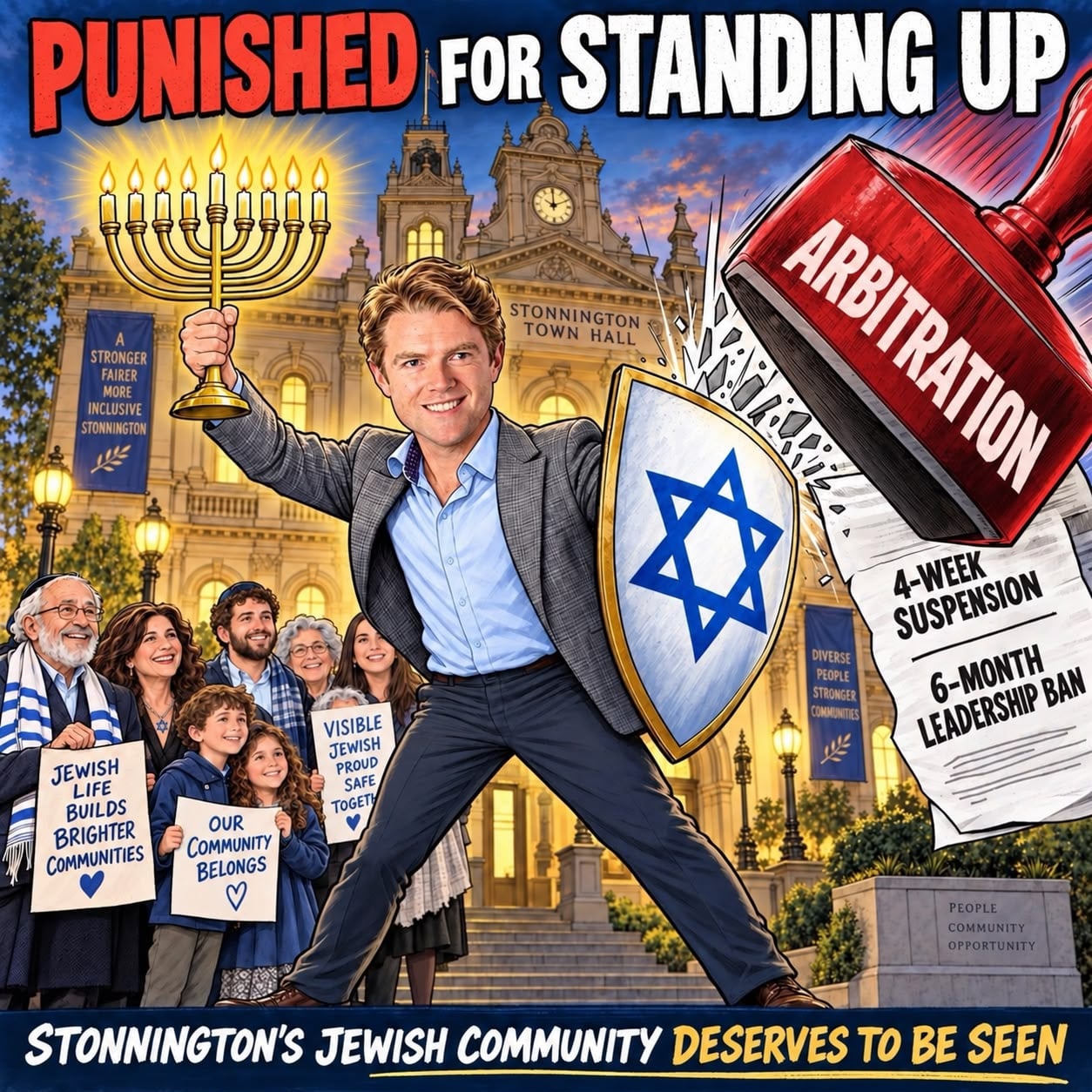
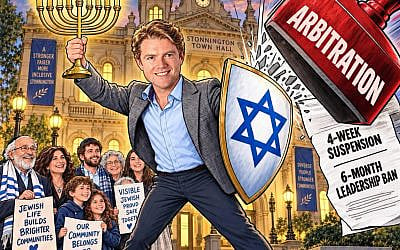 Councillor Tom Humphries from Stonnington Council in Melbourne has been suspended for four weeks following an argument over a modest Hanukkah Menorah. His language was forceful. But after everything Australians have witnessed since October 7, his words were hardly at the extreme end of our political discourse.
That raises an uncomfortable question:
Why do the rules appear different when someone is defending the Jewish community?
Consider Greens Senator Mehreen Faruqi’s repeated accusations that Israel is committing “genocide” in Gaza. Genocide is among the gravest allegations that can be levelled against a nation, yet the International Court of Justice has not made a finding that Israel committed genocide.
Greens Senator Nick McKim accused Senator James Paterson of being “captured by Zionist interests”. He withdrew the personal remark after objections but defended his entitlement to discuss “Zionist interests”.
Then there is Grace Tame. In February 2026, the former Australian of the Year led protesters chanting “From Gadigal to Gaza, globalise the intifada.”
For many Australians, “intifada” evokes the Second Intifada, when over 1,000 Israelis were killed, including civilians murdered in suicide bombings and attacks on buses, restaurants, nightclubs and other public places.
Against that background, what exactly did Humphries say?
He called the deferral of a Menorah “nothing short of antisemitic”.
After the rhetoric Australians have heard since October 7, this was hardly beyond the boundaries of contemporary political argument.
Indeed, what if Humphries had called his colleagues “antizionists” instead?
Would that have generated the same outrage, investigation and four-week suspension?
I doubt it.
Antisemitism mutates. Once Jews were condemned for their religion, later their race. Today, antizionism can provide a more socially acceptable vocabulary through which ancient prejudices are expressed.
Criticism of Israel is not inherently antisemitic if the same standard is applied to other countries. But antizionism becomes morphed antisemitism when “Zionist” substitutes for “Jew”, allegations about Jewish power reappear as claims about sinister “Zionist interests”, Jews are collectively blamed for Israel, or Jews alone are denied national self-determination.
Only three months before the Menorah controversy, Humphries attended the Australian Mayors Summit Against Antisemitism on the Gold Coast.
The arbitration decision records his attendance and that summit material recommended Australian councils install and light Menorahs.
This is fundamental context.
And Stonnington has a significant Jewish population. In Stonnington West alone, the 2021 Census recorded 2,902 people identifying with Judaism, 4.6 per cent of the population, compared with 0.7 per cent across Victoria.
Humphries had attended a conference specifically intended to educate local-government representatives about contemporary antisemitism and how councils could respond.
When Council earlier considered Humphries’ attendance, Cr Samantha Choudhury voted against him going. One is entitled to question her motivations.
Months later, Choudhury joined Cr Steve Stefanopoulos, Cr Jami Klisaris and Cr Melina Sehr as the four complainants who brought the misconduct application against Humphries.
Less than three months after Humphries attended a summit about combating antisemitism including discussion of Menorah displays he put forward a Menorah proposal before his own council.
Was he simply bullying colleagues, or applying what he had learned: that amid record antisemitism, councils should visibly stand with their Jewish communities? I’d argue the later.
The proposal came before Council on 1 December 2025. The next ordinary Council meeting was 15 December. Chanukah began on the evening of 14 December.
Deferring approval until 15 December therefore risked making the proposal pointless. The festival would already have begun before Council had even authorised the installation.
And this was hardly an extravagant request. The Chanukiah was ultimately a relatively modest structure displayed on a balcony. Rabbi Reuvi Cooper of the nearby Chabad of Malvern had assured Council that it would cost Council nothing – the Jewish community would fund it.
Council had rightly supported other cultures. Jewish residents were asking for the same recognition.
From Humphries’ perspective, deferral risked becoming rejection by delay.
When Cr Steve Stefanopoulos moved to defer, Humphries became frustrated. He called the reasons “nonsensical”, described the situation as an “absolute affront to the Jewish community” and declared:
“It is nothing short of antisemitic to defer.”
Strong language? Certainly.
But consider the circumstances: a Jewish community asking to erect a Chanukiah at its own expense; a rabbi assuring Council it would cost ratepayers nothing; Chanukah less than two weeks away; and a proposed deferral until after the festival had begun.
Council ultimately demonstrated the urgency. It did not wait until 15 December. A special meeting was held on 9 December, the practical issues were resolved and Council unanimously approved the Menorah.
If it could be resolved and unanimously approved eight days later, was Humphries really unreasonable to believe on 1 December that delaying it beyond the beginning of Chanukah was unacceptable?
One side gets context. The other gets deterrence.
Humphries did not advocate violence. He wanted a Menorah on a balcony.
He did not seek to make Jewish residents less visible. He wanted them to know their identity and traditions had a place in Stonnington’s civic life.
Yet Humphries was found guilty of misconduct, suspended for four weeks, ordered to apologise and prohibited from serving as Mayor or Deputy Mayor for six months.
The arbitration decision expressly invokes specific and general deterrence in explaining the sanction.
That word should concern us.
Australians have endured years of lies and rhetoric about “intifada”, “genocide”, “apartheid”, “Zionist interests” and the “Zionist lobby”.
Yet a councillor representing a sizeable Jewish community attends a national summit to educate himself about antisemitism, returns to find a recommended expression of Jewish inclusion before his own council, reacts angrily when it is deferred beyond the beginning of Chanukah, and he is the one who must be deterred?
Humphries was maybe not perfect
The arbiter found Humphries should have advanced the proposal earlier and provided councillors with more practical information. He had.
But the arbitration decision itself acknowledges that the Councillor Code of Conduct is not intended to prevent robust democratic debate and that Humphries was entitled to oppose the deferral forcefully.
The question is proportionality.
The Menorah went up. A relatively small Jewish symbol appeared on a balcony.
Nine months later, the councillor who attended a national summit on combating antisemitism and fought hardest for that symbol of Jewish visibility was suspended.
Given what Australia has witnessed since October 7, Humphries’ words seem almost pedestrian beside rhetoric that has become normalised:
“Globalise the intifada.”
“Genocide.”
“Apartheid.”
“Captured by Zionist interests.”
“The Zionist lobby.”
“Zionists should be made to feel uncomfortable.”
Then compare those words from Humphries’
One statement, made while fighting for a Jewish religious symbol to be displayed before Chanukah, helped produce a four-week suspension from elected office.
So ask the obvious question:
Had Tom Humphries called them antizionists instead of calling the deferral antisemitic, would anybody have tried to suspend him at all?
Antisemitism has not disappeared. It has learned new vocabulary.
Antizionism can become its morphed and socially acceptable form, allowing ideas about Jews, Jewish power and Jewish collective legitimacy to be expressed through the language of “Zionists”.
One side receives explanations about context, resistance and political expression.
The other receives deterrence.
That is the double standard.
Tom Humphries may have chosen his words badly. But he educated himself about antisemitism, represented a municipality with a sizeable Jewish population and chose to stand publicly with that community when time was running out for its Chanukah display.
For that, he deserves defending.