
I believe in independent, clear, and courageous journalism – especially where injustice is being silenced
Putin’s Black Day: How Drones Dismantled Russia’s Long-Range Threat
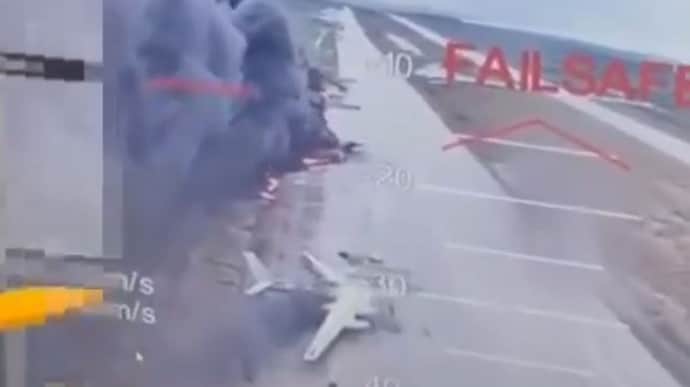
Russian aircraft defeat on June 1, video screenshot
May 31, 2025 may go down in history as one of the darkest days for Russia’s strategic aviation. Ukraine successfully carried out a complex, high-tech special operation codenamed “Pavutyna” (“Spiderweb”), which resulted in the destruction or damage of at least 41 Russian strategic bombers.
These are the very aircraft Ukraine handed over to Russia in 1996 in exchange for giving up its nuclear arsenal. Now, nearly three decades later, Ukraine has symbolically and literally taken them back — by blowing them up with drones.
How the Operation Worked
Planned over 18 months, the operation — orchestrated by Ukraine’s Security Service (SBU) — has been described as one of the most ingenious and logistically complex operations of the full-scale war.
The steps reportedly included:
- Smuggling FPV drones into Russian territory undetected;
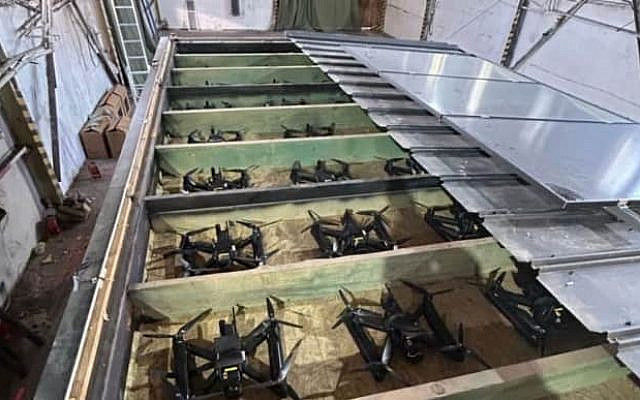
- Transporting mobile wooden structures (small cabin-like huts) and mounting them on trucks;
- Hiding the drones under the roofs of these structures;
- Activating the system remotely to open the roofs and launch the drones directly at military airfields.
The drones — whose exact number remains classified — struck key Russian air bases and damaged or destroyed strategic bombers, likely including the Tu-22M3, Tu-95, and Tu-160.
Zelensky Oversaw It, Maliuk Delivered It
The operation was personally overseen by President Volodymyr Zelensky, and executed under the leadership of SBU chief Vasyl Maliuk. A photo released from the operation shows Maliuk on-site, underscoring the high stakes and hands-on nature of the mission.
This is the latest in a series of asymmetric Ukrainian strikes that highlight its ability to outmaneuver a technically superior but less agile adversary.
A Symbolic Strike
The operation carries enormous symbolic weight. The very aircraft Ukraine once handed over as part of nuclear disarmament have now been turned into wreckage by Ukrainian technology and ingenuity.
It was not just a tactical victory, but a message.
Russia’s Reaction
Russian military bloggers and pro-Kremlin media outlets called the day “a black day for strategic aviation.” Reports suggest Russia’s air defense systems failed to stop the drones, despite attempts to intercept them during their launch from trucks.
One sarcastic Russian commentator wrote: “It wasn’t our bombers taking off from the airfields today — it was Ukrainian bees.”
Ukraine Holds the Cards
Once again, Ukraine has proven that it doesn’t just have cards to play — it holds the trump ones. seem stagnant, it’s these unpredictable, bold, and asymmetric actions that continue to shift the balance and shake Moscow’s sense of control.
Author’s Note:
This article is based on open-source information, official statements by Ukrainian authorities, and real-time reporting from both Ukrainian and Russian military channels. As with all wartime events, especially covert operations, some details remain classified or unverifiable. The analysis reflects publicly available data as of June 1, 2025.
I write this not only as a journalist, but as someone who has followed this war from its very first hours — who has stood with people under fire, listened to their fear, their defiance, their loss. Behind every aircraft destroyed in this operation lie not just military statistics, but human stories: lives shattered, lives defended, and a nation that refuses to be broken.
Related Topics
Related Posts