Qatar got a friendly. Israel got a lecture.
On May 28, Ireland played Qatar at Dublin’s Aviva Stadium. Protesters threw tennis balls onto the pitch. Their target was not Qatar, the host of the 2022 World Cup. They were protesting Ireland’s upcoming matches against Israel.

That image is hard to forget: Qatar on the field, Israel in the dock. Ireland won the friendly 1–0.
Months later, Ireland manager Heimir Hallgrímsson described facing Israel as playing “against genocide.” At a press conference on September 26, a reporter asked him about Qatar. His response was that Qatar had changed under its emir; he declined to comment on what had happened in the past. At that same press conference, he acknowledged that genocide had been a strong and wrong word for him to use.
The past matters here. Hallgrímsson himself coached Al Arabi in Qatar during the buildup to the World Cup. Human Rights Watch’s 2026 report says migrant workers there still face wage theft, dangerous conditions and unexplained deaths. It says abuses connected to the tournament have gone without adequate investigation or compensation. Qatar has enacted labor reforms, but Human Rights Watch says their effect has been limited.
Ireland did not have to arrange a friendly with Qatar. Its matches against Israel are Nations League fixtures, with consequences for refusing to play. Yet the optional match went ahead with an experienced Irish side, while the compulsory ones have prompted calls for a boycott and intense debate over how players should behave toward their Israeli opponents. What principle explains that difference? It has to be called out for what it is: hypocrisy
and why target the only Jewish Nation?
Consider another Irish national team. In August, Ireland’s men hosted Afghanistan for a five-match cricket series. AFGHANISTAN. One match was washed out; Afghanistan won the other four. The Taliban have banned women and girls from sport, driving Afghan women cricketers into exile.
Cricket Ireland did acknowledge that injustice. It invited the exiled Afghan women’s team to play in Ireland, and its chief executive joined an international task force supporting Afghan refugee cricketers. Those steps deserve recognition. They also show that Irish sport can make room for a difficult distinction: confronting a government’s abuses while allowing its men’s team to compete. Irish football’s debate over Israel demands an explanation of why that distinction becomes so much harder, why are there double standards?
I grew up in South Africa and now live in Israel. I understand why people believe sport can carry moral weight. I also know that a moral stand loses its force when the standard changes with the opponent.
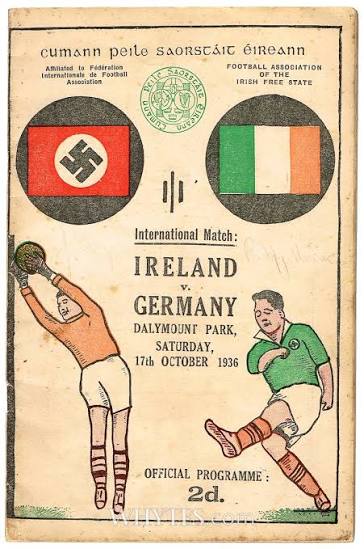
There is a painful history behind that question. In 1904, an anti-Jewish campaign in Limerick brought attacks on Jewish residents and a boycott of their businesses. Irish figures, including Michael Davitt, spoke against it. Decades later, as Jews sought escape from Nazi Europe, Ireland admitted few of them. The Irish Jewish Museum records that appeals to allow individuals in were refused as early as 1933.
The record contains words even harder to read. In December 1938, after Kristallnacht, Ireland’s representative in Berlin, Charles Bewley, sent Dublin a report repeating antisemitic claims and saying he was unaware of deliberate cruelty by the German government toward Jews. Irish people such as Hubert Butler worked to help Jews escape. Bewley did not speak for every Irish person. He did, however, write from an office of the Irish state.
Ireland’s record is preserved in its own documents. A 1943 Dáil speech shows TD Oliver J. Flanagan urging Ireland to follow Germany’s example in driving Jews out. A 1948 Department of Justice memorandum acknowledges that officials initially refused entry to 100 Jewish orphans under a policy restricting Jewish immigration; the Taoiseach later overrode that refusal. This is more than a distant episode: in 2024, a Dublin city councillor invoked the antisemitic claim that Jews controlled the US economy. She apologised and her party suspended her. None of this makes an Irish footballer responsible for those words. It does make Ireland’s history, and the language used about Jews today, impossible to dismiss.
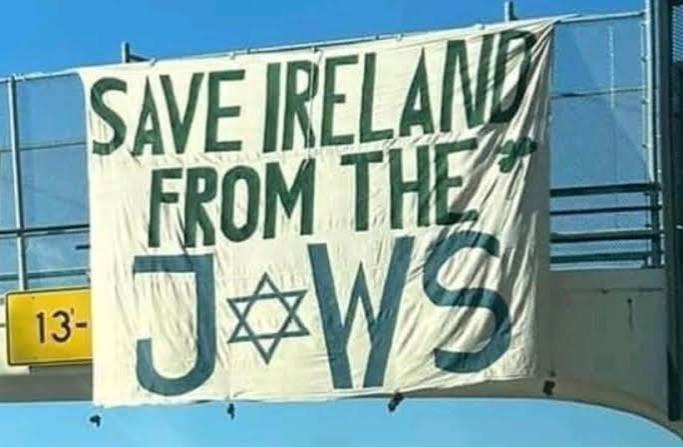
No player on today’s Irish team bears responsibility for Limerick or for a refugee policy from the 1930s. History offers a reason for humility, not inherited guilt. A country with this record can speak about Palestinian suffering. It should. Palestinian lives matter, and criticism of Israel’s government must remain possible. Ireland’s history should also make its public figures careful when their words turn Israeli athletes into stand-ins for every act of their government.
That is why Hallgrímsson’s choice of words matters. So does his readiness to explain away Qatar’s record when challenged. A manager who has worked in Qatar may sincerely believe it has changed. He should be prepared to test that belief against the workers and families still seeking answers from the World Cup years.
The hypocrisy can only be treated as anti-semitism.
The Irish teams have made three choices plain. They played Qatar. They hosted Afghanistan. They will play Israel, but only after treating the fixture as a profound moral crisis. Anyone asking Israel alone to carry the full weight of a state’s actions owes the public a consistent rule.
Apply that rule to Qatar’s workers, Afghanistan’s girls, Palestinian children and Israeli civilians. Each deserves more than a convenient argument made in their name. And each athlete deserves to be seen as a person before being handed a government’s (alleged) crimes to wear with their jersey.