A Call to the Moral Debate the World Refuses to Face — A Black Jewish Voice Speaks for Israel and Global Jewry
Rabbi Sacks and the Torah’s Lesson for Global Diplomacy
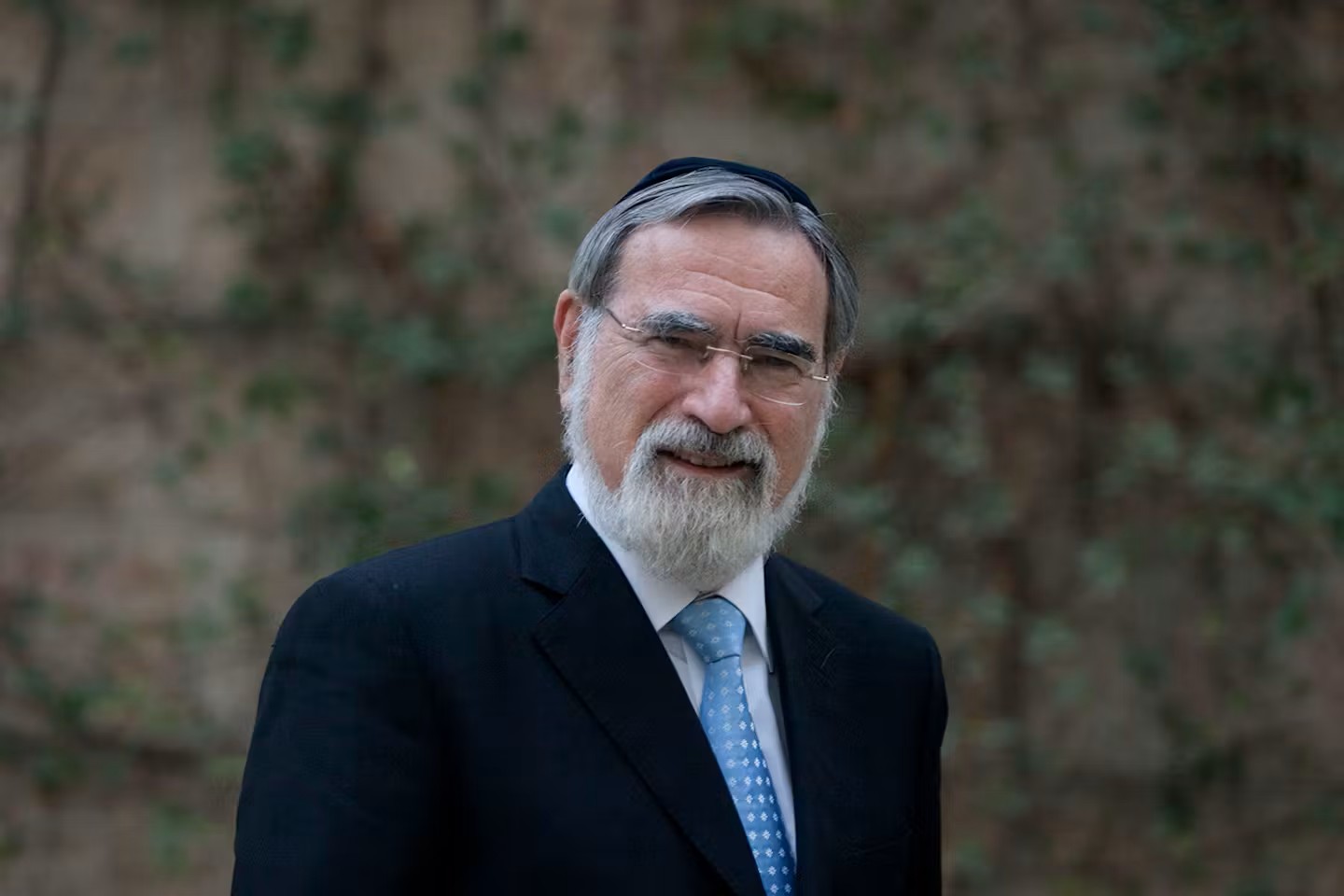
Rabbi Sacks and the Torah’s Lesson for Global Diplomacy By Dr. Shmuel Legesse Photo Credit- Lior Mizrahi, Rabbi Lord Jonathan Sacks
In an era when mistrust between nations runs high, I often return to what I learned from the late Rabbi Lord Jonathan Sacks, z”l, when he was a visiting professor at Yeshiva University in New York. Known for his moral clarity and ability to bridge divides, Rabbi Sacks reminded us that diplomacy is not merely the art of negotiation—it is the art of relationship-building.
He believed that human dignity is the foundation of peaceful coexistence. Quoting the Torah, he often pointed to the creation story: “And God created man in His image” (Genesis 1:27). In international affairs, this means every nation, tribe, and culture possesses inherent worth. To recognize the divine image in another is to recognize their right to security, freedom, and respect—values without which diplomacy collapses into coercion.
From a Jewish perspective, peace is never passive. The Talmud teaches: “Be among the disciples of Aaron, loving peace and pursuing peace” (Pirkei Avot 1:12). Rabbi Sacks emphasized that “pursuing” peace means active engagement—building trust before there is a crisis, listening before responding, and finding the shared human story beneath the politics. At the international level, this calls for what he might have described as relational diplomacy, an approach that does not begin with demands but with understanding; that values long-term trust over short-term gains; that treats dialogue not as a tactic but as a moral responsibility. The Torah itself models this approach in the story of Abraham, who negotiates with God over the fate of Sodom (Genesis 18). Even in a moment of judgment, Abraham engages with humility, moral clarity, and persistence—three hallmarks of good diplomacy.
Rabbi Sacks also warned against the zero-sum thinking that dominates global politics. The Hebrew Bible’s vision for humanity is one of mutual blessing: “Through you, all the families of the earth shall be blessed” (Genesis 12:3). This is the opposite of a worldview that sees one nation’s gain as another’s loss. In today’s interconnected world, security, prosperity, and stability are shared goods. When nations insist on framing every negotiation as a contest of winners and losers, they miss the deeper truth that their fates are bound together.
The Talmud (Gittin 59b) teaches that “the ways of the Torah are ways of peace.” For Rabbi Sacks, this was not a pious slogan—it was a diplomatic mandate. Nations must resolve disputes in ways that strengthen rather than weaken the fabric of trust. That requires empathy, patience, and a willingness to see the world through the other’s eyes, even when disagreement remains. It also requires courage to dismantle religious or ideological fanaticism that justifies the killing of innocents.
If we take these teachings seriously, diplomacy must start with human dignity, acknowledging the history and humanity of the other side before policy is even discussed. It must seek to build relationships before they are needed, through cultural exchanges, joint humanitarian work, and scholarly collaboration that creates lifelines of trust in calmer times. It must frame negotiations not only in terms of strategic interest but in shared values of justice, compassion, and peace, which carry moral as well as political legitimacy. And it must be proactive: as the Talmud urges us to be disciples of Aaron, diplomacy should aim not just to respond to crises, but to prevent them, mediating and reconciling before tensions boil over.
In a time when leaders so often frame foreign policy as a battlefield of competing narratives, Rabbi Sacks’s message is urgently relevant. Diplomacy is not about winning arguments; it is about creating space for cooperation. It is about recognizing, as the Torah insists, that we are all part of one human family. Or, in the words of the prophet Isaiah, envisioning the day when “nation shall not lift up sword against nation, neither shall they learn war anymore” (Isaiah 2:4).
Rabbi Sacks reminded us that history is shaped not only by the power of armies but by the power of ideas. And the Jewish idea that peace is a moral calling, not just a strategic option, has the potential to transform how nations see one another. As the Talmud (Berachot 64a) says: “Torah scholars increase peace in the world.” In our time, so too must our diplomats.
The task is not easy. But as Rabbi Sacks often said: “Optimism is the belief that things will get better. Hope is the belief that we can make things better.” What the world needs now is less optimism and more hope—and leaders willing to act on it.
Related Topics
Related Posts