Person-centred physician
Rambam, The Great Eagle. רמב״ם
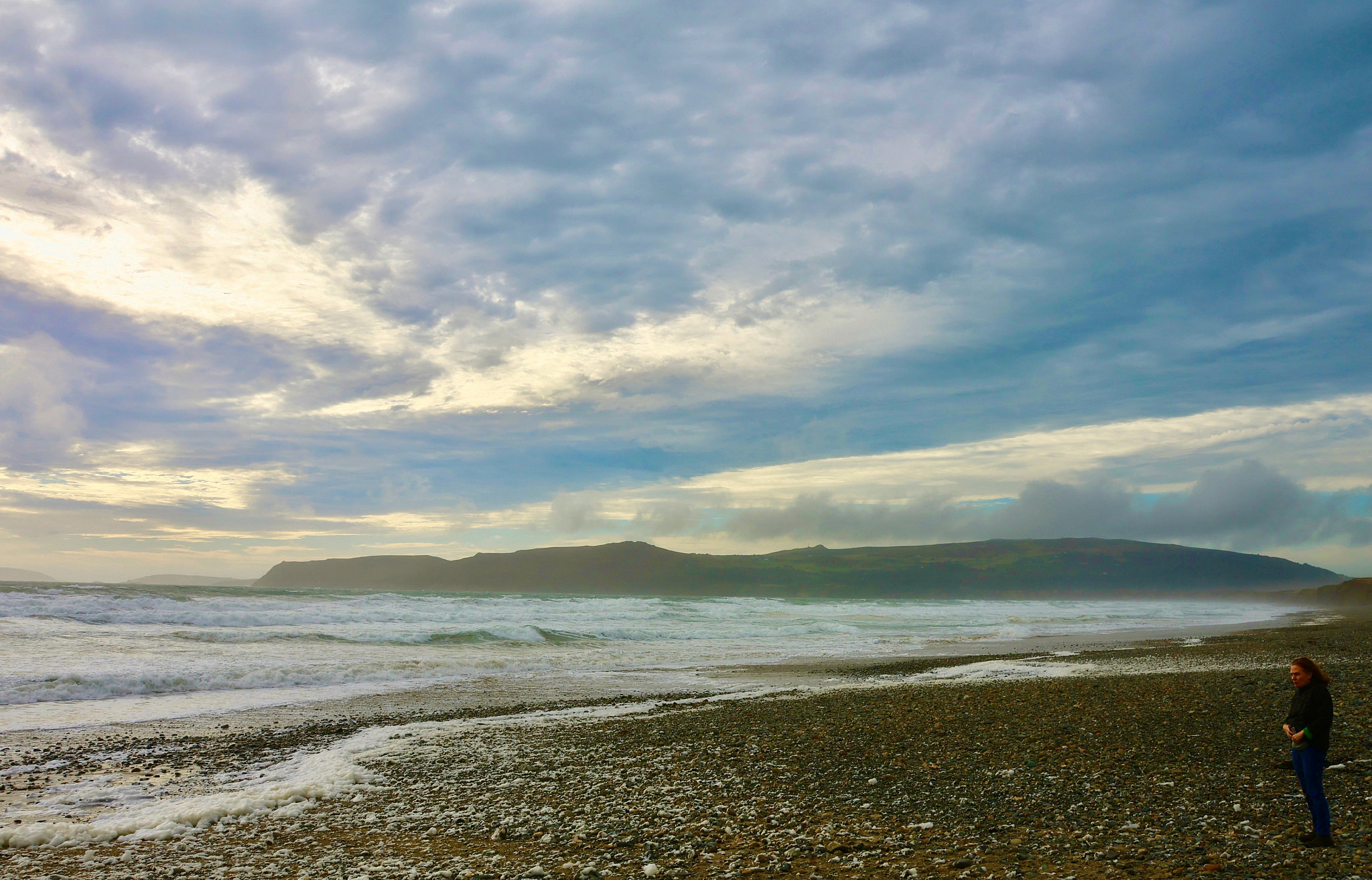
Hell's Mouth, Wales, UK. Photo by Rod Kersh 2025
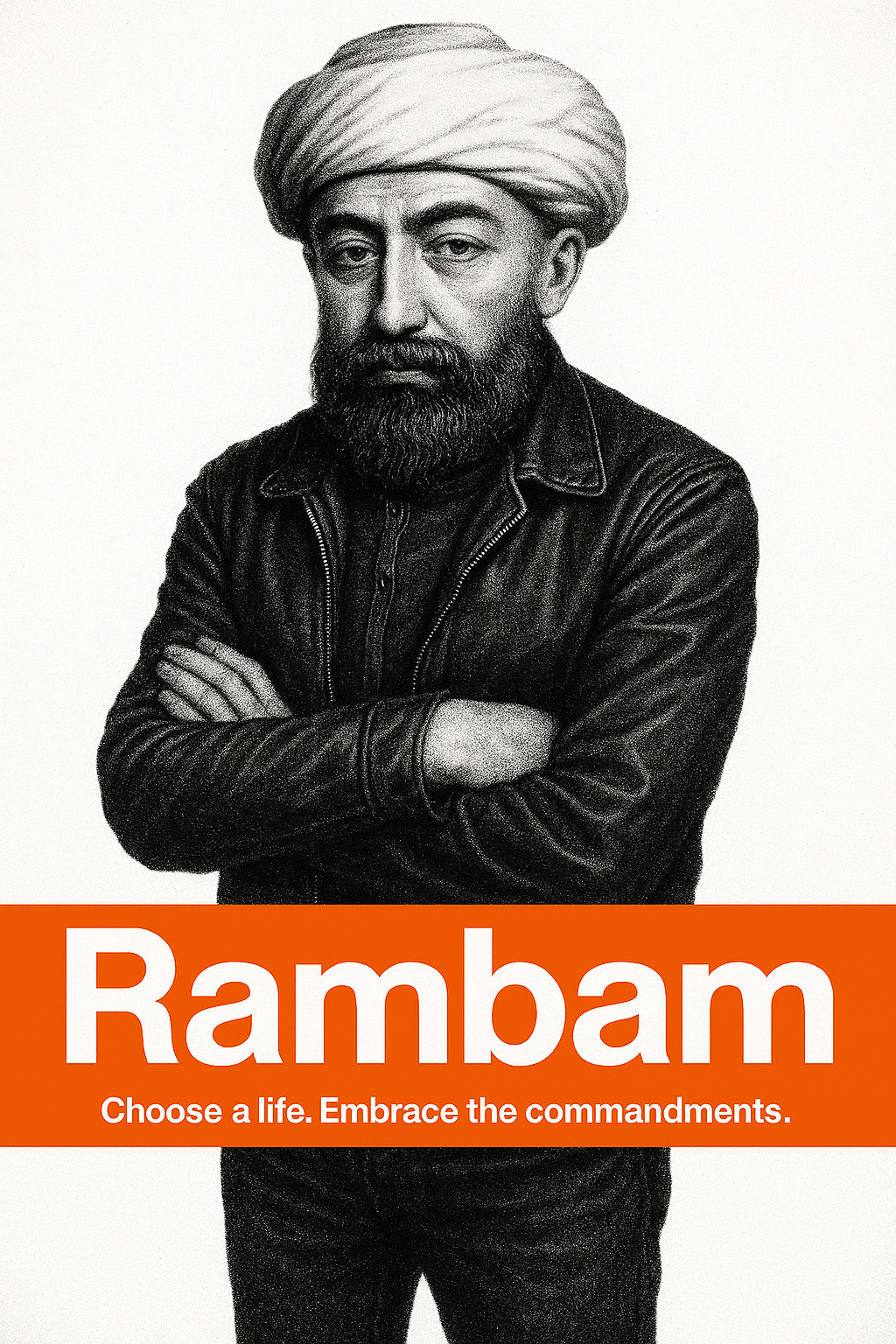
A few years ago, a cartoon image of him featured on this blog. It was taken from a series of stickers I had purchased on a trip to Manchester to visit the place my parents and brothers lived before I was born. In Prestwich, near the King David School there was an antiquarian book shop specialising in old copies of the Torah, Mishnah and associated biblical analyses and commentaries. One of those shops that are musty and quiet and too rarely encountered these days.
Rambam was born in Cordoba in Andalusia during the time of the Almoravid Caliphate on the evening of Passover, 1135. He was a philosopher, astronomer, doctor, poet, mystic and the biblical scholar; his most famous book, ‘The Guide for the Perplexed’ is available today in book shops – 800 years after its publication.
Living in Arab-ruled Spain at the time, Rambam and his family were bound by the Sharia principle of Dhimmi or Ahl al-Kitab, for example, Jews being allowed to practice their religion freely so long as they paid a stipend (jizya), being able to live where they liked so long as it was in a less elevated position than their Muslim neighbours, avoiding horse riding and so on. A medieval equality if you like – better than the experiences of Jews living in Europe who were facing massacre and expulsion, immolation, beheadings or lynching based on blood libels such as using the blood of Christian children to make Matzah. (Which has interesting parallels with modern Antisemitism or the more colloquial Jew Hate).
Rambam was brought into focus for me after I watched a recently released ToI 2017 documentary, ‘The Great Eagle’ which told the story of his life, traveling from Cordoba to Morocco and Egypt, his visit to Jerusalem and eventual burial in Tiberias.
Rambam was a philosopher influenced by the Greeks, Aristotle and the Platonists; he espoused some of the holistic principles of healthcare that we are re-learning today.
As a new consultant 20 years ago, I recall describing the importance of holistic, person-centred care to my colleagues.
Most listened but kept their distance. Their attempts to undermine my actions were subtle and although I managed to make some headway (Mallard Ward, my first love!), my presence was like a pebble in a pond. The ripples soon dissipated, and creativity faded (until recently).
Fast-forward to today and the most recent version of the NHS 10-year plan, published towards the end of 2025, has person-centredness and holism as its core, particularly in relation to our approach to the care, treatment and support of older people.
Recently, this has amalgamated into a group of actions I have been able to advance in my clinical work which fits neatly with our financially constrained times, integrating waste reduction (Muda) both in a material sense (not creating loads of unnecessary packaging, plastic, CO2) as well as process and practice – not making your patient attend three separate clinics when they could combine into one or no visit at all (Viz. Bruce Lee the art of fighting without fighting & PIFU).
I have discussed some of this in recent blogs and I will no doubt return in the future.
The connection between Rambam and 2026 Rotherham?
One of the sage’s famous sayings, ‘treat the patient, not the disease‘ is as true now as it was in 1200’s Andalucia.
The UK is limited in its resources as are all developed health and social care systems; too many older people, too much demand, not enough CT or MRI scanners, increasing lifespans that are weighted with multi-morbidity and their multifarious associated ‘evidence based’ treatments.
Taking the current state of healthcare to its inevitable conclusion, without a dramatic alteration, we will drown amongst our own actions, as with Planet Brontital and Frogstar Planet B. Picture the scene from WallE, surrounded by unlimited waste, a cockroach his only companion.
Exponential and compound growth when applied to biological systems leads to collapse.
Working hard and harder is not the answer.
There is an endless supply of clichés that capture this, from, to a hammer everything is a nail to, take time to sharpen the blade or, if we keep doing what we have always done, and on and on.
And so, treat the patient not the disease. (Rambam said it before Osler).
This is person-centred care.
This is listening to patient preferences.
It is shared decision making.
If you take the magical wisdom of these tenets, you will save the NHS and likely the world (Flash).
Do what the person wants, needs, with them, when they want it. (Preferably without an excess of jargon or defensive practice).
It is Western Society writ large; the person at the helm, directing the play.
By lazy thinking, falling back on outdated modes of practice such as, do the test and ask the questions later, or paternalistic medicine that backs a person into a corner and cuts out their bowel or bladder or tumour, without engagement or involvement, we generate a system doomed to failure.
The exponential growth of treatments, AI-driven strategies to intervene, to pile pill upon pill and test upon test (For example, the commonly used computer algorithm in primary care in the NHS ‘C the Signs’ ) which directs anyone presenting to their GP with the least likely symptom or sign of cancer down an alley of cameras, scans and blood tests) will, if followed to its natural conclusion result in a general collapse. (I am not against early assessment, diagnosis and treatment of cancer, merely its application without a person-centred approach).
I heard this recent entertaining appraisal of sensitivity readers, ‘If you hire a ghosthunter, what do you think they will find?’
Old wisdom. Learning the old ways are how we can save the world. (A totemic song and dance will also do you good).
We take such pleasure in showing off our iPhones or Watches without considering the motivations behind these behaviours which are stuck in our past, a throwback to our days on the Savannah, with hunger and fear, running on an empty stomach for many hours in pursuit of a tiring impala.
Our reaching for the chocolate or alcohol or Netflix is our ancestral physiology and psychology exposed.
We are not as clever as we think and only by accepting our limitations, by living with humility and elevating our sensitivity can we seek to achieve the miraculous.
Is this a paradox? Adopting constraint to achieve growth. Perhaps.
What is the alternative?
Thought is the one infinite we possess. Imagination and creativity are superpowers without beginning or end.
Embracing humanity goes a long way.
As Irvine Welsh/Renton said, ‘Choose Life’ (Thanks Shmulik).
We can view the AI revolution as a catastrophe or accept it as a tool to develop our humanity; the choice is ours.
What would Rambam have thought? How would he have engaged with the bounty of knowledge and information within our pockets? He might have forsaken his principles, hidden away in a lab and developed an answer to everything, or he might have taken a more humble path, putting the person first and the technology second; acknowledging the inherent risks of an uncertain future at the same time as ensuring that we do not lose our humanity.
Related Topics