Raphael Zagury-Orly Interview | Alexandre Gilbert #345.2

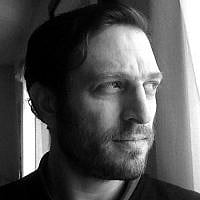
Raphael Zagury-Orly is a philosopher. He is currently a Visiting Professor of Philosophy at the Institut Catholique de Paris. He has taught at numerous universities and art schools across Europe and Israel. In 2019, he was appointed Programme Director at the Collège international de Philosophie (Paris) and Associate Researcher at the Centre de Recherche sur les Arts et le Langage (CRAL – CNRS/EHESS), with which he founded the research group L’Humain qui vient in 2018, in partnership with Le Fresnoy – Studio national (France) and UNESCO.
A founding member of the Rencontres Philosophiques de Monaco, he has also been the curator of the Nuit de la Philosophie in Tel Aviv since 2015.
Since 2004, he has worked as a scholarly editor and translator for Resling Publishing in Tel Aviv, where he has contributed to translations of works by Jacques Derrida, Gilles Deleuze, Georges Bataille, Jean-François Lyotard, Günther Anders, Walter Benjamin, and Georges Didi-Huberman from German and French into Hebrew.
A specialist in German and French philosophy, he is the author of numerous books, including Le Dernier des sionistes (Les Liens qui libèrent, 2021). In collaboration with Joseph Cohen, he published L’Adversaire privilégié (Galilée, 2021), followed by To Live and Die in History (Éditions Alibri, 2024). He has co-edited several collective volumes, including Judéités, Questions pour Jacques Derrida (Galilée, 2003), and, more recently, Où va la philosophie française ? (Vrin & Les Rencontres Philosophiques de Monaco, 2024), in collaboration with Isabelle Alfandary and Sandra Laugier, as well as L’humain qui vient, in collaboration with Alain Fleischer.

You stated that Zionism is “a task that remains before us,” never completed. Is the reconstruction you want to speak about this year a matter of returning to something (a previous state, a promise), or of inventing something that has never existed?
Raphael Zagury-Orly: Even when we “return” to something, whether in Israel or to the so-called “Jewish” texts or again to the foundational texts of Zionism, it is never simply to recover something that has already been stated, that would be “already there” in a completed and intact form. Moreover, Zionism has never simply been a “return” to supposedly original Judaism. A return to supposedly first Judaism, as it was. It is the anti-Zionisms (numerous and varied), now claiming post-colonialism, that claim to “indigeneity” and that, by that very fact, have led the Zionists into this impasse in which they are required to justify themselves.
The ignorance of some and others, sometimes Jews as well, concerning Zionism is appalling. It is, moreover, far more serious than mere ignorance. It involves genuine denial… Very briefly, we can say that what is called Israel, the political space inaugurated by Zionism, is not merely the affirmation of an “ancient,” “recognized” and theologically ordered religion, of an identifiable culture, a clearly established nation and an obvious, pure language, which would come together in an ontologically determined identity. Zionism, for me and for many of its founders, was never formulated in terms of a quest for origins, but in those of a responsible politics. It is also, and perhaps above all, the inauguration of infinite questioning, which always exceeds the sites of the pure, the proper and self-affirmation.
We need to change the diskette quickly: Zionism does not solve the “Jewish problem” through a return to an initial Jewish identity. It awakens dilemmas, aporias in the very best sense of the term. The Zionism to come will have to perceive, within these aporias of identity, of religion, of politics, within the infinite tensions between traditional Judaism and modern politics (Zionism), sites of invention.
You criticized in Benny Lévy the idea that the “modern Jew” had lost something that needed to be recovered. Does the contemporary discourse on the “reconstruction” of Israel—social, democratic, moral—risk reproducing this same nostalgia for a lost purity or unity that you consider illusory?
Raphael Zagury-Orly: Precisely, the risk exists, and this is what must be avoided. Beyond this question, the other thought than that of “return to the origin,” the otherwise than the fantasy of origin, depends on an immersion in the concrete reality of politics and all these temptations, however terrible they may be.
We cannot simply think that these temptations will not exist. What political arena is not worked upon by the worst temptations? Why are Jews always asked not to submit to the worst temptations? They exist here too! But there is also always, in Israel, an openness to something else, at least as elsewhere.
It is therefore as a Zionist that I put forward the necessity of conceiving a responsibility toward history before allowing oneself to be caught up in the game of returns to a healthy, safe, protected and protective origin. Before allowing oneself to be seized, lulled, and ultimately mired in historical-apocalyptic logics, in narratives of national resurrections, whose necessity I fully understand. Today, the historical responsibility of the Zionist consists in proposing paths and trajectories toward a necessary renewal of Zionism itself.
Zionism does politics like no other current emerging from the Jewish world. It is entirely political-historical. By entering into the historicity of history, it also commits itself to a radical redefinition of the politics of memory and commemoration. It makes an entirely different commitment toward the dead of the past and the dead to come, that is to say, toward life and death. And left-wing or liberal Zionism probably more than any other current within Zionism. It has attempted to avoid several pitfalls: we have mentioned that of indigeneity, the infinite and insoluble abyss of “we were here first,” and that of the theological-political, under its two great “Jewish” temptations, so to speak, religious-Zionist messianism and diasporic apocalypticism (the exilic experience accommodating itself in one way or another to persecution, contempt and suffering).
Thus, not only does Zionism not wait for the messianic event in order to emancipate itself, it rejects every idea of apocalyptic redemption, every notion of redemption through suffering. It rejects the fundamentally exilic idea that the Jew is condemned to suffer eternally and that compensation awaits him at the end of this ordeal. The idea that the greater the despair, the more the idea of redemption through misfortune imposes itself, was and remains unbearable to it. In this sense, it may be a form of reaction to a certain diasporic Judaism steeped in an apocalyptic-redemptive culture. Moreover, a certain post-Zionist diasporic Judaism today is returning to the idea of apocalyptic redemption. Whereas political Zionism is more attentive than ever to the idea of a tragedy without redemption. No Jewish suffering is acceptable to it. Period. Diasporic post-Zionism reiterates the apocalyptic analyses of Jewish life in the diaspora, necessary in many respects for the preservation of Jewish life in exile: “we suffer but we are pure of any experience of direct violence.”
Instead of repeating identity-based and origin-based slogans, whether nationalist, messianic or postcolonial and intersectional, would it not be better to listen to complexity and listen to the troubled and troubling, questioning space that opens up with Israel?
You spoke of “aporia” as a place of invention rather than an impasse. Should Israeli democratic reconstruction—after the divisions deepened by the judicial reform and by the war—seek, in your view, to resolve these aporias, or to learn to inhabit them differently?
Raphael Zagury-Orly: I do not believe that aporias can be resolved. On the other hand, I believe more than ever that they must be unfolded in all their power. In other words, if reconstruction is necessary, nothing must be forgotten or relegated to the past.
Reconstruction does not go without saying; it must not cancel destruction but must work with it, it must be wary of its own fantasies, beginning with that of “starting over,” “starting on new foundations” or “starting from scratch.” All these threats always lie in wait for reconstruction.
Insofar as after catastrophe one does not recover from it, one does not move on, one does not in any way resume the same path, one never returns to what we were or supposedly would be, political questions must be asked and asked again: how does one live after so many catastrophes? What does one do afterward? How does one build afterward? What does starting over mean? Resuming? Beginning again? Can starting over, resuming, beginning again and reconstructing necessarily be conceived against the backdrop of the possibility of persevering?
In Israel particularly, the memory of destruction is never simply behind us. On the one hand, there are all those who deny October 7 in the Arab-Muslim and Western world, and on the other, a government that has tried to “start from scratch” in the hope of erasing its responsibility for the catastrophe of October 7. Without comparing these two phenomena, they converge in the same temptation to repress the traumatic event and to ward off its haunting.
It is true that we have only a certain amount of time in which to listen to the unbearable. There comes a moment when, we are reminded everywhere, one must emerge from misfortune and re-enter the fabric of life or history. One should wipe the slate clean of tragedies and show oneself “confident in life.” But the question imposes itself as never before: faced with all kinds of situations of extreme gravity and often unbearable, are we still entitled to think of them against the background of an understanding of the human or of history founded on a universal, general teleology of meaning?
Moreover, I do not feel capable of saying anything other than, again and again, two irreconcilable things: the necessity of reconstruction, the desire for politics, and the constant reminder of destructions. I do not feel capable of doing anything other than placing myself obstinately, with all the risks of misunderstanding, within this aporetic contradiction. To say one thing and its opposite simultaneously, while holding on to both… If I were to speak of a duty, a single one, as the philosophical or common language asks of us, there would be only the duty to acknowledge the embarrassment within this contradiction. It is a strange duty, certainly. The duty not to take pleasure in one of the propositions claiming to know what must be thought, done or said. A duty from which one is never free. I know the difficulties this represents for the philosopher, in search of simplicity and resolution, and for the public sphere and its need for affirmation and clarity. But this changes everything with regard to responsibility. The responsibility I seek to think never gives up either of the two sides of the contradiction.
You said: “we must have the audacity to re-enchant Zionist political engagement against the populists.” Is the word “reconstruction” not today being appropriated, as the word “deconstruction” was in France, by political forces that make it mean the opposite of what you mean by it?
Raphael Zagury-Orly: Reconstruction can be the most unbearable thing to do. It can be extremely brutal. It lies at the heart of so much immorality. It can unfold against the backdrop of a dizzying forgetting of past catastrophes and those to come. In order to reconstruct, the unbearable should neither disappear nor even lose its weight and its persistence. It must never be absorbed by the forward march of the world, of life, of our societies. One should therefore never be content to follow the injunction proclaimed everywhere to reconstruct, start again, and in this way move forward. Never be content simply to accept its law, its legitimacy, its so-called truth.