Raphael Zagury-Orly Interview | Alexandre Gilbert #345.1

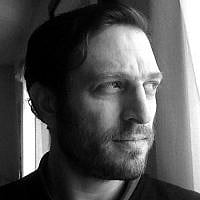
Raphael Zagury-Orly is a philosopher. He is currently a Visiting Professor of Philosophy at the Institut Catholique de Paris. He has taught at numerous universities and art schools across Europe and Israel. In 2019, he was appointed Programme Director at the Collège international de Philosophie (Paris) and Associate Researcher at the Centre de Recherche sur les Arts et le Langage (CRAL – CNRS/EHESS), with which he founded the research group L’Humain qui vient in 2018, in partnership with Le Fresnoy – Studio national (France) and UNESCO.
A founding member of the Rencontres Philosophiques de Monaco, he has also been the curator of the Nuit de la Philosophie in Tel Aviv since 2015.
Since 2004, he has worked as a scholarly editor and translator for Resling Publishing in Tel Aviv, where he has contributed to translations of works by Jacques Derrida, Gilles Deleuze, Georges Bataille, Jean-François Lyotard, Günther Anders, Walter Benjamin, and Georges Didi-Huberman from German and French into Hebrew.
A specialist in German and French philosophy, he is the author of numerous books, including Le Dernier des sionistes (Les Liens qui libèrent, 2021). In collaboration with Joseph Cohen, he published L’Adversaire privilégié (Galilée, 2021), followed by To Live and Die in History (Éditions Alibri, 2024). He has co-edited several collective volumes, including Judéités, Questions pour Jacques Derrida (Galilée, 2003), and, more recently, Où va la philosophie française ? (Vrin & Les Rencontres Philosophiques de Monaco, 2024), in collaboration with Isabelle Alfandary and Sandra Laugier, as well as L’humain qui vient, in collaboration with Alain Fleischer.

In our previous interview, you contrasted Anders’s reading of the nuclear catastrophe—as self-destruction without remainder—with the Heideggerian reading of technological devastation as an occasion for a Kehre toward being. At a time when we are thinking about a “Night of Reconstruction,” is it Anders or Heidegger who seems to you better equipped to think about what, after October 7, can or cannot be reconstructed?
Raphael Zagury-Orly: Anders interests me here in his critique of the Heideggerian conception of history, but I work with both; I need the tension between the two. I need the Heideggerian background which connects—with apologies to the Heideggerians—to a certain philosophical or sometimes common discourse of the permanence of meaning, a certain need that we all have for presence, affirmation and completion. Heidegger embodies in my eyes one of the great achievements of the philosophical quest for origins. It is therefore a matter of thinking with both: one with the other. Through the Andersian approach to the nuclear event, the epoch, our epoch, proves to be not only ordered toward a certain propagation of technology, but above all surrounded by an unprecedented and very recent proliferation of technology. A form of exemplarity and singularity is revealed in it that marks a final point of no return. For Anders, as always, apocalypse (somewhat as in everyday usage) designates the instant of a cataclysm so powerful that it can annihilate humanity and the world. This is the exact opposite of the apocalyptic structure at work in Heidegger, for whom the catastrophic event is inscribed within an apocalyptic history of truth that always ends up restoring the process of meaning, in a turn beyond its destructive dimension. As if, ultimately, no event had ever taken place. Philosophical thought and responsibility must never resign themselves to this….
Anders raises a question, let us say, between the lines, which is not conceivable from the Heideggerian gesture, conventional in this respect, and which I attempt to pursue in my modest way.
How can history be rethought from the standpoint of singular and irreducible events that return and continually occur as new and unpredictable events? How can we open ourselves to modes of thought other than those of understanding history as the presence of meaning, as the historicity of being, which always end up accommodating events, coming to terms with evil, by confining it and incorporating it into the historical work of mourning? How can we relate to past catastrophes outside the powerful apocalyptic schema as yet another justification of what happens in history?
This question brings together, with particular intensity, the tangle of questions that I am trying to trace around history, the event, the work of historical time and everything related to it in terms of commemoration, the work of mourning, and therefore forgetting, and above all what meaning to give to the singular historical event, to singular catastrophic events in history.
I seek to rethink our relationship to the historicity of history and to the events that occur within it, and no longer to see it as the place where its recommencement or rebirth is once again and again realized after every event of rupture. I attempt to think these events in their strangeness to all the forms at work in our ontological conceptions of history, with a particular concern for the powerful Heideggerian apocalyptic. I therefore seek to think outside our capacity to endlessly internalize these historical events within the persistence of historical temporality. In philosophical terms, I refuse to see it as the place where meaning and truth combine and meet.
You said you were seeking “another formulation of the relationship between responsibility, memory and history,” outside any apocalyptic logic of redemption. Is reconstruction necessarily an attempt to give meaning back to what happened—and therefore to fall back into the logic you criticize? How can one reconstruct without “redeeming” the event?
Raphael Zagury-Orly: That is the whole question! It is difficult to reconstruct without being caught up by the onto-theological need to redeem the event, but the future of thought and responsibility also depends on our disposition to seek one or more modalities of the meaningful beyond the current and philosophically dominant logics of redemption and acquittal.
I work from a form of exposure to the senseless. Anders taught us something fundamental: to recognize that the nuclear threat makes the situation of humanity not only fragile or more precarious momentarily, temporarily, but, insofar as it is potentially self-destructive, it can become permanently established. It exposes us singularly to a catastrophe that cannot be conceived apocalyptically and to the necessity of thinking a destruction without remainder and without possible reversal. It is an enormous difficulty for philosophy to think outside the apocalyptic horizon, outside a certain project of possible recommencement. Levinas spoke of a “senseless” trauma, of an “unassumable” historical event, not integrable into the unity of an order or a meaning. In Levinas, a certain ethical question opens onto a relationship to history capable of singularly resisting historical teleolo-eschatologies and their inherent modalities, which always seek to neutralize the question of justice and the possibility of an excess of responsibility, through the persistence of a temporality that ultimately justifies, discharges and forgives. I would say that reconstructing oneself by remobilizing the same historical schemas of renewal and revival against a backdrop of rupture makes little sense.
All the important thinkers of modernity, beginning with Kant and Hegel and continuing through contemporary thought, claim to take the ruptures of history seriously. But the whole question is: how far should we think this rupture? We must also “know” how not to place limits upon it. We must reserve a particular distrust for the idea of salvation, of deliverance, and seek and seek elsewhere than in it… And elsewhere certainly does not mean remaining in suffering or in a state of perpetual grief. But neither does it mean overcoming the rupture in order to relegate it to the past… In any case, a certain dissociation, for any redemption worthy of the name (if I return to your question), is necessary between it—redemption—and every therapy of mourning, every healing, every symptom of forgetting… I therefore prefer not to speak of redemption.
Not to be satisfied with history as a history of redemption, as a history of atonement, of the work of mourning, of the time of mourning and of the logic of renewal that structurally lies in wait for it: we always move too quickly forward. To put it somewhat hastily, Derrida, after Levinas, opens the historicity of history to a certain desire for justice, an idea of justice that makes us forswear redemption, the essence of redemption insofar as it belongs together with the essence of history.
It is as if relating to history “justly” meant remaining perpetually haunted by the events of history as one would be by the dead of the past, who must always remain alive among us. What could it possibly mean to be “haunted” within and through our relationship to history? How and why is the “spectral” experience of historical events (never simply relegated to the past) incomprehensible within the ontological-apocalyptic horizon of experience? How does the spectral experience of events and of the dead radically change our relationship to history (to memory, commemoration, testimony), and why does this experience provoke a displacement of the language and lexicon of experience and responsibility in general?
I have just very quickly introduced here the Derridean idea of “hauntology” as a complement to the Andersian analysis of nuclear catastrophe and Levinasian ethics, in order to enable a concept of responsibility and justice, not in spite of the nuclear cataclysm, but rather precisely because our present remains constantly haunted by the singularity of the nuclear catastrophe and by past catastrophes (never comparable), which for me are never simply a matter of internalizing in order to better continue along our way.
You took up the Levinasian formula “truth presupposes justice.” Can we say, in the same movement, that “reconstruction presupposes justice”—and not the reverse, that a political or social reconstruction should first establish a truth (of facts, of responsibilities) before it can legitimize itself?
Raphael Zagury-Orly: Yes, one can say that reconstruction presupposes justice. A certain idea of infinite, irreducible justice must work, must act at the heart of reconstruction—which is, by definition, reductive, limited and limiting.
There would be neither reform nor reconstruction if we did not respond to a call that was already there before us, that reaches us from the other within us, before us, and reminds us of the situation of radical asymmetry—the situation in which we are looked upon by an Idea of justice that was already there and whose secret commandment we carry within us.
Our responsibility does not commit us only toward those who no longer live, but also toward those who are not yet alive, not yet born: this is where the future dimension of justice appears. Indeed, past catastrophes command us, each time in a singular way, to ask ourselves what world we are leaving to others, that is, to those who do not yet live and whose call we already hear.
This spectral haunting that continually assails our public space makes it possible to pose anew the question of mourning for the catastrophe itself, that is, the return of the dead and the arrival of those “not yet alive”… Here we approach, in a way, the question of mourning outside and beyond the signified structure of the work of mourning, when the imminent return of the dead cannot be internalized and incorporated, and where the imminent arrival of those who are not yet alive cannot be acknowledged.
Hence the question inherited from Jacques Derrida that runs through my reflection: toward what philosophy of history, distinct from the apocalyptic logic of truth and history, are we heading in the face of these “living dead” who have never ceased to coexist with us? What justice toward these “beings” must we imagine here—in the face of these figures impossible to define as living or dead, and which refuse and resist their reduction to the apocalyptic logic that is always capable of knowing where to situate the dead and the living, always capable of establishing who is dead and who is alive?
Continue to Part 2