
Award-winning feminist author, anthropologist, educator, coach, publisher, and activist
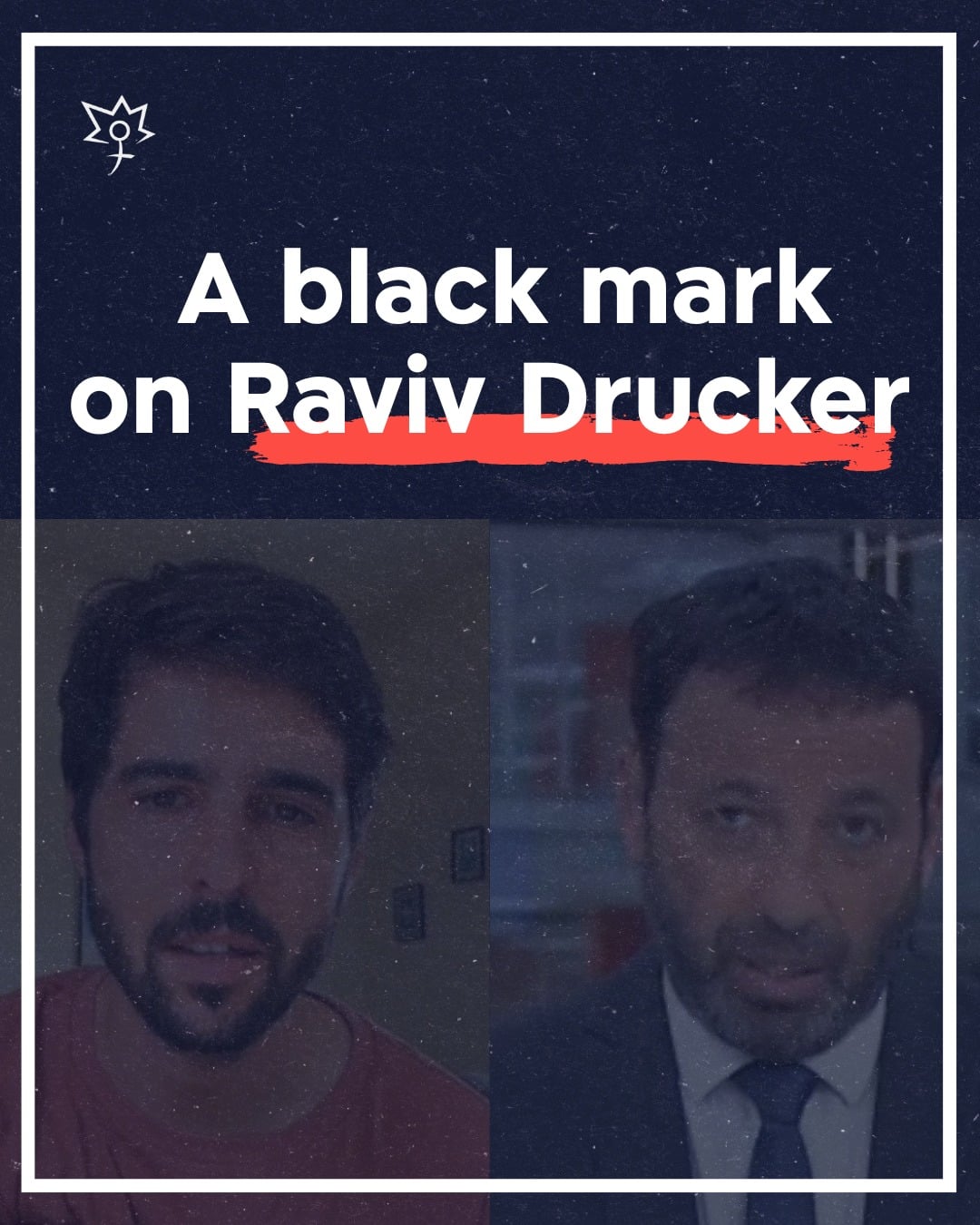
Raviv Drucker and prime-time himpathy for rapists
In 2022, a woman walked into a police station and reported that she was raped. Although her name was publicly known while she begged the justice system to investigate her case, the man’s name was kept secret under a gag order. Her name was out there for everyone to know, but not his. A few weeks ago, another woman came forward with detailed accusations against the same man, even before we, the public, were allowed to know his name. Two named women facing public scrutiny for having shared that they were raped. But the accused rapist had his name protected. For years.
Until now.
The gag order protecting the accused rapist was finally lifted and now we know that the man, Yuval Wilner, is the man who has been accused by Shai-Lee Atary and Naama Shachar of rape.
And then Raviv Drucker arrived. Drucker, a well-known investigative reporter for Channel 13 and host of the program Hamakor, decided to give Wilner an interview. He decided that it’s not enough for us to hear from victims of rape. We need to also hear what the alleged rapist has to say. Give him a chance to – to what? Clear his name? Tell us that he’s great guy? Say that the women misunderstood? That he thought they were having a good time?
This decision is so unbearably outrageous that it should not need an explanation for us to understand why suspected rapists do not deserve prime time.
There are no “both sides of a story” in rape
There is no other crime in the world that makes this outrageous demand on its victims. Victims of burglary, identity theft, fraud, shoplifting, carjacking, or attempted murder, for example, are not treated as suspects, as someone who is lying. Nobody says, “But what if he invented the burglary?” every time someone reports a break-in. Nobody asks if there is “another side to the story”. Nobody treats criminals like “nice guys” who just misunderstood. Nobody suggests that victims of muggings deserved it or asked for it. Criminals are not routinely doubted, assumed to be “victims” of a “witch hunt”, labeled as “good guys” or “musicians” or whatever.
Of course not.
Only rape victims are treated like suspects.
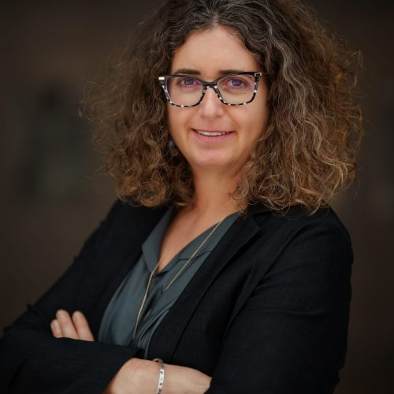
“Only in rape do victims of crime have to be subjected to ‘the other side of the story,” says Attorney Gali Zinger of the Israel Women’s Network. “Only rape victims are automatically doubted. Only in rape are victims routinely accused of asking for it, enjoying it, of deserving it, or of lying about the whole thing.”
For the record, there are very few cases of false rape reports. Rigorous studies generally place false sexual-assault reports in the range of 2%-8%, a range less than false reports in other crime categories. And we know that rape is vastly underreported. Research by RAINN has found that only one third of rape cases get reported. Yet, despite all that evidence rape victims who do come forward are treated like presumptive liars.
The special suspicion reserved for rape victims is not evidence-based. It is cultural. It is profoundly unjust. And it is one of the mechanisms that keeps women silent even when they experience unbearable sexual violence.
The accused rapist is not the hero of the story
The problem is not merely one television interview. The problem is the reflex that made news producers think that this is journalism. The problem is the old media instinct that turns a man suspected of sexual violence into the protagonist of his own redemption story while women are still fighting to have their horrors recognized.
Raviv Drucker and HaMakor could have made a different choice. They could have done a story centering on the years of silence. They could have examined the gag order. They could have asked why women who report sexual violence so often aren’t taken seriously. They could have examined the institutions and practices that keep women quiet.
Instead, Channel 13 chose the spectacle of the accused man facing the camera. OOOHHHH he’s a musician! He gets the platform, the attention, and the opportunity to brand himself as something else.
Misplaced sympathy for rapists has a name: Himpathy
That choice to center the man accused of rape has a name. Philosopher Kate Manne in her brilliant book, Down Girl, calls this dynamic “himpathy”: the disproportionate sympathy extended to men accused or convicted of misogynistic violence, especially when those men are socially familiar, talented, successful, charming, or otherwise legible as “one of us.” Himpathy asks people to look at him, to consider his pain, his future, his family, his complexity, his voice, his wounded face, his life, and his need to be understood.
The women become the background. Maybe even obstacles. The man becomes the story.
There are mountains of examples of public himpathy for rapists and suspected rapists instead of for rape victims. Brock Turner’s case in the United States became one of the clearest examples of this dynamic. Turner was convicted of sexually assaulting Chanel Miller, yet much of the public conversation turned toward his lost swimming career, his damaged future, and the supposedly tragic consequences for his life. Miller’s suffering had to compete with public grief over Turner’s potential. A young woman’s violation became, in the eyes of too many observers, a sad chapter in the life of a promising young man.
That is himpathy.
In fact, the most egregious example is with Donald Trump. He fully admitted to engaging in sexual assault on the Access Hollywoord tape, and was elected president by 60 million voters. He, was awarded over $80 million in damages for rape, and was accused by dozens of more women. And still – STILL! – he was elected even a second time. That tells us everything we need to know about how society treats rapists versus how they treat rape victims. Himpathy all the way.
The rapist’s reinvention also has a name: “Sméagoling”
The same pattern of sympathizing with sexual predators has been repeated again and again in the age of #MeToo. Louis C.K., for example, admitted to committing sexual harassment, and still went back to work, got lucrative media deals, and even won a prestigious award. “These stories are true”, he said publicly, describing how he thinks “It’s okay” for him to whip out his penis in meetings with female colleagues (if he asked first). His statement adopted the language of confession humor, but not genuine remorse. When he returned to stand-up comedy not long after, he began incorporating the scandal into his routine, joking about the accusations and his almost fall from grace. Audiences frequently responded with sympathy (himpathy), applause, and standing ovations. To wit, although he was suspended by Netflix for a while, he quickly returned to his stage and spotlight. Just a few years later won a Grammy for that standup special where his sexual misconduct was reframed as a fetish. Meanwhile, his victims faced a vicious backlash from fans, podcasters, and comedians, and they are not getting lucrative Netflix contracts or big awards.
This posture of fake remorse to win sympathy is a tactic called “Sméagoling”, a label coined by Dr. James Cordova, a professor of psychology at Clark University — admitting “yes, I’m terrible”, while simultaneously reclaiming attention, empathy, and cultural space — achieved its purposes. The women who spoke were expected to disappear. This is one of the tactics I analyze in my forthcoming book, Toxic Tactics, where I explore the “Sméagoling” maneuver as an emotive performance of shame, self-pity, or moral struggle that allows a harmful person to reclaim attention and audience approval.
In Sméagoling, the accused man does not need to prove innocence in the court of public emotion. He only needs to appear wounded enough, complicated enough, and human enough that audiences will decide that they don’t want to focus any more on the women he hurt. It starts to feel unnecessary, too harsh, maybe even irrelevant.
Rape victims deserve justice
“We as a society should be reserving our sympathies for victims of violence, not for their perpetrators,” Attorney Zinger adds. “We should not be handing a national platform to a man suspected of rape over the objections of the women who say he harmed them. Rape should not be used as a promotional hook for the accused man’s television debut.”
Drucker should know this. Serious journalism requires more than access to a celebrity criminal. Serious journalism requires judgment about power relationships and justice. Serious journalism asks who benefits from the camera, who pays the price for the broadcast, and whose silence is being reproduced on the altar of rating.
Editors and anchors must remember that the question is not only “Can we get the interview?” The question is “What does this interview do?” Does the broadcast illuminate a system, expose an injustice, and serve the public interest? Or does it turn an accused man into a beloved star?
Drucker had a choice. Viewers have one too.
The women at the center of this case asked for something simple: Do not give him a platform. That request should have mattered. Ethical journalism must take seriously the predictable harm caused when men accused of sexual violence are given prestige, intimacy, and narrative control.
“A society that wants to take sexual violence seriously has to stop treating accused men as endlessly fascinating and harmed women as exhausting,” Atty Zinger asserts. “AA media culture that wants to have integrity must understand that courage is not about getting the interview. Sometimes the courageous act is refusing to do the interview.”
For us, the viewing public, the courageous act is refusing to watch.
Related Topics
Related Posts