
Reading Next Week: January 12-23 – The Result
THIS WEEK GLOBALLY
Venezuela and a new world order?
The old playbook has changed. What happened in Venezuela this week wasn’t theater—it was a message written in military operations, and Tehran received it loud and clear.
The capture of President Nicolás Maduro directly from his military compound looks very impressive on the screens around the world, especially in Beijing, in Tehran.
But this entire event looks so clean as if it is a scripted show, written by a Hollywood screenwriter working on the next X-Men movie.
The narrative currently being told mostly in the US is that “We wanted to control the oil, so it doesn’t go to China”. The reason is to deprive energy from the AI race, Weaken its army, hurt its economy etc. If that is the case and the Trump administration is really playing strategy, then obviously Iran is next.
And this raises many questions:
- Was there any Israeli influence for this operation, to justify action against Iran? Israel’s PM has a specific interest (not necessarily Israel does).
- Where are the professionals foreign affairs, to explain the effect of this domino track on China? What would prevent China from doing the same in Taiwan?
A small reminder how the US entered WWII, by embargoing oil from Japan, which led to the Japanese surprise attack on Pearl Harbor, which led to the Americans joining the war, which changed the course of this war.
Unfortunately it seems there are no adults around Trump that can put their foot down and stop this. The world has moved that much closer to WWIII.
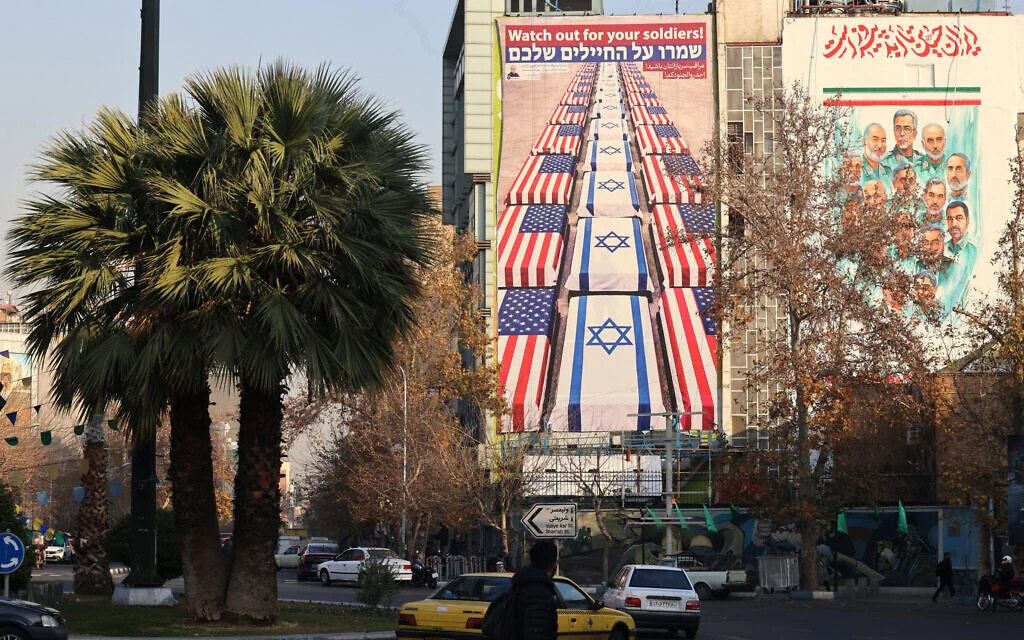
Riots in Iran
As the internet is down all over Iran, you know the riots are at a larger scale than the Ayatollah regime wants us to know, and wants to prevent foreign involvement, which is more than likely happening.
Will these riots bring down the regime? Probably not. But Netanyahu is wagging the American dog, and Trump is posting threats to the Iranian regime. The US has no real interest in Iran. So these riots take the focus and resources of the regime from their missile stocking and air defenses. That’s enough for whoever needs to operate on the ground – to operate.
Iranian leadership is reportedly interpreting American intentions as “maximalist”—meaning regime change isn’t just a possibility they worry about, it’s what they believe Washington wants. That belief changes everything about how a regime responds. It hardens positions. It makes diplomacy look like surrender. And it increases the probability of a military miscalculation or preemptive Iranian action.
What good will another war with Iran do? Nothing. As the Iranians are more likely to unite under the current regime and against Israel, and to prolong a useless resource consuming conflict.
These riots will probably continue for several more days or weeks, and another clash with Iran will most likely follow, in better weather conditions.
THIS WEEK IN THE US
Shooting of Renee Nicole Good by ICE
The Minnesota incident is a window into the mechanics of power in Trump 2.0.
On Wednesday morning, January 7th, ICE agents confronted Renee Nicole Good, driving an SUV in south Minneapolis, telling her violently to “Get the F.. out of the car.” Trying to open the car door by force. When she tried to drive away, backing away slowly then driving forward, an agent fired three shots through her window.
The FBI has taken control of the investigation, and then essentially locked out Minnesota state authorities. The Minnesota Bureau of Criminal Apprehension, which had been conducting a joint investigation, was told by federal prosecutors it would have no access to evidence, interviews, or case materials. Governor Walz immediately recognized what this means: “It feels very, very difficult that we will get a fair outcome.”
Demonstrations soon followed across the country. What the liberal public was worried about – did happen. A private militia is going into cities, terrorizing and using force against citizens.
The killing of Renee Nicole Good will probably not change the course and agenda for the Trump administration. The main question is – will the public be able to confront and prevent this Trump militia from getting into cities, terrorizing its residents? If not, this will have a major impact on the midterms.
THIS WEEK IN ISRAEL
Netanyahu’s Carte Blanche
Netanyahu returned from his New Year’s meeting with Trump in a confident mood, and he used his Knesset address to demonstrate it. He emphasized that Israel and the US “agree on the big things,” and he used language that mirrored Trump’s on both Iran and Venezuela. “There is a global struggle between countries that represent freedom and progress, and violent countries that threaten the world order.”
The two big challenges for Netanyahu if going to elections are Qatargate about his closest circle and agreeing to the exemption to the Haredi community from joining the army.
But the thing that bothers Netanyahu the most, but is almost untouched by his opposition, is the economic state of the public. This is Netanyahu’s weak point. The economic condition of the majority of the public, many of them Likkud and right wing voters, is abysmal.
This is the thing that can kill Netanyahu in elections, but is almost untouched. Everyone is reacting to Netanyahu, to geo-political events, to Haredi draft, to Qatargate. While these upset people, they don’t feel it as hard as not being able to buy groceries or paying their bills.
———————-
NEXT WEEK
IN THE WORLD
- World Economic Forum (WEF) Annual Meeting in Davos
- German Chancellor Friedrich Merz will be on an official visit to India
- South Korean President Lee Jae Myung visits Japan for a summit
- Canadian Prime Minister Mark Carney will make an official visit to China
- Chinese Foreign Minister Wang Yi visit to Somalia
- Presidential election in Uganda
- Benin Parliamentary Election
IN THE US
- Marco Rubio meets Danish officials following Trump’s Greenland sovereignty agenda.
- Trump’s Policy Announcement Next Week (Gaza Board of Peace)
- Brookings Institution: Convention on U.S. defense policy.
IN ISRAEL
- The High Court will debate the claims regarding minister Ben-Gvir
- Japanese foreign minister visits Israel
- Honduras’s new president Nasry Asfura arrives in Israel
- A delegation from Somaliland visits Israel
——————-
Solving problems
When the regulatory obligation for broadcasters ended, two broadcasting entities signed a private content-sharing agreement, outside regulation.
Broadcasting entities are powerful players. When you’re in a David vs. Goliath position, you need to find the stone to throw. Or more accurately, the threat of throwing a stone.
So we drafted an opposition position to the deal for the antitrust authority and conveyed the message that we’d be happy to meet with the broadcasters before we submit our opposition to the deal. Which happened instantly.
After several weeks of negotiation and back-and-forth proposals, we reached an agreement for a 30 million shekel investment outside regulation, a commitment to remain under regulation for another 3 years, as well as revenue sharing from advertising.
A reasonable deal considering we had nothing in hand. With creativity, beautiful things can be achieved.
Kol tuv,
Tzvi
Each week, The Result reads next week’s news before it happens. Subscribe for analysis of geopolitical events with a focus on Israel, the US, and global power dynamics.
https://www.result.law/