Reassembling the dead
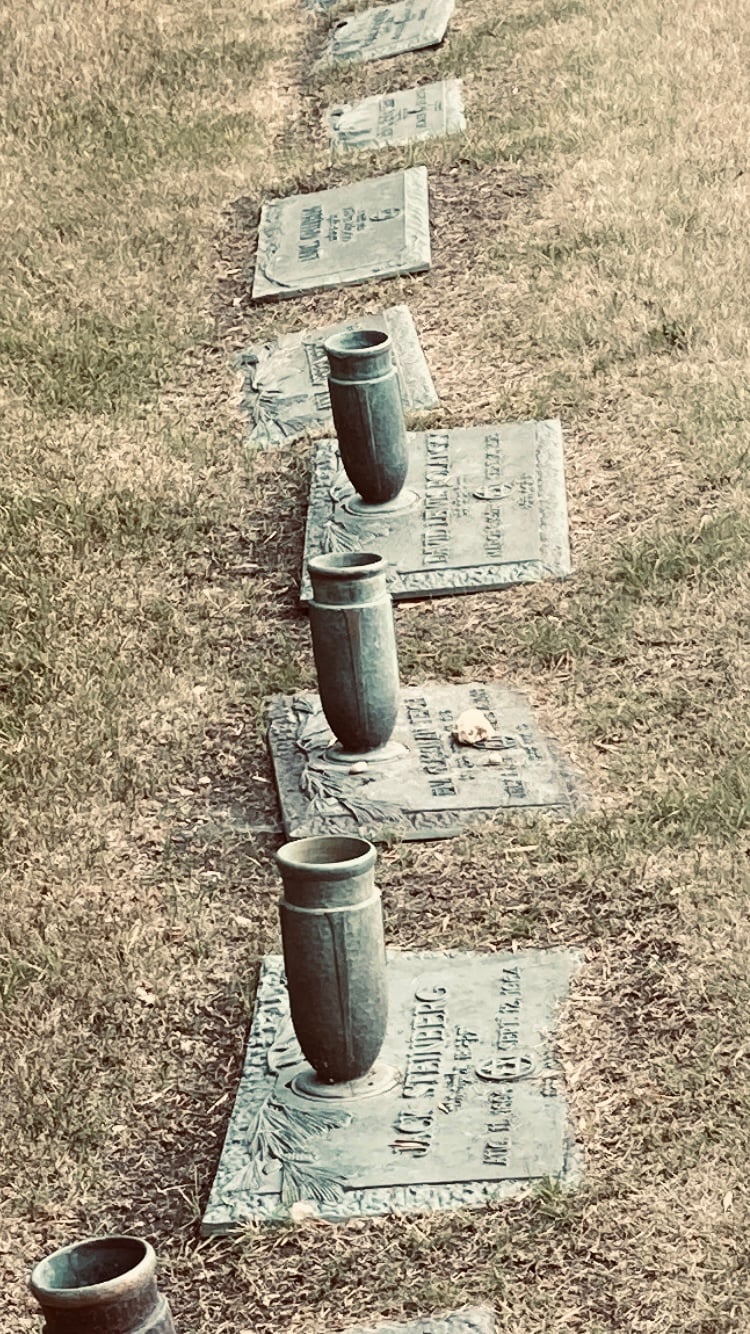
Proper burial is a key theme in the Abrahamic tradition, although archaeology has uncovered burial rituals dating back to the earliest hominids. In the war between Israel and Hamas, and in earlier regional conflicts, the struggle to recover dead bodies, whether whole or partial, continues. For the families still waiting for the return of the dead, without the bodies, the mourning ritual remains incomplete. For those who mourn the death of loved ones yet to be recovered, ambiguous loss is the grim and familiar relationship with unresolved and embittering grief.
Israel and Hamas struck a ceasefire deal that took effect on October 10, 2025. Hamas turned over all 20 living hostages who had remained in Gaza. In exchange, Israel returned over 2000 prisoners convicted of serious crimes and post-October 7th captured fighters. With the return of the living Hamas-held hostages to Israel, the war of body retrieval opened a new front. On October 7th, 2023, 251 hostages were taken into Gaza; the bodies of two remain.
When it comes to complex body recovery, Israel has confronted many difficult situations. On February 2nd, 2003, NASA bioethicist and Jewish scholar Dr. Paul Wolpe received an unusual phone call. Jewish religious law requires that the entire body be recovered for burial. Following the Columbia Space Shuttle disaster, search teams in East Texas recovered the remains of all seven astronauts, but mostly in fragments. NASA asked Wolpe how much of the body of Ilan Ramon needed to be collected to satisfy Jewish law, as only partial remains could be found.
According to Jewish religious law, the entire body must be recovered and buried. If other body parts are later found, they must be buried with the main body in the same grave. Jewish law is split on the question of the necessary quantity of body parts, where some scholars state that the head and most of the body are enough, while others say even a small portion is sufficient. Ramon’s remains were returned to Israel and buried by his family in a private funeral.
In the history of the Israel-Palestinian conflict, body exchange and body retrieval have become a seemingly permanent fixture. On July 16, 2008, Dr. Morris Tidball-Binz, head of the ICRC’s forensics department, was urgently summoned to the Israel-Lebanon border. At stake was the collapse of an agreement between Hezbollah and Israel. The two sides had agreed to an exchange of prisoners. Israel had brought alive captives Samir Kuntar, convicted of multiple murders in Israel, Hezbollah spy Nasim Nisr, and Hezbollah terrorist Mahir Kourani, Mohammad Surour, Hussaun Sulaiman, and Khadr Zaidan. The exchange also includes the remains of 199 Lebanese and Palestinians killed in recent conflicts.
In exchange, Hezbollah brought two body bags they claimed contained the bodies of Israeli soldiers Ehud Goldwasser and Eldad Regev. The two had been abducted 2 years earlier. Tidball-Binz was tasked with identifying the remains of the two corpses contained within the body bags. Working under the tremendous tension of the movement, Tidball-Binz relied on dental records supplied for the two Israeli men. Privacy and dignity were paramount. The remains had to be manipulated very carefully to avoid any tissue disruption. When Tidball-Binz completed the task, he was indeed able to positively identify the two men. Years later, Rabbi Yoav Akunin, head of identification and burial for the IDF Rabbinate, would personally thank Tidball-Binz for the respectful manner in which the identification had occurred.
After the recent October 10th deal, Israeli forensic experts determined some returned bodies did not belong to any of the missing hostages. In another episode, Hamas handed over additional remains of Ofir Tzarafati, whose body had already been recovered by Israeli forces. This was the third time the family had mourned Ofir. Once when he was confirmed dead, a second time when his remains were recovered and buried, and this third time to add the newly acquired remains to the original grave.
After October 7, 2023, forensic experts were able to positively identify 100% of the 1200 victims. In an extraordinary case, one young woman was unaccounted for. Her necklace was found at a funeral home charged with handling the bodies. After additional investigation, it was determined that owing to fire, her body had mingled with another person. This was initially not recognized, and the two bodies were buried, assuming it was only the other person. When the mistake was determined, the bodies were exhumed, and a CT scan showed the two fused skeletal remains.
Sometimes only body parts were found, and those of different individuals were erroneously combined in the same body bag. In other cases, the body parts of a single individual were initially included in several body bags. Since October 7th, some bodies have been obtained by Israeli forces as part of a mission, and other bodies have been returned as part of a negotiation. Forensic evaluation can be applied to bodies that are long dead and poorly preserved. Dental records, DNA analysis, and forensic radiology assist in body identification. Hamas does not seem to have used a consistent method of body preservation. Some bodies were returned in plastic burial bags, others had been buried in the ground with their clothes, and some had been wrapped in various materials. All the returned bodies were severely decomposed or skeletonized, confirming they had not recently died.
The emotional toll on the families of the living and the families of the dead – and the Israeli society at large – has been enormous. The Hostages and Missing Families Forum is a civil volunteer organization created after October 7th, 2023. The purpose is to bring all hostages home, both living and dead. How we care for the dead may be more a measure of the state of civil society than how we care for the living. It is an act of true loving-kindness – it is a debt that can never be repaid.