
A Midwestern Jewish Politico
Recognition of Palestine Is Overdue—and Trump’s UN Speech Misses the Point
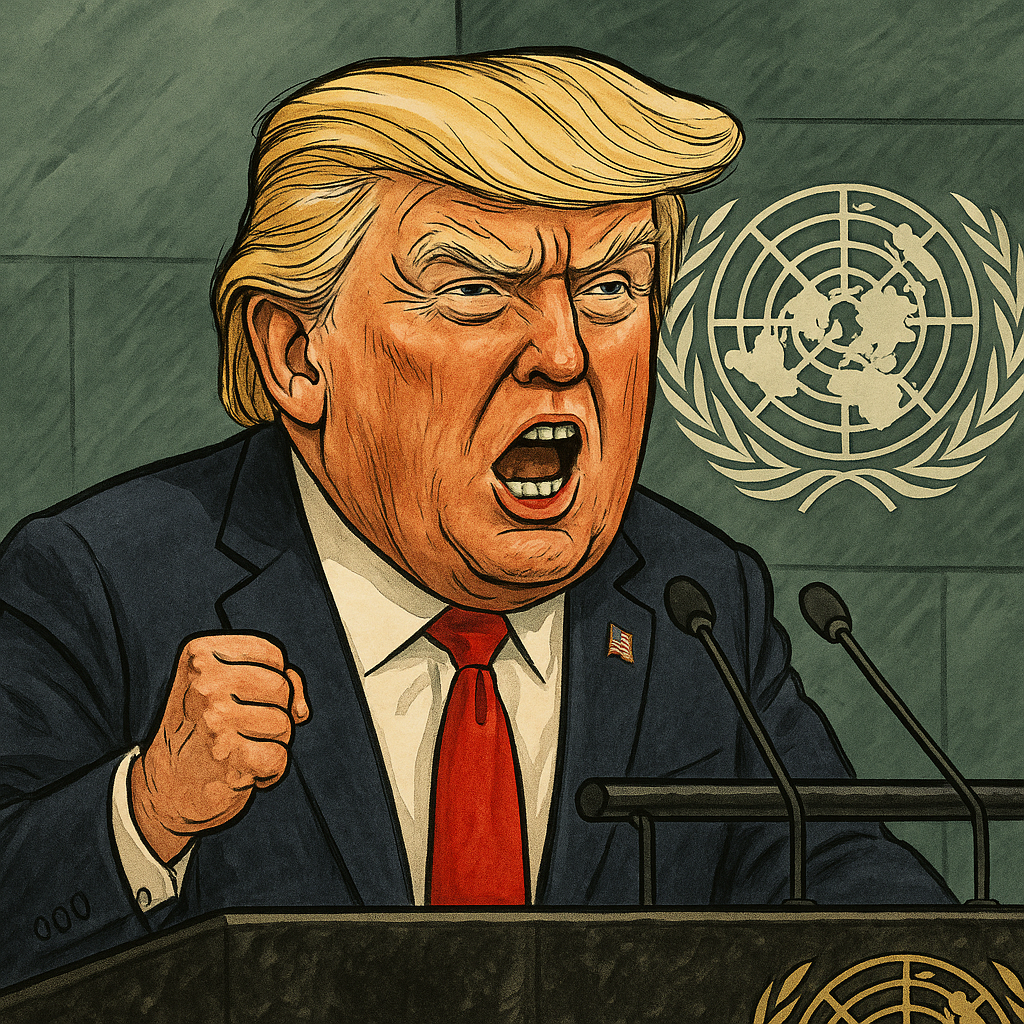
AI Generated image of Trump speaking at the UN. ChatGPT 5
Today, at the United Nations General Assembly, President Donald Trump doubled down on opposition to recognition of a Palestinian state, saying that doing so now would be “too great a reward for Hamas terrorists, for their atrocities.”
He went on:
“As if to encourage continued conflict, some of this body is seeking to unilaterally recognize the Palestinian state. The rewards would be too great for Hamas terrorists, for their atrocities.
He insisted this recognition would reward “horrible atrocities, including Oct. 7,” even though “they refuse to release the hostages or accept the ceasefire.” He also urged that “instead of giving in to Hamas’ ransom demands, those who want peace should be united with one message – release the hostages now, just release the hostages.”
Why These Claims Don’t Undercut the Case for Recognition
Even with those quotes, recognizing Palestine is not—in any honest reading—a reward for Hamas. It is a recognition of rights long promised under international agreements, especially the Oslo Accords. Here’s how the actual history and the moral case counter Trump’s framing:
What Oslo Actually Promised
- Mutual recognition and gradual institution-building: When the Oslo Accords (1993–1995) were signed, the PLO recognized Israel’s right to exist, renounced terrorism, and committed to negotiating. In return, Israel recognized the PLO and agreed to steps toward Palestinian self-rule. The idea was not immediate, perfect statehood, but a progressive path toward it.
- Two-state solution as foundational: Oslo laid down the two-state solution as the goal—coexisting Israeli and Palestinian states—based on agreed borders, negotiation, and mutual recognition. Statehood was part of that bargain. Delaying recognition indefinitely undermines Oslo’s commitments.
How Trump’s Quotes Relate—and What They Leave Out
Take Trump’s line:
“The rewards would be too great for Hamas terrorists, for their atrocities.
He treats state recognition as a consequence of Hamas’s actions, as though Palestinian nationhood can be held hostage to every militant act. But Oslo didn’t say statehood would happen only if there was never violence, only if all hostages are released first, or if a perfect ceasefire came first. What Oslo required instead was political will, negotiation, and recognition of rights by both sides. Holding back recognition until perfect conditions exist has meant decades of delay, suffering, and stalemate.
Similarly, Trump’s demand that those who want peace “should be united with one message – release the hostages now, just release the hostages.” That is a legitimate humanitarian demand—and peace indeed requires it. But using that demand as a reason to withhold recognition indefinitely means peace is perpetually postponed, with the burden falling on the occupied and stateless rather than on the powerful or the perpetrators of conflict.
What Recognition Actually Does—and Doesn’t
- Recognition is not endorsement of all actors: Many countries do recognize Palestine while also labeling Hamas as a terrorist group. Recognition of the Palestinian people’s rights does not mean support for every tactic used by every group.
- Recognition is not a reward: It is not given by some to others for good behavior alone; it is a formal acknowledgment of legitimacy, dignity, and rights that have been deferred for too long.
- No peace has been made better by perpetual delay: Prolonging statelessness contributes to desperation, radicalization, injustice. Recognition can provide a horizon—a shared frame for negotiations, for accountability, for humanitarian law, and for respect of human rights.
What a Humane Perspective Should Embrace
Given the history, morality, and Trump’s own words, a compassionate, just approach would:
- Recognize that the Oslo Accords already committed many parties—including Israel and the United States—to the idea of a Palestinian state.
- Distinguish between condemning Hamas’s violence and affirming the rights of a whole population.
- Demand the release of hostages, a ceasefire, and protection of civilians—but not use these demands to indefinitely stall recognition.
- Acknowledge that recognition is not the end of struggle, but a critical step toward peace and justice.
The False Premise
Trump’s speech today said:
“Recognition of a Palestinian state would be too great a reward for Hamas.”
“Some of this body is seeking to unilaterally recognize the Palestinian state … this would be a reward for these horrible atrocities, including Oct. 7.
These lines are powerful rhetorically, but they rest on the false premise that recognition is something extra to be given for perfect grievances rather than something owed by virtue of long-established rights and past commitments. To any humane observer: recognition of Palestine is not a prize for Hamas. It is a long-overdue fulfillment of the Oslo framework, a matter of justice, and an urgent step toward peace.
Related Topics
Related Posts