Reconnecting – Parashat Va-yishlah 5786
So, as many of you know, Sharon and I are getting ready to celebrate, with God’s help, an incredible moment in our family’s life – our daughter’s wedding.
We feel deeply blessed.
Another blessing is that we’re not just gaining a son-in-law, we’re gaining a whole new family.
To start that process, our son-in-law-to-be’s family invited us to Los Angeles over Thanksgiving for an engagement party.
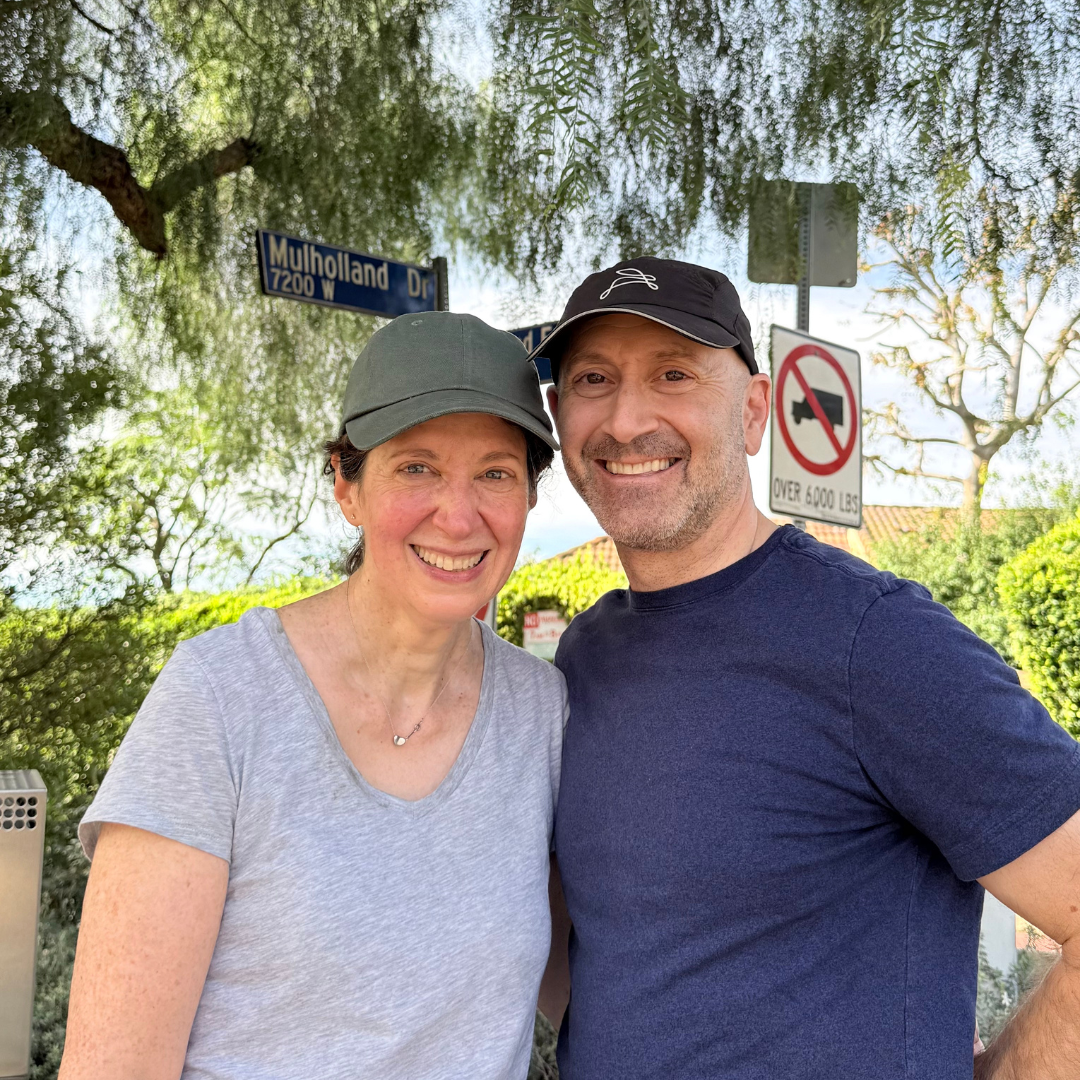
It was the kind of trip I love: we landed and started eating – Thanksgiving dinner, the engagement party, and then, on Shabbat, their shul, where they sponsored a meat kiddush which, for someone who can’t eat dairy, is pretty much the Garden of Eden on a plate. 😉
And of course, the minute we stepped into shul, Jewish geography kicked in. I met someone I know from New York, and then our son Ari ran into an old camper of his from Camp Ramah in the Rockies.
After more food at Shabbat lunch, we walked to a local park for a family game of tennis-baseball – a beloved sport in both of our families.
We had a great time, especially trying to teach their three-year-old niece that after you hit the ball, you run to first base, not straight at the pitcher.
She was very brave… just not so big on rules.
On the way back to our hotel, we suddenly heard a voice behind us calling, “Ari! Ari!”
I ignored it at first – there are lots of Aris in LA.

But this boy, maybe 13, kept calling, and finally ran up to us: “Is your son Ari? I think he was my counselor at Ramah in the Rockies.”
Our Ari was ahead of us, so we called him back, and sure enough, the two of them reunited and started sharing bunk stories. Two Ramah Rockies connections in one Shabbat.
The boy’s grandparents walked over and told us they were in LA visiting for Thanksgiving and playing soccer with their grandsons. They were delighted by the Ramah connection – “What a small Jewish world!” they exclaimed.
I replied, “Yes, it is a small Jewish world… but it’s even smaller since you are both my congregants from 25 years ago!”
They looked again, and then the Shapiros recognized Sharon and me.
They were from my first shul in Highland Park, outside Chicago. I had taught all their kids. Now here we were, in a random park in Los Angeles, watching their grandson and my son reconnect.
There is nothing like reconnecting with someone after many years.
*****
This morning’s Torah reading, Parashat Va-yishlah, as Lucy beautifully introduced it, is a parashah of reconnection.
Yaakov and Esav have been apart for about twenty years, after Jacob took Esav’s birthright and blessing and fled for his life.
In the meantime, each has built a family and a fortune.
Now it is time for Jacob to go home.
The Torah paints the scene: Jacob lines up his family, and then he himself goes out ahead of them:
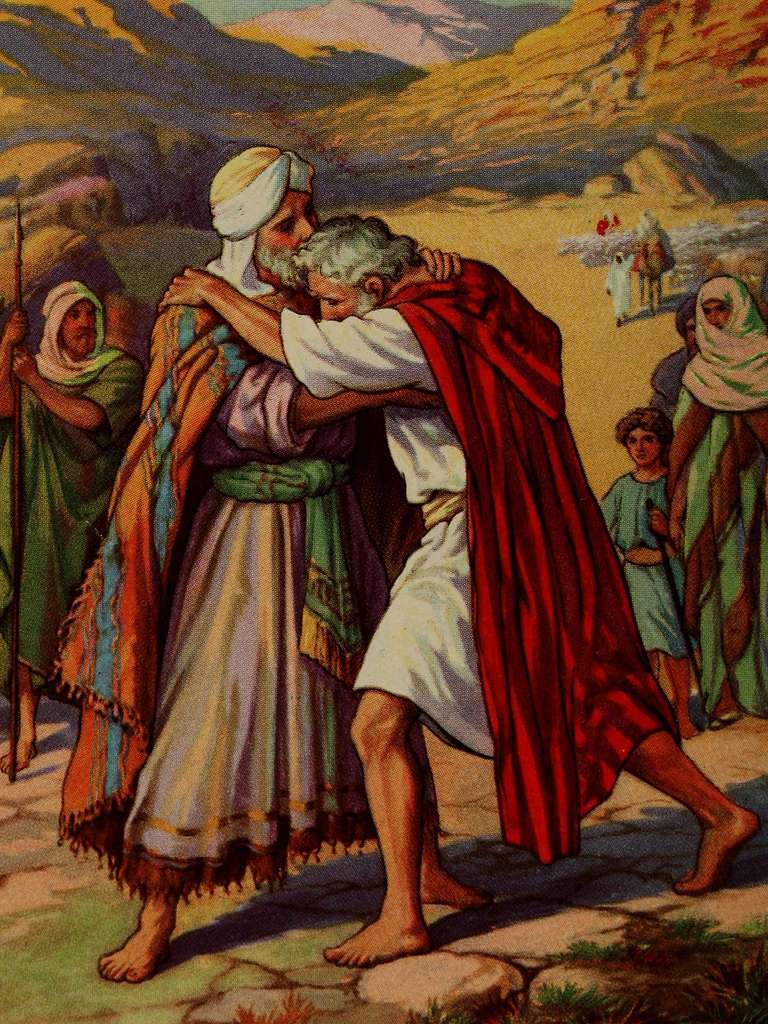
“He himself went on ahead and bowed down to the ground seven times as he approached his brother. But Esav ran to meet him, embraced him, fell on his neck, and kissed him, and they wept.”
The older brother, who once vowed to murder him, runs toward him. He embraces him. He kisses him. And then these two grown men cry together.
That image – two brothers who have every reason to stay enemies, instead weeping in each other’s arms – is one of the most moving scenes in the Torah.
The Hebrew Bible is not embarrassed by men crying; it uses tears to mark some of the holiest moments of reconciliation and love.
What feels especially striking here is that the tears come at the moment of reconciliation, when the relationship is still alive and can be rebuilt.
The Torah dares to show us that real strength includes vulnerability, that sometimes the holiest thing two people can do is fall on each other’s necks and cry.
*****
The rabbis, of course, notice every detail.
There’s a famous midrash on the word “vayishakeihu” – “and he kissed him.”
In the Torah scroll, that word has dots over each letter, and the sages debate what it means.
One opinion says Esav didn’t kiss Jacob wholeheartedly.

But Rabbi Shimon ben Elazar says the opposite: it is well-known that Esav hated Jacob, but in that moment his compassion was stirred, and he kissed him with all his heart.
I love that reading.
It doesn’t romanticize their history.
It acknowledges the hatred, the pain, the decades of distance.
And precisely there it insists: people can change, even for a moment.
Old scripts can be interrupted.
Hearts can soften.
Then, just a few verses later, Jacob says to Esav one of the most remarkable lines in the Torah:
“Please accept my gift from my hand… for to see your face is like seeing the face of God, now that you have received me favorably.”
“Ra’iti fanekha kir’ot pnei Elohim – To see your face is like seeing the face of God.” (Genesis 33:10)
Later teachers take that verse and universalize it.
Every human face carries a spark of the Divine image. To truly look at another person – especially someone with whom we’ve had tension, or distance, or estrangement – can be an encounter with the Divine Presence.
Centuries later, a French writer, Victor Hugo – the 19th-century novelist who wrote Les Misérables – would echo this Torah idea in a single line:
“To love another person is to see the face of God.”
Maybe he didn’t realize it, but he was summarizing Parashat Va-yishlah.
And our tradition doesn’t just offer poetry about this; it actually enshrines the power of reconnecting in halakhah, in Jewish law.
The Talmud in Masekhet Berakhot teaches:
“Rabbi Yehoshua ben Levi said: One who sees his friend after thirty days recites: ‘Sheheheyanu…’ One who sees his friend after twelve months recites: ‘Barukh… Mehayeh ha-meitim – Blessed is the One who revives the dead.’”

Seeing a beloved friend after a year apart is like resurrection.
To lay eyes on each other again is to realize: you have come through another year of life, and so have I, and now we get to be together.
On a deeper level, the rabbis are saying: a relationship that has been frozen for a long time is, in a sense, “dead.”
When we reconnect, when we pick up the phone, when we look into each other’s faces again, we participate in a small act of tehiyat ha-meitim – of bringing something back to life.
And notice – the blessing is triggered not by scrolling past someone’s name on social media, but by actually seeing them.
By presence.
By faces.
*****
And yet… we know how hard it is to maintain relationships in our busy lives.
We move.
We change jobs.
Kids grow up, parents age.
We say, “We should really get together,” and then months – sometimes years – pass.
Sometimes there’s also hurt: a misunderstanding, a sharp word, a feeling of being judged or forgotten.
And so, like Jacob and Esav, we go our separate ways.
It can feel safer not to pick up the phone. Not to risk the awkwardness.
Not to open up the old file labeled “Complicated Relationship with _________.”
But our parashah and our tradition gently push us the other way.
They tell us: you do not need to be stuck in the past.
Old stories and hurts are powerful, but they are not destiny.
Even Esav, the archetypal angry brother, can run to embrace.
Even Jacob, the archetypal trickster, can bow seven times and say, “Seeing your face is like seeing the face of God.”
So, we can learn something from this.
It doesn’t require a grand, dramatic gesture.
Think of one person – just one – with whom you’ve lost touch.
Someone you miss, or at least someone who mattered to you along the way.

This week, send a text, write an email, make a call.
No speech, no big explanation. Just, “You popped into my mind. How are you?”
It may not lead to an Esav-and-Jacob-style embrace, but it might bring a bit of new life where things had gone quiet. It might let you say, in your own way: “Seeing your face again – or hearing your voice – is like seeing a little glimpse of God.”
With the changes in my family this year, I am so aware that life is about these connections – old ones rekindled, new ones formed.
Parashat Va-yishlah invites us not to take any of that for granted.
It shows us two brothers who could have stayed enemies, choosing instead – at least in that moment – to embrace and weep. It teaches us that to love another person, to truly see their face, is to see the face of God, and that reconnecting can feel like a small taste of resurrection.
So next time you find yourself in a park, playing tennis-baseball, take a moment. Look around. You never know which old friend – or which piece of your own past – might be waiting, just a few feet away, ready to say, “Ari! Ari!”