
Red Sea Realignments: How Somaliland Became Geopolitically Important
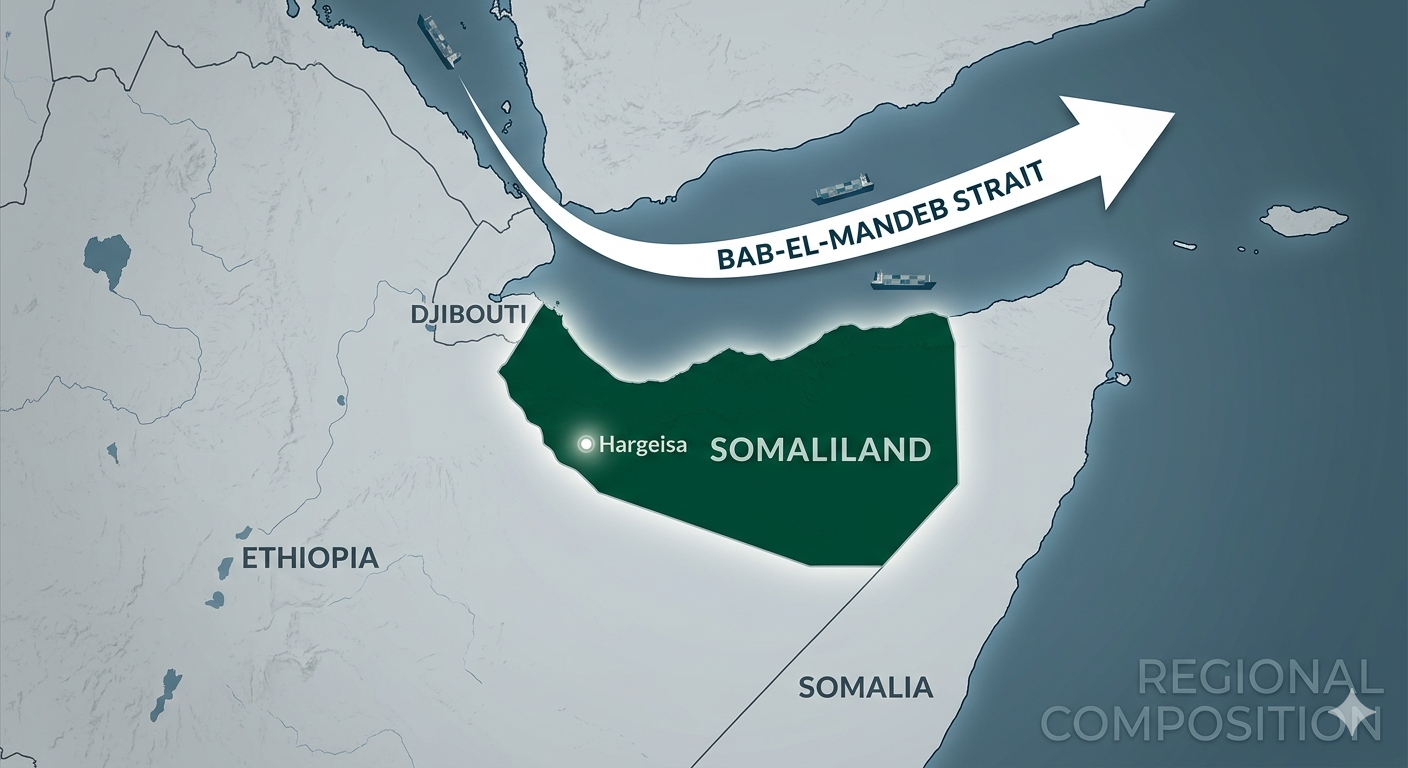
For decades, the Red Sea was viewed primarily as a commercial maritime corridor connecting Europe, the Middle East, Africa, and Asia. Today, however, it has evolved into one of the world’s most contested geopolitical spaces. Rising regional tensions, maritime insecurity, proxy conflicts, and the growing rivalry among global and regional powers have transformed the Red Sea into a strategic arena where influence, security, and economic interests increasingly intersect.
Within this changing environment, Somaliland has gradually emerged as a geopolitically important actor.
Although still seeking wider international recognition, Somaliland’s strategic location along the Gulf of Aden has elevated its significance far beyond the Horn of Africa. What was once considered a relatively peripheral territory is now attracting growing attention from regional powers, security analysts, and international investors.
At the center of this transformation lies geography.
Positioned near one of the busiest maritime trade routes in the world, Somaliland overlooks a corridor through which a substantial percentage of global trade and energy shipments pass. Any instability affecting this route whether piracy, regional warfare, or attacks on commercial shipping immediately draws international concern. As a result, states seeking influence over Red Sea security increasingly recognize the strategic value of coastal territories like Somaliland.
The development of the Port of Berbera has further accelerated this geopolitical shift. Backed heavily by the DP World and supported by the United Arab Emirates, Berbera is no longer viewed merely as a local commercial port. It is increasingly seen as part of a broader regional logistics and security network linking the Gulf, East Africa, and international maritime trade routes.
For the UAE, Somaliland represents both an economic and strategic opportunity. Abu Dhabi has spent years expanding its influence across the Red Sea corridor through ports, infrastructure projects, and security partnerships. In this broader strategy, Berbera offers the UAE access to a critical maritime location close to Yemen, the Bab el-Mandeb Strait, and the wider Indian Ocean trade system.
At the same time, growing regional instability particularly the conflict involving the Houthis in Yemen has elevated the importance of intelligence cooperation and maritime monitoring across the Gulf of Aden. Security analysts increasingly argue that small but strategically positioned territories can play outsized roles in regional security calculations.
It is within this context that discussions surrounding possible cooperation between Somaliland, the UAE, and Israel have gained international attention.
While no formal trilateral alliance has been officially declared, analysts such as Andreas Krieg suggest that overlapping strategic interests are gradually creating a new form of regional alignment. These interests include:
- protecting maritime trade routes,
- countering regional militant threats,
- limiting Iranian influence,
- and strengthening intelligence coordination across the Red Sea region.
For Israel, the Red Sea has become increasingly important due to maritime security concerns and the vulnerability of shipping routes connected to Eilat and broader regional commerce. Somaliland’s location therefore offers potential strategic value in monitoring developments across the Gulf of Aden and the southern Red Sea.
Yet Somaliland’s geopolitical rise is not solely about foreign powers.
Internally, Somaliland has attempted to present itself as relatively stable compared to many conflict-affected areas in the region. Its efforts to maintain security, conduct elections, and build functioning institutions have contributed to the growing perception that it can serve as a reliable regional partner. Whether one agrees politically with Somaliland’s quest for recognition or not, its practical importance in regional geopolitics is becoming increasingly difficult to ignore.
Nevertheless, this growing attention also carries risks.
As competition intensifies across the Red Sea, Somaliland may find itself navigating complex geopolitical rivalries involving Somalia, Gulf states, Turkey, Iran, Western powers, and emerging international actors. Strategic partnerships can create opportunities for investment and security cooperation, but they can also expose smaller actors to external pressures and regional tensions.
The future of the Red Sea will likely be shaped not only by major global powers, but also by smaller strategic territories capable of influencing trade routes, security dynamics, and diplomatic alignments.
In that evolving landscape, Somaliland is no longer simply a local political question in the Horn of Africa. It is increasingly becoming part of a much larger geopolitical conversation one centered on maritime security, regional competition, and the future balance of power in the Red Sea corridor.