
Published author, Jewish educator and scholar
Re’eh: The Danger of Becoming Separate Tribes
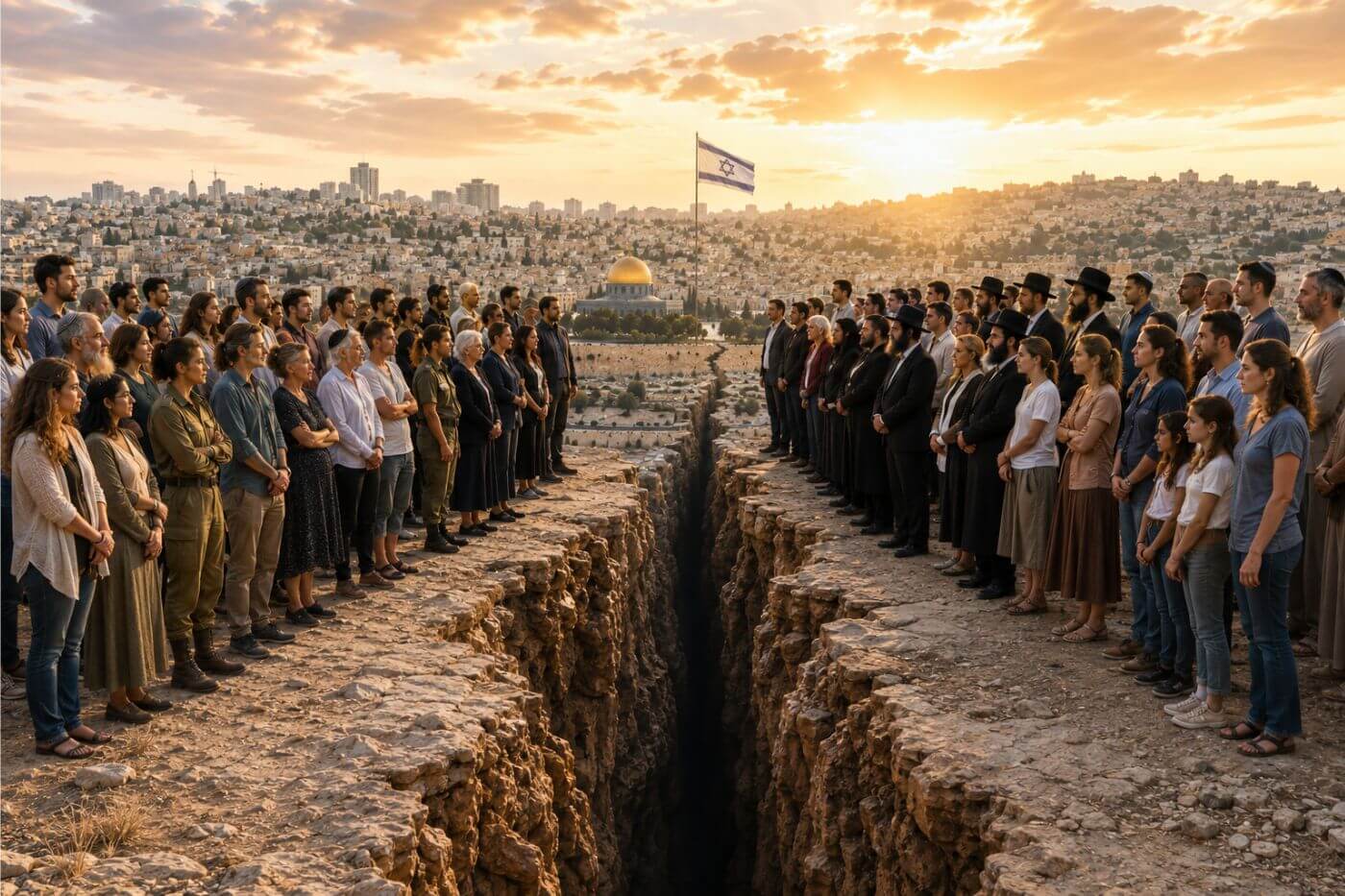
ChatGPT
This week’s parasha contains a prohibition whose significance, according to the Sages, reaches far beyond its original context:
בָּנִים אַתֶּם לַה׳ אֱלֹהֵיכֶם, לֹא תִתְגֹּדְדוּ””, “You are children of the Lord your God; (lo titgodedu) you shall not cut yourselves” (Deuteronomy 14:1).
According to the straightforward meaning of the verse, the Torah forbids cutting or lacerating the body as an expression of mourning. Such practices were common in the ancient world, but the Torah insists that even in moments of grief, human beings must not surrender to despair or mutilate the body that God has given them.
The Sages, however, hear an additional meaning in the words ״לֹא תִתְגּוֹדְדוּ״ — לֹא תֵּעָשׂוּ אֲגוּדּוֹת אֲגוּדּוֹת, “Do not divide yourselves into separate factions” (Yevamot 13b-14a).
The Talmud does not understand this to mean that every Jew must think or behave identically. It discusses communities that follow different halakhic practices and distinguishes legitimate diversity from division that tears apart a single communal framework. Indeed, the Talmud preserves profound disagreements between Beit Hillel and Beit Shammai. Yet despite those disputes, the two schools continued to marry into one another. They disagreed about the Torah without ceasing to regard one another as part of the same people.
Thus, לא תתגודדו does not prohibit disagreement. It does not demand intellectual conformity, political silence or obedience to those in power. Protest and criticism may sometimes be essential expressions of moral responsibility.
The prohibition is against allowing disagreement to become tribal separation.
It warns us against creating rival camps, each with its own exclusive truth, its own institutions, its own definition of patriotism and its own claim to represent the authentic Jewish people. It warns us of the moment when political opponents cease to be fellow citizens with whom we disagree and become enemies whose legitimacy we deny.
This warning speaks with painful urgency to Israel today.
Israeli society is divided over questions of enormous consequence: responsibility for the failures of October 7, the conduct of the war, the establishment and composition of a national commission of inquiry, the authority of the Supreme Court, the independence of the attorney general, the role of the media and, above all, the unequal burden of military and national service.
These disagreements are real and serious. They cannot simply be concealed beneath empty appeals for unity. Unity does not require suppressing moral argument or pretending that injustice does not exist.
But the danger facing Israel is no longer merely that Israelis disagree. Increasingly, different sectors of society appear to be living according to different understandings of obligation, authority, citizenship and responsibility.
A democracy can survive bitter arguments over the proper limits of judicial power. It cannot easily survive when the government and the courts no longer recognize a common framework of authority. A society can survive deep political rivalry. It cannot survive when loyalty to a party, coalition or political leader is presented as identical with loyalty to the State of Israel itself.
At that point, we are no longer merely debating the direction of one state. We are beginning to construct separate Israels.
That is precisely the danger of אגודות אגודות.
The opening words of the verse are therefore essential:
בָּנִים אַתֶּם לַה׳ אֱלֹהֵיכֶם — לֹא תִתְגֹּדְדוּ
“You are children of the Lord your God—therefore, do not divide yourselves into factions.”
Why must we not tear ourselves apart? Because, as children of the one God, we are siblings.
Siblings may disagree bitterly. They may possess radically different values, personalities and visions of the future. But they cannot erase their shared parentage. Before we are right or left, coalition or opposition, religious, secular or Haredi, we are members of one people, sharing one country and one national fate.
The verse may therefore be understood on several levels: Do not cut the body. Do not cut the community. And do not cut fellow Jews out of your circle of moral concern.
This responsibility falls especially heavily upon leaders. Political leaders often benefit from division. Fear, resentment and anger mobilize supporters more effectively than restraint, complexity and moderation. A leader may strengthen his camp by convincing its members that the opposing camp is dangerous, illegitimate or traitorous.
But a Jewish leader must ask more than, “How can I defeat my opponents?” A Jewish leader must ask, “What will remain of the people after I win?”
A political victory that leaves the nation fractured is not a victory. A coalition that survives while the covenant holding the people together collapses has not saved the country. It has preserved power at the expense of the people.
Israel does not need everyone to think alike. It needs us to remember that disagreement must take place within a larger covenant of shared responsibility. We may fight passionately over Israel’s future, but we must not destroy the bonds that make a shared future possible.
That is the challenge of לא תתגודדו: not to eliminate disagreement, but to prevent disagreement from becoming disintegration; not to erase our differences, but to ensure that those differences do not erase our shared peoplehood.
As the verse says, we are all the children of God.
Shabbat Shalom.
For more insights on the parasha and current events in Israel, visit:
https://davidharbater.com/parasha-current-events/
Related Topics
Related Posts