Reflections Following the Ceasefire with Iran As Seen By Ethiopian Jewry
With the announcement of a ceasefire with Iran, many commentators—especially public figures who see themselves as potential alternatives to the current government—rushed to offer sharp criticism of the move and of the government’s conduct. They argue that the war’s objectives were clear: to significantly damage Iran’s nuclear program, dismantle its infrastructure, and remove substantial quantities of uranium from its territory. In their view, these goals were not achieved.
Public disappointment is understandable. For months, there were promises of “total victory” and decisive outcomes across multiple fronts—against Hamas, Hezbollah, and Iran. Yet reality is more complex: the threats have not disappeared, and the gap between declarations and results has widened. At the same time, critics often present an overly simplified picture, as if they possess a complete solution. They suggest that, had they been in charge, the outcome would have been entirely different—sometimes even implying perfect solutions.
So, whom should we believe?
I would like to suggest an answer drawn from the theological and existential worldview of Ethiopian Judaism. This tradition—like the biblical worldview more broadly—does not see reality as linear, orderly, or fully controllable. Rather, it embraces complexity, even a kind of constructive “chaos.” The Bible itself presents a world filled with surprises, crises, and unexpected turns—one that resists human attempts to simplify or fully grasp it. Powerful forces—such as the competing interests of nations—often move in ways that defy logic. This leads to a deeper question: what do we actually see?
In truth, we perceive only a small part of reality. Much of what we “see” is filled in by our own consciousness—shaped by memory, habit, belief, and fear. The more deeply ingrained these patterns are, the more we project our inner world onto external events. In this sense, we often see less of the world itself and more of our own reflection within it.
This has direct implications for public discourse. Commentators and public figures frequently present their views as complete and authoritative, when in fact all of us grasp only fragments of a larger whole. Those who speak with absolute certainty may not recognize how partial their perspective really is.
Here, Ethiopian Jewish thought offers a different approach. Instead of trying to fully control or explain reality, it invites us to accept its complexity—and then turn toward the possibilities that lie ahead. The central question shifts from “Why did this happen?” to “What can we do now?”
This is not a call to passivity. On the contrary, it enables movement. It frees us from the burden of explaining everything and redirects our energy toward building, hoping, and renewing. It allows us to live within complexity without being broken by it.
We see this in earlier generations of Ethiopian Jews, many of whom endured profound loss, hardship, and upheaval, yet carried with them deep faith, hope, and even joy. This was not denial of suffering, but the ability to contain it without losing sight of the future.
Still, the human ego resists such humility. It struggles to acknowledge the limits of knowledge. As Socrates famously said, “The only thing I know is that I know nothing.” At the very least, we must be able to admit that we do not know everything.
Some of today’s harshest critics have themselves held positions of leadership. They, too, faced complex dilemmas. As Ariel Sharon once remarked, “What you see from there is not what you see from here.” This does not excuse criticism—but it does call for humility.
For more than a century, we have lived in a reality marked by conflict—wars, pain, and bloodshed. We have tried military force, diplomatic efforts, and economic solutions. Again and again, it becomes clear that there is no single, simple answer that can decisively resolve the situation.
Yet alongside this, a dangerous language has taken hold—one that sharply divides between those who “know” and those who “are mistaken,” between the “sighted” and the “blind,” between “truth-tellers” and “deceivers.” This language is not only lacking in humility; it distances us from truth itself.
The reality is more complex. Our enemies do not distinguish between political camps. They target everyone—Jews and non-Jews alike—and sometimes even their own people. We are not facing a typical political adversary, but an extreme ideology of destruction. This demands a critical distinction: between those who seek life and those who glorify death; between those willing to coexist and those intent on annihilation.
At the same time, we must avoid sweeping generalizations. Within our own society, there are groups that genuinely seek to belong, integrate, and build together. Toward them, we must adopt the principle (Psalms 34:15) of “do good” (a biblical ethic of proactive kindness and moral responsibility): recognition, inclusion, compassion, and openness.
Conversely, toward violent and destructive elements, we must apply “turn away from evil”—a call for zero tolerance toward those who seek to harm democratic society or exploit its values to undermine it from within. Balancing compassion and boundaries is a profound moral challenge.
Amid all this stand our soldiers and pilots, who fight with a deep sense of mission. For them, this is not merely a role but a calling. They act with focus, determination, and a heavy sense of responsibility. This sense of purpose is a source of strength—not only military, but moral.
The ceasefire with Iran leaves us with an open wound—one that remains raw. The question is what we choose to place within it: darkness or light.
Precisely for this reason, we as a society are called to humility—not to be swept up in slogans, not to make empty promises, but to speak truth even when it is complex. A nuanced perspective is not weakness; it is maturity. It allows us to recognize both achievements and shortcomings, both successes and unanswered questions.
Humility is not a call to passivity or paralysis. It is an invitation to integrate two deep modes of consciousness within Israeli society: redemption consciousness and destruction consciousness. The former reflects a belief that we are living in a time of progress, light, and the possibility of repair—but it can sometimes ignore pain and complexity. The latter reflects a sense of fracture, critique, and fear of decline—but it can lead to despair.
The challenge is to bring them together.
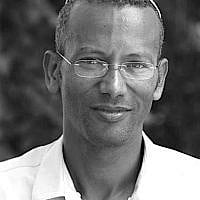
The perspective I inherited from the Jewish village in Ethiopia where I grew up teaches that there is no contradiction between them. One can fully acknowledge hardship and still hold onto hope. Redemption consciousness is not a denial of reality; it is a deeper way of seeing it—through the lens of faith in repair and renewal.
It does not wait for a miracle from the outside, but calls for personal responsibility. It sees every crisis as an opportunity for rebuilding. It reduces fear and tempers the urge for revenge. It reminds us that even a difficult and incomprehensible reality is not the end of the road, but a stage within a larger process.
And this may be the answer to the question with which we began: the issue is not who is entirely right, but who is capable of holding complexity, speaking truth with humility, and acting with responsibility and hope. That is where truth resides.