Reham Barkachizadeh, Meillassoux and the Crisis of Modernity XIII
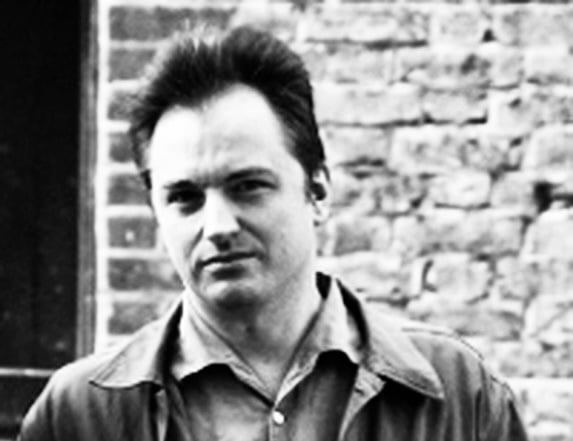
Reham Barkachizadeh translated Quentin Meillassoux’s After Finitude into Persian as Farākarāngī: jostārī darbāre-ye zarūrat-e emkān (فراکرانگی: جستاری درباره ضرورت امکان), published by Nashr-e Sales; also a Sartre play, listed by Sales as Mahbas, and Introducing Lacan. As an editor he has worked on volumes by Alain Touraine, Peter Berger and Thomas Luckmann, Anne Applebaum, and Arlene Saxonhouse.
Meillassoux, a student of Alain Badiou (who wrote the preface), published After Finitude in 2006. He diagnoses most post-Kantian philosophy as correlationist: we never access being alone, only the correlation between thinking and being. The test case is the arche-fossil, a trace of a time before life, such as the Earth’s formation 4.56 billion years ago. The correlationist can only say such a claim is true “for us,” which Meillassoux finds absurd.
His way out turns the correlationist’s own weapon, facticity, into an absolute: things could always have been otherwise, with no reason why. The only necessity is that of contingency, the principle of unreason, whose consequence is hyper-chaos (ابرآشوب, Abar-āshūb): a time capable of destroying every law and every thing without cause. In L’inexistence divine, he goes further, arguing that God does not yet exist and that a just God might emerge from the chaos.
The title already shows the translator’s hand. Farākarāngī suggests “beyond limitedness” (farā- “beyond,” karāne “limit”), a Persian coinage that leaves behind the familiar vocabulary of finitude.
Correlationism becomes hambasteh-engārī (همبستهانگاری), the doctrine of the “bound-together.” The arche-fossil is bon-fosīl (بُنفسیل), the “root-fossil.” The Great Outdoors is bīrūnīyat-e barīn (بیرونیتِ بَرین), and the world in itself is jahān-e dar-khod. Facticity is pīshāmadgī (پیشامدگی), what simply befalls. An IBNA review also mentions an asl-e pīshāyandegī, which I read as the rendering of factiality, though I could not confirm it. For ancestrality and hyper-chaos I found no Persian equivalents, and I would not invent them.
Two of Barkachizadeh’s own pieces on the book, “Awakening from the Sleep of Correlationism” and “The Glorious Return of Thinking to the Realm of the Great Outdoors,” frame it as a wake-up call to a sleeping philosophy. The first echoes Kant’s remark about being woken from dogmatic slumber, casting correlationism itself as the dogmatism.
Kant, Husserl, Heidegger and Derrida: the limits of correlation
This is where Meillassoux touches the concerns of this series. His target is a broad inheritance of post-Kantian thought: Kant restricts knowledge to phenomena, and later philosophies, in different ways, keep limiting what can be said about reality independently of the conditions under which it is experienced, thought or articulated.
Husserl’s phenomenology belongs to this inheritance. It investigates how objects are given to intentional consciousness, but for Meillassoux this leaves the object independent of its manifestation unresolved.
Heidegger is a harder case. Meillassoux treats him as a strong correlationist, though not because Heidegger simply centres the human. Dasein is always already being-in-the-world (In-der-Welt-sein), which moves beyond the subject-object opposition. But for Meillassoux this transforms the correlation rather than breaking it: being is disclosed through Dasein’s openness, and being independent of every such relation remains unthinkable. The test is the ancestral world, the Earth before life and consciousness. If being is always understood through its disclosure to Dasein, how can philosophy take seriously the scientific claim that the world existed billions of years before any Dasein? Heidegger’s finite horizon cannot be the ultimate horizon of reality.
Derrida enters by another route: language, trace, difference and the instability of presence. It would be misleading to call him a linguistic idealist. The question is whether a fully self-present reality can be established outside the structures of difference and mediation. Wittgenstein is grouped in for yet another reason: the conditions of meaningful language delimit what can be stated. Foucault needs a further distinction, since a genealogy of the historical conditions of knowledge is not the same argument as a thesis that being cannot be thought independently of thought, and it is not the central target of After Finitude. These positions are not identical. Meillassoux groups them because each leaves the absolute outside the reach of thought, the Kantian restriction he attacks directly.
In Iran the point is sharp. As earlier articles here have shown, the Heideggerian framework dominates Persian reception: Reza Davari Ardakani built a critique of the West on it, and Siavash Jamadi translated Being and Time. A Persian Meillassoux brings the strongest available objection into a house with one long-standing orientation.
The recent IBNA interview with Barkachizadeh, by Reza Dastjerdi, shows he sees this clearly. The interviewer’s introduction notes that Meillassoux puts phenomenology, Heidegger, Wittgenstein and Derrida in the same camp. Barkachizadeh explains how the phenomenological defence, the split between empirical and transcendental subject, becomes for Meillassoux a new Ptolemaic cosmos. He then turns to the heart of the project, a speculative realism: facticity converted from a limit on knowledge into an ontological principle, and the necessity of contingency set against every reason for things.
Being and Nothingness: Meillassoux’s early confrontation with Heidegger and Derrida
The publication in 2026 of Being and Nothingness in the journal Derrida Today adds an important dimension to this picture. The text is not a recent intervention but section 19 of Meillassoux’s 1997 doctoral dissertation, L’Inexistence divine. Its appearance, almost three decades later, makes it possible to trace the origins of his philosophy to an earlier confrontation with Hegel, Heidegger and Derrida.
The essay takes up the problem of being and nothingness, but its central move is to reconstruct Heidegger’s ontological difference — the distinction between being and beings — through the opposition between necessity and contingency. This is an early formulation of what Meillassoux would later develop as the principle of factiality: the principle that makes contingency itself necessary.
The argument turns on a distinction between two forms of nothingness: le néant, necessary nothingness, and le rien, contingent nothing. These are not interchangeable terms. They designate two different modalities of negation, and their relation allows Meillassoux to distinguish the metaphysical positions of Hegel and Heidegger.
In Meillassoux’s reading, Hegel subordinates contingent nothing to necessary nothingness. Negation belongs to a dialectical movement governed by necessity; contingency cannot constitute an ultimate principle. Heidegger reverses this relation, subordinating necessary nothingness to contingent nothing. Meillassoux takes this reversal as an important step towards his own position, but he does not simply adopt Heidegger’s account. He uses the structure of the ontological difference to formulate a different distinction, one that places necessity and contingency at the centre of the problem.
The essay then turns to Derrida, whose concept of différance complicates the Heideggerian inheritance. Through its reflections on différance, givenness and withdrawal, Derrida transforms the understanding of difference itself. For Meillassoux, however, this transformation comes at a cost. He argues that Derrida effectively reduces the ontological difference to an intra-ontic difference, one generated by the movement of différance rather than maintained as a fundamental distinction between being and beings.
This is a more precise objection than the familiar charge that deconstruction confines philosophy to language or textual mediation. The disagreement concerns the status of ontology itself: whether the difference between being and beings can retain an absolute philosophical significance, or whether it must be understood as an effect of a more fundamental movement of differentiation.
Meillassoux ultimately refuses both Heidegger’s and Derrida’s conceptions of the ontological difference. His own alternative is to reconstruct the distinction through necessity and contingency, preparing the way for the principle of factiality that would become central to After Finitude. The publication thus reveals that the critique of correlationism was preceded by a more fundamental metaphysical project. Before asking how thought might escape the correlation between thinking and being, Meillassoux was already asking what could be absolutely necessary, and whether the answer might be that nothing is necessary except contingency itself.
The essay also changes how one should understand Meillassoux’s relation to Derrida. Derrida is not merely an example of the linguistic or textual turn that speculative realism seeks to overcome. He is an interlocutor in a dispute over the structure of being, negation and difference. The confrontation is therefore internal to the history of post-Heideggerian ontology, rather than simply an external rejection of deconstruction.
The date of publication is itself significant. A text written in 1997, before After Finitude established Meillassoux’s reputation, allows readers to see that his later attack on correlationism did not emerge from nowhere. It grew out of a sustained attempt to rethink the metaphysical consequences of Heidegger’s account of being and Derrida’s transformation of difference. The question of how to escape the correlation between thought and world is thus connected to an earlier and more basic question: what, if anything, can be necessary in reality?
Harman’s objection, and the series’ thesis
The most interesting part of the interview concerns the quarrel inside speculative realism. Barkachizadeh follows Graham Harman’s objection that Meillassoux went only half the way. He removed the human from the centre of ontology, but put “mathematical reason” on the throne in its place, whereas a real realism would grant things an absolute autonomy beyond any scientific or mathematical access. For Harman, mathematics is not a magic access to the thing in itself. It is one kind of translation. To reduce an object to its mathematical dimensions is to ignore its dark, autonomous and irreducible core. The interview also touches on Meillassoux’s relation to structural and critical realism and on the charge that the movement is politically neutral.
This objection identifies a tension at the heart of Meillassoux’s project. His defence of the ancestral statement depends on the capacity of mathematics to describe a reality that precedes and exceeds human experience. Mathematics is what allows science to make claims about a world that no observer could ever have witnessed. Harman, however, asks whether mathematical description itself risks becoming another form of reduction: whether the object is being granted independence from the human only to be subordinated to the structures of mathematical thought.
The disagreement also reveals that speculative realism is not a unified doctrine. Its thinkers share a dissatisfaction with correlationism, but they disagree over what it means to grant reality autonomy. Meillassoux seeks an absolute accessible through mathematical thought; Harman insists that objects exceed every relation, including the relations through which they are known or described.
The phrase “one kind of translation” is worth pausing on, because this series has met it before. Morad Farhadpour’s thesis, discussed earlier here, is that thinking is translating. Here the translator of a book on the limits of the correlation finds in Harman the same figure, and applies it to the book’s own mathematics. The result is a small irony: the Persian reader holds a translation of a book claiming to reach what no translation can reach, namely the thing as it is in itself, and an editor-translator who knows exactly what translation does and does not carry over.