
Remember the Alamo? Maybe Not Anymore
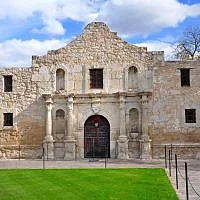
For a child of the 1950s, Davy Crockett, coonskin caps and the Alamo were part of growing up. Then came the day I realized my grandchildren might not know what any of it meant.
An email arrived in my inbox recently inviting me to the Alamo Preservation Ball.
I was intrigued.
Then I saw the price of a table: $10,000. My interest in historic preservation immediately became somewhat more academic. But what really caught my eye was the dress code: Boots and Black Tie.
Now that sounded like an evening. I began imagining tuxedos, cowboy boots and perhaps the opportunity to dust off the coonskin cap that, yes, I own.
Then my wife ruined everything.
“Do you think your grandchildren even know what the Alamo is?”
Ouch.
Worse, she was probably right.
For someone who grew up in the 1950s, that is almost incomprehensible. The Alamo wasn’t some obscure historical site you encountered in a textbook between the Missouri Compromise and the Mexican War.
We knew the Alamo.
More importantly, we knew Davy Crockett.
In the mid-1950s, Walt Disney introduced millions of American children to Crockett through television episodes starring Fess Parker. Disney eventually combined the first three into the 1955 movie Davy Crockett, King of the Wild Frontier. Crockett fought Indians, went to Congress and ultimately headed for Texas and the Alamo. The phenomenon became so enormous that Disney produced additional Crockett adventures.
And seemingly every boy in America needed a coonskin cap. I certainly did.
Davy Crockett was everywhere. We knew the song. We knew the cap. We knew the rifle, “Betsy.” And we knew that eventually Davy was going to wind up behind those walls in San Antonio.
You also knew how the story ended.
Everybody died.
I don’t remember being particularly troubled by the fact that Disney had created a children’s hero whose great adventure concluded with his death. Standards for children’s entertainment were apparently different in 1955.
But the Alamo stuck with me.
Many years later, my wife and I visited San Antonio, and for me it was more than ordinary sightseeing. I was finally going to see the place that had occupied a corner of my imagination since childhood.
There it was—the old mission, surrounded now by a modern city, much smaller than television and childhood memory had made it.
Nearby stands the great cenotaph honoring the Alamo defenders. The tour guide provided a small historical correction to my own recollection: it is a memorial, not their tomb. The fate and location of the defenders’ remains have their own complicated history. So apparently the Alamo Preservation people aren’t the only ones who need to preserve things. At my age, I occasionally need to preserve the accuracy of my memory as well.
We also watched an Alamo film during our visit.
As we walked out, people were waiting to go into the next showing. I couldn’t resist.
I turned to one man and said, “Just so you know—they all die in the end.” He looked at me and then broke out into a loud laugh.
John Wayne later played Crockett in his enormous 1960 film The Alamo, and Hollywood kept returning to the story, including another major version in 2004. The Texas State Historical Association notes that films about the battle go back to the silent-film era
But something has changed.
The Alamo once belonged to American popular culture. You didn’t have to be from Texas. You didn’t have to be a history buff. A kid growing up in Middle Village, Queens could put on a coonskin cap and instantly know who he was pretending to be.
We had a common collection of stories.
Some were history. Some were legend. Most were probably a mixture of the two. Hollywood polished them, Disney simplified them, and children absorbed them.
Today my grandchildren have their own characters, catchphrases and cultural references most revolving around famous rabbis. I’m quite certain there are things that every 12-year-old understands that would leave me completely bewildered.
That’s how generations work.
Still, I wonder whether something is lost when the old stories disappear completely.
The point isn’t that every child needs to idolize Davy Crockett or memorize the details of the Texas Revolution. History is more complicated than the movies we watched in the 1950s suggested.
But there was something valuable about knowing the stories in the first place—knowing that ordinary people had lived before us, taken risks, fought battles, made mistakes and sometimes died for things they believed mattered.
So perhaps my wife is right. Maybe my grandchildren don’t know the Alamo.
That can be fixed.
I have a coonskin cap I bought on that trip to San Antonio.
And unlike a table at the Alamo Preservation Ball, the history lesson is free.