
Senior Rabbi at Temple Sholom, Vancouver BC Canada
Featured Post
Canada, remember your vows
Prime Minister Carney acknowledged this week that Canada's covenant with its Jewish citizens is broken. Will the country do what's needed to repair it?
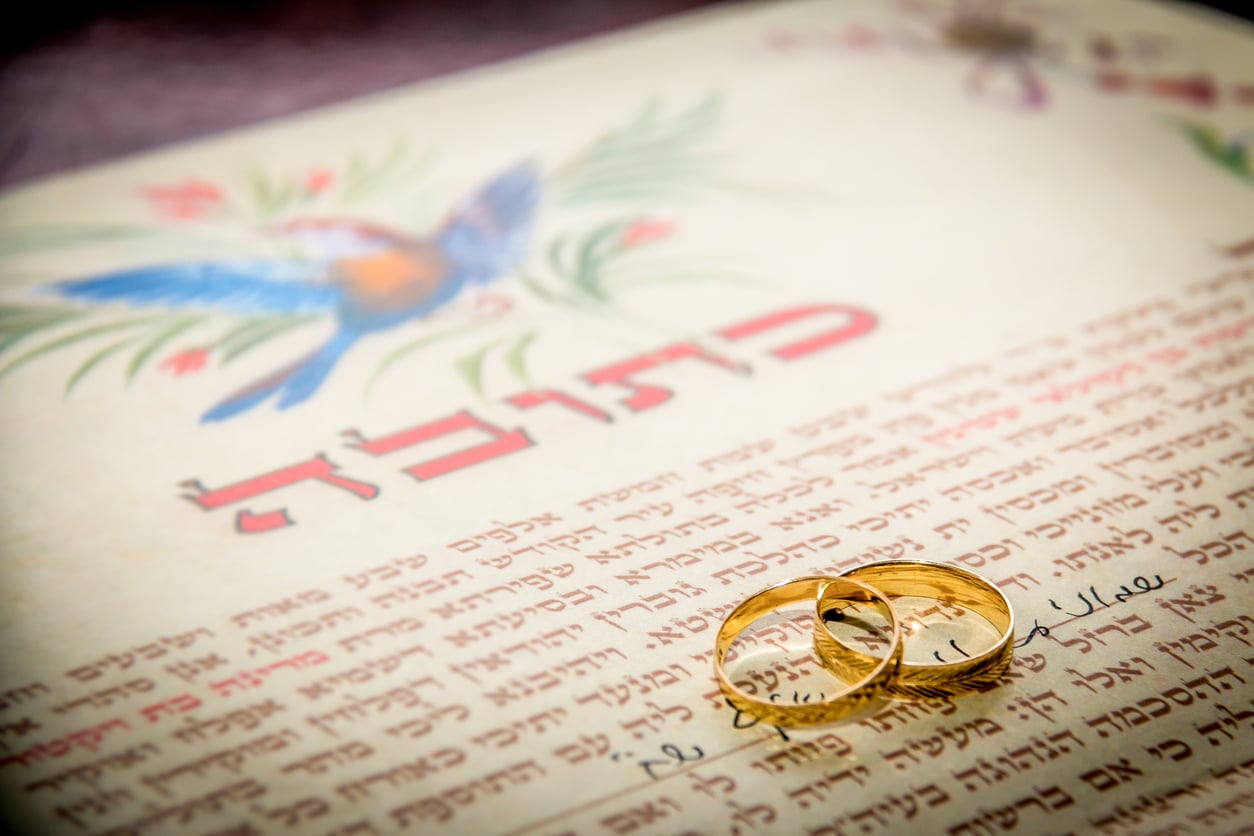
A Jewish marriage agreement (iStock)
As a rabbi, I have officiated at hundreds of weddings.
Every couple arrives at the chuppah, the Jewish wedding canopy, in love. They look at one another with excitement and hope. They imagine a future stretching out before them. They cannot imagine wanting to be anywhere else.
Love gets them to the wedding day. Love alone does not keep them married.
What carries a couple through decades together is trust, commitment and faithfulness. The willingness to bind your future to another person’s future. To take responsibility for their well-being. To care about their fears as if they were your own.
The deepest question in any marriage is not, “Do you love me?” It is, “When I am vulnerable, will you still be there?”
Lately, I have found myself thinking about that question as a Canadian Jew.
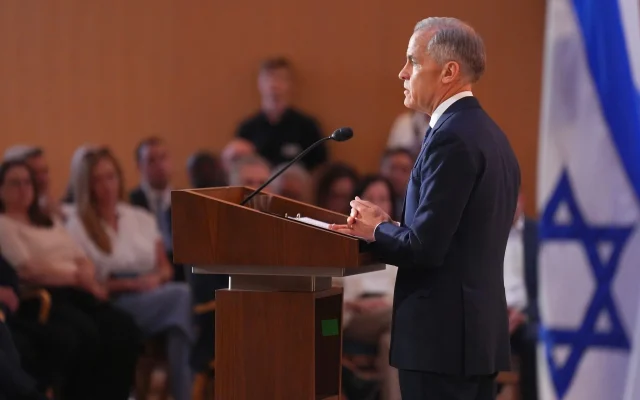
Prime Minister Mark Carney’s recent address on antisemitism resonated with many Jewish Canadians because he did something every struggling relationship requires before healing can begin. He acknowledged the breach. He acknowledged that something between us has been broken.
For generations, Jewish Canadians have lived as faithful partners in the Canadian covenant. We did not simply seek refuge in this country. We helped build it. We brought traditions of learning, charity, justice, community responsibility and civic engagement. We founded institutions, strengthened neighbourhoods, supported hospitals and universities, served in public office, contributed to the arts, sciences and professions, and invested ourselves in the Canadian project because we believed in it.
Many of our parents and grandparents arrived from places where citizenship was conditional, where belonging could disappear overnight, where promises of equality could be withdrawn with frightening speed.
Canada felt different. Canada felt like a country that wanted us. And we responded with loyalty, gratitude and love.
Jewish Canadians have kept faith with Canada. Today, many Jews wonder whether Canada still intends to keep faith with us. That is a painful sentence to write. It is also an increasingly difficult one to avoid.
In every long marriage, there comes a moment when one partner has to say to the other: Something is wrong. I still love you. I am still committed. I am not leaving. But I cannot pretend everything is fine.
That is where many Canadian Jews find ourselves today.
Canada is suffering from a sickness of anti-Jewish hatred. It is visible in bullets fired at Jewish schools, synagogues requiring ever-increasing security, vandalized businesses, and students who have learned that silence is often safer than speaking openly about their Jewish identity or connection to Israel.
A marriage is not dissolved because sickness enters the home. When sickness enters, the vows become more serious.
What has been especially painful is not only the hatred, it is the dismissal. Every marriage counsellor knows that one of the most destructive responses to a hurting partner is to tell them that their hurt is not real.
You’re overreacting. You’re imagining things. It isn’t that bad.
Since October 7, many Jewish Canadians have heard some version of those responses. When Jews speak about antisemitism, we are often asked to contextualize it, qualify it, compare it, explain it or justify why it deserves attention at all.
Jewish Canadians are often asked to examine ourselves, explain ourselves, moderate ourselves, distance ourselves and contextualize ourselves. Self-examination is a Jewish virtue. We know how to look inward, and ask difficult questions of ourselves. Yet honesty requires all Canadians to acknowledge an equally uncomfortable truth.
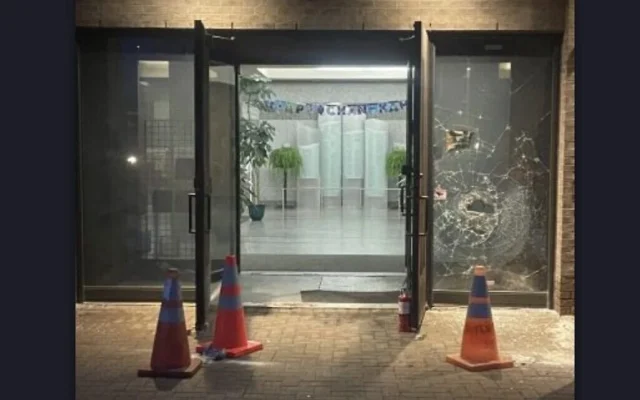
Jews are not the ones shooting at Jewish schools. Jews are not the ones intimidating students, vandalizing synagogues or bringing fear into Jewish spaces. Whatever one thinks about the actions of the Israeli government, those are the actions of a foreign government, not Jewish Canadians in supermarkets, summer camps, classrooms and universities.
We have not broken the covenant. Yet through violence, intimidation and, perhaps most painfully, indifference, many Canadian Jews have come to question something we once took for granted: when we were vulnerable, will our neighbours stand with us or look away?
Prime Minister Carney also said something else worth reflecting upon: “When you come to Canada, you bring your faith, your tradition, your language, your story. You leave behind your wars and your animosities.”
That is one of the conditions of the covenant. Canada welcomes memory. Canada welcomes difference. Canada welcomes faith. Canada cannot welcome hatred.
Many newcomers understand this instinctively because they came to Canada seeking the same safety, opportunity and freedom that earlier generations of Jews sought. They are indispensable partners in building the Canada we all want.
Yet some have mistaken tolerance for permission. They have used Canada’s freedoms to intimidate Jews, celebrate terrorism and import conflicts from elsewhere into Canadian streets, campuses and institutions.
No one receives a multicultural exemption from Canadian values. Not Islamists. Not white supremacists. Not extremists of the left or the right.
A covenantal society can welcome many faiths, cultures and histories. It cannot accommodate hatred.
The answer to this moment cannot be that Jews become smaller, quieter or less visible. The answer cannot be that we hide our kippot, tuck our Jewish stars beneath our shirts or teach our children that safety requires concealment.
The Canada I love is a country where the debate is over the place to get the best Jewish bagels, not the place of Jews in Canada.
In every marriage there comes a moment when one partner must decide whether the relationship is worth repairing.
Prime Minister Carney has taken an important first step by acknowledging the breach. Now comes the harder work of rebuilding trust and restoring safety.
The work of ensuring that Jewish Canadians can once again feel what generations before us felt: That this country is not merely where we live. It is where we belong.
Jewish Canadians are not seeking a divorce from Canada. We are asking Canada to remember its vows.
Related Topics