
Remembering Nova Through ‘We Will Dance Again’
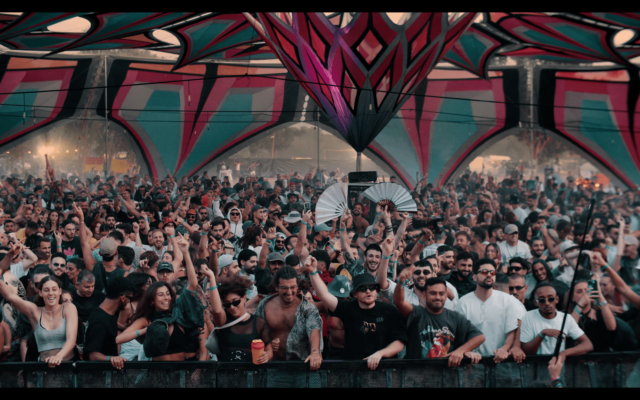
Documentary that moved President Herzog shows the world the truth of October 7 and the spirit of innovating the future of Israel
I will build you up again, and you, Virgin Israel, will be rebuilt. Again you will take up your timbrels and go out to dance with the joyful. – Jeremiah 31:4
Those words, written in the 7th century BC, may well have been spoken for us, here, now. Every time I read them, I think about how they fit the arc of modern Israel’s story: battered yet unbroken, wounded yet determined, always building again.
And when I first heard about the award-winning documentary We Will Dance Again – and the private screening hosted by President Isaac Herzog – Jeremiah’s words came flooding back. Because October 7 happened. Israel is rebuilding. And, yes, the people of Israel will dance again.
There are documentaries you watch because you want to. This is one you watch because you have to. We Will Dance Again does not merely recount the Nova festival massacre; it drags you into the raw, unfiltered reality of that day, through survivor interviews, phone footage, even the body cameras worn by the terrorists themselves.
It is the kind of truth-telling that bypasses headlines and statistics. You do not just learn about the atrocity, you feel it. As one review put it, it “invades every fiber of your being to make certain you don’t forget.”
That is the point. October 7 is not just another date in Israel’s national calendar; it is a day etched in our collective memory. And this film ensures that it will remain etched in the memory of the world.
The Nova music festival was meant to be a sunrise celebration of light and love. Instead, it became a killing ground, where more than 370 people were murdered and hundreds more wounded or taken hostage.
Director Yariv Mozer, like so many people that morning, felt helpless. Then he found his mission: to film, to document, to bear witness. With astonishing speed, he and his collaborators at HOT, SIPUR, and Sloatzky Productions, along with MGM, the BBC, and Paramount, assembled the footage, fought for editorial integrity, and brought it to audiences around the world.
It is already made history: the first Israeli documentary ever to win an Emmy, and a winner of multiple other awards. But more than accolades, it is about impact. As HOT CEO Tal Granot said, it is a historic document, an essential tool for telling Israel’s story, and a message to the people that “we are here not just to exist but to live.”
The film weaves together stories of horror and heroism. Aner Shapira, who lobbed grenades back at Hamas attackers until he was killed. His friend Hersh Goldberg-Polin, taken hostage and murdered. Survivors like Tamir Leshetz, Yuval Siman-Tov, and Noam Ben David, still carrying the weight of what they saw and felt.
There are moments in the film where survivors recount crouching among the dead, unsure if they would be next. One young man says, “My life will never be what it was.” That line lingers. Not just for him, but for all of us.
And yet, even in the recounting of horror, there are threads of resilience. Songs Aner composed are being released posthumously. Survivors are speaking, again and again, to audiences here and abroad, determined that the truth be heard.
I have written here before about resilience and renewal not as abstract concepts, but as living, breathing realities in Israel. This film embodies both. It is resilience that a creative team, in the midst of grief and war, could produce a work of such honesty and urgency. And it is renewal that, by telling this story with such power, they honor both the living and the dead while contributing to the nation’s healing.
And yes, this is also about innovating the future of Israel, not through technology or startups, but through a narrative that captures, preserves, and presents the truth. In an age of misinformation, creating a film that is both art and evidence is a form of innovation we can never take for granted.
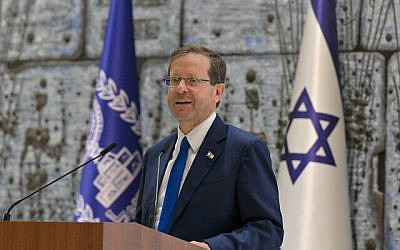
President Herzog’s decision to host the screening now – while Israel is still at war, while hostages remain in Gaza – is itself a message. The horrors of October 7 did not end on October 7. They continue in the starvation and abuse of hostages like Evyatar David and Rom Braslavski, whose recent images show the devastating toll of captivity.
The documentary does not shy away from that connection. It dedicates its Emmy to the safe return of the hostages. It reminds us that “never again” is not a slogan to be dusted off for anniversaries, but a daily call to action.
Jeremiah’s vision was of timbrels and joyful dancing. That may feel impossibly far from the images of October 7. But it is not naive to believe in it. It is necessary.
We Will Dance Again is not about forgetting the massacre; it is about ensuring we remember it so deeply, so vividly, that we are never complacent again. It is about holding the space for grief and for joy, side by side.
The title is a promise. Not that life will go back to what it was, as the survivor in the film says, it would not, but that life will go on. And when it does, it will carry the memory of those lost into the future they were denied.
If you are Israeli, it is part of your history. If you are human, it is part of your moral responsibility. Watch it not because it is easy, but because it matters.
There is a line from the panel discussion after the presidential screening that stays with me: “We are here not just to exist but to live.” That is the essence of survival. That is what it means to rebuild. That is how, in time, the good people of Israel will pick up their timbrels and dance again.