The hidden costs of all that reserve duty
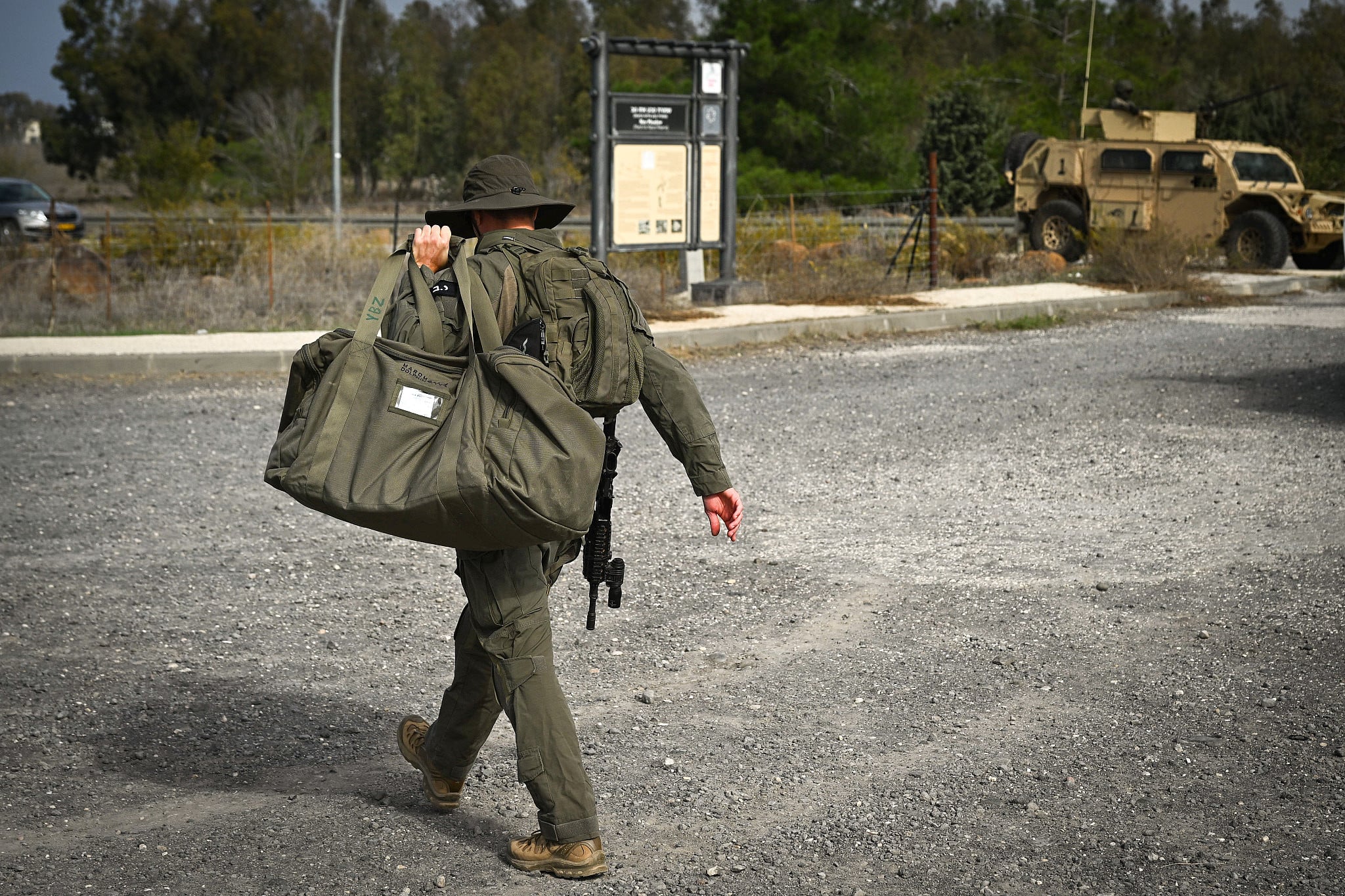
My husband left for reserve duty this morning, yet again.
I’ve stopped counting the rounds, which, if you knew me, you’d know is strange, considering how much I love math and statistics.
As the wife of a reservist, I’ve learned how to be flexible and take things one day at a time.
But, as a researcher at the Taub Center, I can’t help but zoom out and try to see the bigger picture because the phenomenon is much greater than myself and my family.
For the past several years, people in their 20s, 30s, and 40s have been living in a state of suspension. One foot in their civilian lives, and the other always at the ready for the next round of reserve duty. Even if peace deals were made on all fronts, the scope of reserve duty is not likely to recede back to what it was prior to Simchat Torah 2023. We are dealing with a new reality, and I keep coming back to the same question: how is this sustainable?
To see the big picture, I needed data. This presented a challenge since the army, understandably, does not share its numbers. So I sat down with two colleagues who are reservists themselves, and we started piecing it together: IDF figures released under the Freedom of Information Act, National Insurance Institute payment figures, Central Bureau of Statistics education data. We built a model, based on the economic literature on long absences from work, to estimate what all those missing months are likely to cost a reservist’s salary over the years ahead.
Each page of our publication stands on its own, but together they tell the same story of living in suspension.
People in their 20s finished their mandatory service and went into reserve duty that looks nothing like what it was before they enlisted. For them, the challenge is launching: starting a degree, a career, a life. In the data, we see enrollment in undergraduate studies falling to its lowest point since the 2018/19 academic year. The drop is sharpest among women in their early 20s and men in their late 20s, the peak years for starting a degree. The Council for Higher Education put extensive support packages in place, and still the numbers fell. It is hard to maintain continuity or pursue a course of study when you keep being pulled out of it.
People in their 30s and 40s had already served for years under the old model of reserve duty, and by the time the war came, they had built something: a career, a business, a family. For them, the challenge is holding on and moving up. Reservists are paid for the days they serve, but no one is compensated for the experiences they did not accumulate, the projects that went to someone else, or the promotion cycles that passed while they were away.
Because nothing in the economic literature quite matches what reservists are living through, we chose the most conservative estimates available. Our model projects that the average reservist, who has served 233 days since the start of the war, will carry a long-term wage loss of about five percent. For the many thousands, who have served a cumulative year or more, it is 7% or higher.
What we see is that the support for reservists and their families serves its purpose for the short term: it covers salaries for months served, it provides accommodations for tests during semesters missed, but it does not address what accumulates round after round, year after year. Months at a time, for years, during the most productive decades of people’s lives. The cumulative effect of living with one foot out the door is the part that the country has yet to reckon with.