
Resilience: Benjamin’s Enigma and Simchat Torah
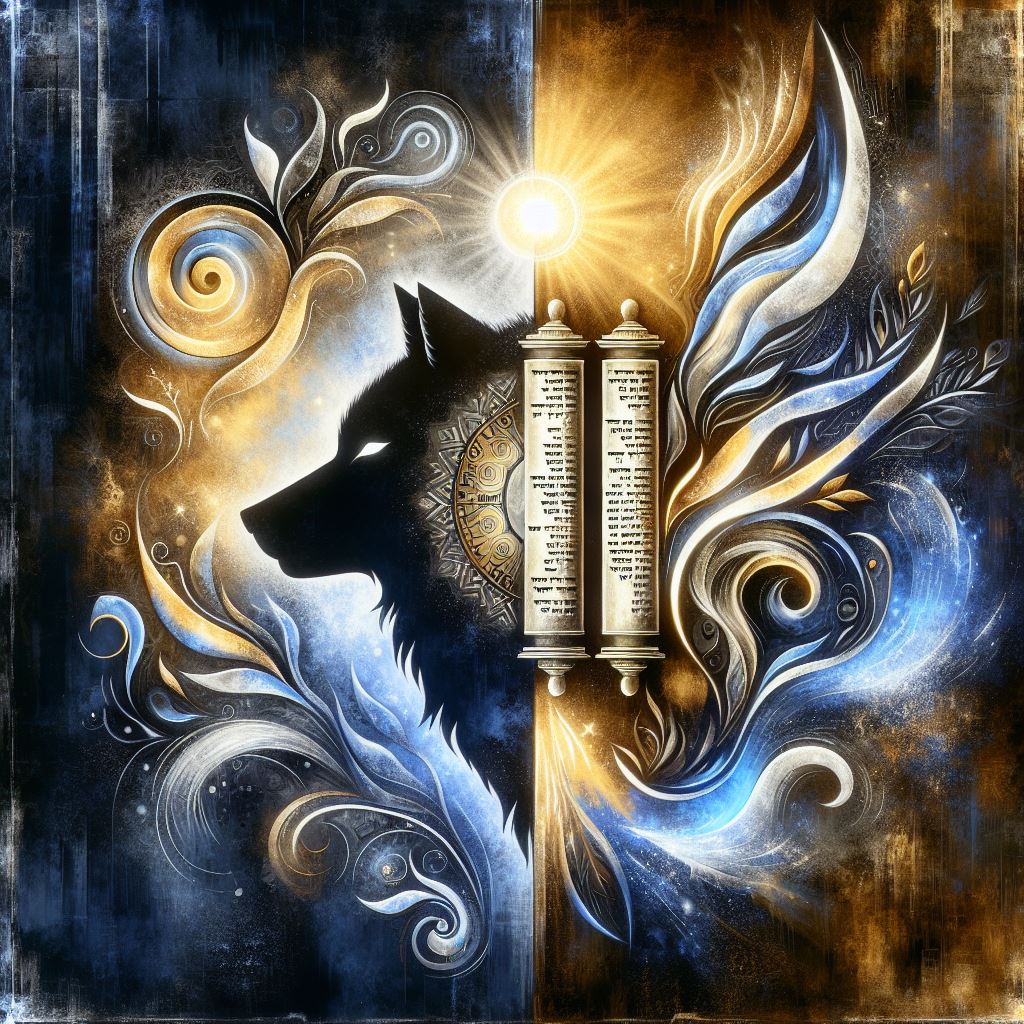
How the story of the quiet youngest son became a tale of resilience – revealed on Simchat Torah two years ago
Benjamin is a mystery to me (and also the name on my passport). He’s the youngest son of Yaakov, born in sorrow. Rachel, his mother, names him Ben-Oni (“son of my sorrow”) as she dies, but Yaakov renames him Binyamin (“son of the right hand”) (Genesis 35:18). He’s cherished, seemingly delicate, and fiercely protected by his brothers Yosef and Yehuda, and especially by Yaakov, who at first refuses to let him travel to Egypt (Genesis 42:38). When Yosef sees him, he weeps (Genesis 43:30). Benjamin is quiet, the underdog. Yet Yaakov blesses him with almost shocking intensity:
“Benjamin is a ravenous wolf; in the morning he devours the prey, and in the evening he divides the spoil.”
בִּנְיָמִין זְאֵב יִטְרָף בַּבֹּקֶר יֹאכַל עַד וּבָעֶרֶב יְחַלֵּק שָׁלָל (Genesis 49:27)
This doesn’t sound fragile, it’s fierce, even violent. Rashi connects this to King Saul, Benjamin’s descendant, and his military strength (Rashi on Genesis 49:27, Mikraot Gedolot). Rabbi Samson Raphael Hirsch sees it as divine power used to protect the community (The Pentateuch, Genesis 49:27). Rabbi Mendel Kaplan interprets the wolf as a spiritual guardian, defending the divine spark within us (Chabad.org, Parshat V’Zot HaBerachah).
But on Simchat Torah, we read a different blessing from Moshe, reverting to the beloved side of Benjamin:
“The beloved of the Lord shall dwell in safety by Him; He covers him all the day, and He rests between his shoulders.”
יְדִיד ה’ יִשְׁכֹּן לָבֶטַח עָלָיו חֹפֵף עָלָיו כָּל־הַיּוֹם וּבֵין כְּתֵפָיו שָׁכֵן (Deuteronomy 33:12)
This refers to the Temple and Jerusalem, partly located in Benjamin’s territory, shared with Yehuda, making Benjamin a guardian of divine closeness. He is both fierce and beloved, a warrior and a sanctuary. This duality is, at least to me, the heart of resilience, a balance of strength and tenderness that defines our Jewish DNA.
The Resilience of the Tribes: Benjamin, Levi, and Yehuda
Benjamin is one of three tribes, alongside Yehuda and Levi, that endured, their resilience rooted in this duality. The ten other tribes, Reuven, Shimon, Dan, Naftali, Gad, Asher, Yissachar, Zevulun, and Yosef’s two sons, Ephraim and Manasseh, were lost after the Assyrian exile around 722 BCE (2 Kings 17:6): “And he carried Israel away into Assyria.”
Levi mirrors Benjamin’s duality. He and Shimon avenged Dinah’s violation with brutal force (Genesis 34:25-26). Yaakov later criticizes their violence:
“Simeon and Levi… their weapons are tools of lawlessness.”
שִׁמְעוֹן וְלֵוִי… כְּלֵי חָמָס מְכֵרֹתֵיהֶם (Genesis 49:5-7)
But Moshe blesses Levi for developing the capability to channel that passion into sacred service:
“Bless, O Lord, his substance… They shall teach Jacob Your ordinances, and Israel Your law.”
בָּרֵךְ ה’ חֵילוֹ… יוֹרוּ מִשְׁפָּטֶיךָ לְיַעֲקֹב וְתוֹרָתְךָ לְיִשְׂרָאֵל (Deuteronomy 33:10-11)
The Levites transformed their zeal into devotion. As priests and teachers, they brought people together. Rabbi Hirsch sees this as strength made holy, used for the good of the community (The Pentateuch, Deuteronomy 33:10). Their toughness and love fostered unity, ensuring their legacy as ancestors of Kohanim and Leviim.
Yehuda’s duality blends fierce leadership and deep love. Yaakov calls him:
“A lion’s cub… The scepter shall not depart from Judah.”
גּוּר אַרְיֵה יְהוּדָה… לֹא־יָסוּר שֵׁבֶט מִיהוּדָה (Genesis 49:9-10)
This strength leads to King David’s dynasty. But Yehuda’s heart shines when he pleads to save Benjamin, offering himself as a slave in his place (Genesis 44:18-34). Moshe blesses him:
“Hear, O Lord, the voice of Judah, and bring him to his people.”
שְׁמַע ה’ קוֹל יְהוּדָה וְאֶל־עַמּוֹ תְּבִיאֶנּוּ (Deuteronomy 33:7)
Yehuda’s courage and compassion unite the tribes, making him the leader and ancestor of most Jews today.
Dancing Through the Pain: Simchat Torah and Resilience
Two years ago, on Simchat Torah, October 7, 2023, our joy was shattered by devastating attacks in Israel. On that day and for two years, we’ve had to draw on these traits. Like Benjamin’s wolf, we defended with fierceness. Like Levi’s priests, we held tight to Torah with zeal. Like Yehuda’s lion, we led with toughness and rebuilt with love.
As we finish the Torah and begin again, the blessings of Benjamin, Levi, and Yehuda, our enduring tribes, call us to live with fierceness and devotion, resilience and love. These three tribes survived because of their balance. Benjamin, the quiet one, my namesake, may not be as famous as Levi’s priests or Yehuda’s kings, but he reminds us that every Jew carries this legacy.
On Simchat Torah, we honor those who fought and those who prayed. We dance with the Torah, even in sorrow. And we carry forward as wolves, priests, and lions, ensuring the Jewish soul endures.
Conclusion: Strength in Peace
Our enemies should know that while our tears and pain are real, and while we love life and want peace, it shouldn’t ever be taken for weakness. We are strong and resilient; we just prefer peace and life. I hope it comes soon.