
Rethinking America’s Pastime
“In order to be a success in the American rabbinate, you must be able to talk baseball,” said Rabbi Solomon Schechter to an aspiring rabbinical student. It is hard to believe that Rabbi Schechter, a European trained Rabbi, had any interest in this sport, but regardless there was real depth to his insight. As we emerge from the World Series of the Jewish calendar, the High Holidays, we find ourselves at the advent of the actual World Series, so it only makes sense to reflect on America’s pastime.
To be relevant and relatable in America at the start of the 20th Century it was not enough to speak the English vernacular. Jewish leaders needed to have a deep understanding of America’s pastime. Leadership could not be isolated in an intellectual or spiritual ivory tower. To lead that community effectively, they had to engage with and be fluent in the dominant American culture. They needed to be with their people; a shepherd out in the field with their flock. They needed to be in touch with the zeitgeist making Jewish life accessible within the New World context. The movie Field of Dreams captures the importance of baseball by saying, “America has rolled by like an army of steamrollers. It’s been erased like a blackboard, rebuilt, and erased again. But baseball has marked the time.” The one constant through the years has been baseball.
Through baseball, our leaders could use this shared cultural context to help immigrants and their children naturalize and transition to being part of the fabric of this country. Baseball, with all of its rules, customs, and pageantry was a rich common ground for people to appreciate, discuss, and care about the punctilious nature of Jewish law and customs. In rooting for the home team we could find a home for our Jewishness and our Americaness.
So if baseball could serve as a cultural playbook for the rabbinate of the 20th century, what insights can todays’ Jewish communal leadership learn from the emergence of Banana Ball? For those who have not seen its meteoric ascent, Banana Ball is a modified, fast-paced, and highly entertaining version of baseball, played by the eponymous Savannah Bananas and their rivals. It is less a traditional sport and more a spectacle, often compared to the Harlem Globetrotters, combining competitive play with constant comedy, stunts, and wacky props. The game is still baseball but governed by a unique set of rules—designed to eliminate downtime and maximize action. Due to its growth, this month they had their first Banana Bowl, league championship with over 40,000 people in attendance, selling out the Washington Nationals Park. Clearly this success of Banana Ball reflects change, dynamism, and growing interest in entertainment over a yearning for that constancy and consistency of America’s Pastime.
Banana Ball was created by the team’s owner, Jesse Cole, who is always dressed in a banana-yellow suit, shirt, and bowler. His mission is to make baseball “fast, fun, and affordable”. Core to their ethos is to experiment constantly. The goal is not to mock traditional baseball, but to improve the fan experience and eliminate the elements that cause people to disengage.
For example, one rule that gets to the core of their “Fans First” approach is “Fan Catch Out”. If a foul ball is caught cleanly by a fan in the stands, the batter is immediately out. With this shift of rules, the audience impacts the game’s outcome and everyone is part of the game. The consumers are not just there to watch, but to participate. How could it be boring if everyone is actually part of the action?
When it comes to Banana Ball, there are many who will recoil. Some will claim it is a satire of one of our last cultural touchstones. Others will see this as a sign of the larger decline of society in this attention economy. The purist will want to wax poetic about Shohei Ohtani as the next Bambino and how that pure talent would be lost in this new game. But in looking at the power of Banana Ball, no one is saying that we should abandon baseball in its hallowed form. However, being open to new ideas is good for everyone. Just as this is true for baseball, it also rings true with contemporary Jewish life.
With the conclusion of the 150th year of the major leagues, might Rabbi Schechter’s insight need an update? Here are some lessons from Banana Ball for contemporary Jewish leadership:
- Love of the Game: In a world that is reminding us all the time that we should be excluded, shamed, or killed, we need to create joyful lifelong memories for our people. That said, when they are with us we need to help them have fun and fall in love with being Jewish.
- “Fans First” Approach: We need to create experiences that people value by valuing their time. We need to design with them at the center. We need to do everything we can to make every moment a “wow” moment.
- Fan Catch Out: We need to make sure that everyone, no matter where they sit, feels like they are players and not just watching the game. We are all critical to the outcomes.
- Great Players: We need professionals at the highest level who are trying to engage the crowd within an atmosphere of pure entertainment and excellence in the game.
- “A” Game: It is great that people love the traditional “way of playing”. When it comes to our leadership, like Jesse Cole, we also need to be open to new ideas and push ourselves to evolve.
Now, you might not immediately see the connection between Banana Ball and Jewish camp, but I can’t help thinking about how much the lessons from this sport have in common with the incredible work Jewish camp professionals do every day. Like Jesse Cole, camp professionals take their work, but not themselves, very seriously. They experience no shame in bringing joy to their community. No one would be surprised to see any of them wearing banana-yellow suits this summer.
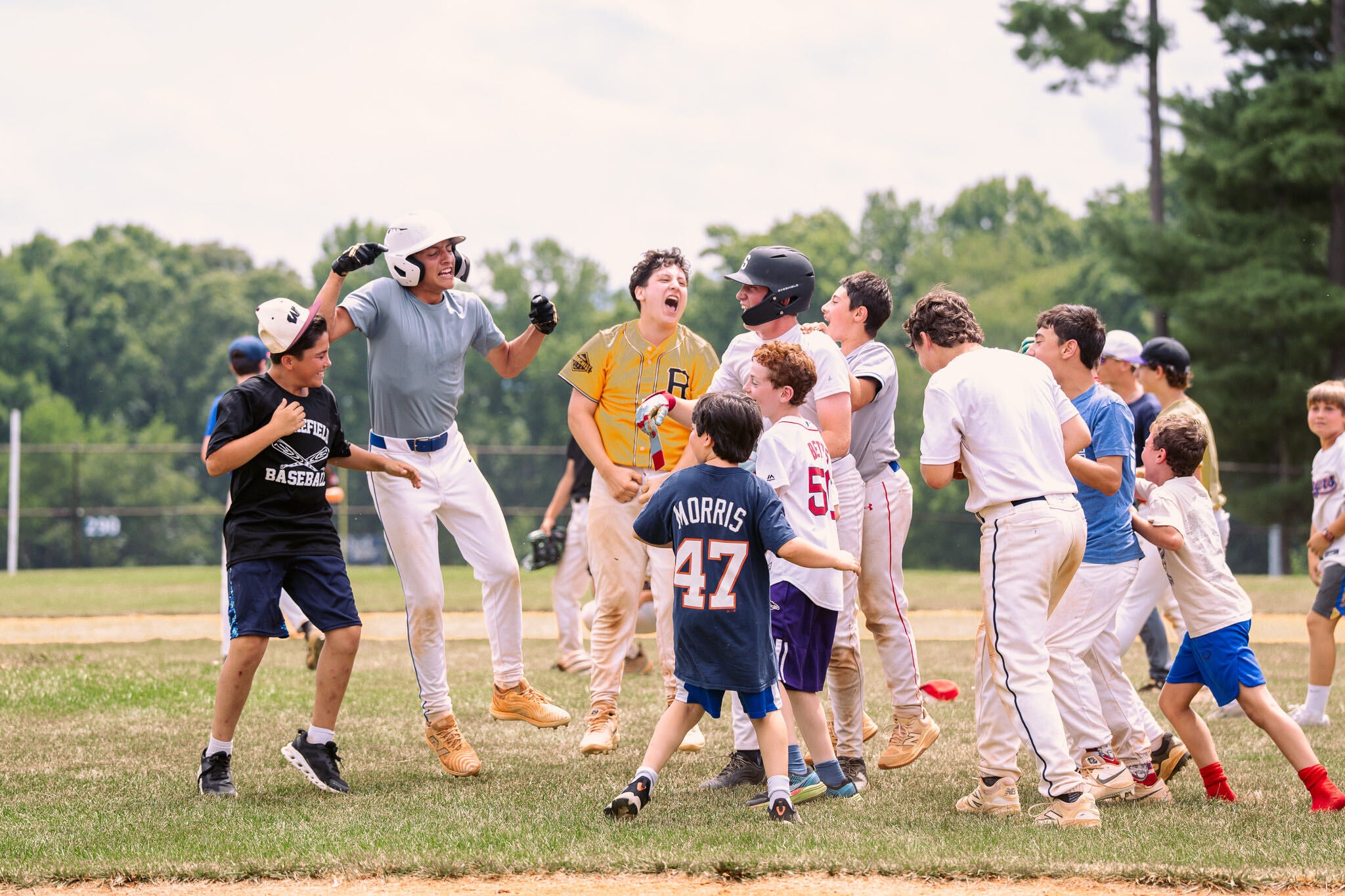
Every summer, camp leadership takes thousands of teens, many of whom used to be campers, and trains them to be camp staff. Like the Banana Ball players, these staff give their all to make Jewish life come alive for their campers. Every session and every day is brimming with the potential to change their lives. Everyone is part of the action; there are no spectators at camp. Everyone there knows that they are playing a critical role in that community. Ultimately the game is played to make a difference in the Jewish community and the world. That sense of ownership of their camp experience is what makes Jewish camp work. Like the Field of Dreams, Jewish camp is a place where their memories are so thick they have to brush them away from their faces.
To successfully lead Jewish life in North America today, we all must be able to talk Banana Ball. We need to take these insights and translate them into a vision of what vibrant Jewish life could look like after the post-season play. It’s time to step up, play ball, and bring “joy to Mudville” and Jewish life.