POST-HARMONY Special Project
Revisiting Conscience. Or Absence of It.
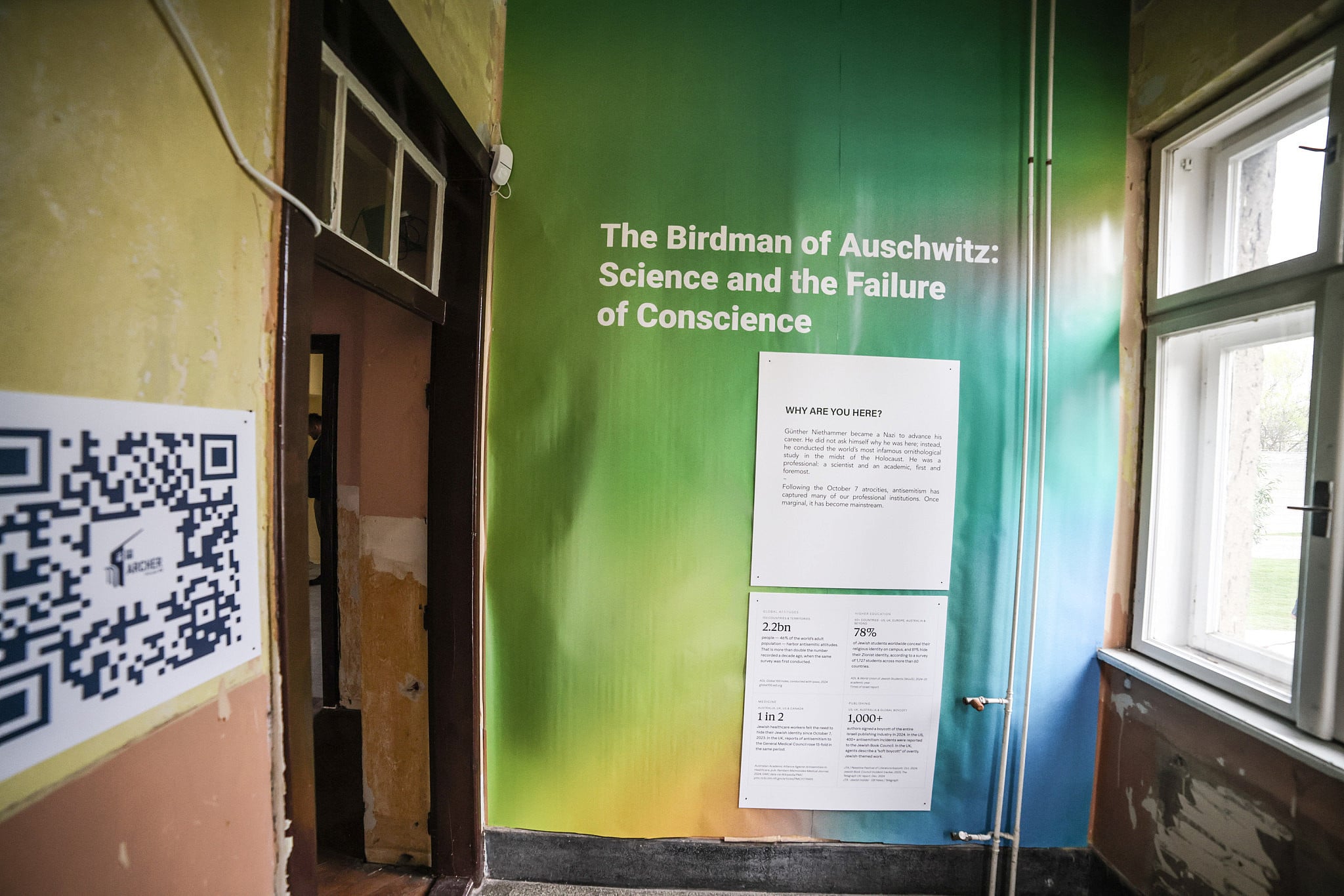
New exhibition at House 88 in Poland. (C) CEP/ARCHER
The Birdman of Auschwitz: New Exhibition at the House 88
Parallels: People’s Lives and Deeds
Some while ago, not that far from now, Ambassador Mark Wallace was discussing things with his friend, famous architect Daniel Libeskind. The conversation was, in a form of reflections, about a few core phenomena that we associate with the Shoah all those eighty years, and counting. “ It is maybe a myth, but the belief that birds do not sing in and over the concentration camps bothers me”, – shared Mark with his friend. – “It signifies and underlines the depth of horror that occurred here, to the degree that it has become a death zone literally, for decades”. “Here” in this conversation in early 2025 was Auschwitz. Wallace and Libeskind were in the Zone of the Interest, as the 40 square kilometres area around Auschwitz that has been under Nazi control during WWII has become known for posterity.
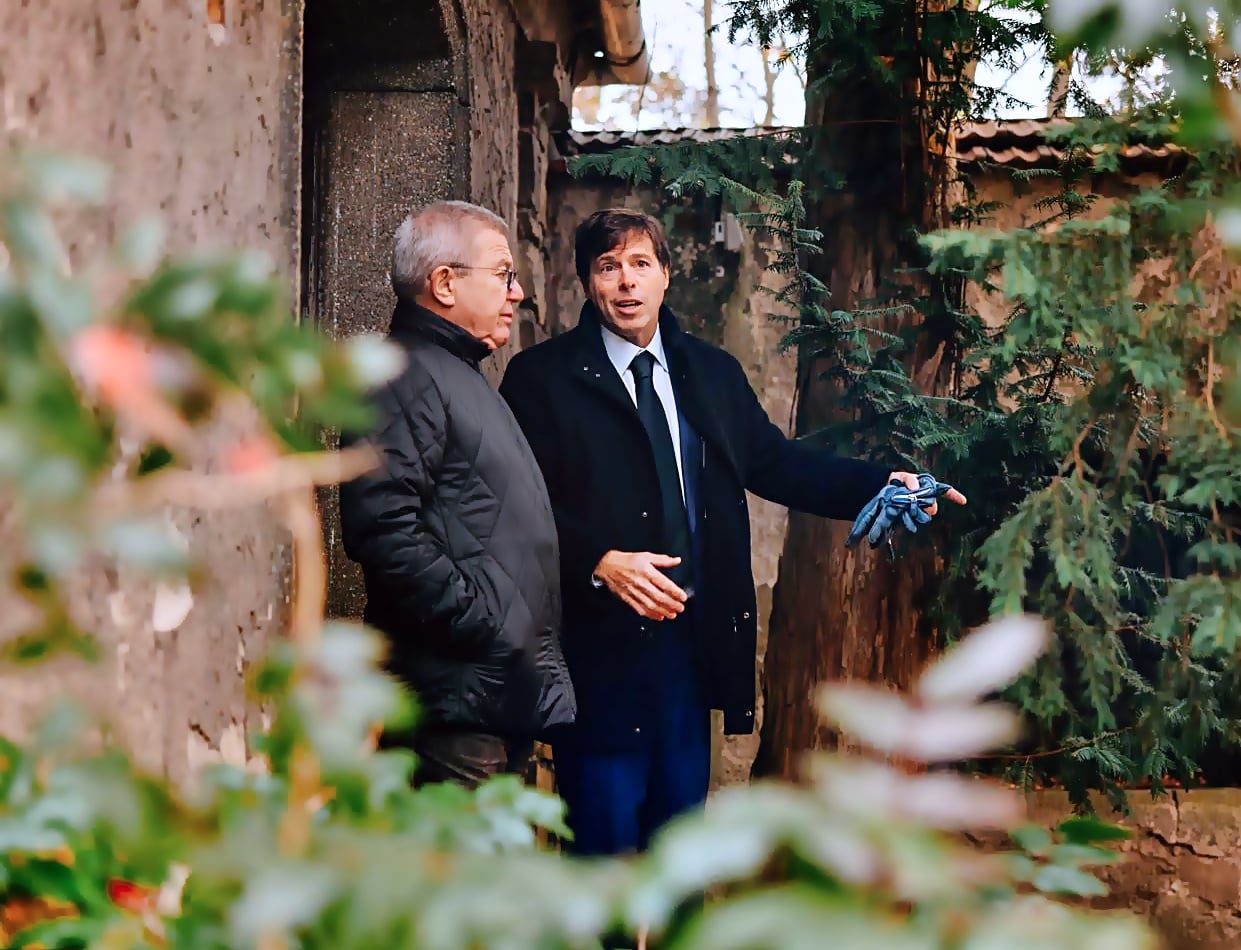
The reason of them to be at the place was the opening of the new landmark next to Auschwitz, ARCHER at House 88, unique project of memory and compassion that acts nowadays from the premises of the house in which the butcher Rudolf Höss and his family were thriving in all their hellish idyll while the head of the family commanded over Auschwitz-Birkenau death factory.
Ambassador Wallace was the driving force of this truly special project that has been functioning as part of his CEP, Counter Extremism Project , which is known for its efficient fight against terrorism and anti-Semitism world-wide.
Mark Wallace’s elder friend Daniel Libeskind, with his and his Poland-born family’s life experience has mentioned to his friend: “I am sure, Mark, the birds will sing there one day. They will, trust me”.
That conversation might stay as a friendly exchange unless soon after it a book has been published in the UK. An extraordinary book, it must be said, as of its subject, as of the way it has been researched, written and presented. The book is a thoroughly researched biography of a leading German ornithologist, the head of the Ornithology Department of the famed Museum of Natural History in Vienna, who also happened to be the SS-guard in Auschwitz. The book’s title is The Birdman in Auschwitz: The Life of Gunter Niethammer, the Ornithologist Seduced by the Nazis ( 2025). Its author is a well-known British ornithologist and historian Nicholas Milton.
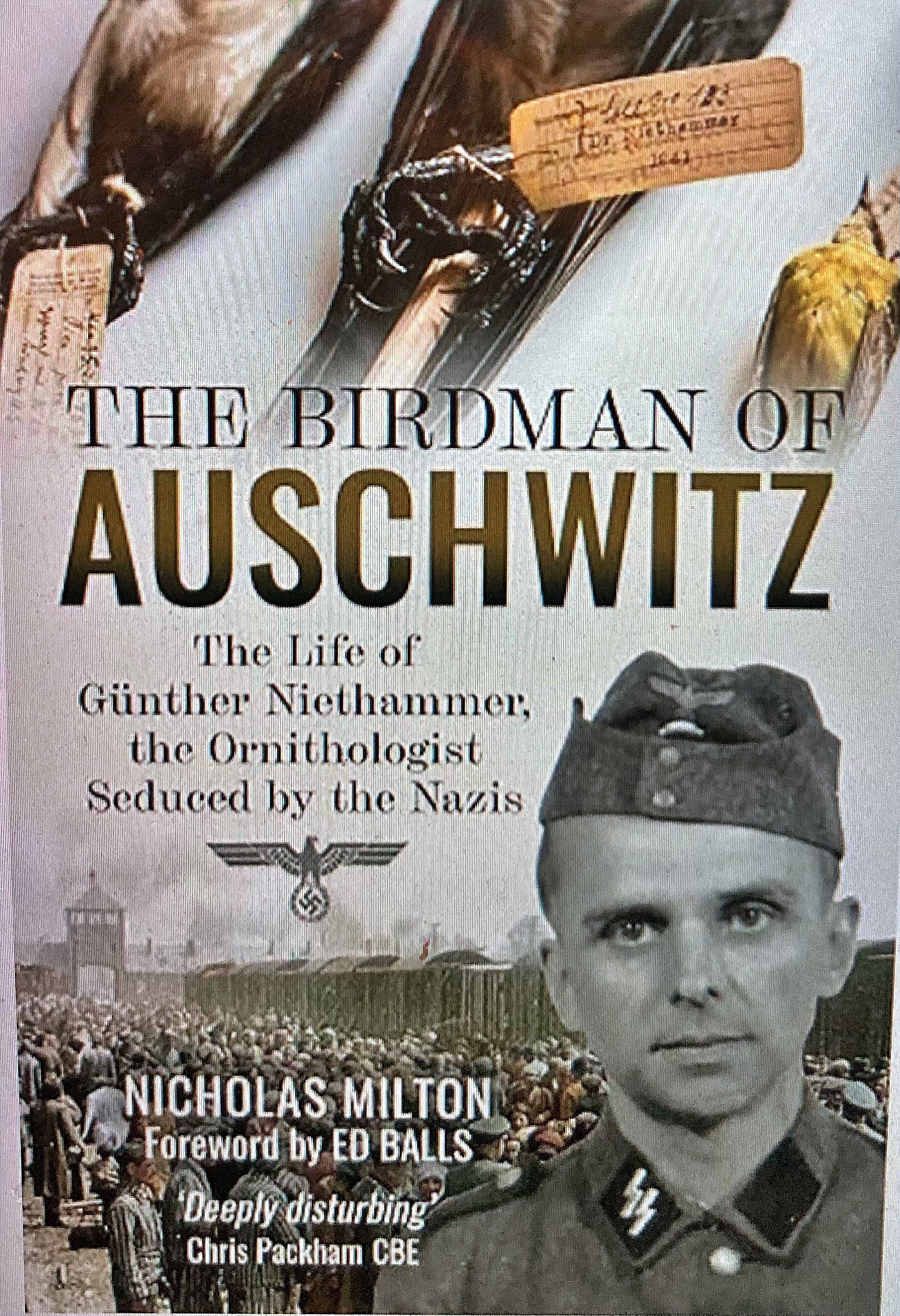
The book was published a month after Mark Wallace and Daniel Libeskind’s friendly exchange next to the Auschwitz zone. As Mark Wallace mentioned in one of our conversations, “it was the Hashem’s call in all this”. And I see his point. From the moment of seeing and reading Nicholas Milton’s book on pre- and post war life and recognised achievements of Niethammer despite his Nazi crimes and conviction, Mark Wallace and his team knew the theme of the next important multi-month event at the ARCHER at House 88 in Poland. It would be about Science and Faltered Conscience, sampling birds in a dizzy paradoxical macabre of human behaviour and morale in the most painful moment of the 20th century, which is becoming so disturbingly relevant to us today, again. The exhibition opens on April 30th, 2026, at the premises of the ARCHER at House 88.
The Place Like No Other: House 88
For those who are not familiar with the physical topography of WWII and the Shoah, this house in the Polish city of Oswienciem would not tell much. House like house from the 1930s, large enough, grim, grey, heavy, unpleasant – even without knowing a thing about it. I used to move next to it many times while filming in Auschwitz, going to and from there. I knew what it was from the beginning, and in my mind, I instinctively rejected the very existence of it. The fact that anyone could live there – and we knew that some family was living there – was utterly incomprehensible for me.
After the release of the Zone of Interest film in 2023, which I also reviewed, the world has seen what I have seen years ago, in a chilling detail: the house, the garden, the pool, all the perversity of normality and sickness of pretension – and believing in it – of an idyllic family nest just literally next to the wall of the largest extermination camp, and with a dark tunnel to it from the house directly.
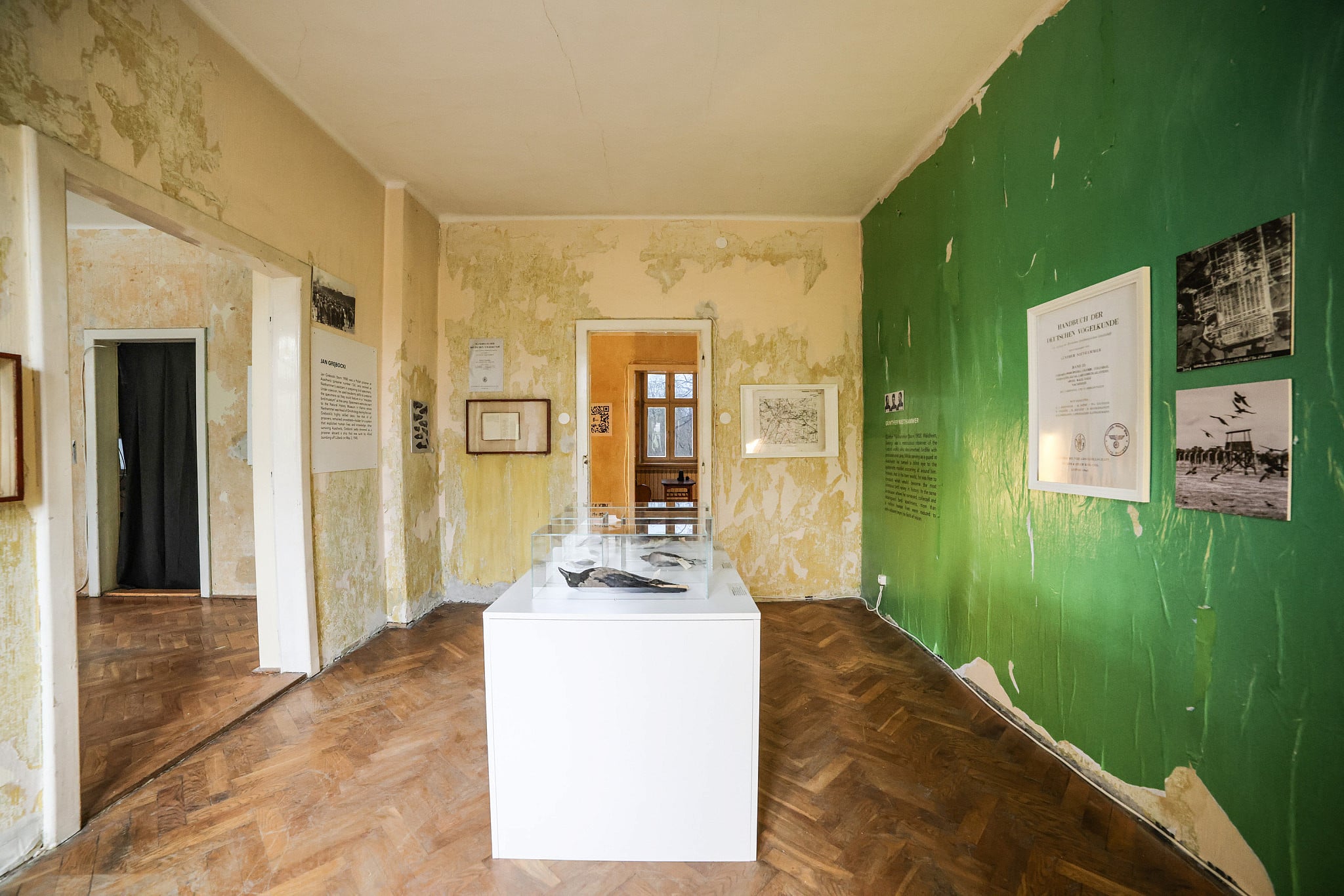
Ambassador Wallace and his colleagues and co-funders in the extraordinary ARCHER project decided to annul the evil which was reigning at this very place during the Shoah, and which was left unattended from the responsible historical processing ever after, and to organise there the place for active reminding. We owe it to all our victims of the Shoah and their families, and the current wave of hate against Jews all over the planet has made it even mandatory for the people who understand it and can do something with this respect.
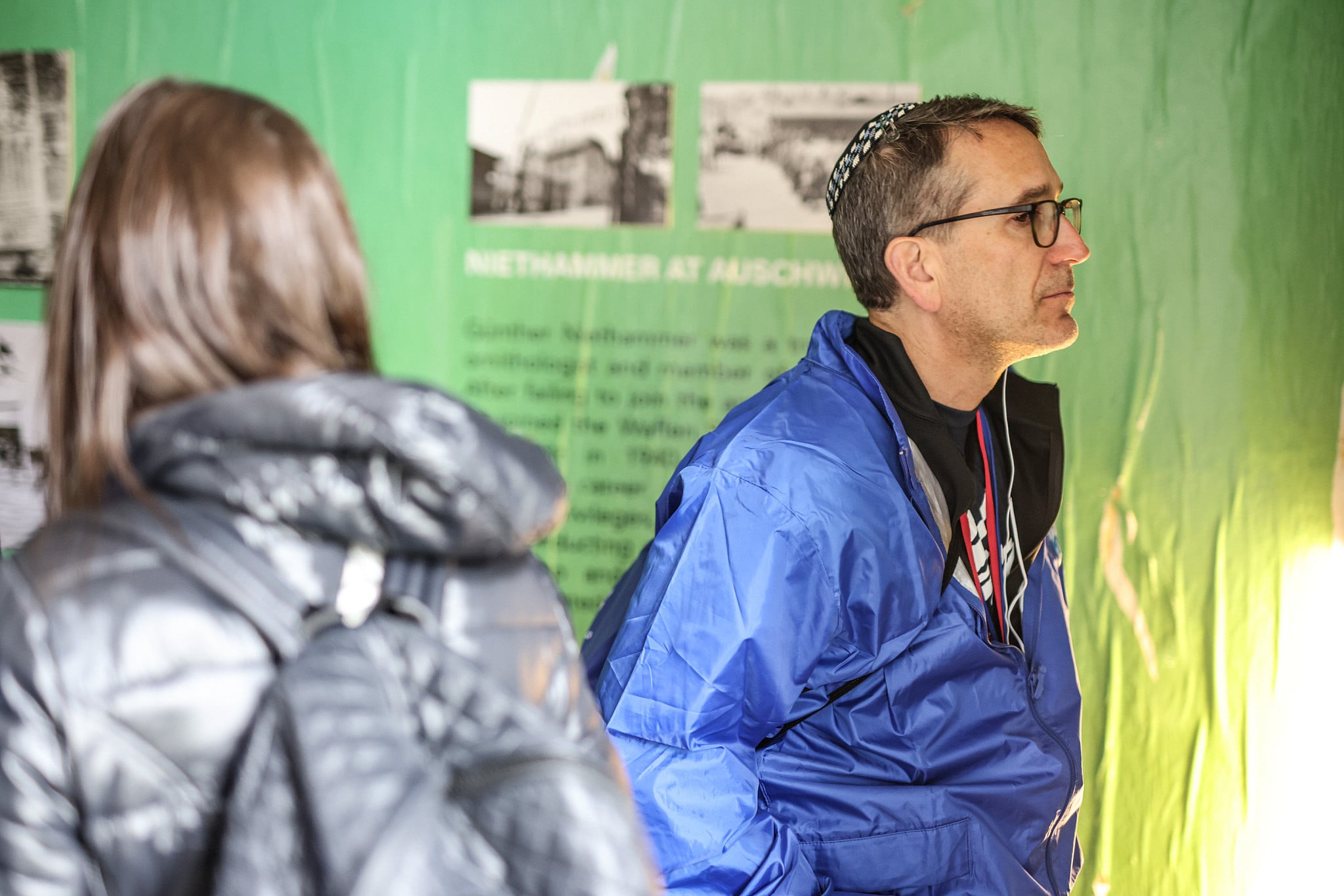
It is neither conventional, nor it is an easy place to be. Additionally to all I know and experienced in the totally murky premises of House 88 in Oswenciem every time I was there, I saw now the reaction of a large group of people who visited the house for the exhibition’s preview event a couple of weeks ago, in mid-April 2026. They were American Jews, who participated in the March of Living 2026 events in Poland, on the Yom HaShoah. They were stunned. One could see that they were trying to comprehend what they were seeing in front of them, and also that they had to live through the personal experience of being present at the house of Rudolf Höss, which is a huge challenge for every and any Jew. And they had to process the thriving ornithology scientific exercises of a moral pervert that he conducted there, with his boss Höss’s blessing and encouragement. The ornithology research was seriously conducted inside Auschwitz at the time of mass extermination there, in between Niethammer being on his duties as an SS-guard there. You have to have a special strength to absorb such things in such a premises. But once you did, you would never forget it. And this is what is beneath Mark Wallace and his colleagues’ concept of this lesson of history in this highly site-specific place.
In the face of what is going on in the world today, it probably is a doubly-meaningful premise for addressing the Nazism, the crimes against humanity, anti-Semitism, racial hatred – and it’s so easily and quickly forgotten crimes, in so many cases. Both the facts and the attitude of that criminal forgetfulness. The case of Gunter Niethammer is a screaming example of it. And due to its piercing macabre, it certainly is the subject of a stunning in its material and message exhibition.
The Insightful Exhibition
The exhibition Birdman of Auschwitz. Science and Faltered Conscience ( April 30th- October 30th, 2026, ARCHER at House 88, Oswenciem, Poland) is a well presented incredible story of a well-known German scientist who was a devoted Nazi and whose conscience was whipped away efficiently. The narrative of the exhibition in the form of documents, photographs and astonishing artifacts has been skilfully present inside the House 88, the Rudolf Höss’s infamous family house during his term as an Auschwitz Commandant.
The entire narrative of the exhibition is based on an extremely well-researched and exceptionally well-written book by Nicholas Milton The Birdman of Auschwitz ( 2025). The depth of detail in this rare historical personal narrative of WWII and the Shoah has provided the ARCHER at House 88 team with the possibility of not just tell the story of one person acting in the terrible camp just metres from the place of extermination process, but also, very importantly, to project many questions which are part of the phenomena of the post-Holocaust. Not only “how on earth was this possible? ” which is still relevant for any adequate human being, but also ‘ why was it not reacted to adequately and properly after the war?”, ‘why was it silenced so easily, so quickly, and for so long?’
The exhibition which occupies all the premises of the frightening Höss family’s house, including that terrible tunnel where Jewish people were tortured casually and regularly, in a complete darkness, does have its eerie echo from the past, which has become a natural and thought-of part of the exhibition – and the meaningful historical interferences as Mark Wallace characterises the events at the House 88. The interference term in Mark’s interpretation in this context comes back to Elie Wiesel’s famous phrase said by him in 1986, “Sometimes, we must interfere” in order to be pro-active at the moments when humanity is in jeopardy. Mark, as my husband Michael and myself, all knew Elie well, and his words are much more than a quote to us all and our colleagues.
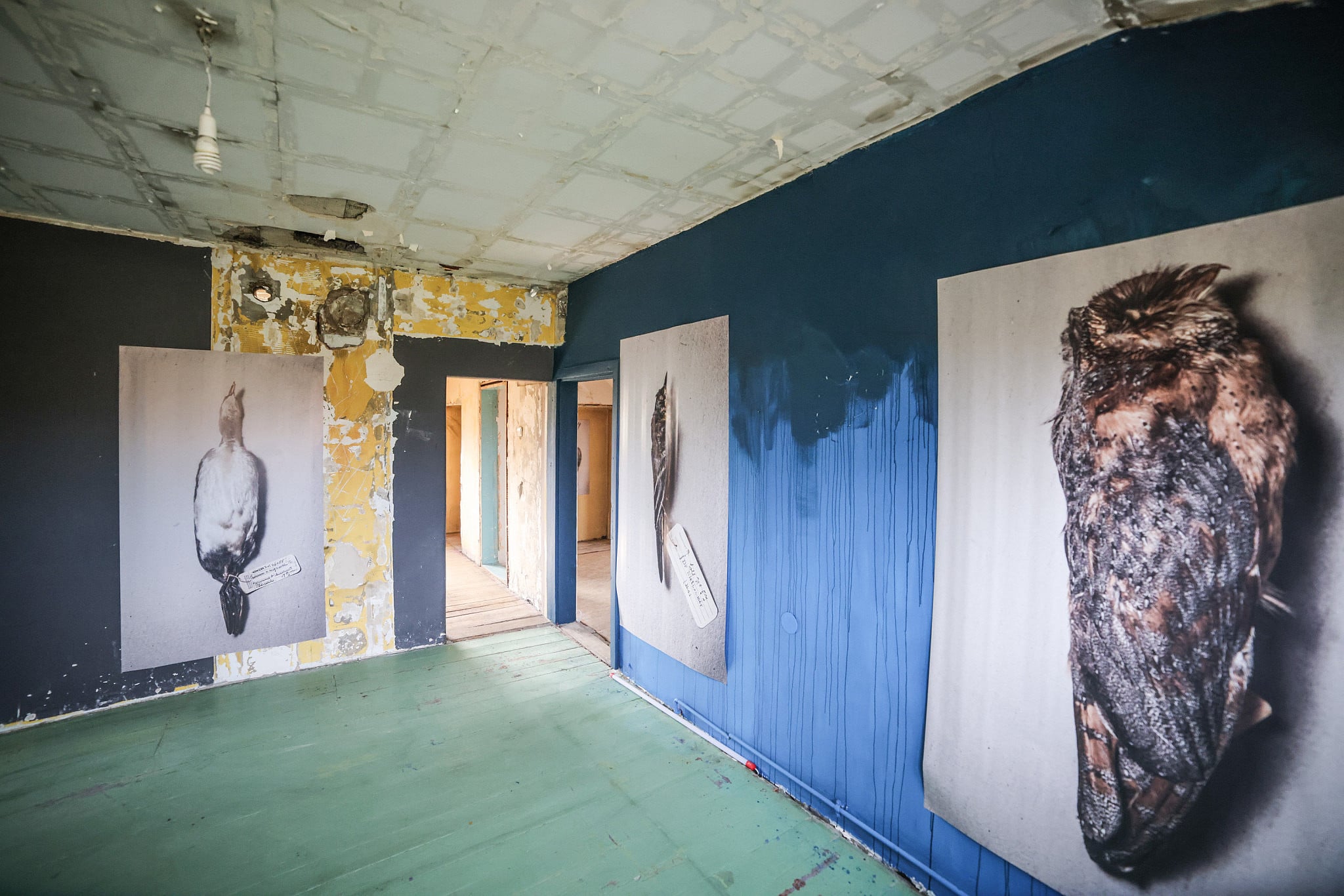
Everything in this exhibition is stunning: the story it tells, the facts, the premises, the documents, the photos. But one part of the exhibit made people grasp their breath with an effort. The devoted Nazi ornithologist of Auschwitz Gunter Niethammer was very busy on his duties and in between. He was hunting for birds, with scientific purposes, had stuffed them very carefully and professionally, with the assistance of an early Polish prisoner of Auschwitz who was a professional taxidermist, and eventually sent them to the Ornithology Department of the Museum of Natural History in Vienna. The department that he was head of before his army services in the late 1930s -early 1940s.
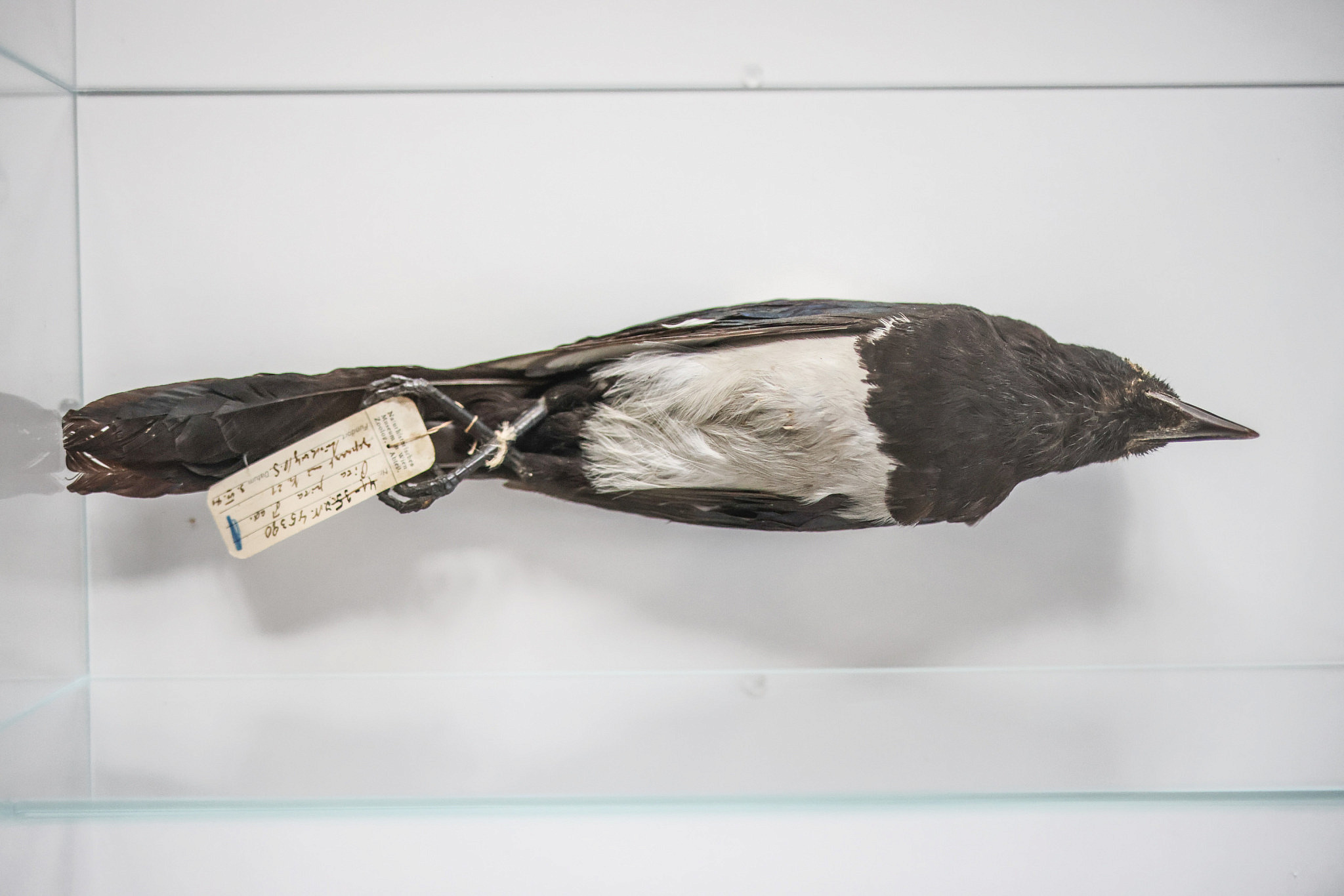
An accurate Nazi Niethammer had marked his scientific Auschwitz trophies dutifully, with standard hand-made – in Auschwitz – paper-labels, handwritten meticulously, dated, and marked with his SS stamp. Every single one of them. If I did not see it myself, I would not believe it. It is utterly beyond believable. But it is true.
All those 84 years since the time when professional Nazi ornithologist Niethammer have sent his Auschwitz hunted and stuffed there scientific samples to Vienna, all of them, over 90 species and witnesses of an utter moral perversity, were collecting dust at the storage of the Museum of Natural History in Vienna.
It is only now, eighty four years later, that a part of them, eight original stuffed birds, has been provided by the Museum and its Ornithological Department ( which , ironically, was once led by Niethammer) to be seen by the public for the first time ever.
It is a very uneasy view, I must tell. It is eerie, twice so when one glances in the window of the House 88 to observe there the rows of appalling red-bricked barracks of Auschwitz. One immediately senses the wind of history, and this wind in this case is not gentle, to say the least.
When Simon Wiesenthal has told me so many times “We need to remind people. We need to prevent another Holocaust. We need to act in this direction tirelessly“, I was of course registering all that, but in my mind and based on the life around and my insufficient experience, I was thinking that he was so deeply wounded by the Shoah in both, personal and historical senses, that he feels like that in the way of precaution. I did not realise at the time that after experiencing the Shoah, and in the case of Wiesenthal, after getting familiar with so many details of it, this conviction of his was an absolutely objective necessity. And now we are seeing it daily, in our current-day reality, dominated by the irrational and inhumane hatred, the old-new fashion of the day.
The more we need to tell, to show, to evoke to those who do not know enough of these places, these criminals, their acts and its impact, their lives after WWII, the society which has permitted them to continue with their lives as if nothing ever happened.
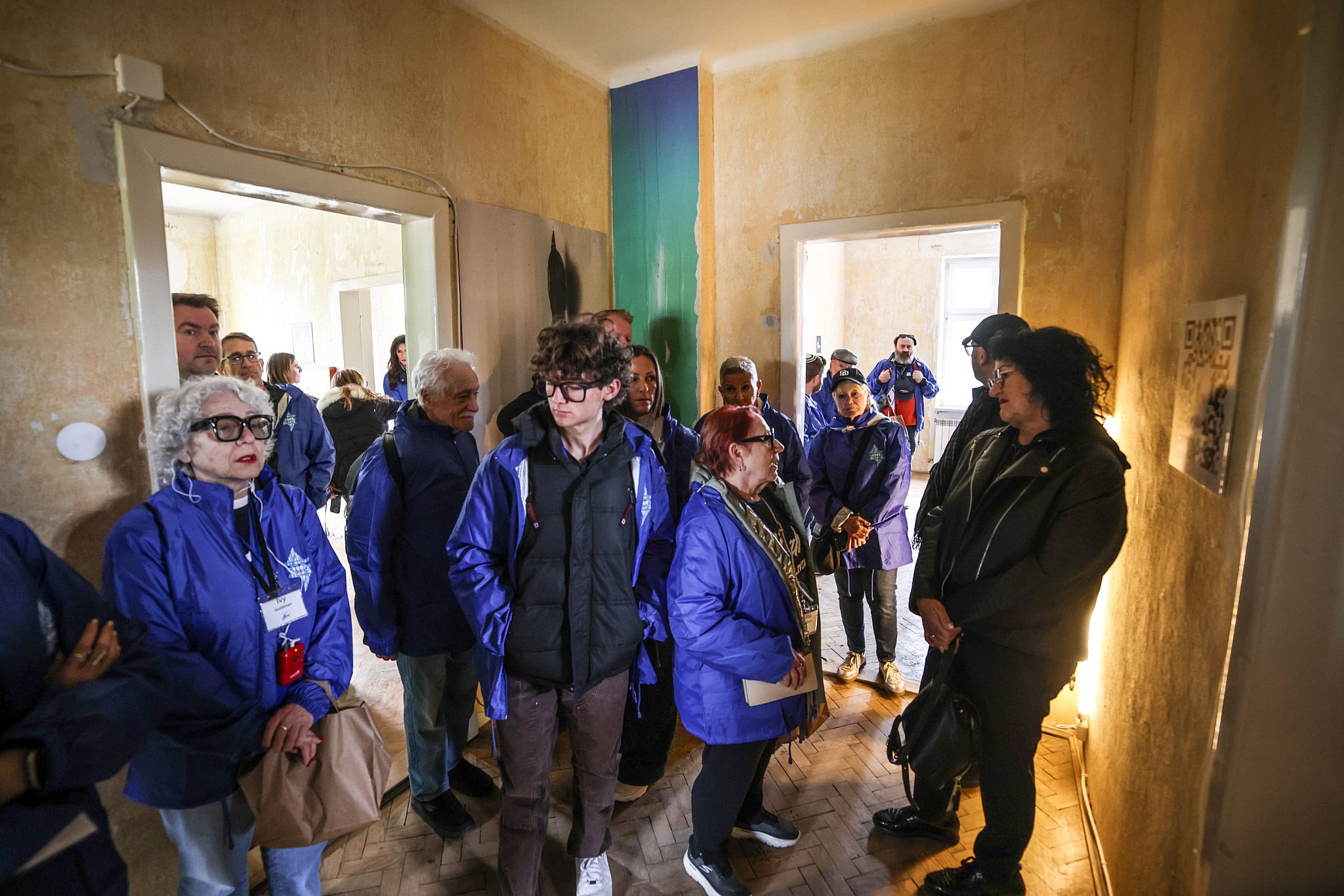
In an amazing way, the exhibition about the macabre reality eighty four years back has become a very powerful wake-up call inside the walls of that once horrific house where the Auschwitz commandant and his family had their tasty dinners of the delicatesse birds which were provided to him by his in-house super-ornithologist of the Reich. Just a hundred meters, literally, from the hundreds of thousands of dying and tortured starved people, crematoria and gas chambers.
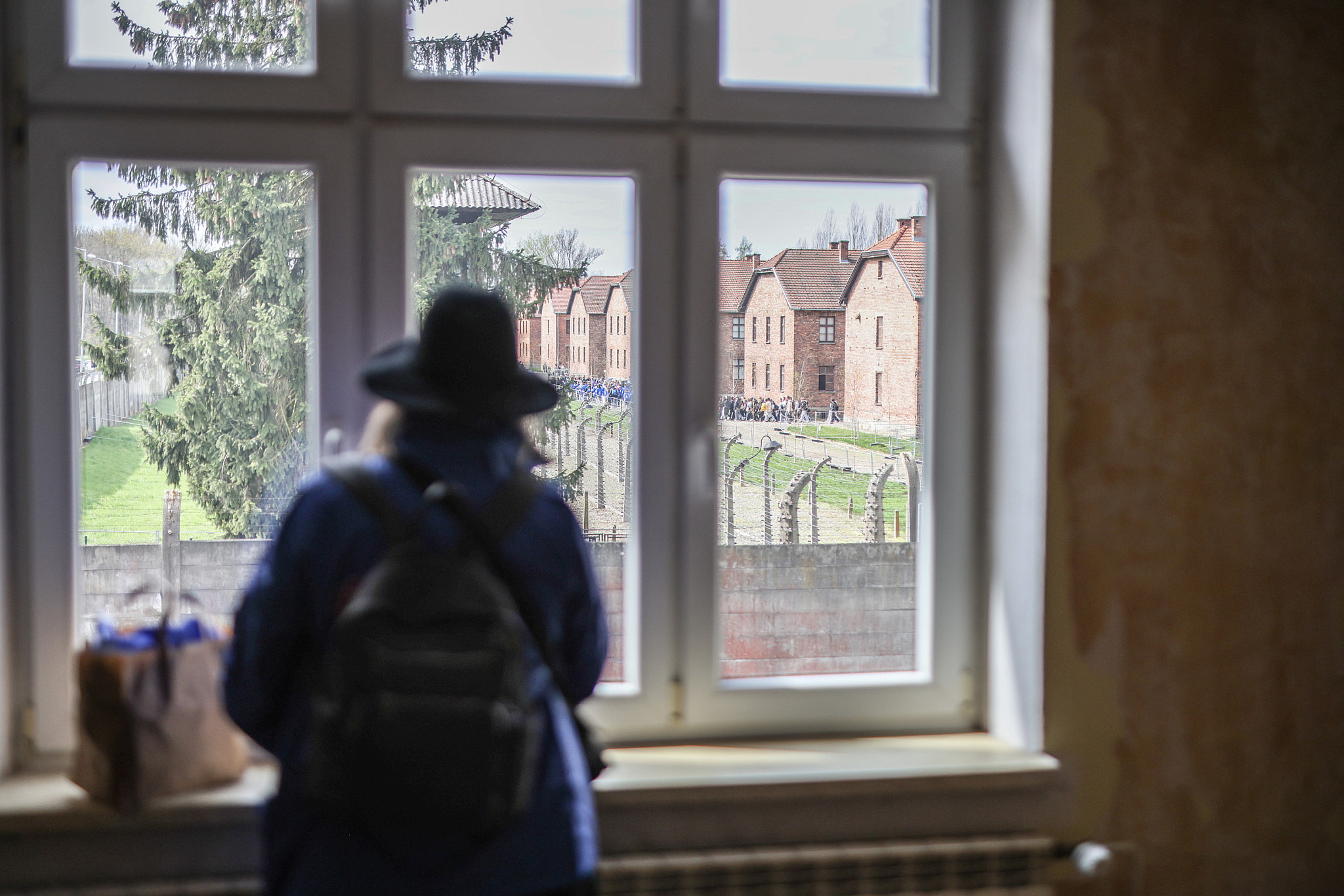
This is a very powerful call for everyone who would be walking into the premises of the new exhibition about the stunning story of a faltered conscience by ARCHER at House 88 to think, to remember, to understand – and to think again.
More details about the exhibition and personalities it tells about in the Part II of the essay.
The Birdman of Auschwitz. Science and Faltered Conscience Exhibition. April 30th – October 30th, 2026, ARCHER at House 88, Oswenciem, Poland
© April 2026
Related Topics
Related Posts