Right There in the Front Room

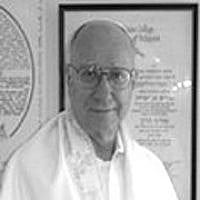
During a visit to the Lubavitcher Rebbe’s Ohel, I got to talking with a man I’d never met before. He spoke about tefillin with so much warmth and happiness. I hadn’t been feeling it that day, but hearing him talk made me want to put them on. So I did, right there in the front room.
I already knew I was supposed to put on tefillin. What stayed with me was how much he loved doing it. I could hear it in his voice. And when somebody loves a mitzvah like that, I have a hard time saying no.
That conversation was on my mind when I sat down to write about the next mitzvah in my Sefer Hamitzvos series, Positive Mitzvah #9: Kiddush Hashem, sanctifying G-d’s name. The Torah says, “And I will be sanctified among the Children of Israel” (Vayikra 22:32). As I wrote, I kept coming back to a question I ask myself often. Am I making G-d happy?
In Hilchos Yesodei HaTorah, the Rambam describes a person whose honesty and kindness make people love the Torah he lives by. The Rebbe once retold a story from the Midrash that shows exactly that. Rabbi Shimon ben Shetach bought a donkey from a non-Jewish merchant, and his students found a precious stone hanging from its neck. Rabbi Shimon told them he had bought a donkey, not a jewel, and sent it back. The merchant said, “Blessed be the G-d of Shimon ben Shetach.”
I love how ordinary that story is. A man sold a donkey. He got his stone back. And when he wanted to say something about the person who returned it, he ended up blessing Hashem.
I think about that whenever I walk into a room wearing my yarmulke, often with my tzitzis out. People know I’m a religious Jew before I’ve said a word. Whatever they decide about that comes from the ordinary stuff. Do I listen when someone disagrees with me? Do I do what I said I’d do?
When Rabbi Shais Taub taught this mitzvah in his Daily Sefer Hamitzvos class, he said that as much as Kiddush Hashem can mean giving your life, he finds it more inspiring to live for Hashem, because you can do that every day. I think of my parents, my grandparents, and my rabbeim. So much of what I learned from them came from watching how they lived on an ordinary day.
And sometimes there’s nobody there to watch. The Rambam writes that when a person does a mitzvah or holds back from an aveirah purely for the sake of Hashem, that too is a Kiddush Hashem. I find that especially meaningful, because some of my chances to make G-d happy are so small nobody would know if I missed them. Like thinking of someone I’ve been meaning to call, actually picking up the phone, and giving them fifteen minutes without doing anything else at the same time.
That’s what I want to try this week. One phone call I’ve been meaning to make. And when I get the chance to do a mitzvah where someone can see me, I hope a little of my love for it comes through. The man at the Ohel probably went home that day without giving our conversation another thought. I’m still thinking about it.