Rise Like A Lion
On May 29, 1953, Sir Edmund Hillary and Tenzing Norgay were the first to climb Mt. Everest, the tallest mountain in the world. What’s even more incredible is that since that date, more than 5,000 climbers — including an 81-year-old man from Nepal — have climbed Everest, a mountain that before May 29, 1953, seemed unconquerable. Within weeks of Roger Bannister breaking the four-minute mile, others followed suit.
Simply knowing that something is possible, helps make it possible. Conversely, not believing in one’s own abilities can prevent even the most important things from happening. No story illustrates this better than the incident of the spies, recorded in last week’s parsha. The spies return with a negative report and famously remark: Va’nehi b’eineinu kachagavim — “And in our own eyes, we were like grasshoppers,” v’chein hayinu b’eineihem — “and so we were in their eyes.” Because they saw themselves as grasshoppers, v’chein hayinu b’eineihem — so too were they perceived by others.
These tribal princes may have been men of great stature, but they lacked self-esteem. Despite all the miracles they had witnessed, they deemed themselves unworthy of God’s intervention. They didn’t believe in themselves. They saw themselves as weak and therefore couldn’t inspire the people to go forward.
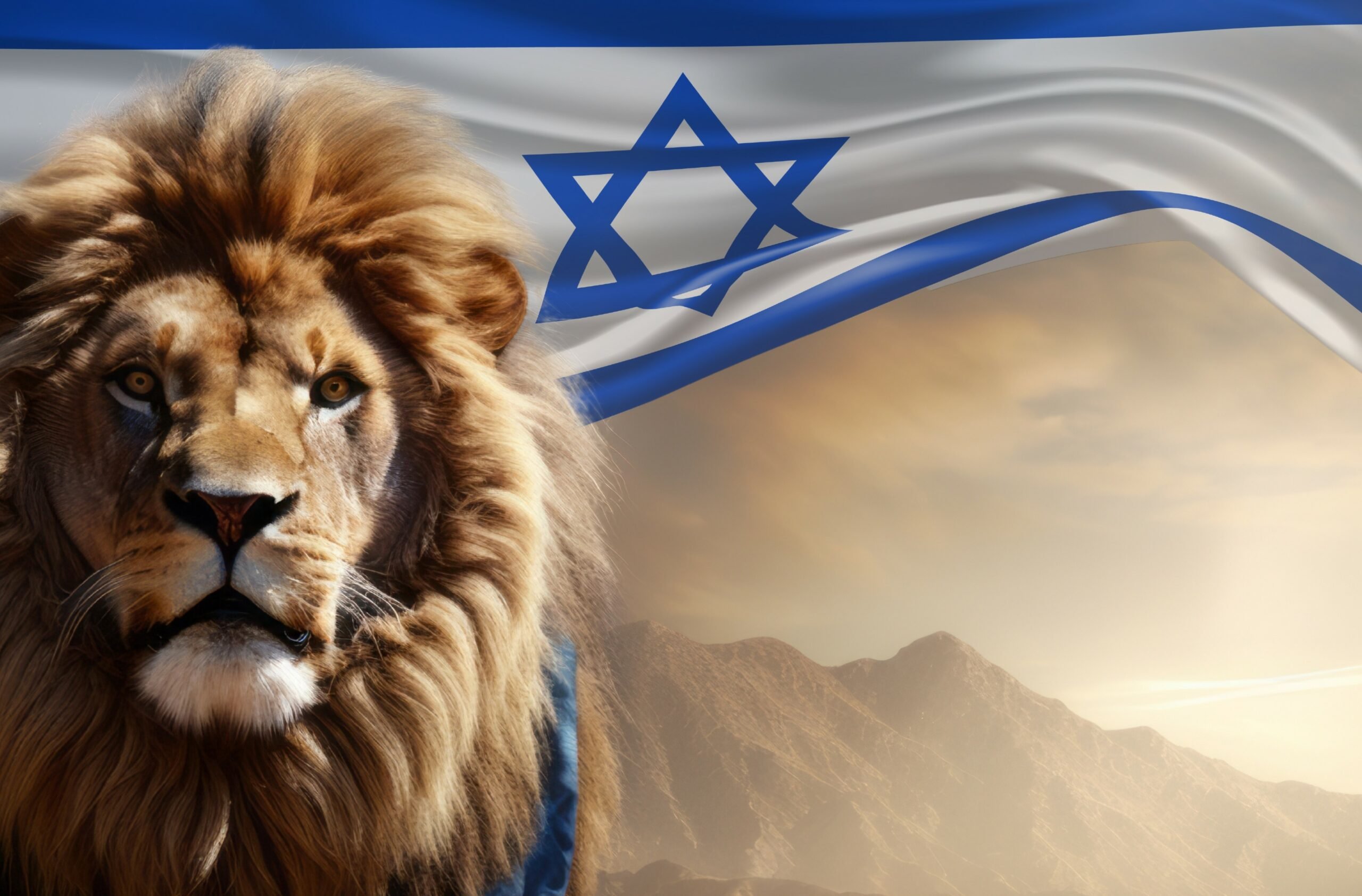
There’s been a lot of talk about the name given to Israel’s operation against Iran: “Operation Rising Lion.” The phrase, taken from Parshat Balak when the prophet Bilam tries to curse the Jewish people, reads: “Behold a nation that rises like a lioness and raises itself like a lion” (Bamidbar 23:24).
The image of a lion “rising up” depicts the strength and bravery of Israel to proactively defend itself — to not sit around and wait for Iran to obtain nuclear weapons, but to rise up and preemptively strike. Just one chapter later, however, that same Bilam compares the Jewish people to a lion that crouches: “He crouches and lies like a lion” (Bamidbar 24:9).
What does Bilam mean when he first refers to the Jewish people as a lion that rises and then later compares them to a lion that crouches?
In answering this question, the Lubavitcher Rebbe, zt”l, cites the Talmudic distinction between a shor tam — an ox that has gored less than three times — and a shor muad — an ox that has gored three or more times. The owner of a shor tam pays half damages, but a shor muad is deemed dangerous and the owner must pay full damages. This is true of all domesticated animals. However, if a non-domesticated animal — like a lion — gores even once, the owner must pay full damages. A lion is always presumed dangerous. Even when it crouches or lies down and appears docile or even playful, its nature is to be aggressive. It will rise up.
Thus, when Bilam compares the Jews to a lion that crouches, he’s saying that because the Jewish people have long been subjugated in foreign lands, they may appear docile or weak. But that subjugation is not their true nature. Like a lion whose instinct is to be fiercely independent, the Jewish people have the power to rise — to bravely defend themselves, as we see throughout Tanach, and as we saw last week in Tehran.
But this is not just on the physical level. There are times in our lives when we feel confident — when we are rising — and there are times we feel anxious or defeated, like we’re crouching or sleeping. But your soul, says the Rebbe, is never defeated. We all possess a chelek Elokah mima’al — a part of us that is Godly — and it will always rise. Even when it looks like we’re down, dormant within us is the nefesh Elokit — the Godly soul that will eventually rise. There is an invincible spirit that the Jewish people possess. Exile may have dampened or concealed it, but it is still there. It may seem like we’re crouching, asleep in the field, but that spark — that invincible spirit — will eventually emerge.
That’s what the spies lacked. They felt defeated. They saw themselves as kachagavim — grasshoppers — and v’chein hayinu b’eineihem — that’s how others saw them too.
So much of what other people think of us stems from the way we think of ourselves. If we are small in our own eyes, we will be small in the eyes of others.
In our professional lives, if we question our own skills and abilities, if we doubt the value we bring to our company, then more than likely, others will question our value too.
In our social lives, if we are unhappy with ourselves, when we present ourselves to others — that unhappiness will show.
And in our religious lives, if we feel insecure about our Judaism because we didn’t grow up observant or don’t have a strong background, we must remember that we already possess a deep connection — a nefesh Elokit that is waiting to be reawakened. A soul that rises like a lion every time we come to a Torah class, every time we show up to davening, every time we come on a retreat like this one [MJE’s annual Spring Retreat].
I’ve been privileged to witness countless men and women embark on ambitious spiritual journeys — taking upon themselves Torah and mitzvot. A few MJE participants recently began keeping kosher and are now hosting Shabbat meals in their apartments. Another young woman, who doesn’t keep kosher but wants to host people for Shabbat, called me to ask for a kosher takeout place so she could host, too. A number of MJE alumni, after becoming ba’alei teshuvah, have gone into Jewish education — and I’m currently writing a recommendation for one student applying to Yeshiva University’s rabbinic ordination program.
It all comes down to how we see ourselves. Are we takers or givers? Giants or grasshoppers? Are we proudly wearing our kippot and Stars of David, standing up for Israel and for the Jewish people — or are we crouching, apologizing for our very existence? The answer will absolutely shape how our friends — and our enemies — perceive us.
But it all starts inside. If we get the inside right, the outside will fall into place. And the positive, uplifted person we know ourselves to be will become our reality.