
CEO of Time to Stand Up for Israel
World War III: Why Israel May Be Better Prepared Than Europe
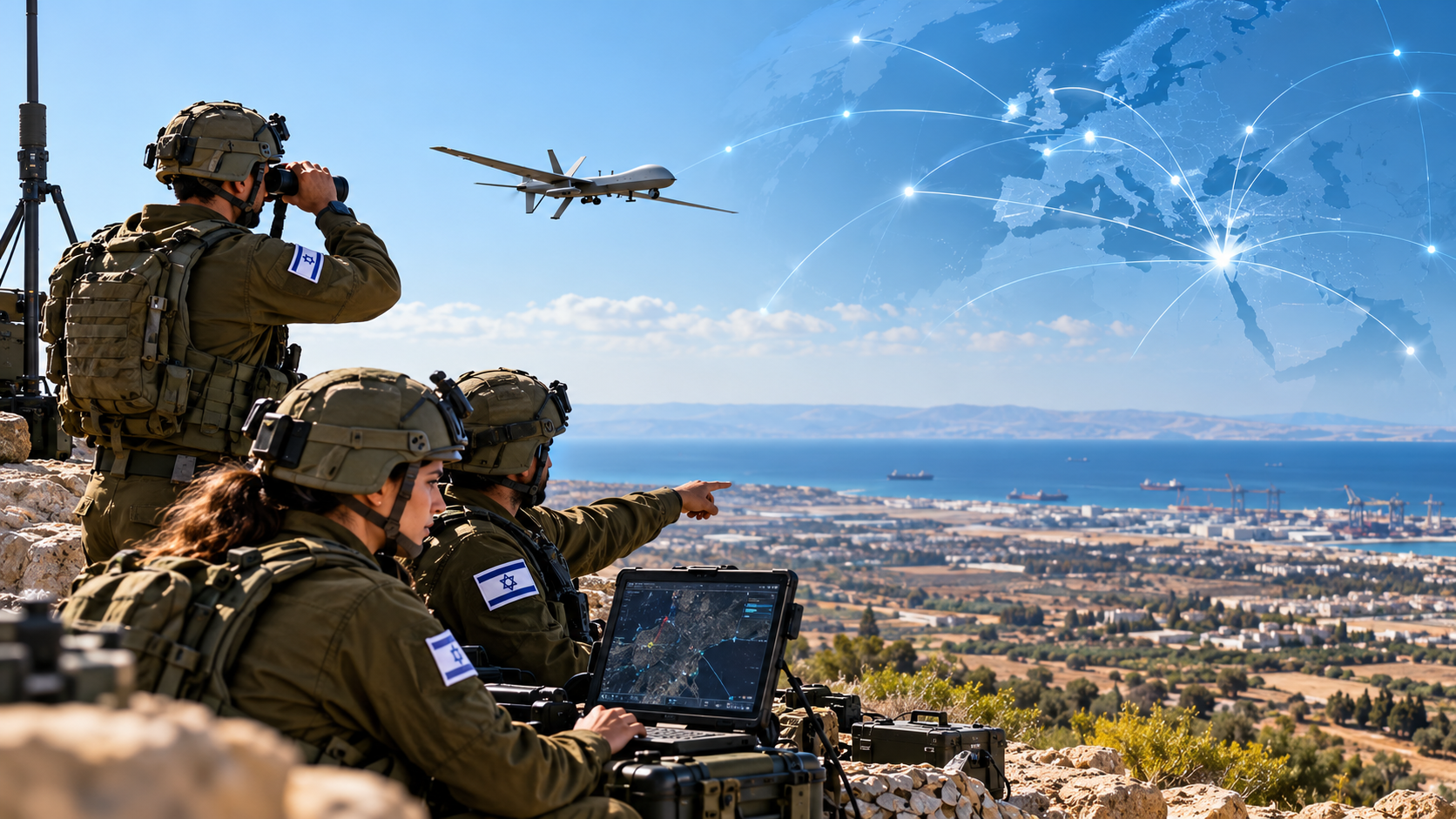
Photo Credits: Sabine Sterk ( AI)
The world is entering a period of dangerous instability. Military tensions are rising, international alliances are being tested, and the possibility of a third world war can no longer be dismissed as an unimaginable scenario. Yet one country possesses advantages that could prove particularly valuable in such a crisis: Israel.
For decades, Israel has operated in one of the world’s most volatile security environments. Surrounded by regional threats, exposed to terrorism and missile attacks, and repeatedly forced to defend its sovereignty, the Jewish state has developed military capabilities, technological expertise and a culture of preparedness that few countries can match.
These strengths do not make Israel invulnerable. Its small territory, concentrated population and dependence on international partnerships create serious challenges.
Nevertheless, in a world where future wars may be determined by intelligence, technological superiority, civilian resilience and the speed of military adaptation, Israel possesses several important strategic advantages.
A World Moving Towards Greater Instability
The possibility of World War III is no longer discussed exclusively by military historians or geopolitical analysts.
Russia’s war against Ukraine, tensions surrounding Taiwan, confrontation in the Middle East and the growing competition between major powers have exposed weaknesses in the international security system.
A future global conflict might not begin with a formal declaration of war. It could emerge through a series of escalating regional confrontations, cyberattacks, economic disruptions and military miscalculations.
Electricity networks, financial institutions, satellites, communication systems and transportation infrastructure could become targets alongside military installations.
In such circumstances, national survival would depend on much more than the number of soldiers or tanks a country possesses.
The ability to anticipate threats, maintain essential services, protect civilians and respond rapidly could determine whether a nation remains functional during prolonged warfare. These are areas in which Israel has accumulated considerable experience.
Military Innovation as a Strategic Advantage
Israel has become a global leader in several areas of defence technology.
Its military development has been driven by operational necessity rather than technological ambition alone.
The country’s layered missile defence architecture, including Iron Dome, David’s Sling and Arrow, represents a sophisticated response to different aerial threats.
These systems are not impenetrable. Large coordinated attacks can overwhelm defensive capabilities, and maintaining sufficient interceptor supplies remains a significant challenge. However, Israel possesses extensive operational experience in detecting, tracking and intercepting incoming threats. Its military has also invested heavily in drones, electronic warfare, intelligence systems, precision weapons and advanced battlefield communications.
Another important strength is the relationship between Israel’s defence establishment and its technology sector. Military experience frequently contributes to technological development, while civilian innovation supports new security capabilities. This relationship allows Israel to adapt to changing threats and develop solutions under considerable pressure. During a major international conflict, technological adaptability could become one of the most valuable military assets.
Intelligence and Cybersecurity
Modern warfare increasingly depends on information. Knowing an adversary’s intentions, identifying vulnerabilities and detecting threats before they materialize can provide advantages that conventional military strength alone cannot deliver. Israel has invested extensively in intelligence gathering, surveillance technology, cybersecurity and electronic defence. Its security institutions operate in an environment where hostile organizations and states continually attempt to exploit weaknesses.This has encouraged the development of advanced defensive technologies and operational expertise.
Cyberwarfare could become a defining characteristic of World War III.
Attacks against energy infrastructure, banking systems, airports, hospitals and telecommunications networks could paralyze entire societies without traditional military occupation. Israel’s experience in confronting sophisticated digital threats could help it maintain operational capabilities and protect critical infrastructure. Its cybersecurity industry also contributes to international technological development, making Israeli expertise relevant to countries seeking stronger digital defences. In a future conflict, information superiority and cyber resilience could be as important as conventional firepower.
Civilian Preparedness and National Resilience
A country’s ability to survive prolonged warfare depends heavily on its civilian population. Israel has developed extensive emergency response structures, public warning systems, protected spaces and procedures for responding to military threats. Hospitals, emergency organizations, local authorities and security institutions have experience operating during national emergencies.
Many citizens understand the importance of following emergency instructions and responding quickly to security alerts. Military service and reserve duty also contribute to a substantial pool of people familiar with defence procedures and national mobilization. These capabilities are particularly relevant in an era when civilian infrastructure may become a primary target.
A major war could disrupt electricity, water supplies, transportation, communications and medical services.
Countries capable of maintaining essential functions under pressure would possess an important advantage. Israel’s experience does not eliminate the possibility of serious disruption, as previous conflicts have demonstrated. But its preparedness systems provide an established foundation for responding to emergencies.
Rapid Military Adaptation
One of the most important lessons from recent conflicts is that military technology and battlefield conditions can change extraordinarily quickly.
Drones, electronic warfare, artificial intelligence and precision weapons are transforming military operations. Strategies that appear effective at the beginning of a conflict may become obsolete within months. Israel’s defence establishment has considerable experience adapting to evolving threats.
Its relatively compact military command structure, integration of intelligence and operational capabilities, and close connections with technological industries can support rapid responses. The country’s reserve system also allows experienced personnel to be mobilized during emergencies. This flexibility could prove valuable during a prolonged international conflict.
However, rapid mobilization also carries economic consequences. Reservists are drawn from businesses, universities, public institutions and essential professions.
Israel’s ability to sustain military operations therefore depends partly on maintaining a functioning civilian economy. The strategic advantage lies in its capacity to respond quickly while continuing to develop new capabilities.
Israel’s Strategic Importance to Europe
Israel’s security expertise has significance far beyond its borders. European governments increasingly recognize the importance of missile defence, cybersecurity, intelligence cooperation and advanced military technology.
Germany’s acquisition of Israel’s Arrow 3 missile defence system illustrates the growing relevance of Israeli defence capabilities to European security. This relationship could become increasingly important as NATO members strengthen their military preparedness. Israel can contribute advanced technology, operational experience and specialized expertise.
Europe, in turn, possesses enormous industrial capacity, substantial economic resources and military partnerships that can support long term security cooperation. These capabilities are complementary. A stronger strategic relationship between Israel and European democracies could improve preparedness against shared threats, particularly in missile defence, cyber protection and critical infrastructure security. Such cooperation does not require agreement on every political issue. It requires recognition that security challenges often extend beyond ideological disagreements.
The Importance of National Determination
Military technology alone cannot guarantee national survival. History repeatedly demonstrates that national determination, public confidence and the willingness to endure hardship influence the outcome of conflicts.
Israel’s national identity is deeply connected to Jewish history and the determination to maintain an independent homeland. The memory of persecution, the Holocaust and repeated threats to Jewish security contributes to the understanding that national sovereignty must be protected. For many Israelis, defending the country is therefore more than a military obligation. It represents a responsibility to future generations.
This sense of national purpose has helped Israel endure repeated periods of conflict and uncertainty. It also supports the country’s ability to mobilize resources and maintain public engagement during emergencies. National determination should never be confused with immunity from political division or social exhaustion. Israeli society contains profound disagreements, and prolonged conflict creates substantial psychological and economic pressure. Nevertheless, a strong commitment to national survival remains one of Israel’s most important strategic assets.
The Vulnerabilities Israel Cannot Ignore
Despite these advantages, Israel would face serious dangers during a third world war. Its geographical size creates particular vulnerabilities. Critical infrastructure, population centres, military installations and economic facilities are concentrated within a relatively small area. A sustained campaign involving missiles, drones or other long range weapons could cause extensive damage.
Israel also relies on international trade, access to essential materials and cooperation with strategic partners. Its relationship with the United States remains especially important for military supplies, diplomatic support and advanced defence capabilities. A global conflict that disrupts international transportation or industrial production could place significant pressure on these relationships.
Israel’s economy would also face difficulties if prolonged mobilization removed large numbers of workers from civilian employment. Furthermore, no national preparedness system can fully protect a population from the consequences of nuclear warfare. Recognizing these vulnerabilities is not a sign of weakness. It is a necessary part of serious strategic planning.
Could Israel Be Safer Than Europe?
The answer depends on the nature of the conflict.
During a major cyberwar or a period of widespread infrastructure disruption, Israel’s experience with emergency preparedness and security operations could provide meaningful advantages. In conflicts dominated by drones, missiles and rapidly changing military technologies, its defence industry and operational expertise could also prove valuable.
However, geographical exposure matters. Israel’s proximity to regional adversaries and its limited strategic depth could make it more vulnerable to direct military attacks. Much of Europe benefits from greater geographical distance from certain conflict zones, larger territories and the collective military capabilities of NATO. It would therefore be misleading to claim that Israel would automatically be safer during World War III.
The more defensible conclusion is that Israel may be better prepared for several forms of modern warfare, even while facing greater exposure to others. Preparedness and geographical safety are not the same thing.
Europe’s Opportunity to Learn
The changing international security environment presents Europe with an opportunity to reconsider its priorities. Military readiness, civil defence, strategic industries and protection of critical infrastructure require sustained investment. Recent increases in European defence spending represent important progress, but financial commitments must translate into operational capabilities.
Israel offers useful lessons in technological innovation, emergency response, intelligence integration and the ability to adapt under pressure. These lessons can be studied without adopting every aspect of Israeli security policy.
A practical relationship based on mutual interests could strengthen both Israel and European countries. In an increasingly unstable world, democratic nations benefit from cooperation that improves their ability to protect citizens and maintain essential institutions.
The Greatest Advantage Is Preparedness
World War III is not inevitable.
Nuclear deterrence, economic interdependence and international diplomacy continue to provide powerful incentives for governments to avoid direct confrontation. Nevertheless, the consequences of a global conflict would be so severe that preparedness remains essential. Israel’s experience demonstrates the importance of investing in security before a crisis emerges. Its military innovation, intelligence capabilities, emergency response systems and national resilience have developed through decades of difficult experience. These strengths could provide significant advantages in a future international conflict. They also explain why Israel remains strategically relevant far beyond the Middle East.
The Jewish state is not simply a country seeking protection from international threats.
It is also a country capable of contributing knowledge, technology and experience to the security of other democracies.
And that is something Europe should recognize.
Israel’s Strength Is More Than Military Power
A third world war would test the resilience of entire societies. Military power would matter, but so would technological innovation, intelligence, economic endurance, civilian preparedness and national determination. Israel possesses considerable strengths in these areas. Its security experience has produced capabilities that are increasingly relevant to the challenges confronting the international community. Those capabilities cannot eliminate the dangers of a global conflict, but they can improve the country’s ability to respond.
Europe has the resources, industrial strength and alliances necessary to build formidable defensive capabilities. Israeli experience could contribute to that effort.
The future should not be defined by competition over which society is better prepared for catastrophe. It should be defined by cooperation among countries determined to prevent catastrophe while remaining capable of defending themselves.
Israel’s greatest strategic advantage is not that it expects war. It is that decades of experience have taught it the value of preparing for threats before they become existential emergencies. And in a world facing increasingly unpredictable dangers, that experience deserves recognition, respect and serious consideration.
Standing with Israel is not merely a statement of political solidarity. It is also a recognition that the security, innovation and resilience of the Jewish state matter to the wider democratic world.
Related Topics
Related Posts