
Research Fellow at the Hebrew University of Jerusalem
Rojava Impasse: Kurdish Statehood, Historical Aspiration and Political Failure
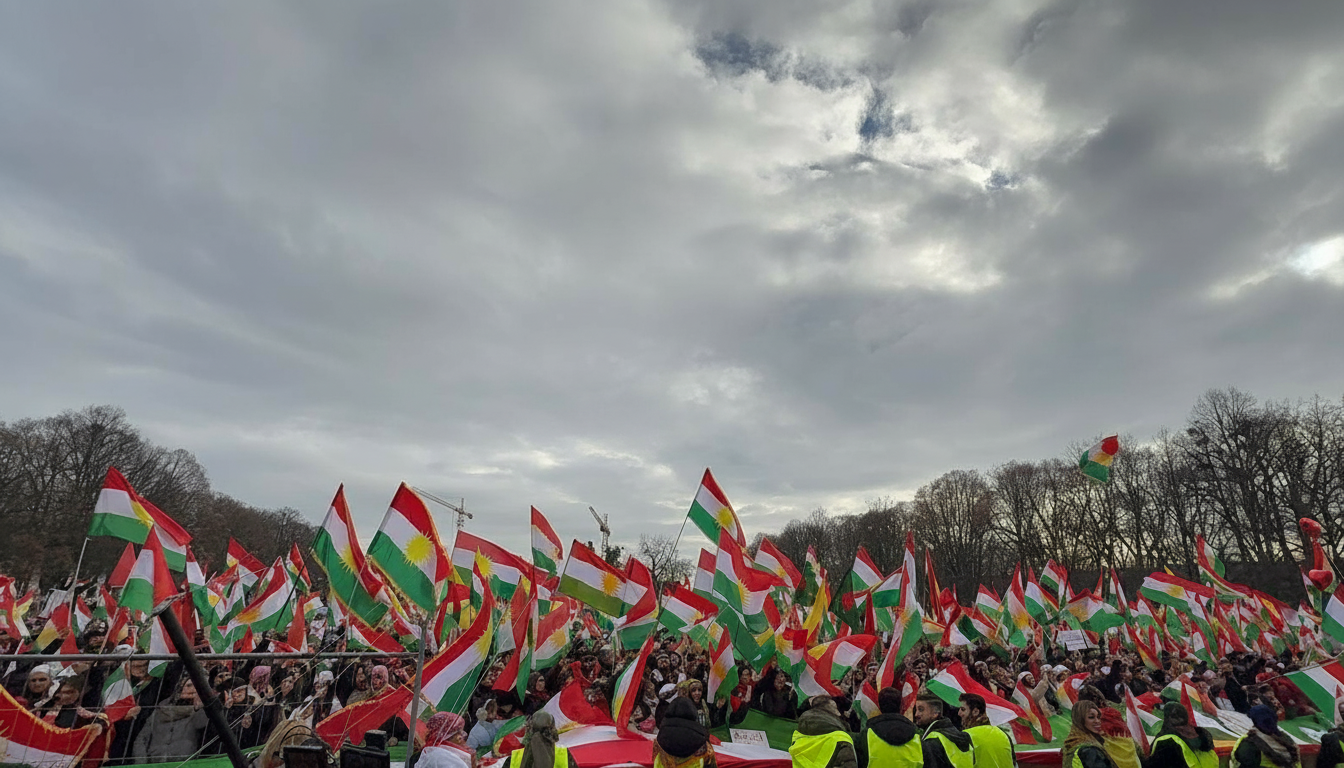
The Kurdish diaspora members in Bonn demonstrate for statehood. This image is used with permission from the rally organizer.
As the Kurdish world mourns the collapse of the de facto autonomous Kurdish region in Rojava (North and East Syria) since January 18, a deeper and more painful reckoning has emerged among the Kurds themselves, stirring their collective memories of missed opportunities and tragedies. Beyond grief and anger, there is a growing consensus that Kurdish political elites and leadership have repeatedly failed to articulate the full demands of the Kurdish masses and to develop a coherent and unified vision for Kurdish statehood or even a clear de jure political status of their autonomy. The appearance of the Rojava representative at the Oct 23, 2019, subcommittee hearing exemplifies this complex stance, as she rejected both independence and autonomy while advocating for a decentralized, unified Syria in her response to American lawmakers. Although Kurdish movements have shown remarkable resilience on the battlefield and in grassroots mobilization, they have frequently struggled to convert popular aspirations into lasting diplomatic and political achievements. Why is this the case?
Yet this failure of leadership must not be confused with a lack of popular will. On the contrary, the Kurdish demand for statehood has been one of the most consistent and enduring political aspirations in the modern Middle East. Claims that Kurds have never demanded a state or that those who do represent only a marginal or extremist fringe constitute a deliberate distortion of Kurdish history and political reality. Such narratives do not merely misunderstand Kurdish politics but actively erase a century of struggle, sacrifice, and collective mobilization. This distortion is particularly prevalent among self-appointed, illegitimate, and unqualified “Kurdish diplomats” in major world capitals of powers in the United States and Europe. These certain circles operating under a Kurdish identity promote narratives that align closely with the strategic interests of the Turkish state. By framing Kurdish demands as the issue of decentralization and integration in ruling states that have oppressed Kurdish populations and denied them any legal and political status, these actors present Kurdish politics as inherently non-statist, thereby reassuring regional powers and international stakeholders that the territorial status quo will remain intact. They also legitimize the discourses of the ruling regimes, particularly in Ankara and Tehran, that portray Kurds as “unassimilated,” “backward,” and “unmodern” segments of their societies, suggesting that they do not require their own institutional structures but instead must be assimilated and modernized. They fundamentally misrepresent both the historical record and the political consciousness of the Kurdish people. This approach highlights the gap in Kurdish diplomacy that allows nefarious actors to distort, misrepresent, and undermine Kurdish claims. The Kurds have persistently failed to fill this diplomatic gap, leaving it to those individuals aligned with the repressive states that have permanently persecuted, oppressed, and assimilated the Kurdish population while denying them the rights of self-determination.
A Historical Continuum of State Demands
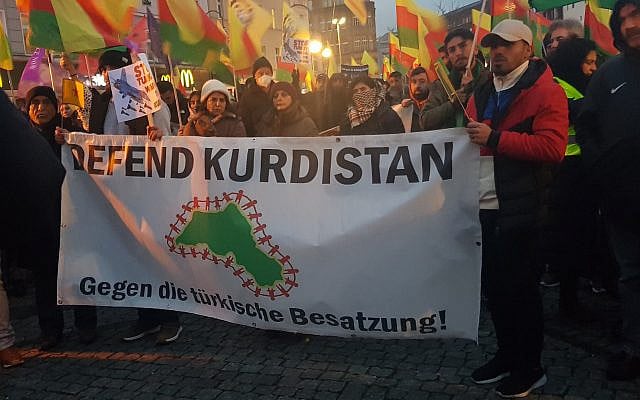
In reality, Kurdish demands for statehood are neither recent nor episodic. They form a clear historical continuum, stretching from the late nineteenth century to the present day. As early as 1880, Sheikh Ubeydullah of Nehri articulated one of the first modern Kurdish political claims, asserting that Kurds constituted a distinct people with the right to govern themselves. Though his vision was shaped by the political vocabulary of his time, blending religious authority with emerging nationalist ideas, it marked a decisive break from purely local or tribal autonomy claims. The Bedir Khan family, particularly in the nineteenth century, further institutionalized Kurdish political consciousness by resisting Ottoman centralization and promoting Kurdish administrative autonomy. These early movements laid the groundwork for a more explicit national discourse that would emerge after the First World War.
The post-war period marked a critical turning point. Kurdish leaders and movements actively engaged in international diplomacy, most notably during the negotiations that led to the Treaty of Sèvres in 1920. For the first time, Kurdish statehood was acknowledged, albeit conditionally, within an international legal framework. While the treaty was never implemented and was later replaced by the Treaty of Lausanne in 1923, its very existence demonstrates that Kurdish state demands were recognized as legitimate political claims, not marginal fantasies. The interwar and post-war periods further reinforce this trajectory. The Kurdistan Republic of Mahabad, established in 1946, though short-lived, is one of the most significant examples of Kurdish statehood in practice. With its own government, institutions, and official language, the Kurdistan Republic under Qazi Muhammed represented more than just a rebellion or an experiment in autonomy. It was a clear declaration of Kurdish sovereignty. The republic’s collapse, influenced by the changing dynamics between the Soviet Union and Iran, underscores a recurring theme in Kurdish history: the subordination of Kurdish aspirations to the interests of larger powers.
The movement led by Mullah Mustafa Barzani in Iraq consistently framed the Kurdish struggle as a pursuit of national self-determination. While tactical demands often focused on autonomy or federal arrangements, the core aspiration for statehood remained present. This dual-track approach, which balanced ambitious goals with pragmatic demands, would later resonate with other Kurdish movements. The Kurdistan Workers Party (PKK), especially in its early years, articulated a clear revolutionary vision for Kurdish independence. Despite changes in its ideological direction and stated objectives over time, we must view its emergence within the broader historical context of Kurdish aspirations for statehood. Lastly, the 2017 Kurdistan Independence Referendum in Southern Kurdistan represents the clearest contemporary expression of Kurdish popular will. With over 90 percent of voters supporting independence, the referendum strongly countered claims that the desire for statehood is a fringe or elite-driven concept. It clearly demonstrated that, when presented with a direct and democratic choice, the Kurdish population overwhelmingly favors sovereignty in their own national state.
The Structural Failures and Disastrous Outcomes of Kurdish Political Projects
The repeated failures to achieve statehood should not be seen as a lack of legitimacy or public support. Instead, they should be seen as a result of geopolitical constraints, regional hostility, the national interests of great powers, and diplomatic failures of the Kurdish elites. Kurdish regions are divided among four states, namely Turkey, Iran, Iraq, and Syria, each of which has viewed Kurdish independence as an existential threat. This structural reality has severely limited the space for Kurdish political maneuvering. At the same time, Kurdish leadership has often struggled with fragmentation, rivalries, and short-term tactical thinking. The aftermath of the 2017 referendum serves as a prime example. Despite the overwhelming popular mandate, Kurdish leaders failed to secure international backing or to prepare for the predictable backlash from Baghdad and neighboring states. The result was not only the loss of territory but also a significant erosion of political leverage. The collapse of the Rojava project further underscores these challenges. Rojava was one of the most ambitious Kurdish attempts at self-governance. It combined military effectiveness, grassroots participation, and international visibility, but it ultimately failed to obtain de jure recognition or long-term security guarantees. International allies once again abandoned Kurdish forces, demonstrating that their commitments were conditional and reversible. The Kurdish elites and leadership played a significant role in this disastrous outcome by failing to establish strategic alliances within the region, relying on unrealistic ideals, and allowing the most vital diplomatic arena to become marginal or subject to the influence of malicious actors.
As suggested above, the Kurdish model in Rojava has been strongly shaped by the utopian ideals developed by the imprisoned PKK leader Abdullah Öcalan, who was himself influenced by the American Marxist social theorist Murray Bookchin. Öcalan reoriented the PKK’s political project away from nationhood and statism toward anti-statism, culminating in the concept of democratic confederalism. This model draws on libertarian municipalism and emphasizes organizational principles such as local assemblies and councils, as well as political and social commitments to ecology and women’s emancipation.
However, these utopian ideals are unlikely to gain broad traction or legitimacy in the Middle East. Öcalan’s prolonged isolation of over 26 years in solitary confinement on İmralı Island has likely distanced him from the region’s evolving political realities. Hence, the Middle East is marked by highly centralized and militarized states, the dominance of intelligence services, weak grassroots civil traditions, and enduring tribal structures. Deep religious and confessional tensions, together with conservative and patriarchal social orders, further undermine prospects for recognition and peaceful coexistence.
Moreover, the region is a focal point of great-power geopolitical rivalries, and its economies depend less on communal or cooperative models than on oil revenues, international aid, and strategic trade routes. Finally, entrenched ethnic conflicts, collective trauma, militarization, and terrorism in the Middle East severely constrain the possibilities for sustained communal negotiation across societies. Yet, the Rojava leadership failed to reflect on the realities in the Middle East and organize its military, diplomatic, and social structures accordingly. In addition, this model remained elitist, as it barely found mainstream recognition among the Kurdish and non-Kurdish populations in Syria. Despite intensive campaigns by the Rojava leadership, the idea of Kurdish statehood amongst the Kurdish population has not disappeared. On the contrary, the repeated failure of interim arrangements, autonomy without sovereignty, and de facto control without legal recognition has once again reinforced the perception among mainstream Kurds that only full statehood can provide lasting security, dignity, and liberation. A similar trend can also be noticed after weakening Rojava’s de facto structures amongst the Kurdish masses in the Kurdistan Region of Iraq, Rojava, Turkey, the diaspora, and on social media platforms.
The Persistence of Kurdish Aspirations
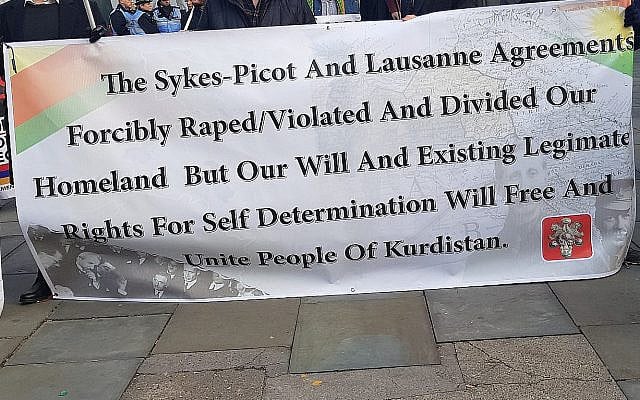
There is little doubt that the idea of a Kurdistan state remains deeply embedded in the collective consciousness of the Kurdish people. While preferences may vary regarding timing, strategy, and territorial scope, the underlying aspiration endures across generations and regions. This persistence is not accidental but rooted in lived experience. Decades of repression, denial, and broken promises have taught many Kurds that partial solutions are inherently fragile. Crucially, the failure to achieve statehood does not invalidate the demand itself. Many states that exist today endured centuries of failed revolts and unrealized aspirations before achieving independence. Kurdish history fits squarely within this global pattern of delayed self-determination. As long as the Kurdish people continue to identify with their territorial homeland, preserve their language and culture, share their historical memory, and express collective political demands, their aspirations for statehood will persist. Although state borders may become more rigid and various Kurdish elites may fail to express these Kurdish demands, the fundamental desire for self-determination and statehood will remain strong.
To conclude, in-depth historical scrutiny does not support the narrative that Kurds have never sought a statehood or that such aspirations are marginal. From Sheikh Ubaydullah in 1880 to the 2017 referendum, the quest for Kurdish statehood has been a recurring, legitimate, and widely supported political objective. The tragedy of Kurdish politics lies not in the absence of popular support but in the enduring gap between that support and political realization, as well as the shortcomings of Kurdish elites. As Kurds reflect on the setbacks of recent years, particularly the collapse of the Rojava experiment following the failed Kurdish Independence Referendum in 2017 in the Kurdistan Region of Iraq, the task ahead is not to forsake the idea of statehood but to reevaluate the strategies, leadership models, and diplomatic frameworks necessary to achieve it. Kurdish aspirations will persist as long as the Kurdish people remain committed to their territorial homeland, identity and heritage. History indicates that this commitment is far more resilient than any temporary defeat.
Related Topics
Related Posts