
Rubio Voices Optimism as US Pushes for Swift UN Approval of Gaza Plan
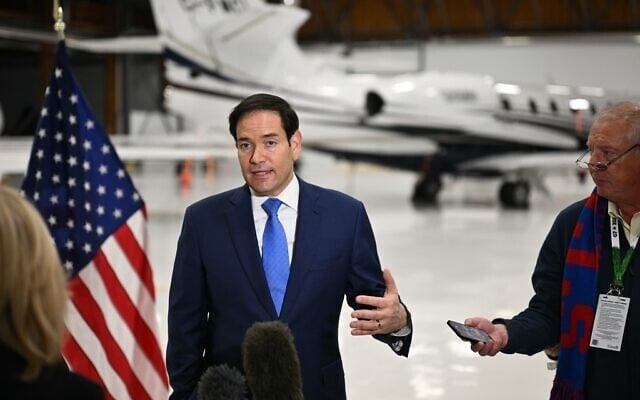
Washington is pressing ahead with an all-out diplomatic drive to secure United Nations Security Council authorization for the proposed International Stabilization Force (ISF) in Gaza—an initiative the administration views as central to President Trump’s wider regional peace plan.
After consultations with G7 foreign ministers in Canada, Secretary of State Marco Rubio voiced optimism, suggesting the draft resolution could move forward within days, laying the groundwork for deployment at the start of 2026. Simultaneously, the U.S. Mission to the UN has issued a searing appeal to the Council, urging swift endorsement of the resolution that would operationalize the President’s 20-Point Comprehensive Plan to End the Gaza Conflict. Crafted with input from key regional partners, the proposal is cast as the only realistic path to a stable, demilitarized Gaza and a political transition free from Hamas’s influence.
“The ceasefire is fragile and we urge the Council to unite and move forward to secure the peace that is desperately needed,” a spokesperson for the US mission to the UN said in a statement, calling it a “historic moment to pave a path towards enduring peace in the Middle East.”
Yet Washington’s push is running into determined resistance from Russia, China, and few Arab states, all of which object to the establishment of a Trump-chaired “Board of Peace” and the lack of a defined role for the Palestinian Authority. Moscow has already circulated a counter-draft, while Beijing and other critics are demanding sweeping revisions that would gut much of the US text. Core disagreements—ranging from Palestinian statehood and Israel’s withdrawal timetable to the scope of the ISF’s mandate—have deepened existing divides within the Security Council and complicated the path to consensus.
Despite the friction, Rubio insists the diplomatic momentum remains intact.
“We’re making good progress on the language of the resolution and don’t want to lose momentum,” he remarked, framing the current moment as a narrow but critical window for action.
“If you want to really flood Gaza, particularly in that red area that’s not in Israeli control – if you really want to see a huge uptick not just in humanitarian assistance but redevelopment, you’re going to need to have security, and that can’t be Hamas,” he explained.
According to a Western diplomat, the administration hopes to bring the measure to a vote imminently. If adopted, it would create the legal and operational architecture for a two-year multinational ISF charged with demilitarizing Gaza and supporting the emergence of a transitional governance structure until a reformed Palestinian Authority is prepared to assume control.
The US Mission’s warning is unmistakable: continued attempts to stall or dilute the resolution risk “grave, tangible, and entirely avoidable consequences for Palestinians,” especially given the fragility of the present ceasefire and the urgency of securing a durable peace.
ISF Mandate: Security, Oversight, and Demilitarization
The latest draft resolution outlines a comprehensive mandate for the ISF, tasking it with dismantling Hamas’s military infrastructure, preventing the rearmament of armed factions, and ensuring long-term stability in Gaza. Unlike traditional UN “blue helmet” missions, the ISF would carry a more assertive security role — one that has drawn cautious deliberation from potential troop-contributing nations wary of operating in volatile conditions.
Rubio, however, stressed that the mission is not intended to be a combat force. “It shouldn’t have to be a fighting force,” he said, explaining that Hamas and other militant groups have already committed to disarmament under the terms of the Gaza peace agreement. “Demilitarization was a commitment Hamas made — and we expect our partners to hold them to it.”
“So there will have to be a force that provides just basic everyday security. That’s as much as anything else what the stabilisation force’s role is, is to stabilise.”
Security on the Yellow Line and Gaza’s Governance
Discussing Gaza’s internal geography, Rubio noted that the ISF’s deployment would focus on stabilizing areas west of the so-called Yellow Line — regions beyond Israeli control where Hamas’s remnants continue to operate. “If you want to see real progress — more aid, more reconstruction, more normalcy — you need security, and that can’t come from Hamas,” he said.
Rubio outlined a vision for Gaza’s future governance in which a civilian Palestinian administration, strengthened and supervised through US-led mechanisms, gradually takes over.
“The Israelis don’t want to govern Gaza. We don’t want to govern Gaza. No country in the Middle East wants to govern Gaza,” he said. “But until local governance is ready, someone has to provide stability.”
G7 Consensus and the Path Ahead
At the G7 meeting in Niagara-on-the-Lake, Germany’s Foreign Minister Johann Wadephul echoed Washington’s call for a UN Security Council mandate.
“We need a mandate so Hamas can be disarmed and an international force can assume responsibility,” he said, adding that the G7 ministers were united in urging rapid action. “The clock is ticking, and we need a security structure as quickly as possible,” Wadephul warned.
In a joint statement, the G7 ministers reaffirmed their “strong support” for President Trump’s Gaza peace deal, welcomed the ceasefire and hostage releases, and urged all parties to facilitate unrestricted humanitarian aid through the UN and the Red Crescent. The communiqué also called on Iran to comply fully with international nuclear obligations.
Despite the diplomatic hurdles — from securing Security Council approval to assembling a credible multinational force — Rubio projected calm assurance.
“We feel optimistic that it’s going to happen,” he said, casting the ISF as an essential pillar for long-term peace and regional stability.
Even amid resistance from key powers, several Council members insist that quick movement is vital to maintain the fragile momentum on the ground. Washington now faces three distinct options: accept meaningful amendments to win broader support, push the draft to a vote and hope no veto is cast, or sidestep the UN entirely by assembling a “coalition of the willing.”
As the US presses ahead, the proposed stabilization force stands as both a measure of global resolve and a pivotal test of whether the region can move beyond ceasefire mechanics toward a durable and enforceable peace.