Rabbi, Economist and Community Builder
Saadia’s parsha: What is to work the land?
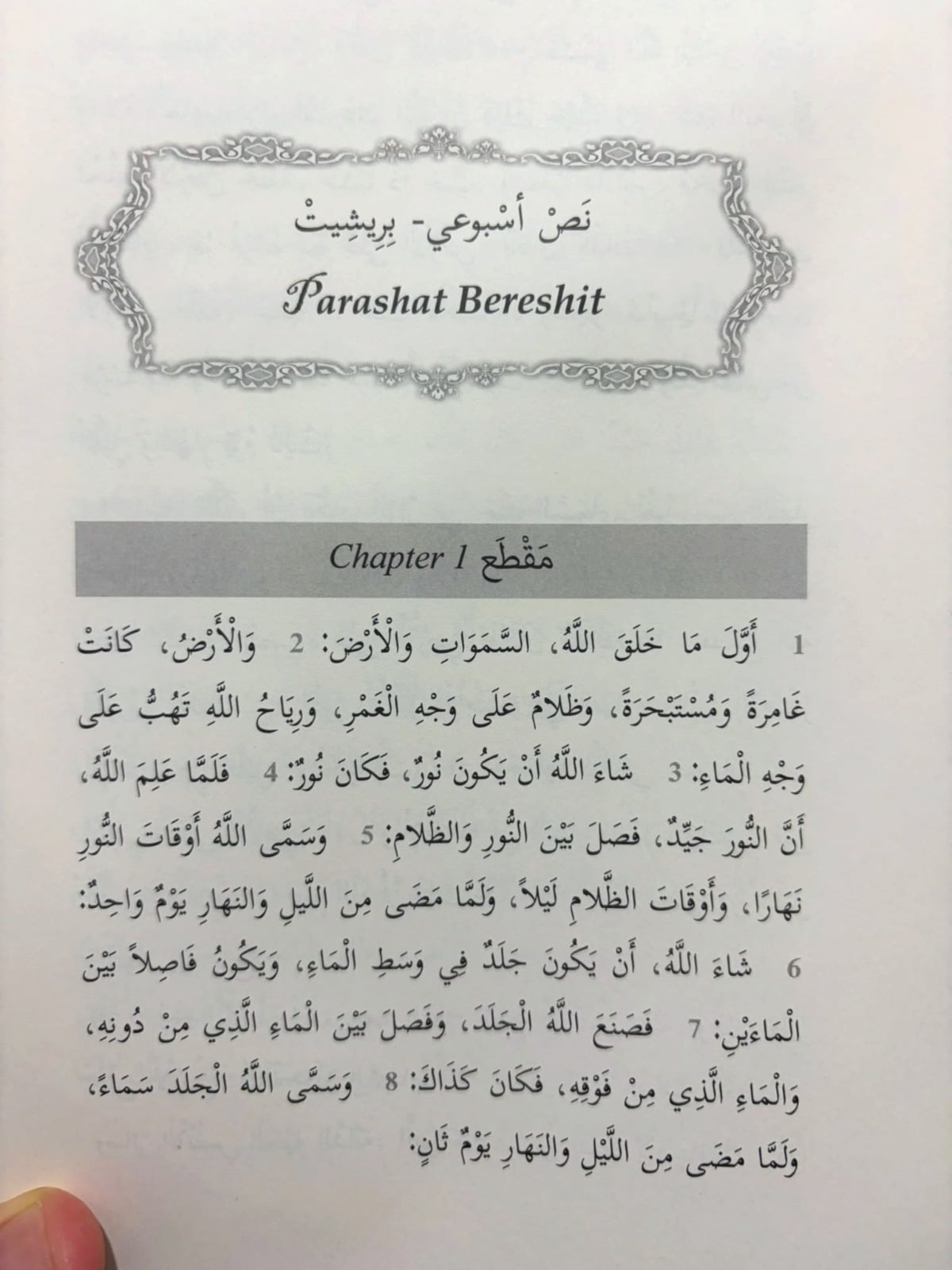
Rav Saadia Gaon's Arabic Translation of the Torah: Parshat Beresheet
Over 1,000 years ago, Rabbi Saadia Gaon – one of the greatest Jewish scholars of the medieval period – produced his monumental Arabic translation of the Torah.
But it was much more than a technical translation. It became known as the Tafsir (تفسير) – Arabic for “interpretation” or “explanation.” Saadia’s choice of words often reveals how he understood the deeper meaning of the biblical text.
Each week, we will choose one verse from the weekly Torah portion and explore an insight that emerges from Saadia Gaon’s Arabic translation.
And what better place to begin than Parashat Beresheet, as we begin reading the Torah anew?
One of the most famous verses in the portion describes humanity’s purpose in the Garden of Eden:
וַיִּקַּח ה’ אֱלֹהִים אֶת־הָאָדָם וַיַּנִּחֵהוּ בְגַן־עֵדֶן לְעָבְדָהּ וּלְשָׁמְרָהּ
“The ETERNAL God settled the Human in the Garden of Eden, to cultivate it and preserve it.” (Genesis 2:15)
The Hebrew phrase le-ovdah (לעבדה), however, literally means something closer to “to work it.”
Saadia translates the two key words – “to work it and to preserve it” – as:
ليفلحها وليحفظها
li-yaflaḥahā wa-li-yaḥfaẓahā
His choice for le-ovdah comes from the Arabic root F-L-Ḥ (فلح), a root closely associated with cultivating or tilling the land. Indeed, the Arabic word fallāḥ (فلّاح) means a farmer.
Saadia could have used a more generic Arabic verb meaning “to work.” Instead, he makes the agricultural dimension explicit: humanity is placed in the Garden not merely to “work” it in some abstract sense, but to cultivate it.
This matters.
In recent generations, particularly with the rise of environmental awareness, much attention has rightly been given to the second half of the verse: “to preserve it.” The verse has become an important Jewish source for environmental responsibility and our obligation to protect God’s creation.
But we should not forget the first half.
Human beings are commanded not only לשמרה – to preserve creation, but also לעבדה – to work and cultivate it.
These two responsibilities belong together.
The Torah does not seem to envision humanity as merely a passive guardian of an untouched natural world. Nor does it give us unlimited permission to exploit it. Rather, human beings are called upon to develop the world while protecting it – to cultivate without destroying, to improve without exhausting, and to create while remaining conscious of what has been entrusted to us.
Perhaps creation was intentionally left, in some respects, unfinished – leaving room for human beings to become partners in its continued development.
Saadia’s choice of one Arabic word helps bring that dimension of the verse into sharper focus.
And that is precisely why his Tafsir remains one of the crown jewels of Jewish literature in Arabic. For centuries, it shaped how Arabic-speaking Jews encountered and understood the Bible, and its influence extended far beyond a simple translation.
Today, language can easily become another barrier in an already fractured and polarized world.
In this weekly series, we want to explore the opposite possibility: that both the similarities and differences between Hebrew and Arabic can become a source of connection – and can help both languages illuminate ideas that neither reveals quite as clearly on its own.
We owe a tremendous debt to Rabbi Yom Tov Gindi from Kefar Chabad, who published a modern version of the Tafsir in Arabic letters several years ago. We could not have embarked on this journey without him, and we invite you to join the ride!
Shabbat Shalom, and see you next week!
Related Topics