Peripatetic scribbler
Samaritan Sukkot on Mount Gerizim
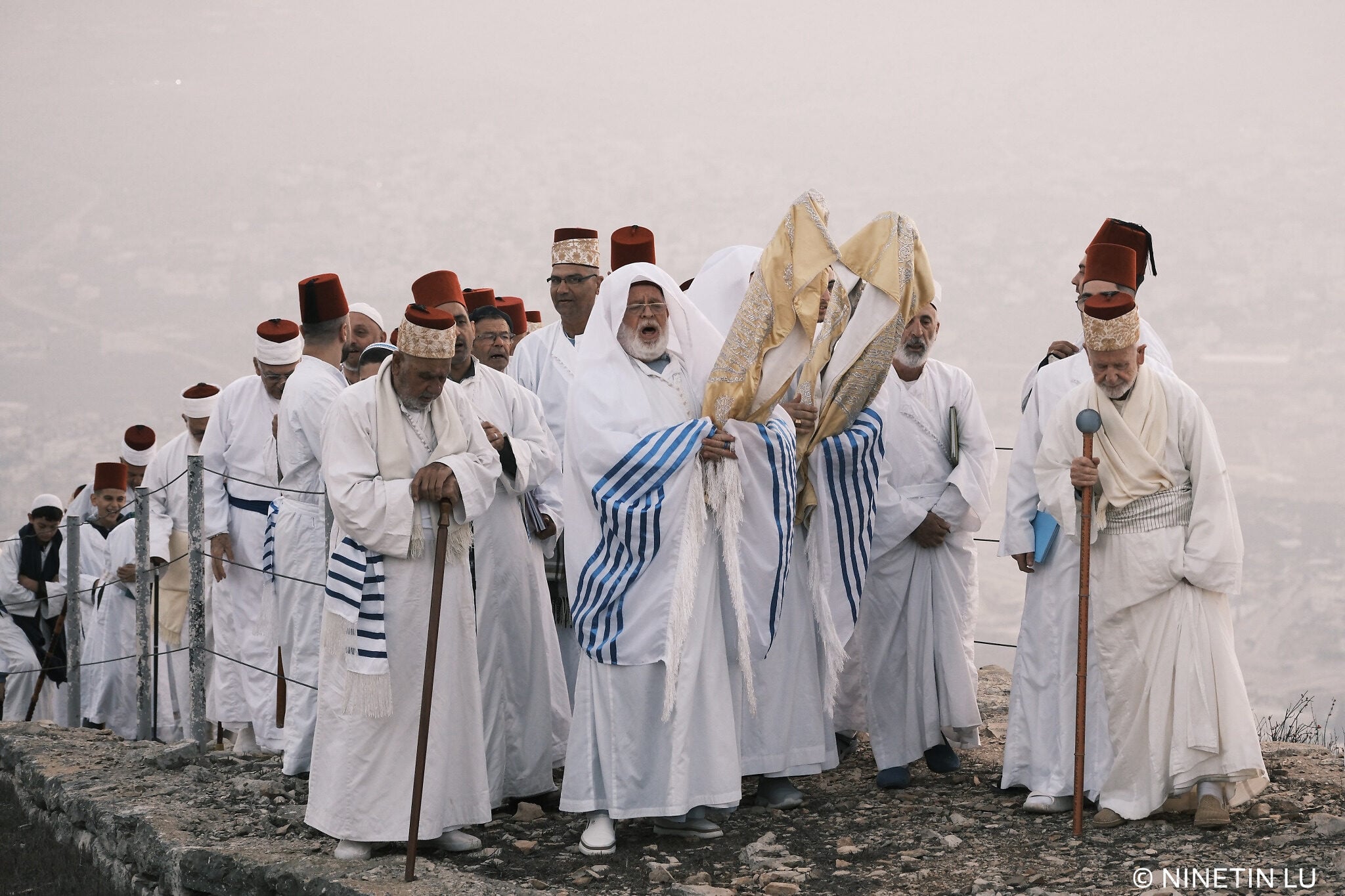
Samaritan pilgrimage on Mount Gerazim
The most exciting adventures start at midnight. We had been told that the Samaritans began to gather at the Kiryat Luza synagogue around 2 am, for Torah recitation prior to the Sukkot pilgrimage which would ascend Mt Gerizim just before dawn.
I locked the front door and turned out into the Jerusalem night. The tourist has the choice of approaching Kiryat Luza from Tel Aviv or from Nablus. This weekend, the West Bank was on lockdown following an attack on Friday by two gunmen on an Israeli military checkpoint outside Hebron, and this forced us to take the shorter route.
My wife and I caught the 12:37 am train from Jerusalem to Tel Aviv, where we rendezvoused with our vehicularly endowed friend. Throughout the preceding week, we hadn’t held out much hope of succeeding in this excursion. Speculating about when hostilities with Iran will reescalate is the new Israeli pastime. This atmosphere turns one into a Laputian, with one eye perennially observing the skies. These days, one’s weekend plans always feel mercurial.
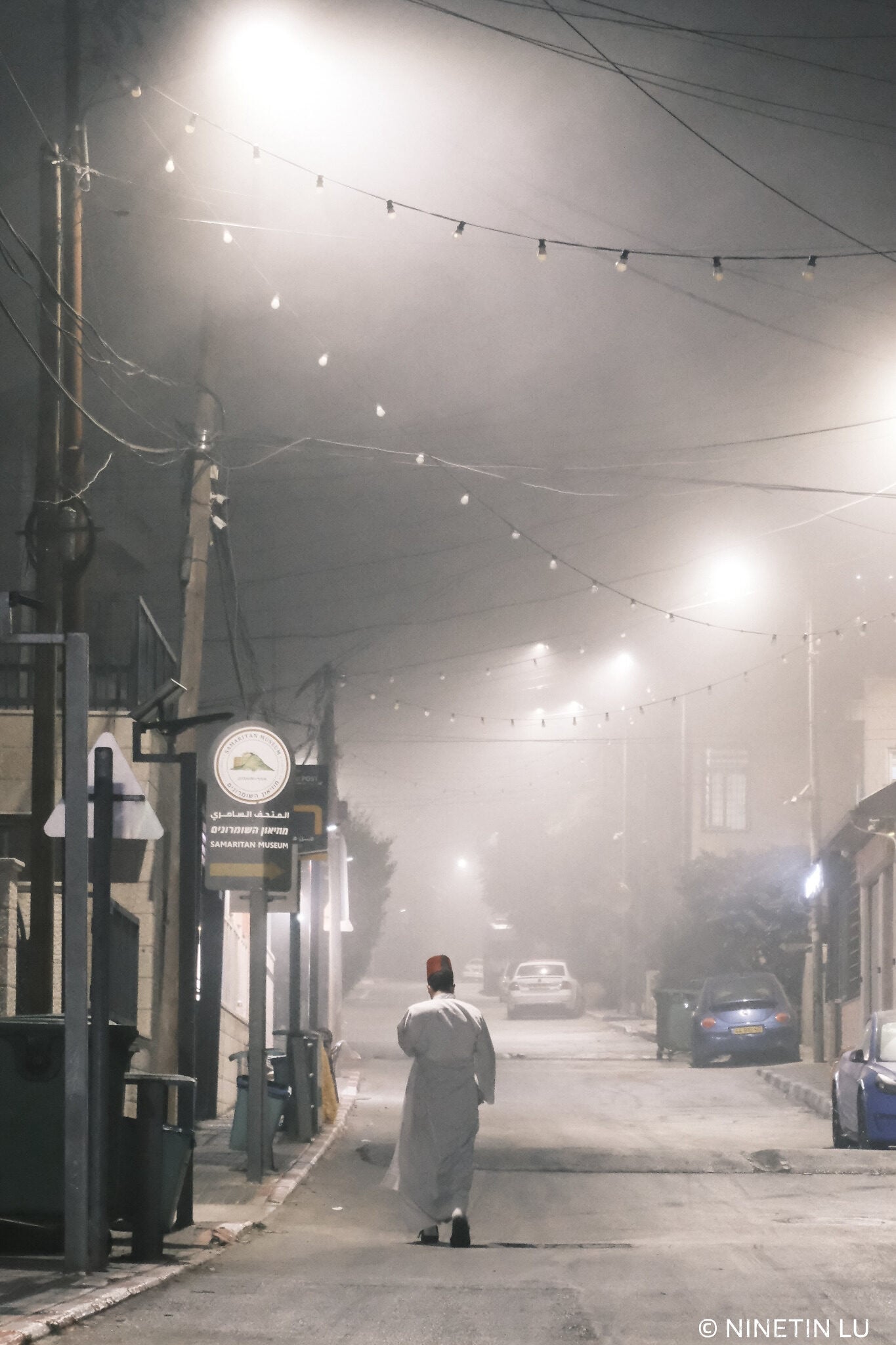
It took about an hour to drive from Tel Aviv to Kiryat Luza, which was thick with mist. We alighted from the car and scanned the high street. The vagaries of daylight savings had compounded our uncertainties about time and place, and so it was with some relief that we saw a white clad figure materialising from the engulfing haze, walking towards the synagogue.
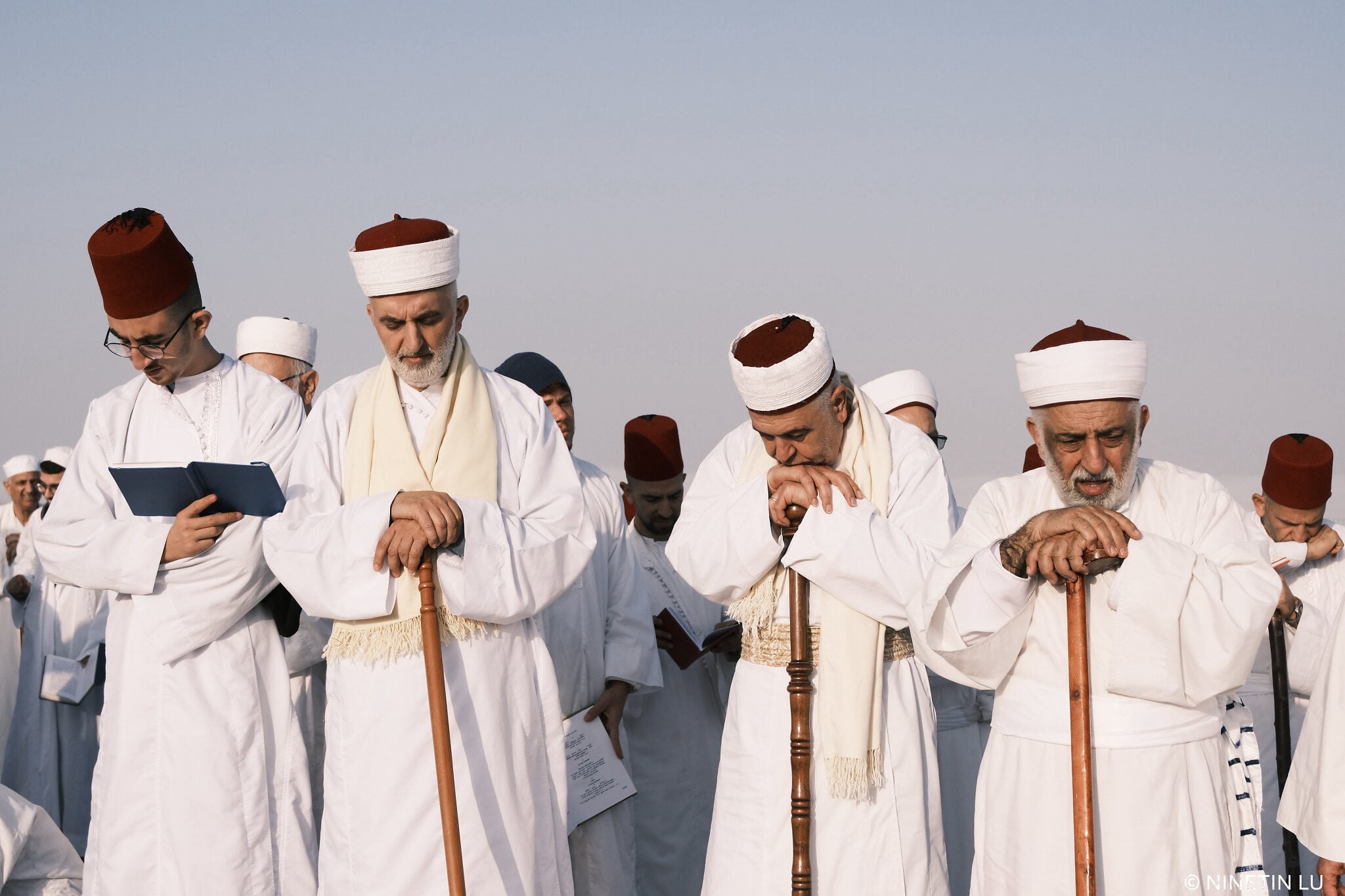
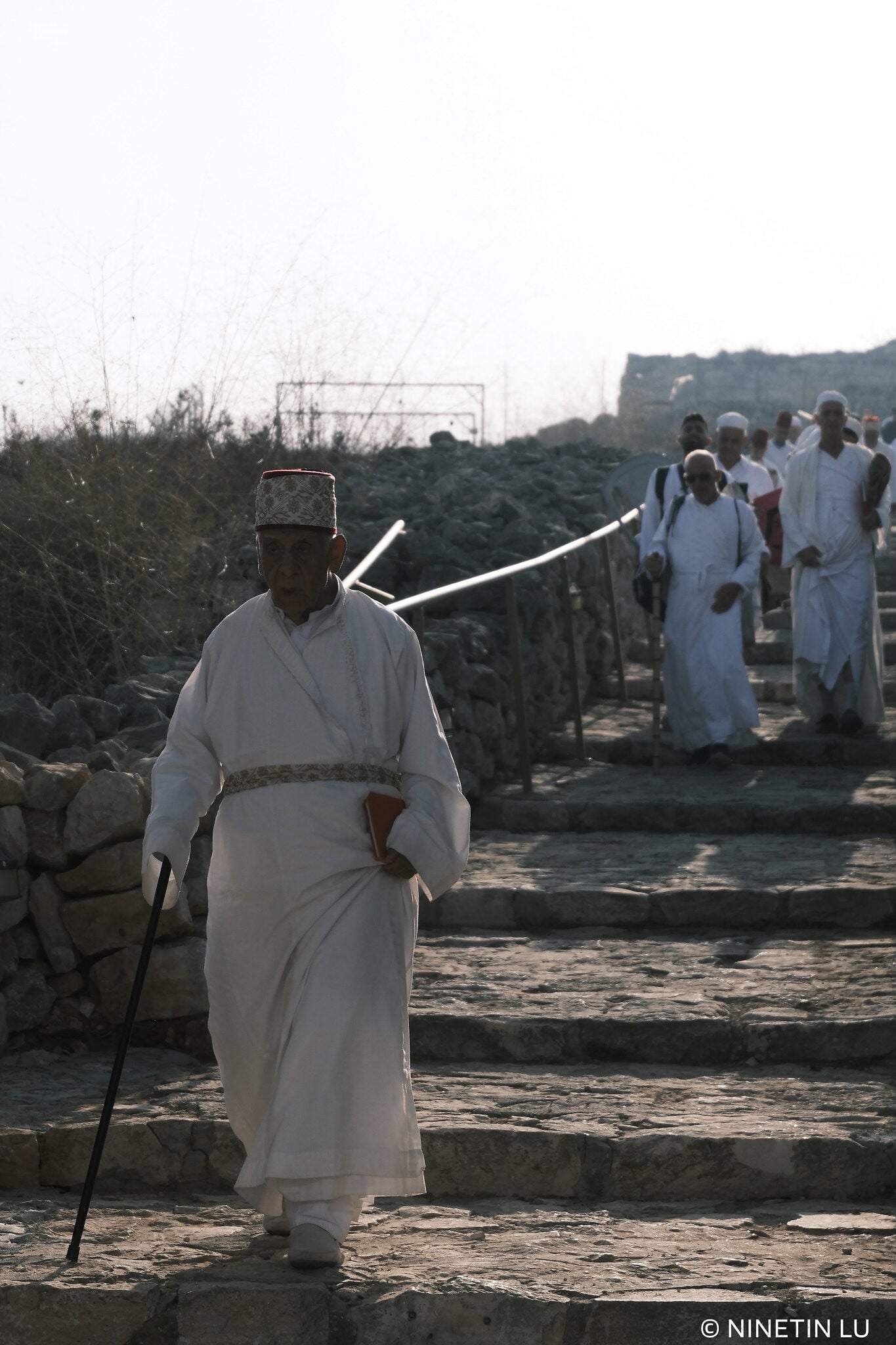
We sat down opposite the synagogue as more figures emerged from the fog. They came with increasing frequency, but each man walked alone. Men of all ages were arriving, from young boys to white bearded priests. They all wore white robes, and most wore red fezzes.
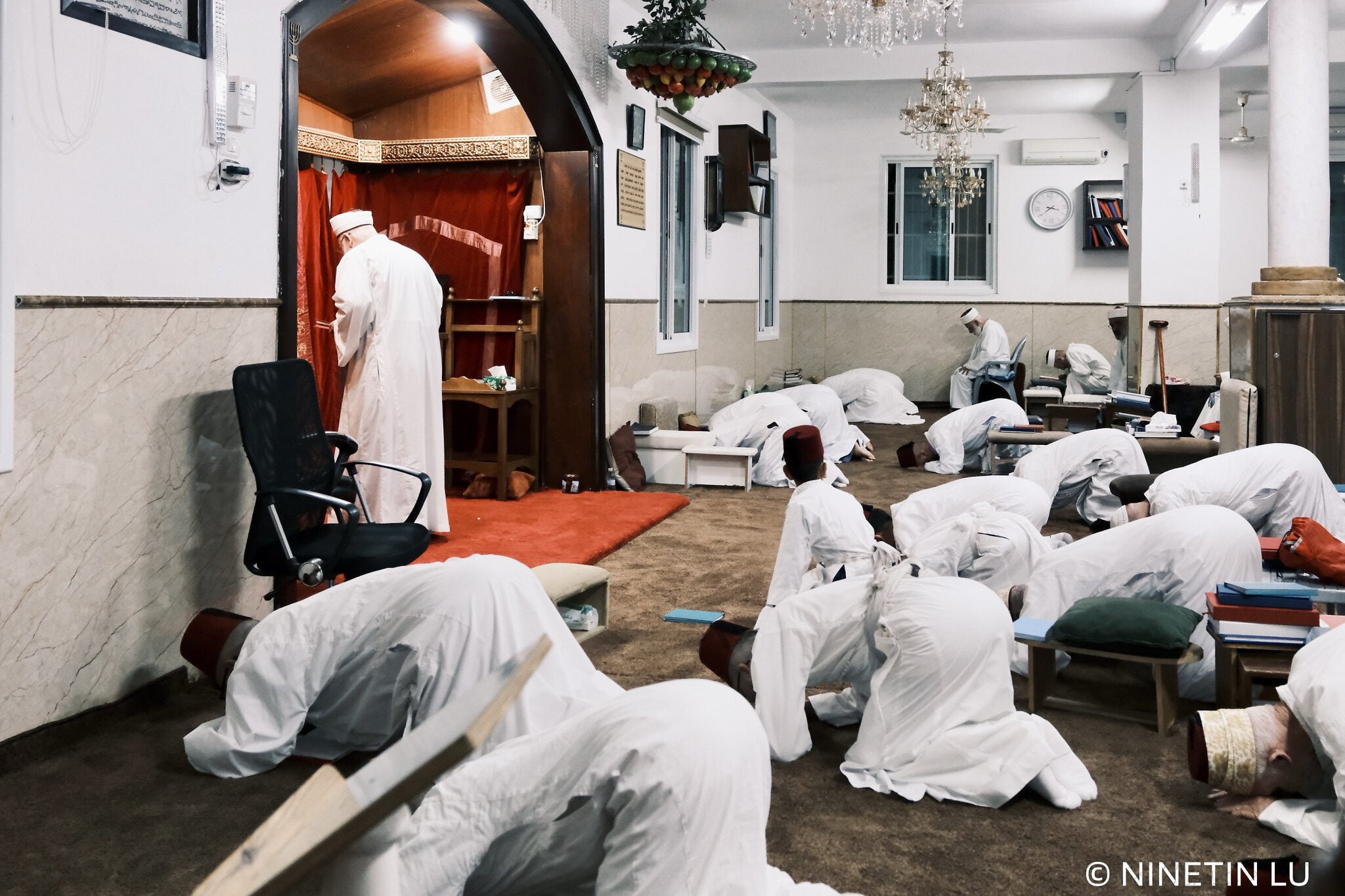
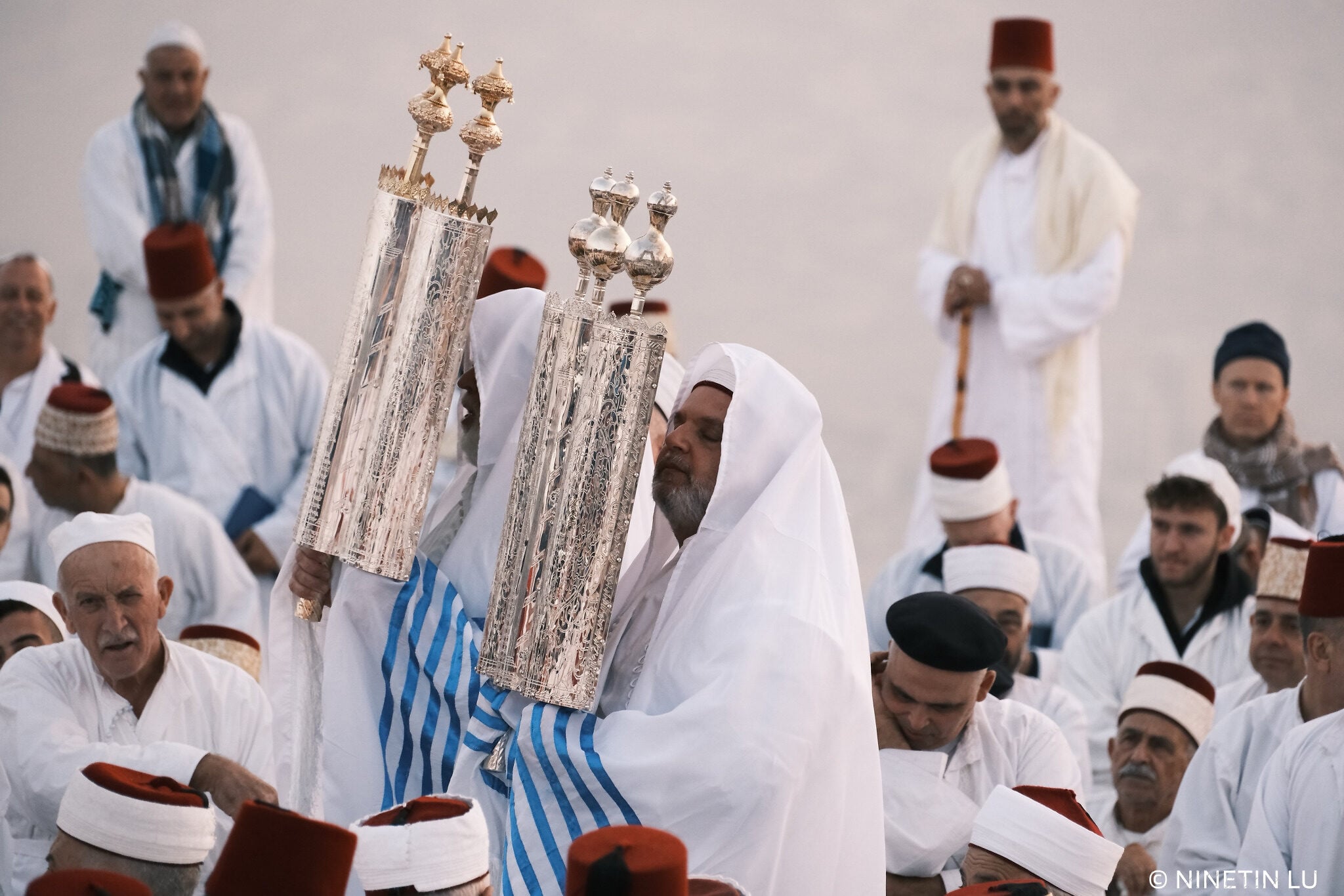
The Samaritan prayer involves prostrations, similar to those performed by muslins and so they have adopted the fez which, being brimless, is perfect for this kind of genuflection. The Samaritans believe themselves to be the descendants of three of the tribes of Israel: Ephraim, Manasseh and Levi. The descendants of the tribes of Joshua wrap gold around their fezzes, and the Cohanim wrap white.
Unfortunately, the nonagenarian high priest is no longer able to participate in the pilgrimage and so the prayers were led by another Cohen. The interior of the synagogue reminds one of a columned mosque, only instead of a mihrab it has a Torah Ark which points towards Mt Gerizim.
The Samaritans chanted in paleo Hebrew. As I sat at the back of the synagogue, I was struck by the vocal abilities of the singers. Throughout the pilgrimage, for over 5 hours, octogenarian priests would powerfully project their voices, never wavering.
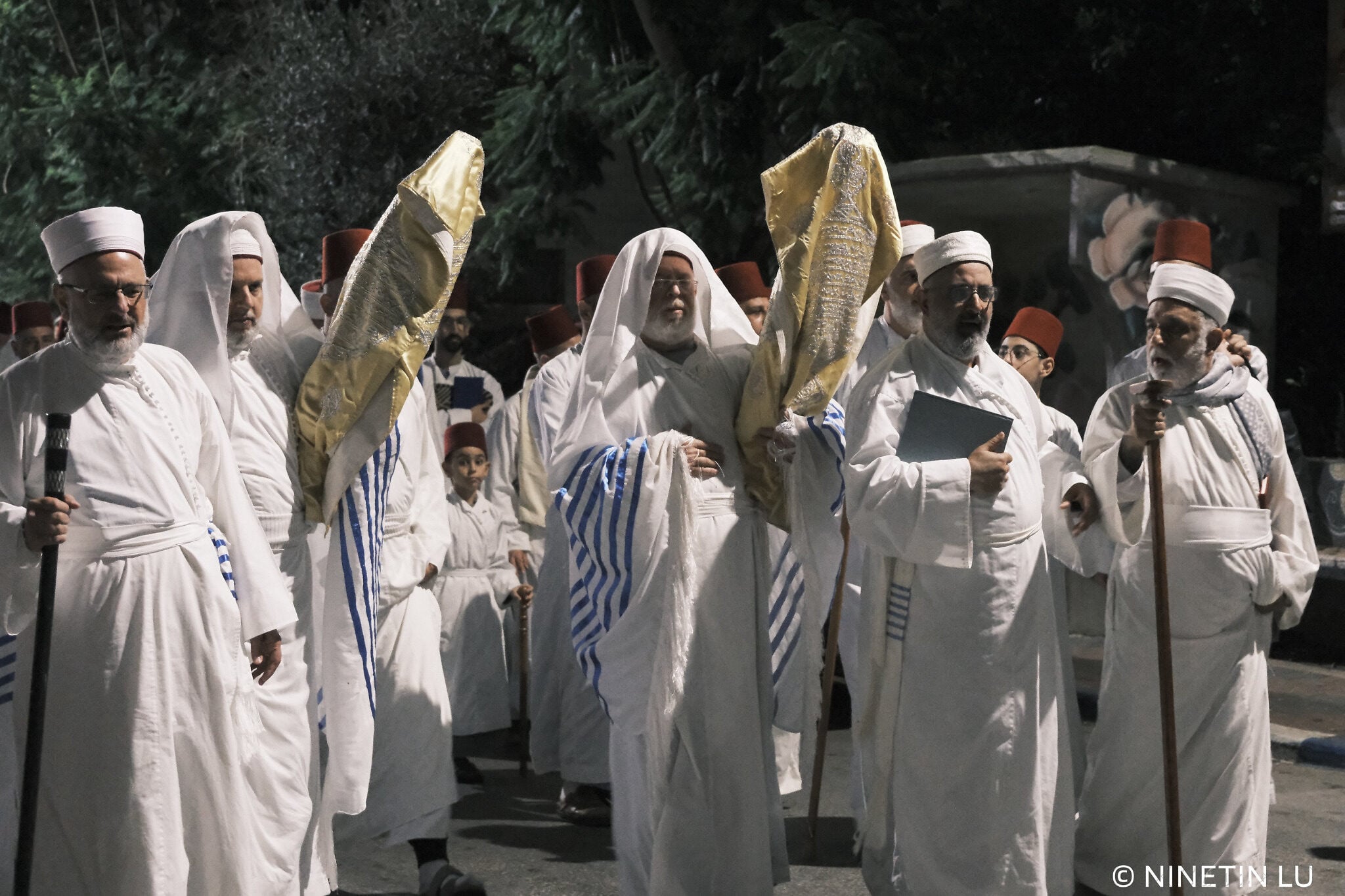
The Samaritan community is tiny. It currently numbers less than a thousand persons, almost all of whom either live in Kiryat Luza or Holon, in roughly equal numbers. At around 4:30 am, the Samaritans from Holon began to arrive in buses. Their arrival precipitated the commencement of the pilgrimage.
We processed up the high street in the dark and began to ascend Mt Gerizim. Following the Babylonian exile, when the Golah returned to Jerusalem they no longer considered the Yahwists who had remained in Israel and Judah, whom the Golah called the Am Ha-Aretz (The People of the Land), to be a part of their community.
For Abraham does not own us
and Israel does not acknowledge us;
yet you, Yahweh, yourself are our father….
We have long been like people who do not rule,
People who do not bear your name.
(Isaiah 63;16)
Excluded from Jerusalem, the Am Ha-Aretz made Mt Gerizim their spiritual centre and endowed it with a spiritual geography combining Mounts Moriah and Ararat. It is possible that a Temple was built on Mt Gerizim, and was destroyed by John Hyrcanus, the Hasmonean high priest.
 The Samaritans believe that it was on Mt Gerizim that Adam built his first alter to God. They also believe that it is where Noah’s ark came to rest, and where the binding of Isaac took place. The Sukkot pilgrimage maps out this geography.
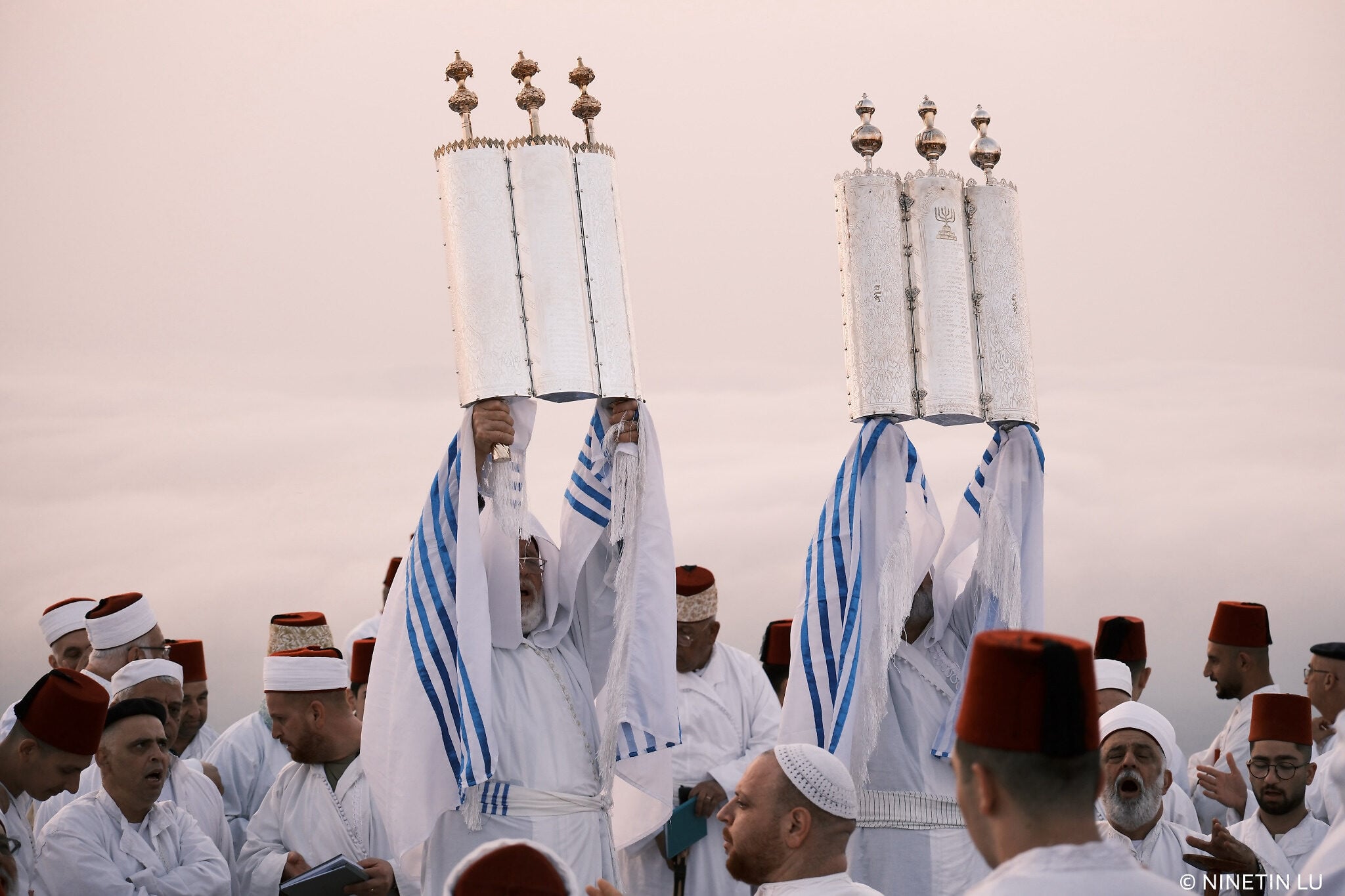
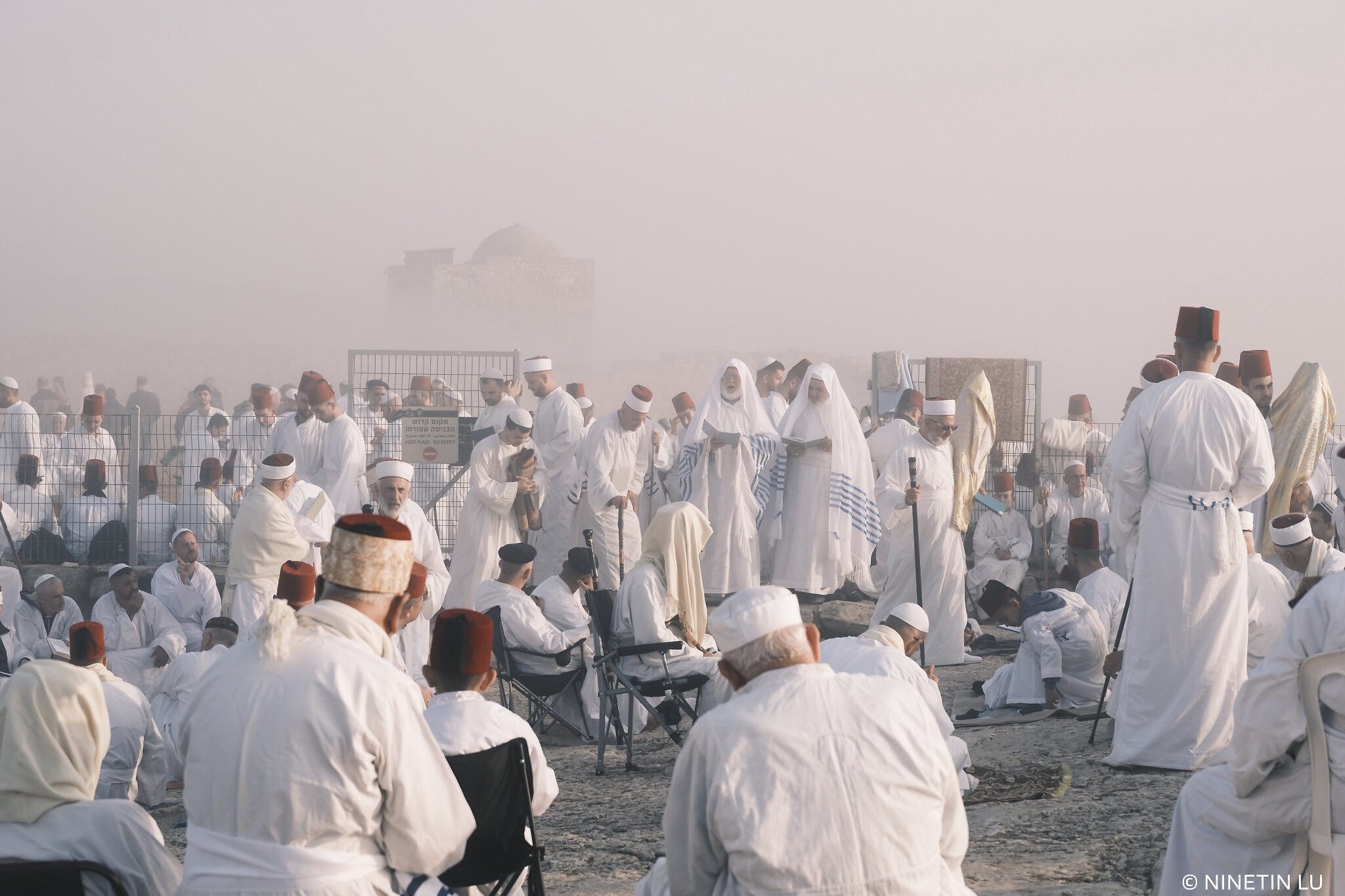 The pilgrimage consists of eight stations. The prayer to begin the ceremony and the pilgrimage is the first stage. The ascent of Mt Gerizim is the second. The fourth station is a prayer before the foundation stone of the world. The sixth stage takes place at the point where Abraham was tasked by God to Sacrifice Isaac. The final station culminates as the pilgrims joyously perambulate around this stone.
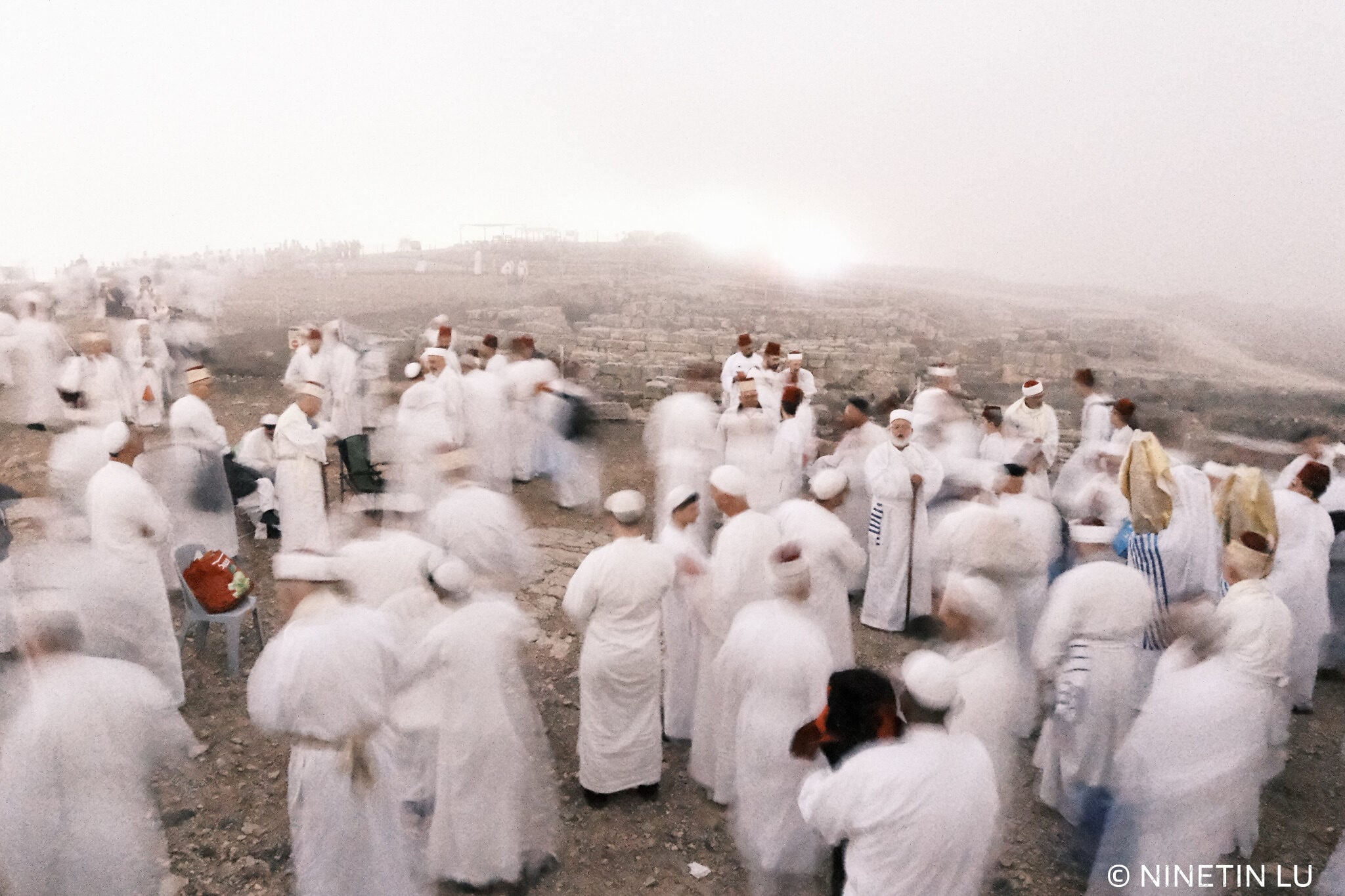
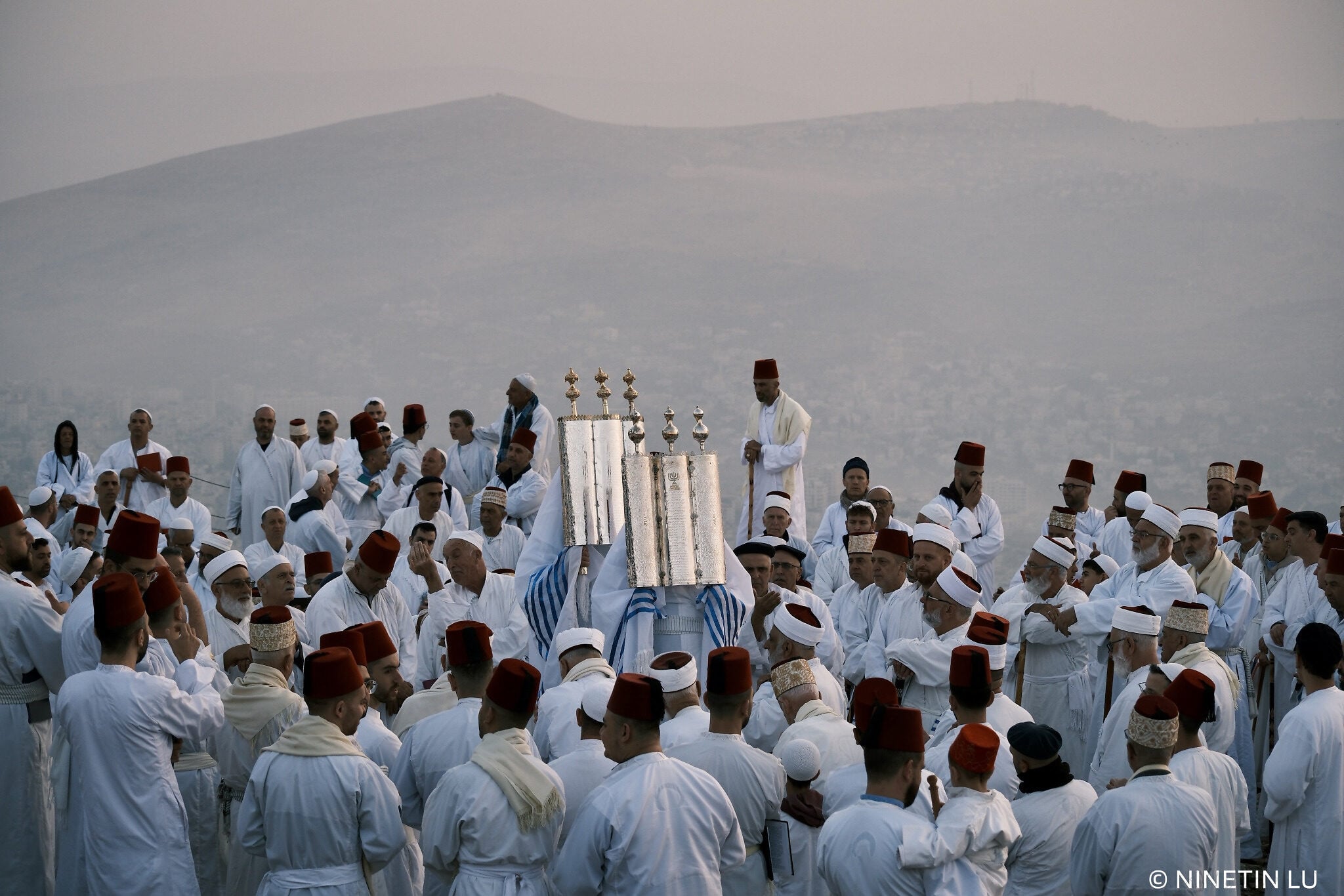 The pilgrimage ascended Mt Gerizim in the dark. I hung back towards the end of the peloton. At the second station, the alter of Adam and Seth, the pilgrims seated themselves facing the priests and the torah scrolls and the singing crescendoed. I climbed up onto some presumably Roman ruins and looked down. A numinous mist permeated through the air.
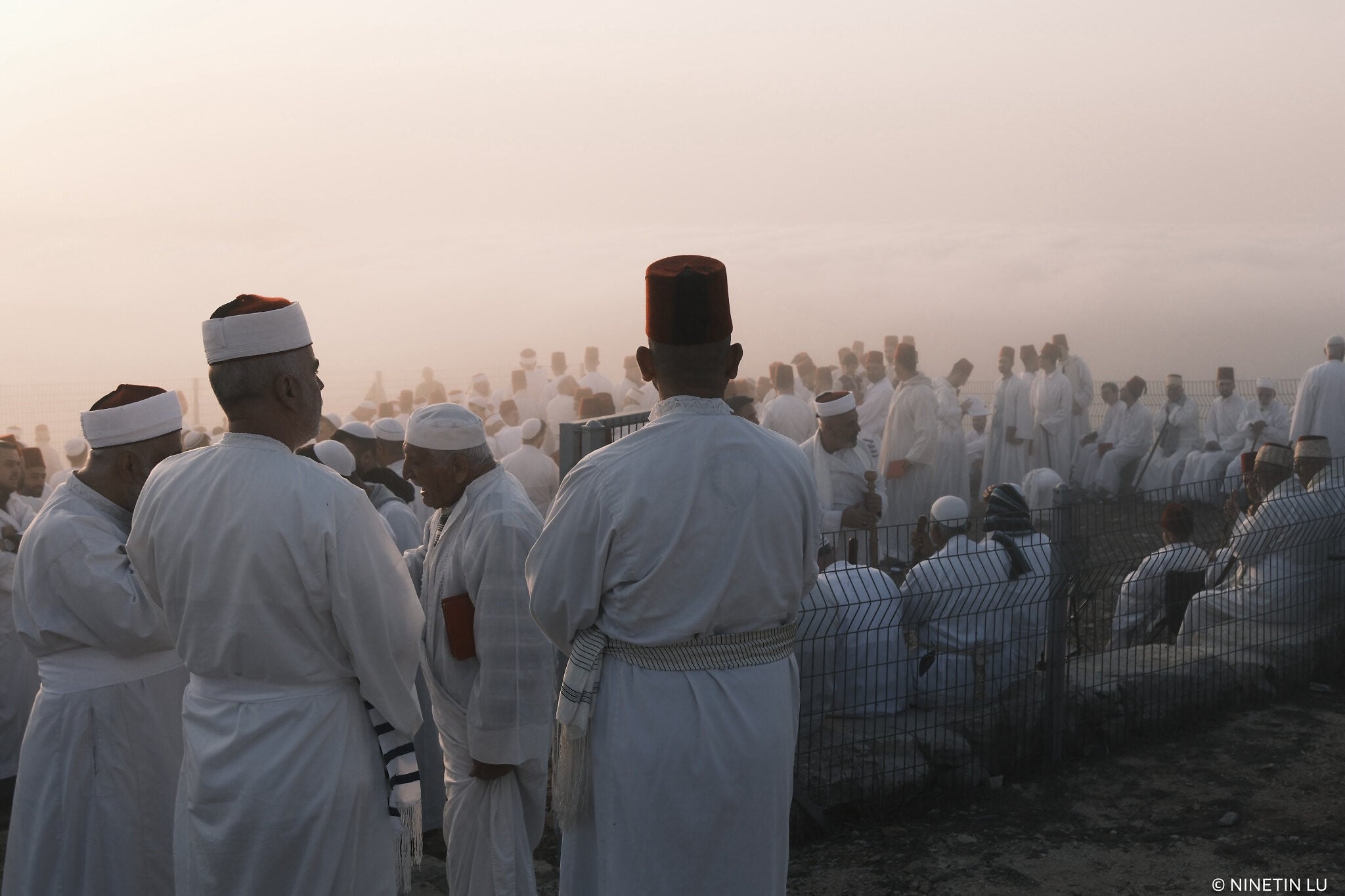
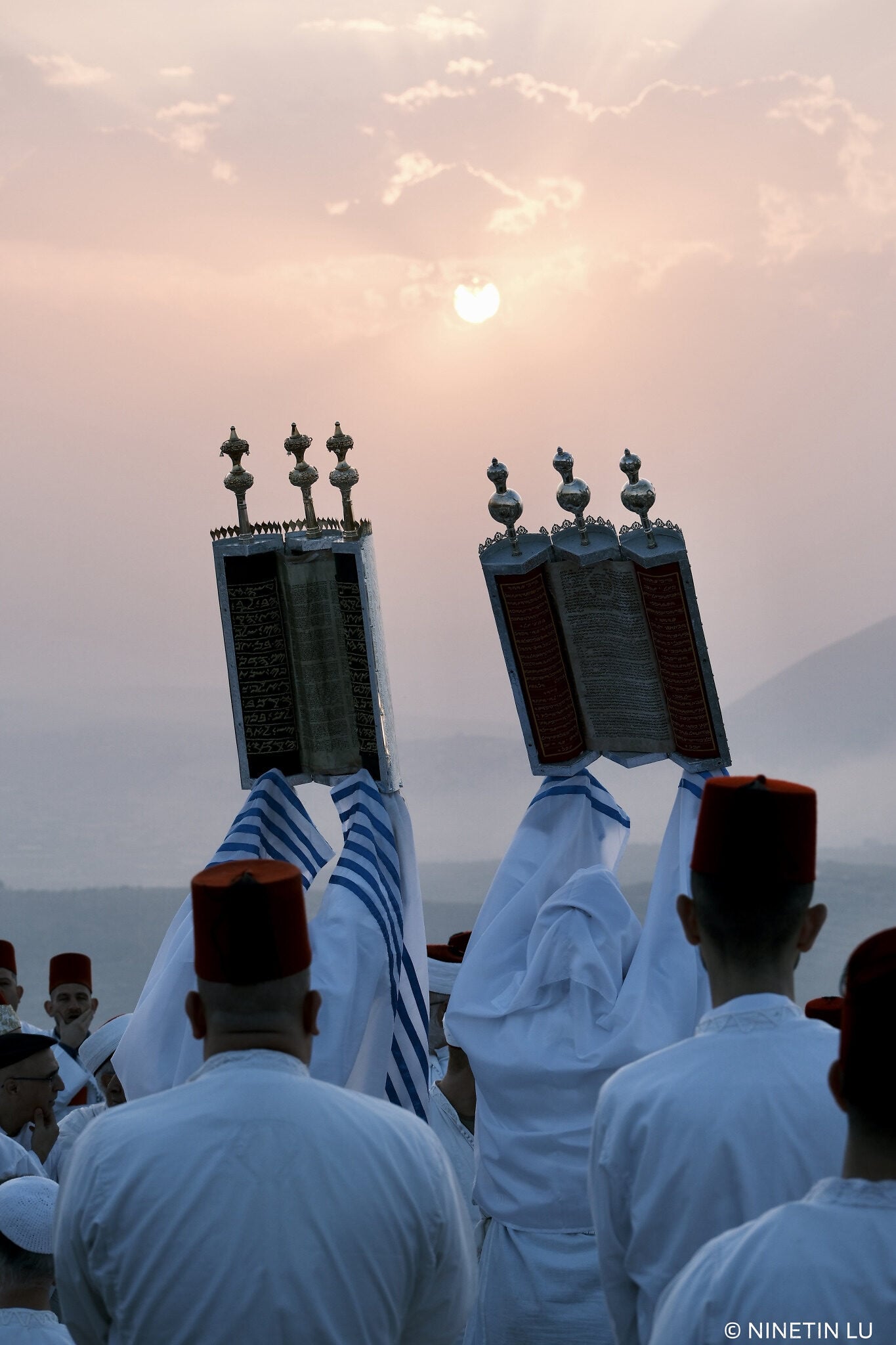
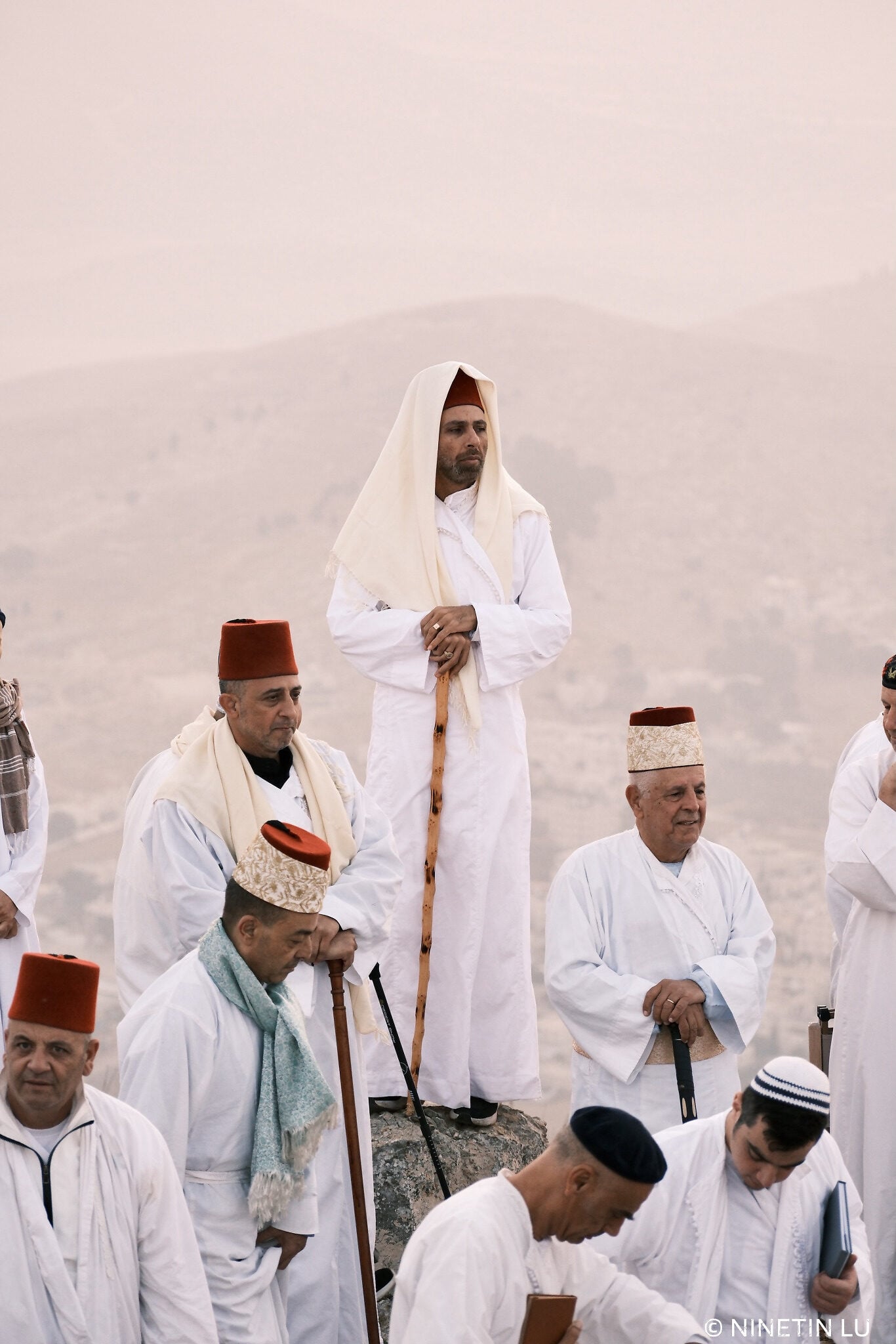 The thick atmosphere began to illuminate the pilgrims congregated at the third station, in front of the foundation stone. I realized that my hair was damp and dripping from the moisture. At first the sun didn’t pierce the cloud, but the air lightened and the white silhouettes came into focus.
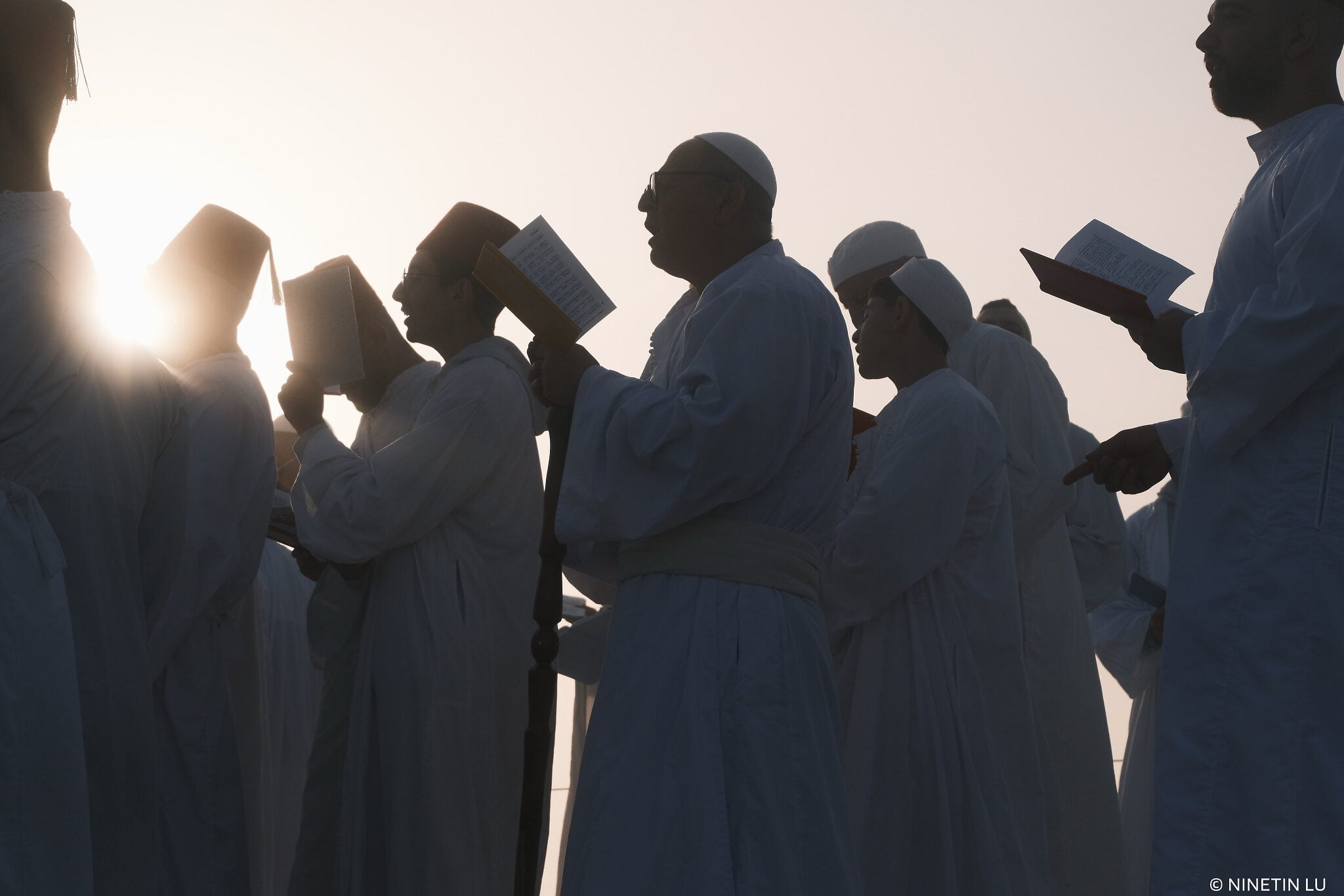 The sun burned through the cloud throughout the third station and began to evaporate the dew from my hair. It was fully day by the time the pilgrims proceeded to the fourth station, the Alter of Isaac. I began to delayer, removing my jacket and regretting my oversight in not bringing a pair of sunglasses.
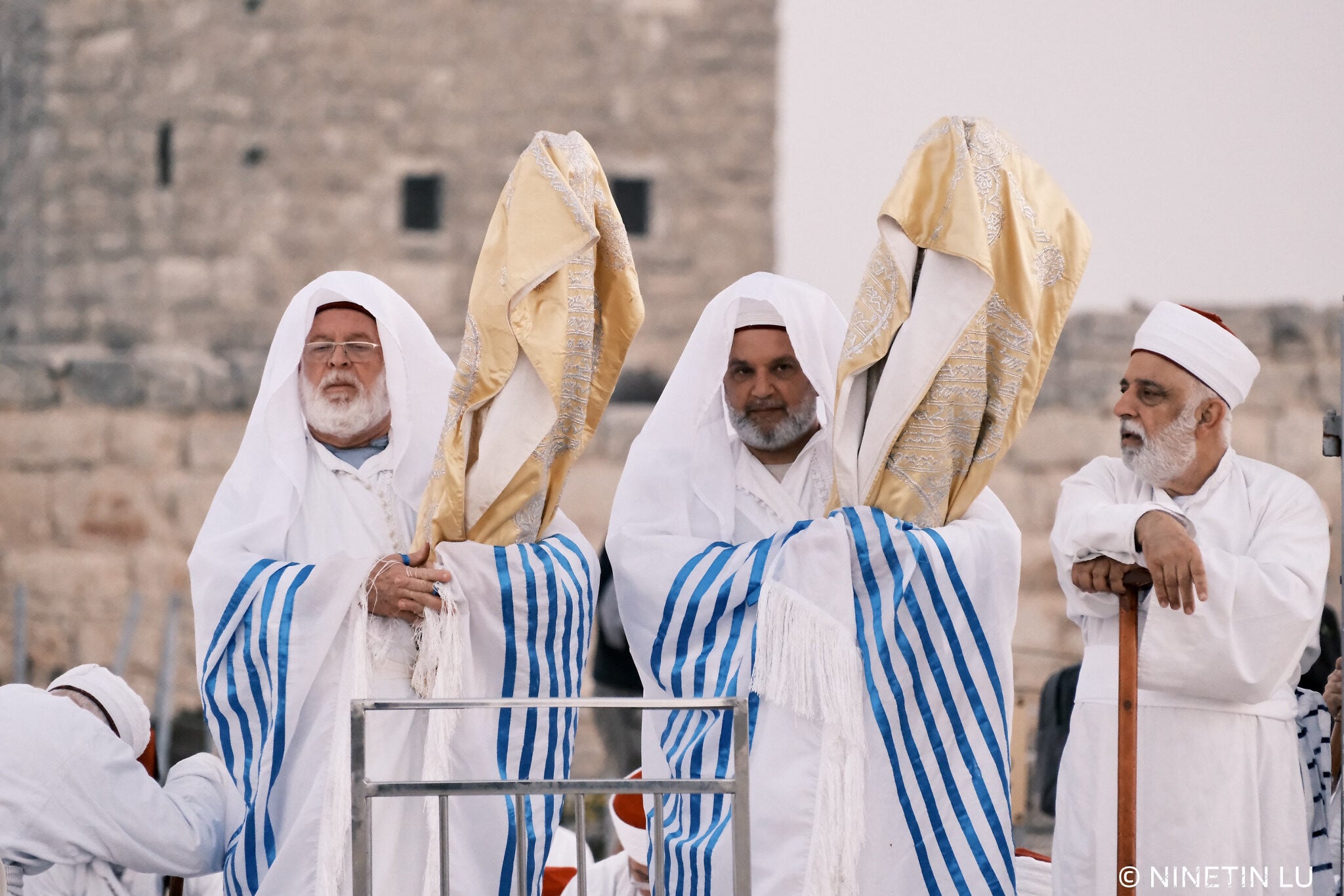 The final elevations of the torah Scrolls at the seventh station were magisterial. The priests seemed to me like Homeric figures, Nephilim from the time of giants. The pilgrims were clearly flagging however. The exhaustion showed itself somewhat in the circumambulation of the foundation stone. All of the pilgrims seemed to be perambulating in different directions.
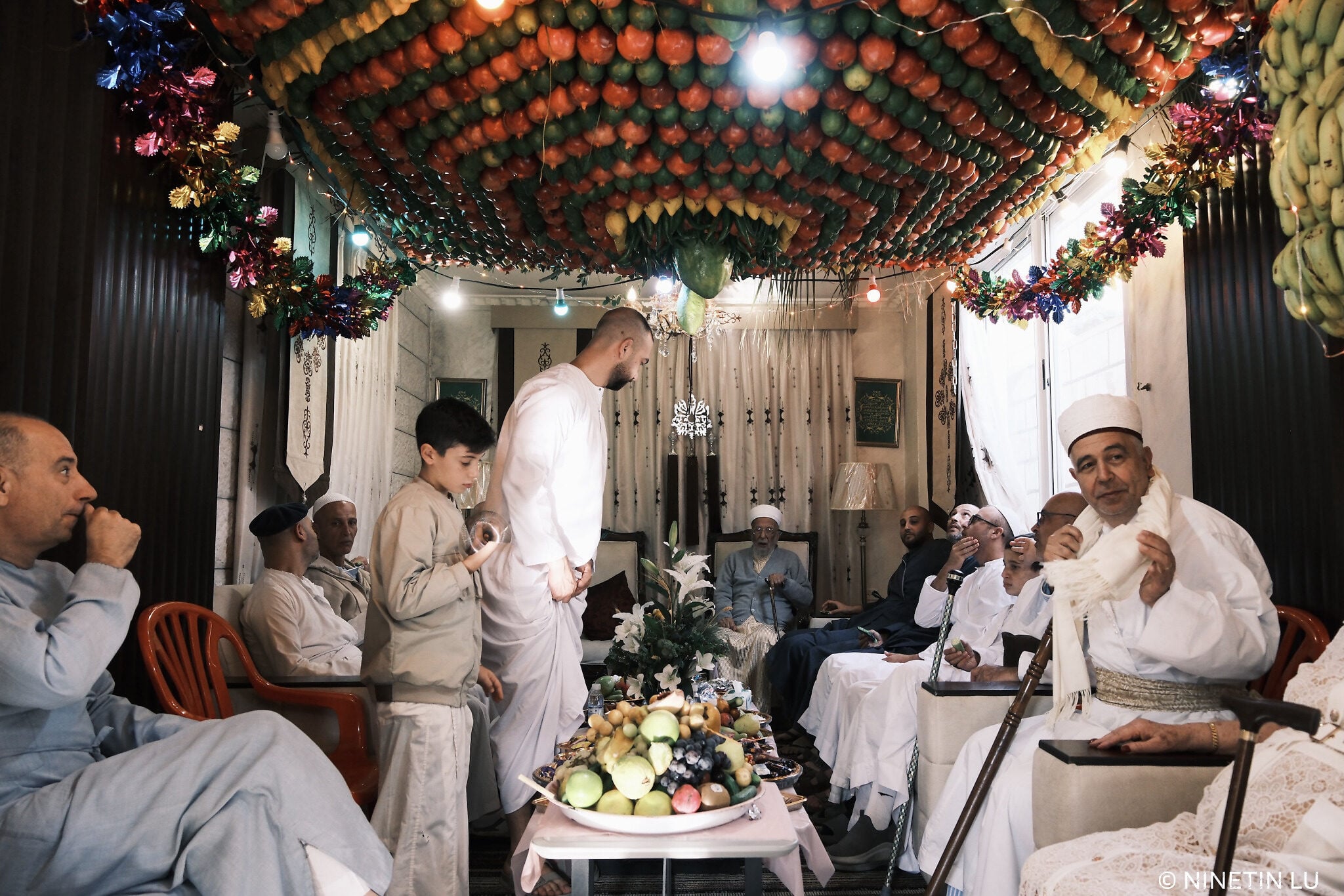
 After the final station I ran into the familiar face of Abood Cohen, whom I had met several times previously. We descended back to Kiryat Luza together. Abood was somewhat worn down but clearly brimming with pleasure. Abood is the grandson of the High Priest, and he very graciously invited us into his Sukkah.
 Throughout the night, we had not seen much of the Samaritan women. Some pajamaed ladies had followed the pilgrims up the mount to offer moral support to their menfolk, but not so many. Now they were appearing in elegant dresses, and the men changed into galabias.
 The Samaritan Sukkot are different to the Jewish ones. They are built indoors and are colourfully constructed with heavy fruit ceilings and the four Sukkot species. The centrepiece of the High Priest’s Sukkah was the largest etrog I have ever seen in my life. The table underneath the canopy was laden with goodies.
 The Sukkah was quite busy; we overflowed with compliments to our hosts and then made our exit. We found our car, and then continued our descent back to the prosaic, manifested in the first instance by Tel Aviv traffic. The humidity and crowds on the train platform completed the return from the numinal to the phenomenal.
Our nocturnal sojourn in antiquity was sadly over. Adventures start at midnight, but days start on a commuter train at rush hour. And again one finds oneself wondering whether the war will start up again this week.
Related Topics
Related Posts