
Sanae Takaichi: Japan’s Iron Lady Who Changed History in Silence
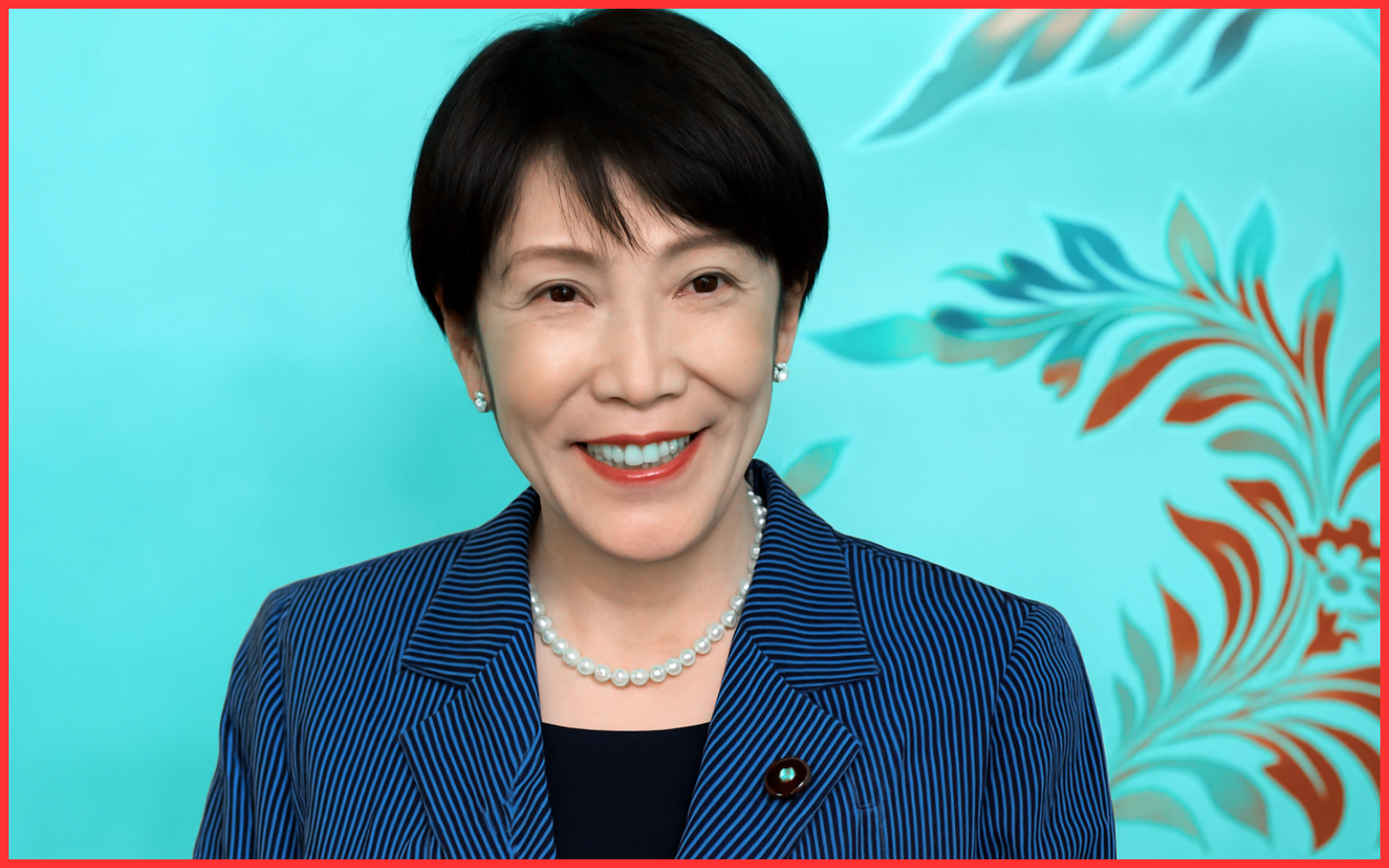
You have heard the truth. It is another Iron Lady who changed the history of Japan, which was just a dream even yesterday.
Today is October 21, 2025, a historic day for Japan. The morning in Tokyo began like any other, but by sunset, the country had changed forever.
Inside Tokyo’s National Diet building, time itself seemed to pause. Japan is a nation where order defines everything from trains to thoughts, and was about to meet a new kind of order: the calm certainty of a woman’s voice.
Japan had sixty-four prime ministers before Sanae Takaichi — all of them men. Everyone helped shape the nation’s post-war identity from recovery to prosperity.
However, none of them carried the burden of representing half the population, who were rarely seen in power. Women hold less than 10 percent of Japan’s parliamentary seats. No woman had ever led the ruling Liberal Democratic Party before her.
Yes, Takaichi’s election was not merely a change of leadership; it was a correction long overdue, a step that could bring long-missing balance to Japanese politics.
For seventy years, Japan’s politics had carried the same tone — firm, polite, and male. Every prime minister before her had belonged to that rhythm. But this afternoon, the sound changed. When the final vote was counted, Sanae Takaichi stood where no woman had ever stood before. The chamber fell silent not with confusion, but with recognition that a nation had just crossed a line it had drawn for itself.
Across the world, news headlines came about Japan’s transformation. From Washington to London, leaders are sending messages of congratulations.
Of course, yet beyond diplomacy, there was genuine curiosity – could this quiet, disciplined woman reshape a system so firmly built by men?
Takaichi, sixty-four, had been walking toward this moment for four decades. Her journey was never easy. She climbed slowly, one quiet battle at a time. There was no surprise on her face, only calm, as if she had carried this weight in her heart for years.
Takaichi’s message to the nation is clear. She said, “Today marks a new beginning. I will work to build a Japan that future generations can be proud of.”
Her words were simple, but they filled the hall like wind through paper doors. Japan is a land of invention and discipline. However, people are bound by the old expectations of gender. The nation that builds robots and satellites has finally built room for a woman to lead it.
For decades, Japanese society prized harmony over confrontation. That same culture made women’s ambition seem unfeminine. Takaichi’s rise challenges that idea — she stands for a generation of women who learned that dignity and determination can coexist.
She joined politics in the 1990s, a time when women in parliament were often viewed as numbers but not as equals. She learned early that politics was not debate but endurance. Each campaign was not against opponents, but against centuries of unspoken rules.
Besides, she was told by her relatives that politics was not a suitable place for a woman. Yet she kept walking, not shouting, not demanding, simply moving forward.
Now, as the head of the Liberal Democratic Party, she prepares to form a coalition with the Japan Innovation Party. Reports say Koizumi Shinjiro may take defense, Yoshimasa Hayashi internal affairs, and Toshimitsu Motegi foreign affairs. Her decision to include former rivals shows something deeper—the wisdom to build bridges where others built walls.
Probably, it is her strong message for Japan that when a woman leads, she does not divide power; she restores balance and wants to bring unity to a nation.
This election is not just a political victory; it is a kind of healing. A nation long used to seeing women in supporting roles now sees one at the front. The meaning goes beyond gender, and it is about how a society learns to trust a new shape of strength.
For decades, Japanese women have worked quietly in offices, classrooms, and homes. They built the country’s foundation but rarely held the pen that signed its laws. Today, they saw one of their own write a line in history. Her victory is not loud, but it runs deep — a quiet reply to the past.
History often changes not with noise, but with grace. Takaichi didn’t overthrow a system; she outlasted it. Her strength was patience; her weapon, persistence. Japan did not see her coming because she never raised her voice. She simply refused to leave the room.
Across the world, women have stood where men once claimed destiny — Indira Gandhi in India, Golda Meir in Israel, Sheikh Hasina in Bangladesh, Jacinda Ardern in New Zealand. Today, Japan joins that lineage.
But in Japan, the meaning feels different, not rebellion, but renewal. The country that once believed women must complement men has begun to understand that they can lead them as well.
According to the news, Takaichi’s first goals are to rebuild the economy, strengthen defense, and promote social equality. These became very long-awaited demands in Japan.
Her victory is not only Japan’s story. Her victory is Japan’s gift to the world, which can prove that silence, too, can change history.
Sanae Takaichi is not only Japan’s first female prime minister; she is the reflection of a generation that refused to give up. Leadership, she reminds the world, is not a man’s privilege; it is humanity’s responsibility.
Somewhere in Japan tonight, thousands of young women may look at the new prime minister on television and whisper to themselves, “I can too.”
Yes, this is how revolutions begin, not in streets or slogans, but in moments when a nation finally listens to a different kind of strength.
October 21, 2025
Tokyo, Japan