
A peripatetic scribbler
Featured Post
Saturday morning at the Basimta protests
PHOTO ESSAY - A flashpoint for debate about Israel's future: The Haredim object to an open cafe on the day of rest and secular activists arrive to ensure their Shabbat coffee
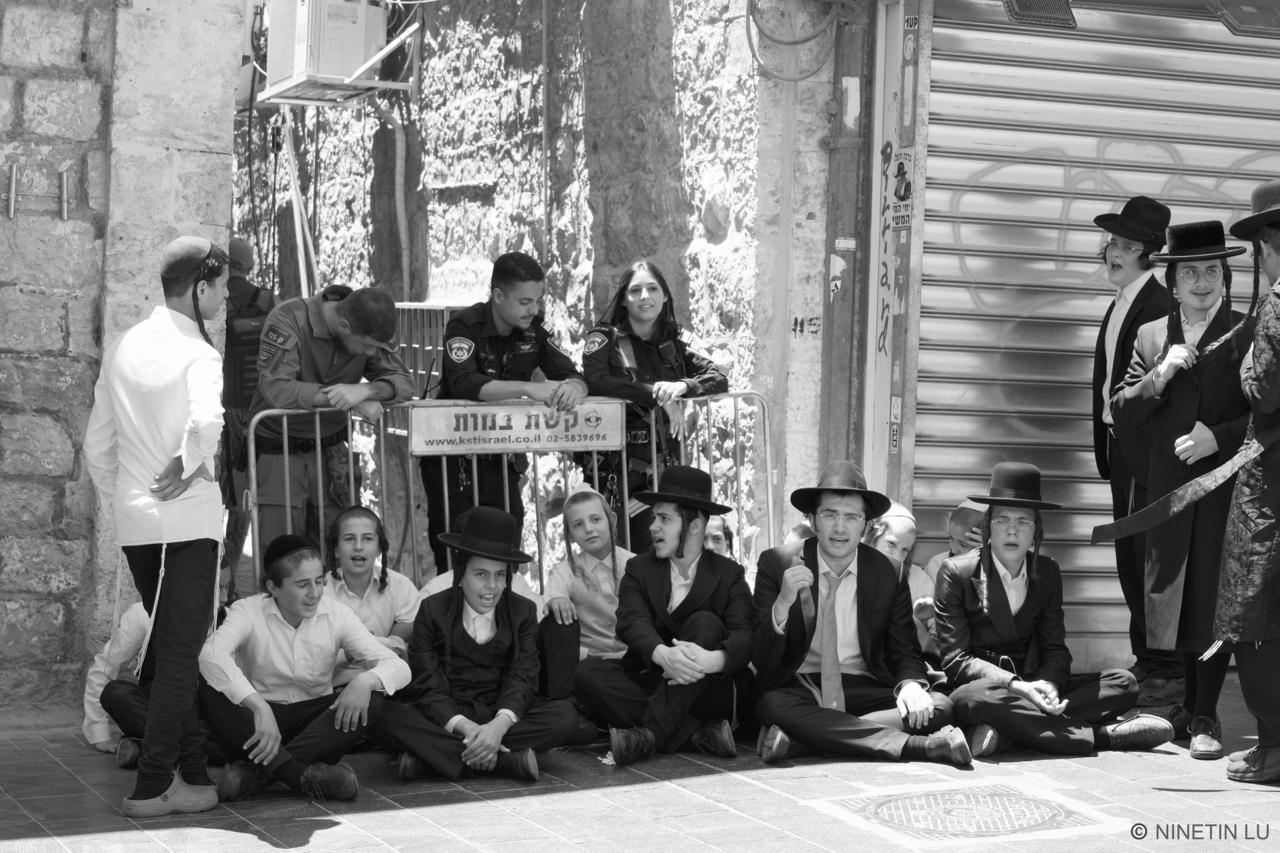
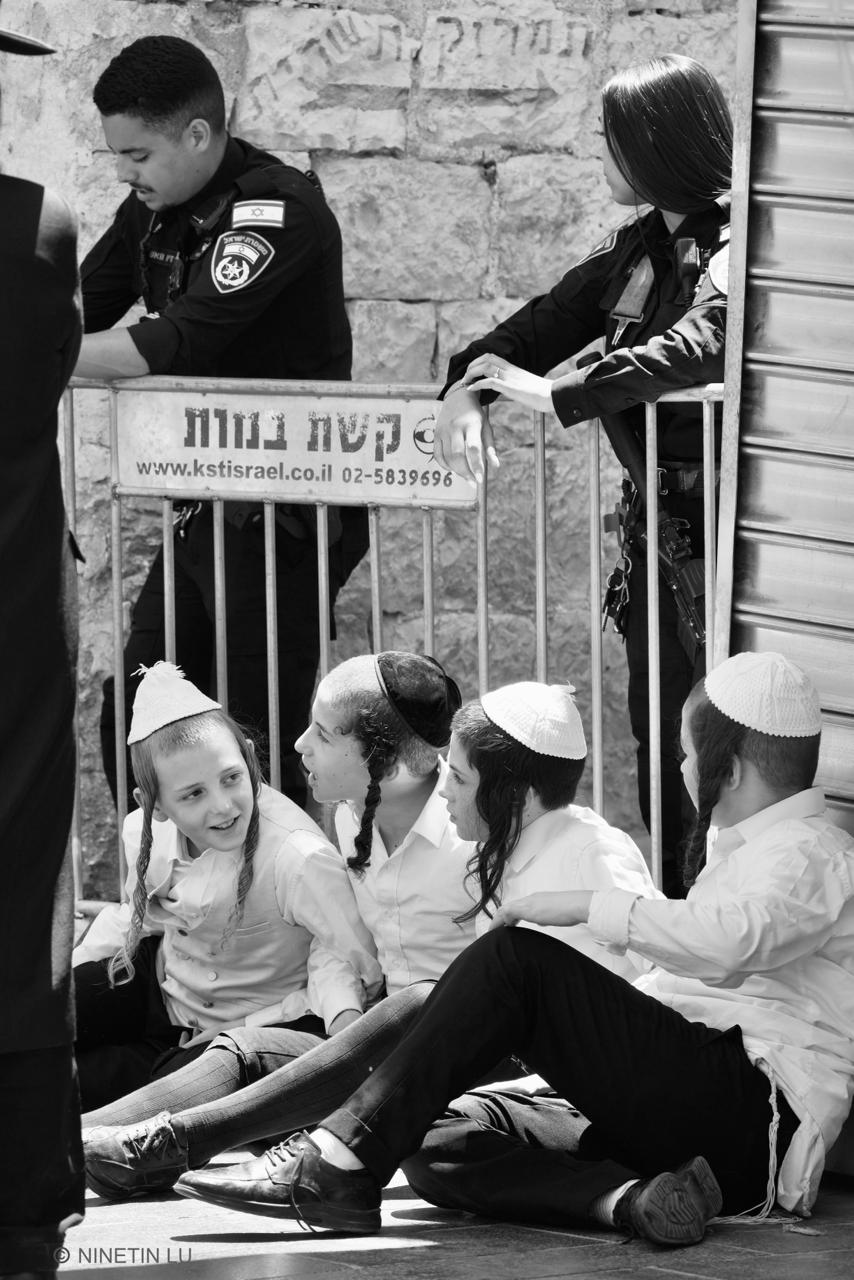
Overseen by police, young Haredim sit in an alley outside Cafe Basimta, Shabbat morning, in protest of the cafe being open, August 8, 2026. (courtesy, Ninetin Lu)
We got to the protests around 11:30 in the morning, just as the two opposing sides were working up to the peak of their acrimony. Normally, Shabbat is the day I sleep in late – until noon, if all goes according to plan – but this week my wife had forced me out of bed early to see the balagan (chaos).
The brouhaha in question was the warring protests over the new Jerusalem café, Basimta. Since it opened six weeks ago, every Shabbat, the café has attracted Haredim, who strongly object to its proprietors’ choice to open on the day of rest.
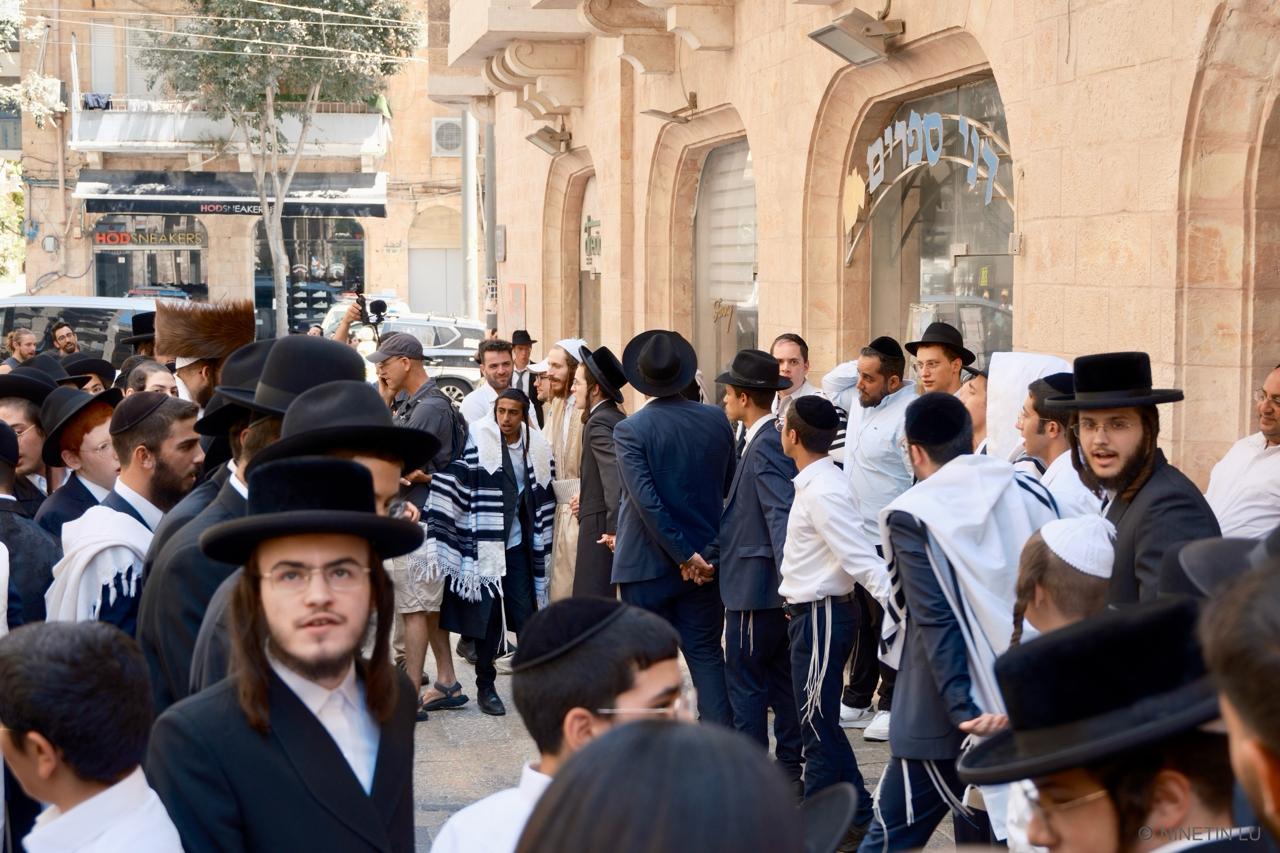
The number of Haredim is not large, maybe a few score, but they make their presence felt dramatically. They are all male, and there are lots of children. Latterly, in recent weeks, secular counter-protesters have turned out in roughly equal numbers and commensurate stridency.
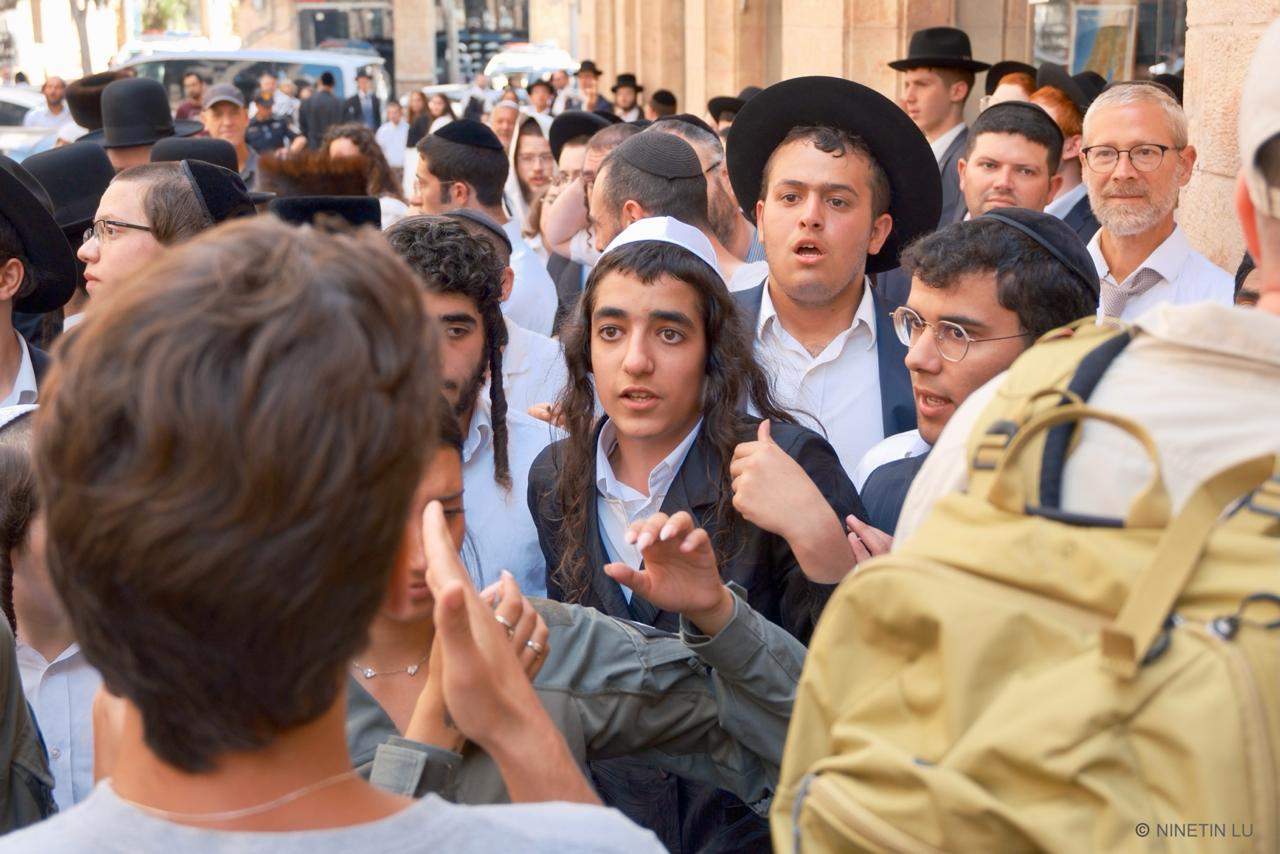
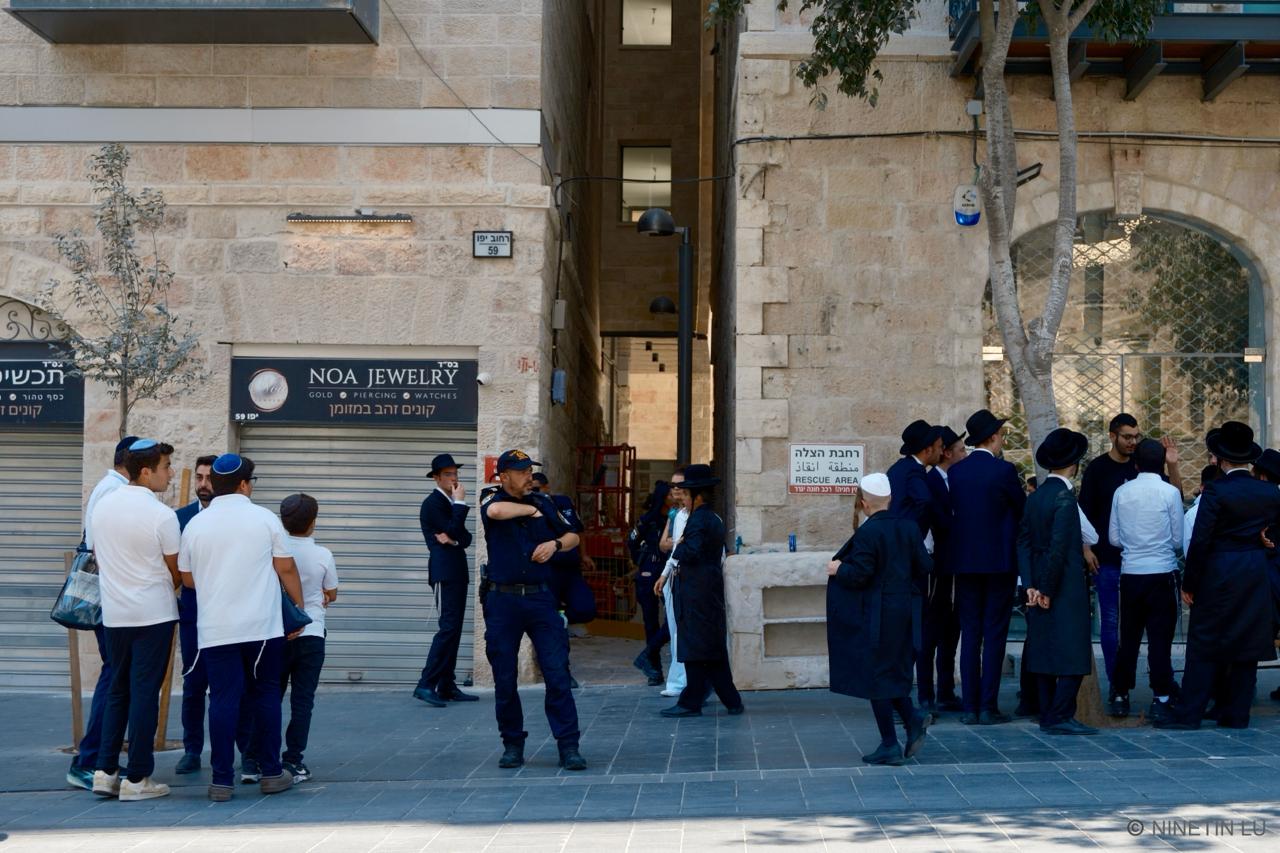
My wife wanted to be at the scene at 9 a.m., when the café opened. But I flatly refused a single digit alarm on a Saturday. Therefore, we arrived late to what, at first sight, appeared to be a clash of two antagonistic groups, crammed into a small alley, and just about held apart by tired and irritated police. From up above, bemused residents watched from their balconies. There were lots of journalists.
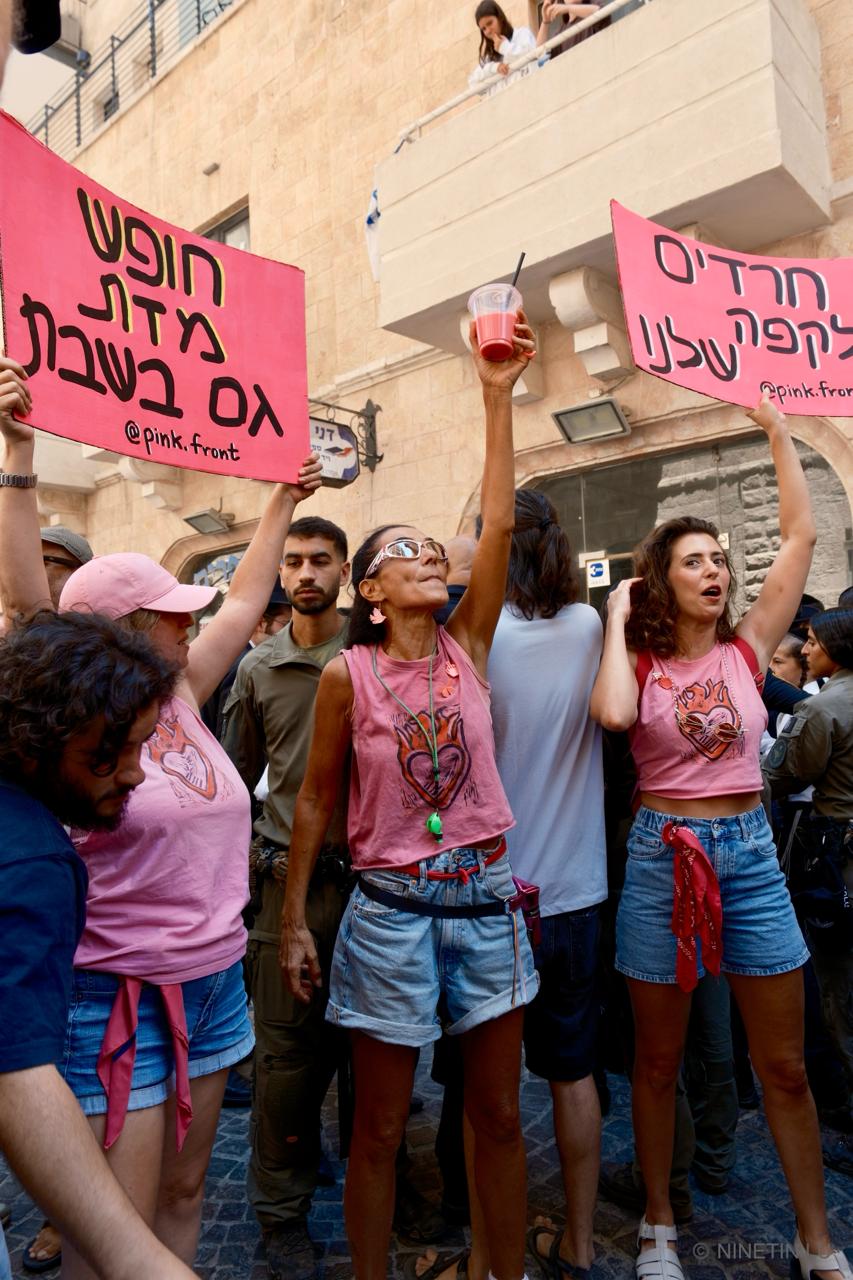
We arrived from the secular side, the front line of which was a vanguard of pink clad activists with placards reading “Freedom from religion, even on Shabbat.” Beyond this secular forward guard was a sea of Haredi black and white.
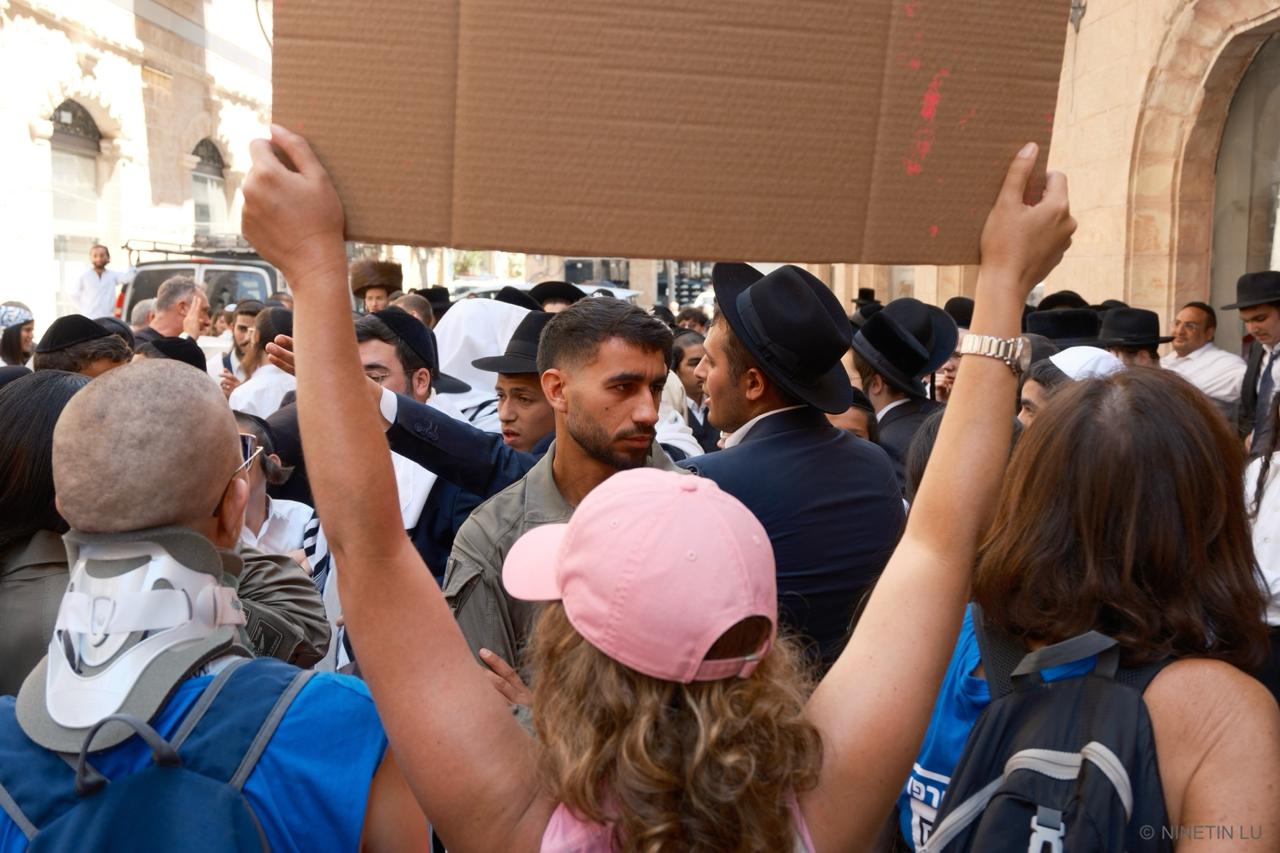
On closer inspection, however, there was rather more intermixing than first appeared. Several Haredim had moseyed into the secular camp and were engaged in exchanges of various kinds with their putative opponents. The interlocutors were in pairs or little clusters. Some were vituperative, with raised voices and aggressive gesticulations, but others seemed to be respectful and amiable.
The energy rose with the sun until, practically on the dot of noon, the security forces began to walk the Haredim back. The Pink Front cheered – they had clearly won this battle.
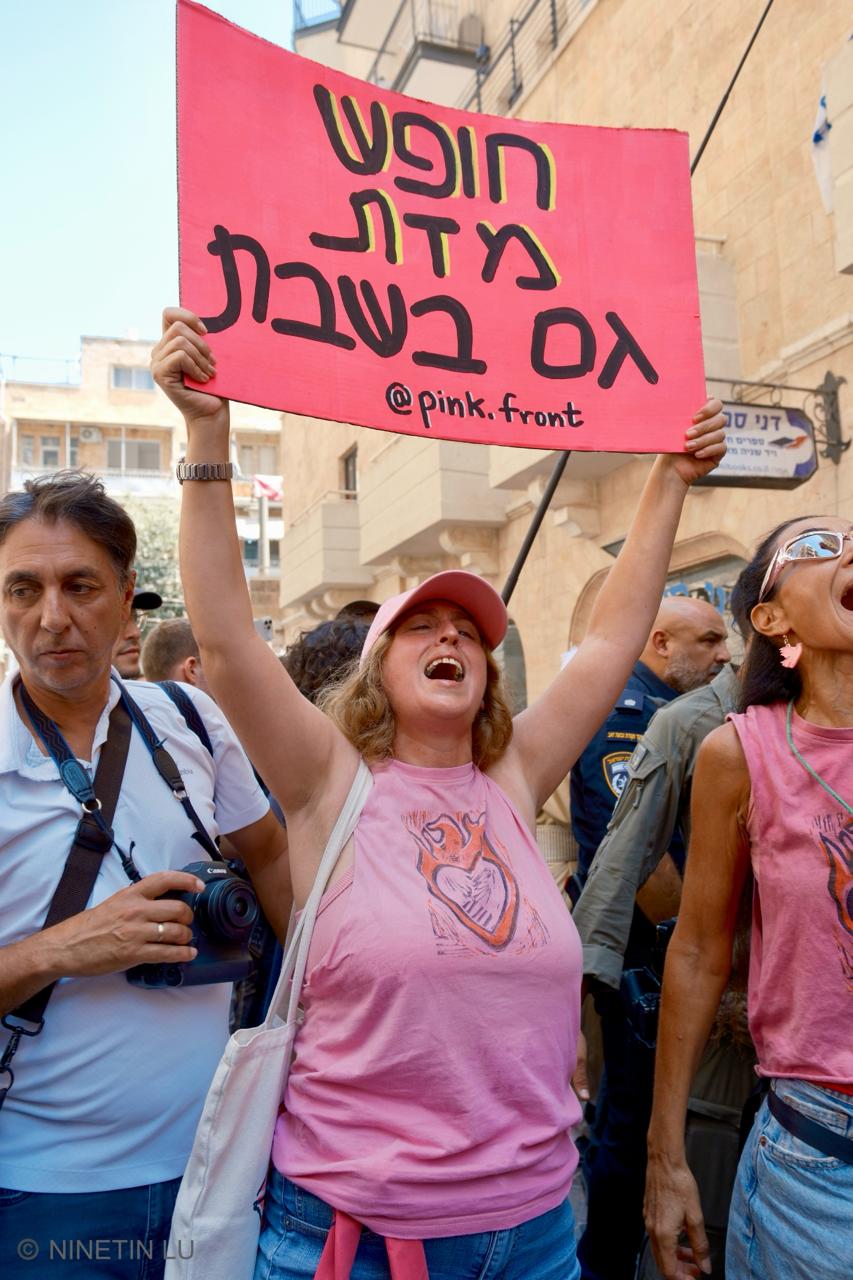
As the Haredim were forced to retreat, the secular activists turned towards Basimta with the intention of imbibing well-earned refreshments, and their chants changed from “Shabbat is for all! Shabbat is for all!” to “Hafuch! Hafuch!” [“Cappuccino! Cappuccino!”].
Basimta sits unostentatiously in the inner courtyard of a modern, multistorey apartment complex. Circumnavigating the block, it is not visible. Last week, the Haredi protests were within the courtyard, and some of the religious activists had attempted to infiltrate into the café. This week, the security forces erected barricades to keep trouble to the perimeters.
Basimta seemed well positioned to be defended from a siege. The inner courtyard in which it is located can only be accessed via small alleys, at each of which the security forces had erected a barrier. Residents and thirsty prospective patrons were let past, as well as secular activists. But the religious were kept out.
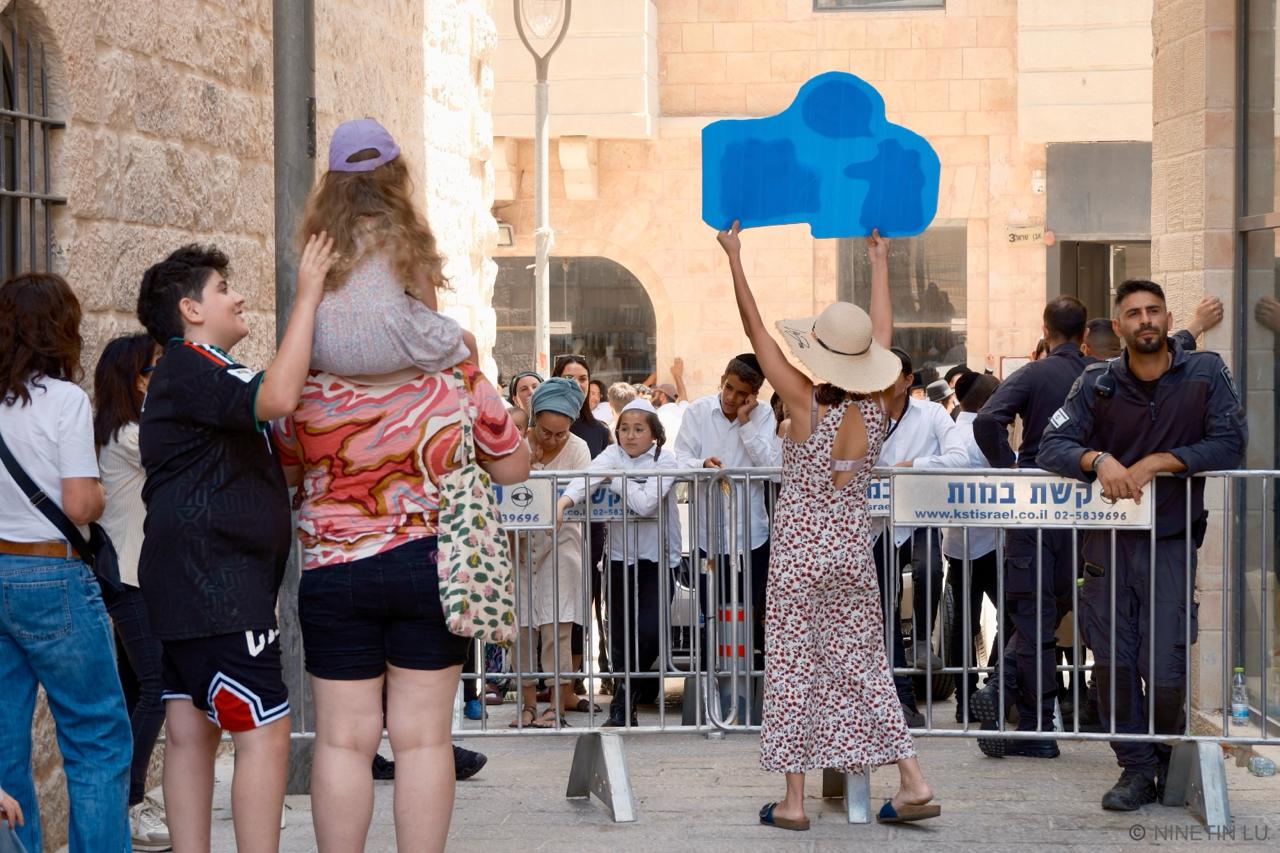
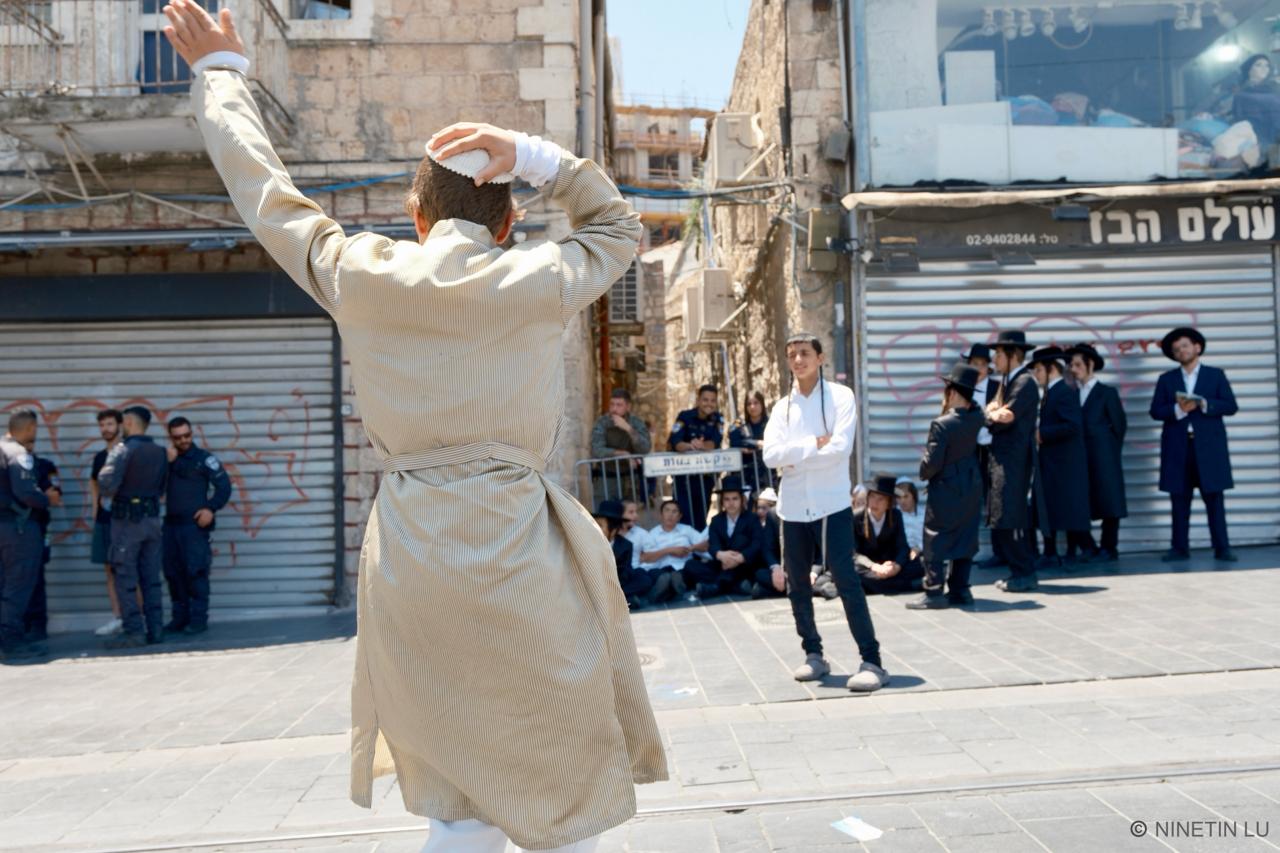
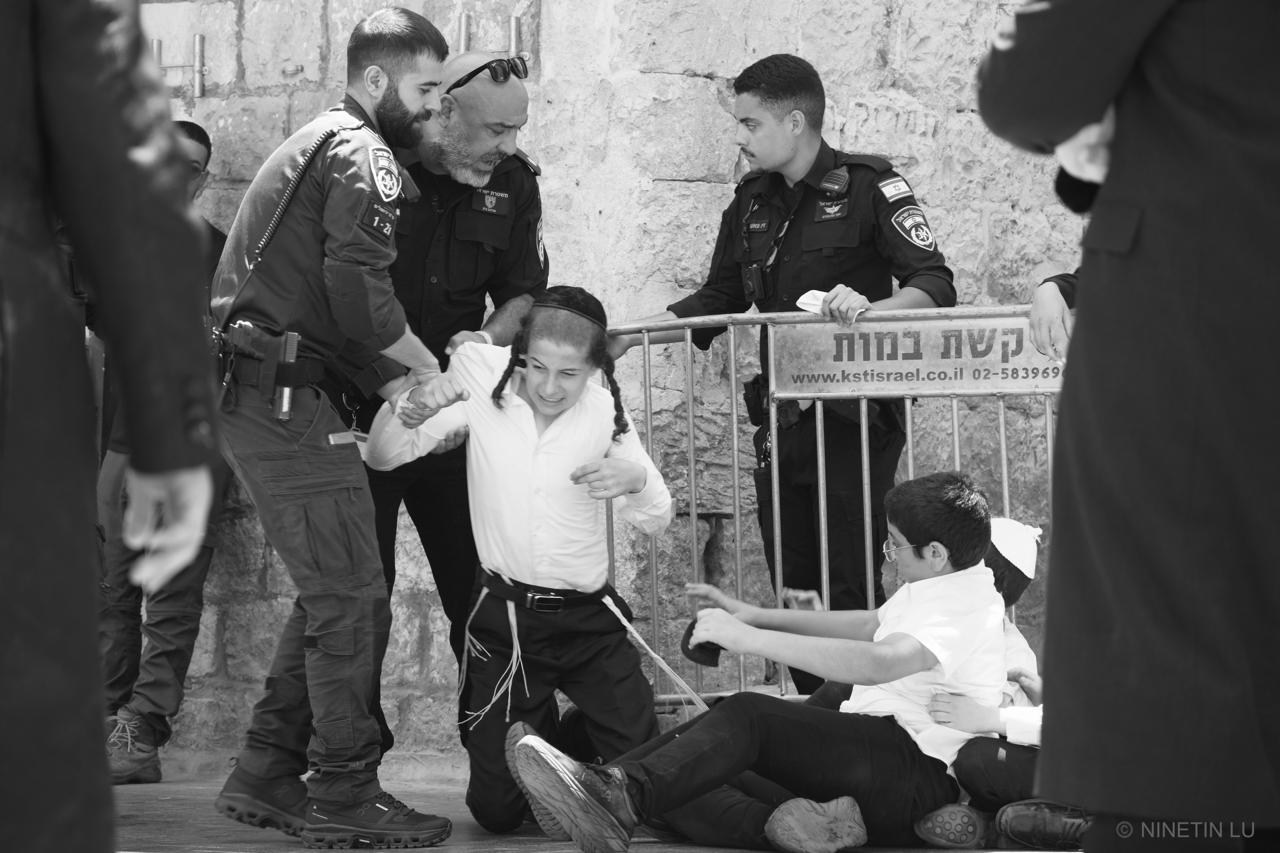
As they were walked back by security forces, we followed the Haredim around an outside corner of the complex. Most seemed to dissipate, but a small contingent redirected their energies to one of the other entry points. Many of this group were children who plonked themselves down, interlinked their arms and entwined themselves with the barrier.
The Haredim repeated the word “Shabbos… Shabbos…” over and over again, using the Yiddish pronunciation. The tone and intonation were reminiscent of the “Brains… brains…” of old zombie movies.
A Dati Leumi [national religious] person was talking with one of the Haredim, complaining that their behavior looked bad. “Don’t you see all of the cameras?” he asked, “What do you think the rest of the world will see when they look at this?” The Haredi person replied “People in Japan will see Jewish people, trying to live the right way.”
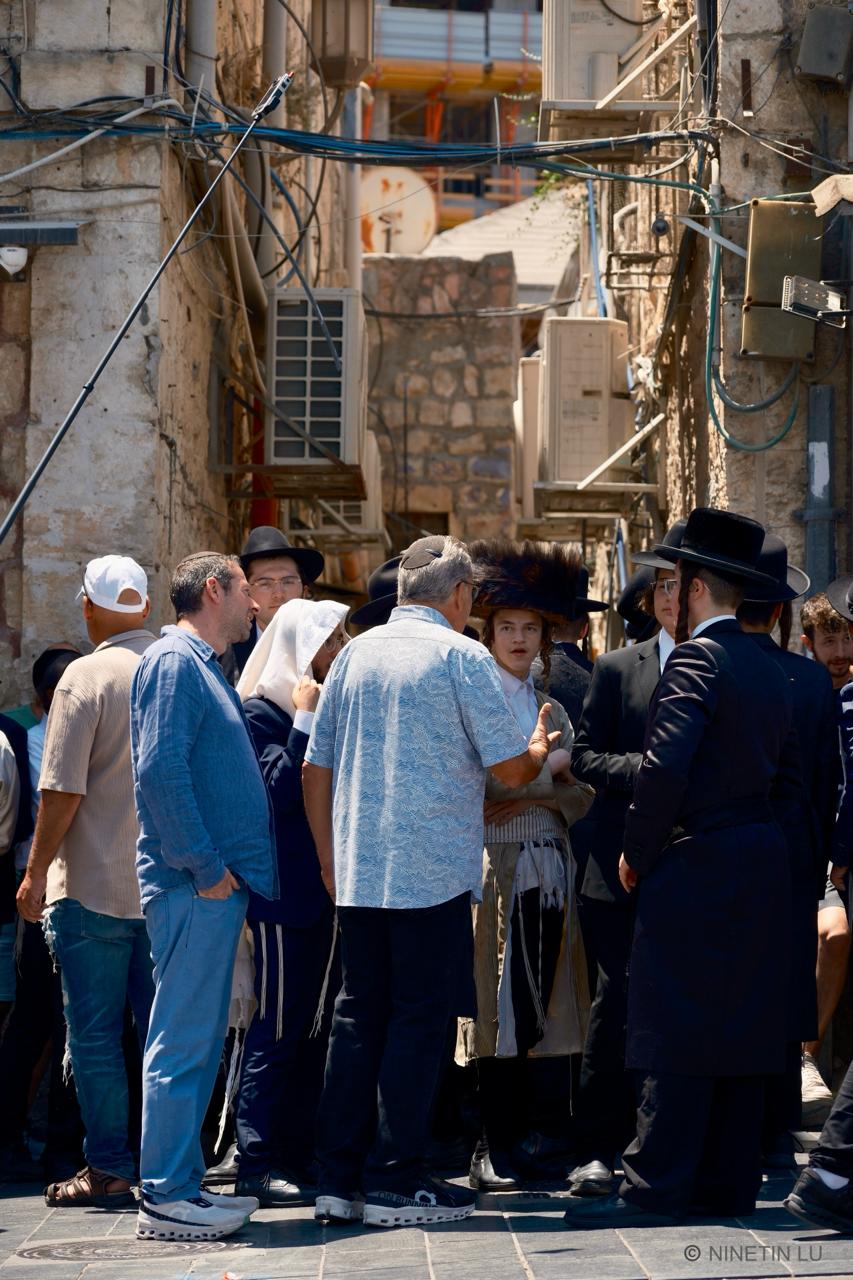
The Dati Leumi man asked about the residents living in the nearby apartments, whom the protests were surely disturbing. The Haredi man replied that he did not want anyone to be disturbed, but that people should not live next to a cafe that does not respect Shabbat. This seemed slightly unfair, considering many of them had probably resided there for longer than the six weeks that Basimta has been open.
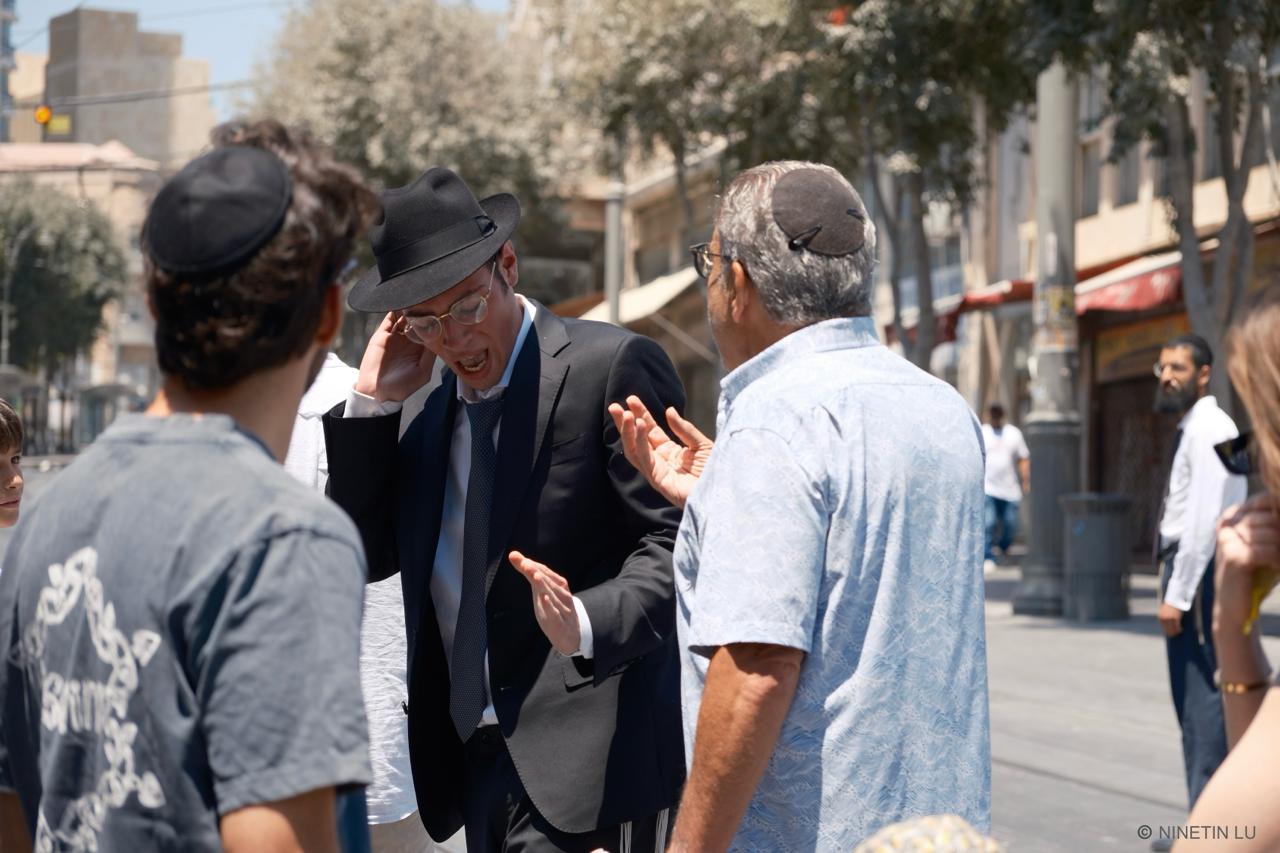
There was much to-ing and fro-ing at the barrier between the religious protesters and the police. Some secular activists also followed the action. At one point, a vituperative exchange broke out, and a Haredi man’s hat was knocked off.
A police car pulled up and started to blast piercing static noise from its loudspeakers. The security forces started to harry the crowd back from the barrier. They dragged the children away, with force but without violence. The juvenile activists kept their arms linked and were pulled along like a little chain.
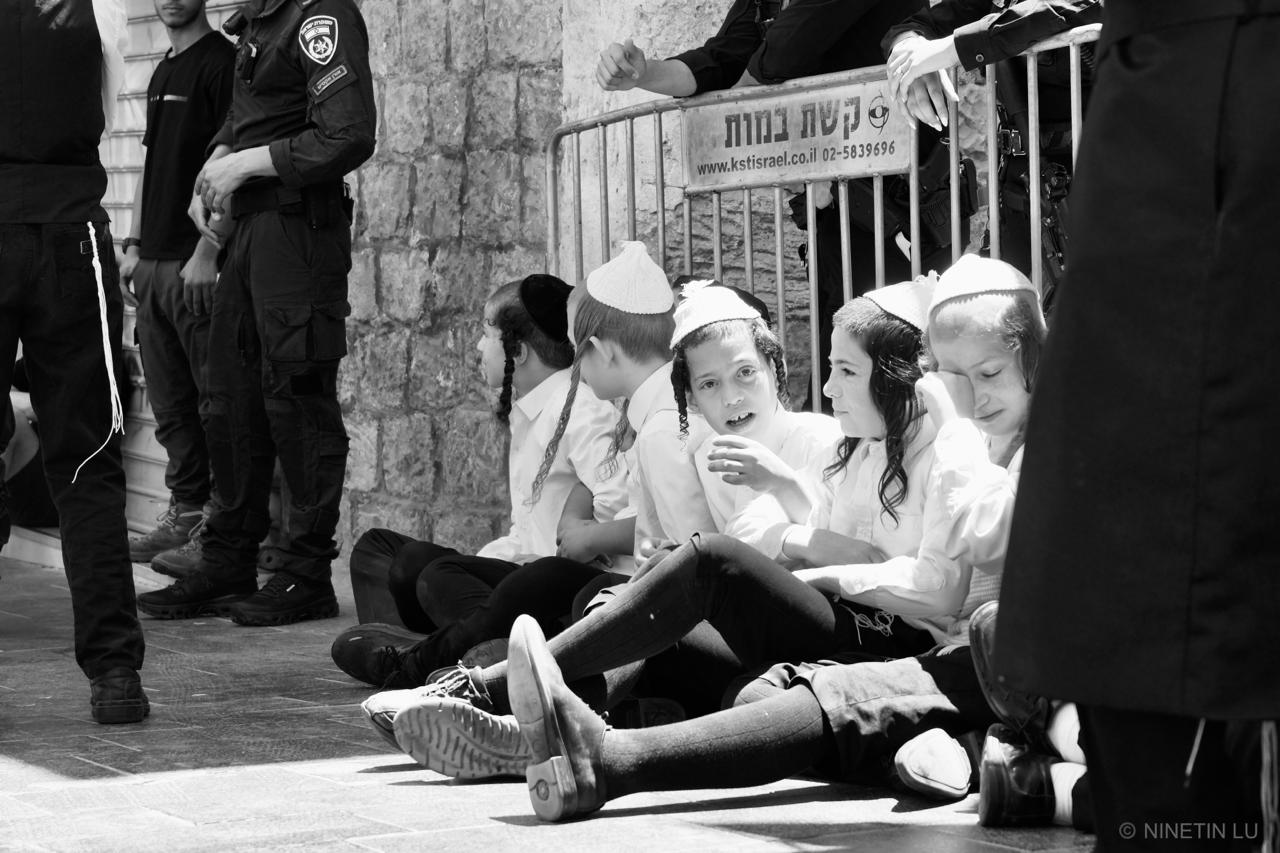
More Haredim ran back to the barrier, diving like baseball players doing a foot-first slide to a base. My wife was taking a photo, and a child stood up and placed himself between her and the rows of sitting activists. She moved to the right, and the little child followed, maintaining his interdiction. She moved a little more, so did he. They played this cat-and-mouse game good-naturedly for a little bit, tracing out concentric semi-circles, before my wife smilingly signaled her defeat to the diminutive sentinel.
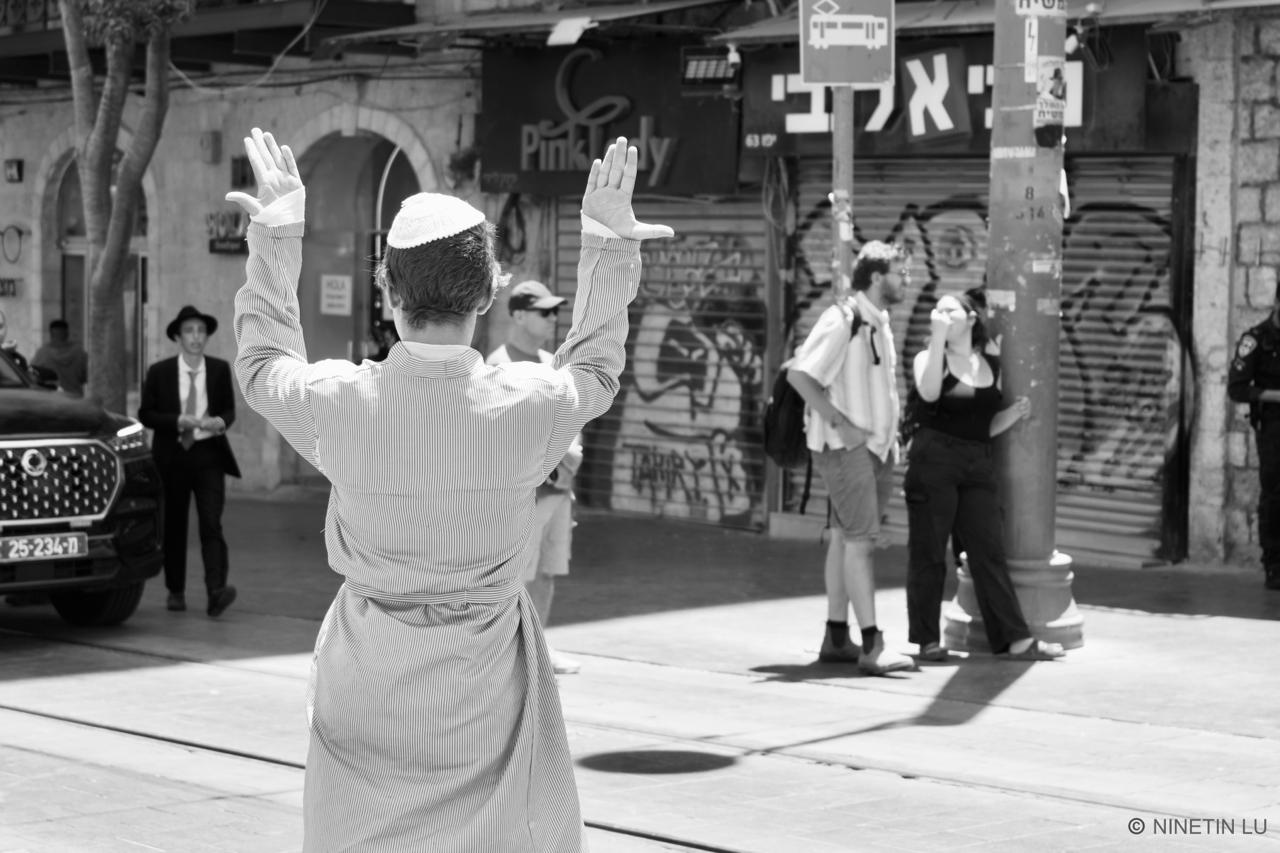
The security forces seemed to give up trying to move this group of Haredim. The police car had driven away without my noticing. Also, the journalists and secular protesters seemed to have lost interest and wandered off. The religious protesters sat at the barrier for a little while longer, still intoning “Shabbos… Shabbos…”. But, with no adversaries and no friction, they appeared to lose energy. Somewhat uncertainly, one by one, they unlinked themselves and wandered off.
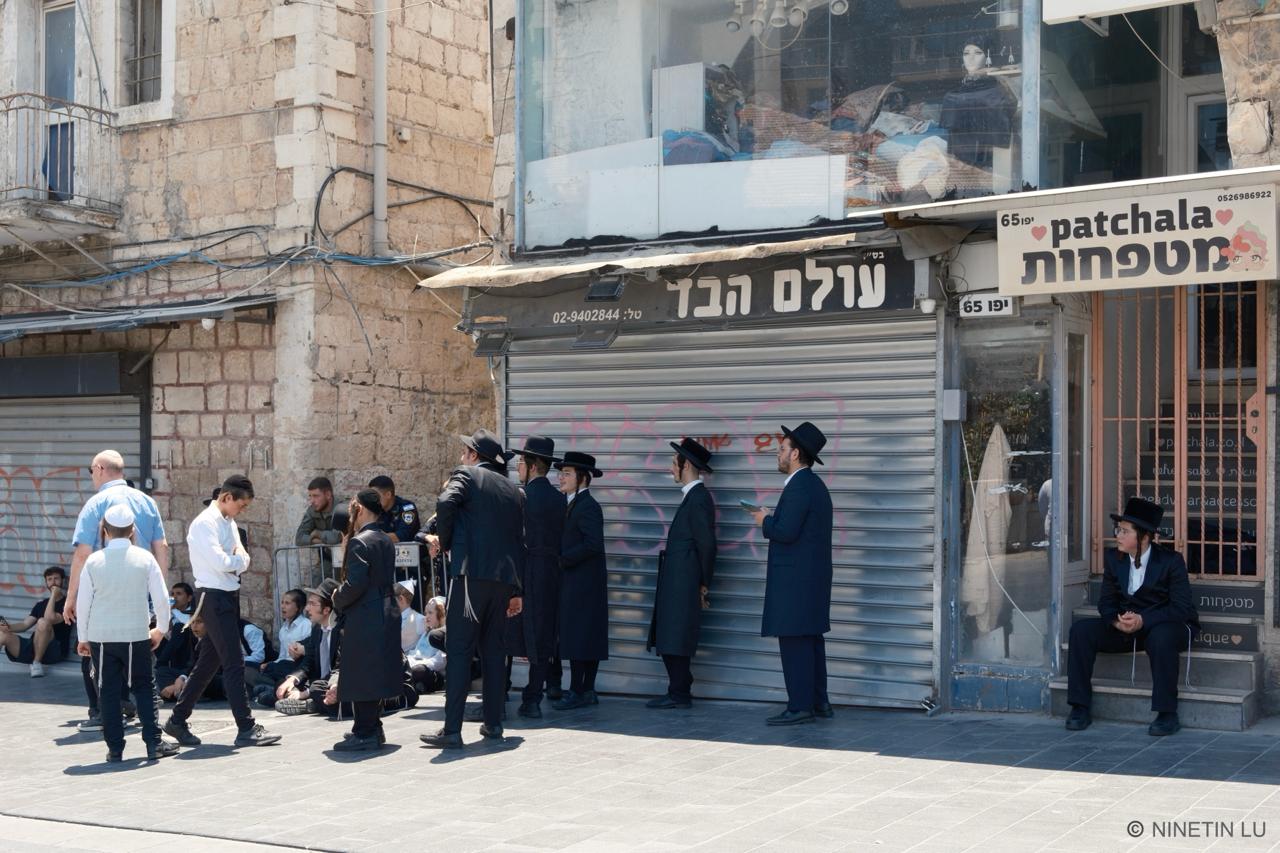
We returned to the original battlefield of the morning. Things were calm now. I chatted with a secular activist who had come from Netanya to join the counter-protest. My wife found someone from Tel Aviv. I asked a Haredi person why he was protesting this café. After all, I pointed out, Aroma is open on Hillel. He said that that was probably far away, and when I said it was just a few hundred meters he shrugged. I am an American, he said. I am just here on vacation.
I found myself next to the Haredi man who was arguing with the Dati Leumi man about world opinion. He is an American Litvisher, and seemed to be one of the younger leaders – or at least hype men – of the group. Before, with the Dati Leumi person, he had been angry and uncompromising, but now he seemed mild and reasonable. He spoke so quietly, in fact, that I had to lean in to hear him. In one excited gesticulation, he flicked his tie up into my face, for which act he apologized profusely.
I asked him again, why this café? He said that it isn’t just any shop, and he told me that the Haredim are protesting this café because they believe that the proprietor is trying to encourage more shops to open on Shabbat. “It isn’t about the cafe,” he tells me, “The owner has an agenda. He wants to convert Jews.” This allegation is based on the fact that the owner of the café is a Jew-for-Jesus. However, this claim is, at best, a retroactive justification, since that fact only emerged some weeks after the protests had begun.
I pointed out to the Litvisher that the Haredi protests seem to be stimulating quite a lot of business for Basimta, which had a long, snaking queue extending outside its doors. “Yes,” he agreed thoughtfully, “and also, look at all the cameras.” “It says in the Torah that we aren’t supposed to light a flame on Shabbat,” he told me. “That means that we aren’t allowed to push buttons. But we are causing all these photos to be taken.”
I remarked that a lot of people also take this mitzvah – not to light a flame – to mean one ought not to behave in a fiery way. He agreed, but he told me it that it wasn’t the Haredim who were behaving heatedly. “Who did you see using force?” he asked me. “It wasn’t us.” I conceded that I hadn’t seen any Haredim using any kind of aggressive physical force, but that I had seen a secular man knock a Haredi man’s hat off.
This is obviously far more than just a parochial dispute among Jerusalemites. A lot of the protesters seem to have been bussed in. My wife spoke with a secular woman who was originally from Jerusalem, but who had moved away some years ago. This woman said she was protesting “because I want to be able to drink my coffee on a Saturday.”
But this dispute is about far more than a café. Rather, it is a flashpoint for an argument about what sort of country Israel will be, what freedom means in Israel, and to whom it belongs.
Related Topics
Related Posts