The views expressed herein are solely mine.
Featured Post
Saudi Arabia does not believe Iran. Period.
As faith in diplomacy erodes, Riyadh is positioning for a post-agreement Middle East in which non-proliferation has failed and US credibility is conditional
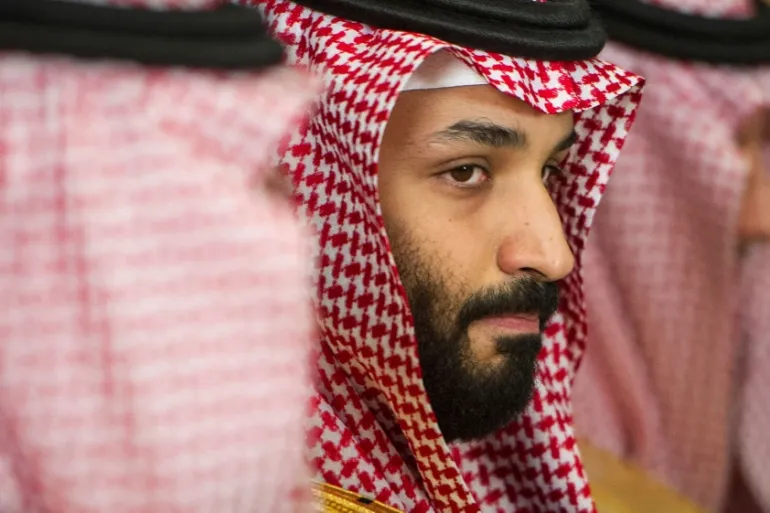
Mohammed bin Salman, the de facto leader of the kingdom, has seen a quick rise to power [Cliff Owen/AP].
For decades, Western diplomacy has clung to a convenient myth: that Iran can be managed, delayed, or transformed through negotiation. Saudi Arabia has now made clear, quietly but unmistakably, that it does not subscribe to this illusion.
Riyadh’s assessment is not emotional. It is structural.
Negotiations with Iran are not designed to resolve the nuclear question; they are designed to manage time – time for Tehran to consolidate capability, normalize pressure, and advance toward irreversible thresholds under diplomatic cover.
Saudi Arabia understands this dynamic with growing clarity. After years of lower oil prices that forced Riyadh to delay, scale back, or rethink several of its once-iconic Vision 2030 mega-projects, and after a period of intra-Gulf tension in which it was compelled to confront Qatar rather than dominate the regional agenda, the Kingdom has become markedly more pragmatic, wary, and unsentimental in its strategic outlook. This accumulated experience has stripped away illusions and sharpened Saudi suspicion toward Iran’s negotiating strategy.
Against this backdrop, Saudi Arabia’s participation in US–Iran negotiations does not constitute endorsement. It is a concession to alliance politics, undertaken explicitly at the request of Donald Trump. This is not faith in diplomacy; it is transactional coordination with Washington – engagement without illusion, participation without trust.
The strategic core of the Saudi message is stark. And it is unprecedented in its openness: if Iran crosses the nuclear threshold, Saudi Arabia will match it.
This is not bluster. It is a declaration of conditional proliferation, intended to preserve regional balance through deterrence symmetry. Riyadh is signaling that the collapse of non-proliferation in the Middle East will not be an Iranian monopoly, it will be systemic.
In doing so, Saudi Arabia is redefining deterrence in the region. Not through alliances. Not through guarantees. But through self-help, the oldest rule of international politics.
Equally important is Riyadh’s second signal: strategic neutrality.
In my assessment, Saudi Arabia does not intend to serve as the shock absorber for a confrontation engineered elsewhere. No prolonged proxy wars. No open-ended conflicts that drain resources while empowering Iranian auxiliaries. No repetition of Yemen, Iraq, or Syria – arenas where chaos served Tehran far more than its adversaries.
Neutrality here is not disengagement. It is force preservation. It is the decision to conserve leverage, capital, and optionality while others escalate.
The message to President Trump, and by extension to Washington, is precise: do not repeat Iraq. Do not confuse regime pressure with regime collapse. Do not dismantle state structures without a successor order. Do not create vacuums that Iran’s networked militias, proxies, and intelligence services are uniquely positioned to exploit.
Saudi Arabia understands a fundamental reality that much of the Western policy class still resists: the Iranian regime negotiates not to compromise, but to endure. Diplomacy is not a path to moderation; it is a tool of regime survival. Each round of talks stabilizes Tehran internally while fragmenting opposition externally. Each time nothing is done against the regime, it grows stronger.
Seen from Riyadh, the nuclear issue is therefore not about agreements; it is about thresholds. Once crossed, they cannot be reversed by paper, inspections, or guarantees, only by countervailing power.
In essence, Saudi Arabia is preparing for a post-agreement Middle East, one in which non-proliferation has failed, US credibility is conditional, and regional actors must assume responsibility for their own deterrence.
This is not a diplomatic posture. It is a strategic repositioning.
And it signals something deeper and more unsettling: the Middle East is quietly shifting from managed ambiguity to open balance-of-power politics – with or without Washington’s consent, unless the United States once again decides, abruptly and unpredictably, to reroute the course of history.
Related Topics
Related Posts