
Saying Goodbye to Britain for Good
In September 2023 I finally got my British passport renewed. The only reason was that my daughter was taking an extended trip to Bali and, as an Israeli, I’m banned from this Muslim country. So, to be on the safe side, I waded my way through the nonsensical passport office paperwork, submitting the worst DIY profile shot ever — me, a perfect combo of old hag and criminal — and sent off the form. Just as my shiny new reminder of my British origins arrived via registered delivery, October 7th broke out.
My daughter realized she was in the wrong country at the wrong time and was heading home faster than you could say ‘Island of the Gods’. Oh well, there went one hundred quid down the drain.
And since then, my passport has been sitting unused in a forgotten corner of our bedroom — our safe — a bit like my British identity.
My accent gives it away. I still like my black tea with milk, and Dairy Milk is my chocolate of choice. I am drawn to the banter of my landsmen, I miss the Life of Brian quotes, I miss the ‘Here’s one I made earlier’ — but I don’t miss England.
And even if I did, the England I knew and loved, the land of my childhood, no longer exists.
I grew up in a seaside town. A place of parks, cricket fields, grammar schools, a wonderful pier, a town center, and an Odeon Cinema. My parents chose it because it offered a ‘Jewish life’, with two synagogues that didn’t require 24-hour security protection.
The population of Southend was mainly white but had a substantial Asian/Indian population. Many of them were doctors; others owned and ran 24-hour pharmacies for the late-night aspirin emergency, or newsagents, or delicious Indian takeaways for drunk crowds with the munchies after a few beers in the local pub.
My best friend at junior school was an Indian girl called Maria. I spent countless hours in the immaculately clean Patel house eating samosas and watching Bollywood movies that didn’t have subtitles.
There were other minorities who I got to know too — like Salvatore from Sicily, who ran a fantastically authentic Italian restaurant, long before antipasti and pecorino cheese became standard consumer fare.
I attended the local senior grammar school and was a beneficiary of an excellent education. Despite being the only Jewish girl in my year, I rarely felt anything less than safe. I was excused from ‘religious assemblies’, which was kind of cool, but I still gave out Christmas cards to my friends.
I studied at London University. Everyone who knew me at uni knew I was Jewish. My professor made a big deal about my ancient roots — making it clear I should be proud of them rather than embarrassed, as I often was.
The college next door to mine — SOAS — was a place I frequented. They had a better coffee shop and a good cloakroom. I remember my feeling as I handed my coat to a girl wearing a T-shirt with the words ‘Free Palestine’ inscribed. This was the first time I felt genuinely threatened. Was this an orange light for my exit?
Let’s be clear: there is no ‘Free Palestine’ with Jews in it. But that, I reasoned, was happening in SOAS (School of Oriental and African Studies), a place where a large number of people learned modern and classical Arabic and the Koran. If I didn’t like the cloakroom and coffee shop so much, I could have chosen to stay away.
Spending four years at uni in the heart of London was a great privilege. I made friends with a Fin, a Bulgarian, and countless Czechs. Our faculty drank vodka together every Thursday night and inevitably ended up eating a giant Chinese meal that our professor always insisted on paying for. Leicester Square was a ten-minute walk away, Covent Garden around the corner. There were coffee shops and tea shops, impromptu picnics in Hyde Park, and the odd visit to a museum or a show with my grandparents. In the early 90s, we were no strangers to terror, but the IRA opted for incendiary devices that caused havoc rather than carnage. We were still in a pre-9/11 era. Soviet communism was taking its dying breaths and the EU was just round the corner.
For once, I experienced an exciting, truly multicultural Britain of optimism, and above all, dialogue.
Fate, however, determined that my future would be elsewhere. After graduation, I ended up in Israel with no intention of staying (long story). But it happened anyway (long story).
So at which point did I actually say farewell to Blighty? When I received my Israeli passport and ID? Or was it when I started to understand that things in England were changing — and not necessarily for the better?
As a wife and young mother, I visited Britain rarely. However, I still gravitated towards Brits. We spoke the same language when everyone around us (especially the Americans) didn’t.
Like Naama, an ex-midwife who’d lived in London (two roads away from my digs, but our paths never crossed) all her life prior to making aliyah. We spent most days in intense conversation, in and out of each other’s apartments, nursing our babies, eating toast and Marmite.
It was via Naama’s family missives and visits from mine that I learned that life in Britain had become complicated. Mass immigration had changed the face of London. Her niece couldn’t find a part-time job to fund her BA. All the service jobs seemed to pass quietly from hand to hand within the same close-knit circles. I heard about rising crime of a nature that was unfamiliar to me — gangs, mafias who had imported their business model from the crumbling ex-Soviet states.
And then along came terror attacks that made IRA-style firebombings and kneecappings look like child’s play.
Or perhaps the final curtain happened three years ago, when I visited the UK for a long weekend, having been away from the country for five years or so. We stayed in Central London, went to a great show, saw the changing of the guards, checked out an exhibition at the British Museum, and of course, shopped in Primark at least twice. Everything was dandy.
But then our flight got delayed overnight. We were forced to spend an unexpected extra night in Luton. We were trying to figure out how to while away the long summer hours before we got on the plane again.
A movie, perhaps? The movies were in Hindi or Bengali, take your pick.
Most of the pubs had been boarded up and had become barber shops instead.
We opted to visit the local mall. Wandering around stores that sold gaudy Middle Eastern–style jewellery, heavy crystal chandeliers, unrecognizable food, and hookah pipe tobacco, I wondered if I was really in England at all. Half of the women were covered from head to toe (more extreme than the Arabs of East Jerusalem, who just wear hijabs most of the time). Anyone who had white skin spoke Polish.
I couldn’t understand why I felt so alienated. After all, Indian restaurants and Chinese takeaways, saris and pagri turbans were part of my childhood. Hijabs were part of my Israel experience. But where were the Brits? This wasn’t multiculturalism. This wasn’t us embracing otherness — this was a culture obliterated.
Israel is a multicultural country, too. But when Arab surgeons stitched my elbow or straightened my nose after bike/car accidents, when I bought Ukrainian ice cream from Russian stores, when I attended an Ethiopian-style Henna party, or even when the Chareidi women gave me candles for Shabbat and a free blessing, I felt enriched rather than alienated. Even in the heart of the Arab Shuk in East Jerusalem, neither I nor my husband felt the same way as we did at the Luton Mall.
When I lived in the UK, I dreamed of becoming a BBC journalist. I knew that my chances of being accepted were minimal. I didn’t have a degree that was prestigious enough. That was how much I admired the deep reporting, fantastic journalism, and thorough (and supposedly unbiased) analysis the BBC offered in all of its programming.
And now? I feel betrayed. The institution I once revered launches relentless attacks on my country. Fact-checking is minimal as long as the anti-Israel narrative is rigidly adhered to. Case in point: producing a documentary about children in Gaza, prominently featuring the child of a Hamas leader, and then disingenuously claiming ignorance of this rather crucial fact.
The twisted narrative that spawned from the worst massacre Jews have experienced since WW2 has turned into a bloodfest, where the word ‘genocide’ has lost its meaning altogether. It is still unfathomable to me how the victims have switched roles to perpetrators by the BBC’s sleight of hand. If this is ‘impartial journalism’, then I wonder what bias actually looks like.
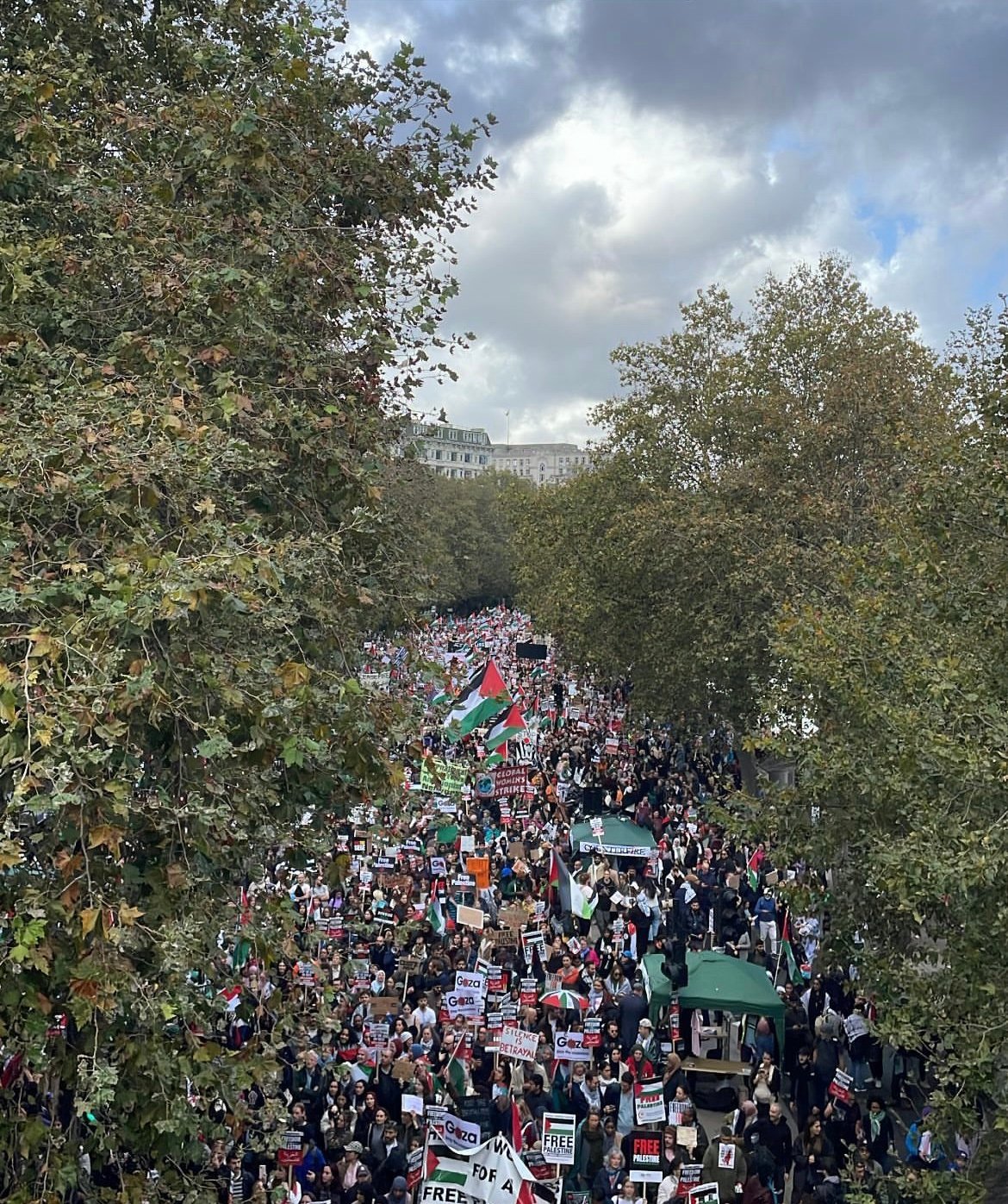
And let’s go back to London, just for nostalgia’s sake. The very city that was once a bastion of democracy, pluralism, and tolerance now hosts rabid weekly militaristic pageants which thinly disguise their real aims — the destruction of the Jewish state and anyone who supports it (i.e., Jews).
So I’m not going back anytime soon.
And then I wondered. Perhaps the tolerance I believed in growing up wasn’t real at all. Perhaps, at the time, it was just socially unacceptable to give a heil Hitler salute and paint swastikas on the wall. Nothing more than that.
Perhaps the war, a genocide (note the correct use of the term) of six million of us, hadn’t taught the Brits anything. Perhaps everything is just a question of narrative.
I really try to filter the news of attacks, online vitriol, the pro-Palestinian (which is always anti-Israel) rhetoric in the Houses of Parliament. We have enough problems of our own, thank you very much.
And then came Glastonbury — my final break with Britain. As a teacher in Israel’s high school system, I’ve watched my students grapple with profound loss. One lost her brother on October 7th. My graduates, barely 18, serve in the IDF, risking their lives to protect us from threats inside and outside our borders. Their mothers lie awake at night, as do I, thinking of my own children in uniform.
So when a performer at Glastonbury, broadcast to millions, shouted “Death to the IDF” while waving a flag of ignorance, it felt personal. This wasn’t just a festival chant; it was a call against young men and women I know, who sacrifice so much. The crowd’s roar, amplifying that hate, left me speechless. I began to question if the multiculturalism, the banter, the art and music were all just an illusion. Or whether a rot had settled in.
But the Brits are the people of a great nation, the people of ‘the sun never set’, the people of Shakespeare, Milton, Homer, and Churchill. They are the people of kings and queens, of the Industrial Revolution, of great universities and institutions.
Or perhaps not. Perhaps there are no people like that anymore. Perhaps the silent shadow of something sinister and malevolent has snuffed out this spirit.
Perhaps all that is left is outrage and algorithms, silence and shame.
Perhaps they’ve unwittingly severed their ties to anything honorable and admirable.
Yes, there a few brave people who are fighting the takeover. But the optics don’t look good.
There are too many echoes of the 1930s right now. British Jews are making plans to leave. And rightly so.
And me? I’m going to hold a giant farewell party. I’ll dig out a jar of Marmite or two, open up some digestives, buy some overpriced Dairy Milk from the supermarket, warm up a pot of real English tea made with PG Tips. I’ll make a long and emotional speech, with lots of Monty Python references.
I will then wave goodbye to a country that was once a great place to live.
But I won’t burn my passport. Not yet. It might be handy to travel to less friendly places. Or maybe one day I’ll use it on my return and all of this will seem like one bad dream.
But it’s just a piece of paper, really.
And that picture is just awful.