
Scott Richards: A Hostage Negotiator’s Perspective
Hostage Negotiations and How They Function.
Guest Blog Post by Scott Richards.
https://www.presidiumnetwork.com/
At the time of writing this, it’s been 30 days exactly since my colleague and friend, Luc Bernard, the producer of the holocaust educational game, “The Light In the Darkness” contacted me concerning the hostages held in captivity by Hamas. Luc reached out to me because of the success that Presidium Network had with the British Hostages held in Afghanistan and Ukraine, and that we’d been able to achieve positive outcomes in earlier interactions with Hamas.
https://www.bbc.com/news/uk-england-tees-67075387
To tell this story, there’s a need to understand who I am and the reason that people like me exist, and what it is that we do within international relations.
As the world became multi-polar, the traditional mechanisms of international relations ceased to be as effective. There is a chasm-like lack of understanding about different cultures in the West, whether in London or Washington, and no more so is this shortcoming visible when it comes to tribal cultures. In trade or diplomacy, there remains a desire for the West to dictate terms. I remind diplomats frequently in their efforts to have dialogue with the Taliban, “They lived in chaos, they hid from drones, and fought for 20 years against the West, and now you think they’ll consent to your terms over chai and biscuits?” I watch endlessly as failure is repeated over and over.
This is a vitally and critically important step in 'moving the needle' forward. It's 'a proof-of-life' and a 'welfare check' of sort; and it's imperative to build on this. As it remains essential to have a status report on the health/welfare of the others held in captivity. https://t.co/xDxn2PWcxS
— Scott Richards ???? (@skotrds) April 24, 2024
In this space, there aren’t many that can get a message to Hamas. Sometimes I’m forced to ask people, have you ever met these kinds of people or ever talked to them? The answer is: no.
My phone rings when there is a problem, whether that’s a disappearance in Mexico related to cartel violence, foreign nationals working with NGOs in Gaza needing safe exit and a message be delivered to Hamas, an overrun of aid facility, the disruption of sex-trafficking networks in Pakistan, writing speeches for UN envoys, or as when Luc called, people held hostage.
It’s the ability to be able to communicate across lines, whether the Cartel, the Taliban or Hamas – that’s what is unique. It’s strange to talk about. We don’t talk about ‘the ‘work’. There are probably few hostage negotiators that have been able to release hostages or detainees, without prisoner exchanges or ransoms. It’s about being able to enter spaces others can’t.
The situation with the Israeli hostages in Gaza is unlike any negotiation that I have ever seen. It’s troubling. Even if I was purely an observer, it would cause me concern. To have a closer view of it, is profoundly disturbing.
The very first thing you do as a negotiator is establish a baseline of facts. The first fact to establish is what is the state of health and welfare of the hostages. In cinema, the truncated version of this is ‘proof-of-life’, that’s partially correct. The welfare aspect is vital at the onset, being ‘alive’ is one part, maintaining life is just as important. That means understanding the conditions they are kept in and determining their health, any medical conditions that may be relevant. In the case of the Israeli hostages that is two-fold, the first is any trauma injury and the second are any medical conditions that require treatment. If there were injuries that were sustained during the kidnapping, they may need antibiotics, or if someone has a heart condition, or diabetes, that requires maintenance.
Once you have the benchmark, you start with bargaining for smaller concessions. There needs to be an effective line not just to those who are representing Hamas in this case and their demands, but you test the line to the people who physically have the hostages. Can we get regular data on the welfare of those held captive?
If that line isn’t stable, as it isn’t in this situation, you create conditions to compel that line into existence.
This achieves several goals, first it ensures the wellbeing of the hostages, it shows good faith in a negotiation by both sides, and it moves the needle forward. There are two rules in hostage negotiation, the first is no action should ever make the situation of those held captive worse, and always move the needle forward.
A hostage is taken for one of two reasons a ransom or a political concession. The Israeli hostages are held for political reasons. The exception to this principle is ISIS, the value of the hostage for ISIS, was in their gruesome death, as a display of willingness to commit atrocities. Hamas is not ISIS.
There’s been a lot of analysis of October 07th, 2023, and much of it misses several obvious indicators, and these indicators are relevant to the hostages, and relevant to what Hamas has said over the course of time. If you look at the behavior of the attackers on that tragic day, there are uniformed and uninformed, there are differences in how the units operated.
That the welfare and location of the hostages isn’t known or being managed over 6 months into the Israel-Hamas conflict is an extremely troubling indicator. Functionally, to not maintain their welfare, means that either Hamas leadership doesn’t have control over the parties that captured them, or that the hostages aren’t sufficiently valued in the negotiations between Israel and Hamas. It begs the question: is it unclear to Hamas where the hostages are because of how the operation itself was run?
On March 04th 2024, Hamas official Basem Naim told the BBC that information on the hostages was “valuable and couldn’t be given for free.” He also added that the hostages were held by many terror groups in different locations in the Gaza Strip. There was enough coordination to carry out the attack. It’s logical by extension that there would be enough coordination between Hamas, and these other groups to manage their welfare.
In the third week of April, Hamas’ Moussa Abu Marzouk stated they don’t know how many hostages are alive or dead. The hostages have been central to the negotiation of a ceasefire. Hamas has changed its bargaining position to one of demilitarization and conversion to a political party. There’s been ‘chatter’ on the Internet about Hamas relinquishing heavy weapons and to transform into a purely political party, if there’s merit to these statements, then it would be a major shift away from the hostages being the center of negotiations, but also for the families of those held captive, that not enough are alive to be used for the basis of a ceasefire.
For Hamas and Netanyahu, the number of hostages remaining alive has profound political impact. Hamas is in a difficult position, they can make the argument that any combatant is held as a prisoner of war, but for civilians, their capture is a violation of the Geneva Convention to hold them hostage.
For prisoners of war, they have a duty of care. For Netanyahu, if there are not enough hostages alive, then with the protests and the handling of the negotiations, it will cause a further loss of confidence in his government.
In the event of an incursion into Rafah by Israeli Forces, both sides will blame each other for the deaths of the hostages, and the truth will be buried under the rubble in terms of accountability.
The most recent goal we set was to request the release of Noa Argamani, to show that good will can be achieved, as her release would directly impact other efforts towards humanitarian relief for the civilians of Gaza.
Noa Argamani’s family asked me to share this video.
Please share widely. Liora has terminal brain cancer. pic.twitter.com/uBV4s6ThvC
— Luc Bernard (@LucBernard) March 27, 2024
It would move the needle forward.
That approach was documented and escalated to the stakeholders, and we know it’s been discussed, because when we addressed it, we were told: “it’s already being discussed”. That’s often how this works, you seed the vector in several corners, and you watch the machine respond.
The concern we have is that we don’t know and nor does it seem that Hamas knows, whether or not she or how many of the others are alive. Hamas can’t reasonably assume the position that information as to the welfare of the hostages is valuable, for Palestinians the lives of Gazans are valuable also.
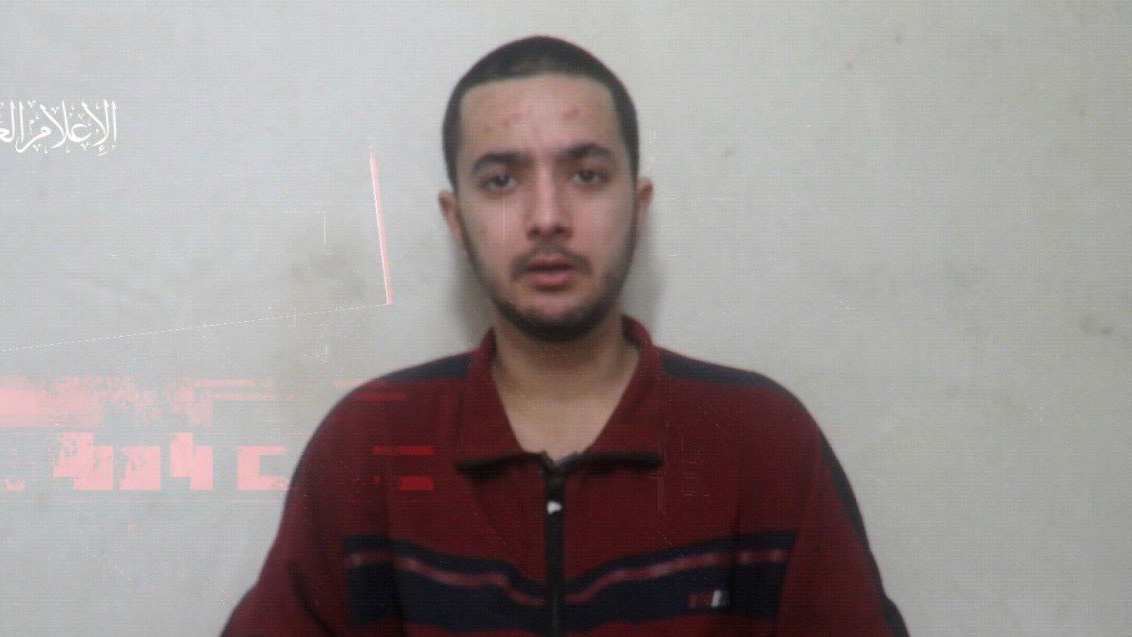
The Goldberg-Polin family has given permission for the video of their son Hersh, who has been held captive by Hamas for 201 days, to be published and used after it was released by the terror organization Hamas today.
For more than 200 days, 133 hostages have been held captive by… pic.twitter.com/1pD4RcxEe0
— Bring Them Home Now (@bringhomenow) April 24, 2024
In the days since starting this piece, the video of Hersh Goldberg-Polin has been released. This is the ‘needle’ moving forward, but while being a vital moment, also delicate. The negotiations require a ‘reset’. I am asked the question; how do you negotiate with Hamas? First and foremost, Gaza, has urgent needs, whether trucks or diesel fuel. Eighteen countries came out yesterday and asked for the release of the hostages, Hamas is now in a position where releasing the hostages, or even some of them, the young, the civilian, the sick or the elderly, is imperative for the survival of Gazans. Without aid, without being able to show Gaza can be reasonably safe, that international aid-workers won’t themselves be at risk of kidnap, or violence – the situation can and will only deteriorate.