A Jew from Texas, who knew?
Searching for Valesca: Once More to Memory Lane
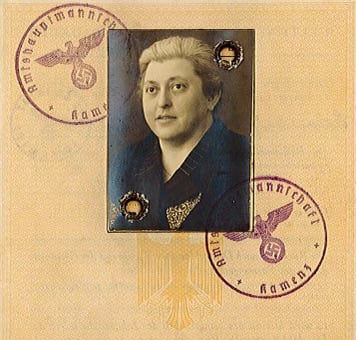
Valesca Leiseroff's German passport.
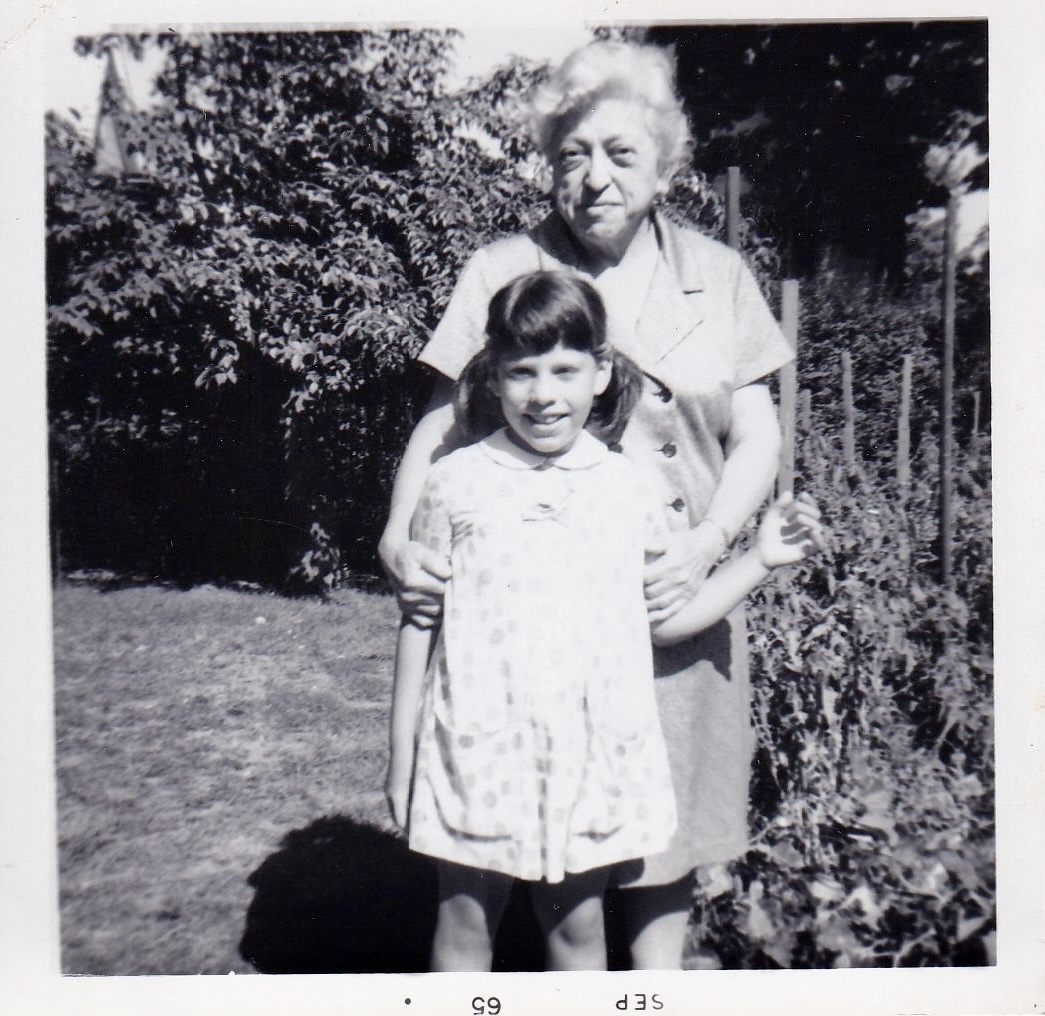
In 2023 and 2024, my partner Naomi and I spent hours searching for the grave of her grandmother, German-born Valesca Schulman Leiseroff. She died in 1972 and in 1974 her son Eric had her name added to a gravestone where she shared space with her brother Herman, who died in 1949. The memorial was in the Westchester Jewish Cemetery on Memory Lane in Greenwich, Connecticut. Despite maps, row locations, the names of adjacent plots and lots of determination, we could not find her memorial. This April, we relocated from Katonah, NY to a Boston suburb, making weekend searches impossible.
But thanks to an unforeseen series of events, we had one more chance to find Valesca, who had left Dresden, Germany with Eric in June 1941, passing by train through Germany, France and Spain to Lisbon, where they boarded the S.S. Excalibur for a voyage to the United States, soon settling in Port Chester, NY.
We were staying with relatives in Stamford for a wedding reception. Over the weekend we had lunch with Naomi’s in-laws, the parents of her late husband, at The Beehive restaurant in Armonk, NY. On the way over, we drove on Riversville Road in Greenwich. That sounded familiar.
We looked at each other and Naomi said, “We’re very near the cemetery.” We agreed to stop there for a third time after our lunch.
“It’s Shabbat, I’m feeling lucky,” I said.
On the drive to Armonk we listened to the audiobook version of the English crime novel “The Thursday Murder Club.” Inspired by the book to slip into sleuth mode, I mused, “What are we overlooking? We’ve been there twice and walked over the same sections repeatedly. Are we missing another section?”
Back at the cemetery on Memory Lane we re-read instructions on where to find Valesca. We had row and plot numbers that were impossible to find. We had struggled to reconcile maps and that was a dead end. At least we had three names to help: The cemetery administrator wrote that “according to our records your grandmother is buried next to Fannie Leibert and Herman Schulman. The first grave in her row is Charles Auster.” None of the four were listed on findagrave.com, typically a great resource.
We split up to cover different sections. We saw memorials for Schulmans, but not these two.
The names and sections all felt familiar from past searches. I had a sense of déjà vu; we really had been here before. I realized I was looking mostly in family plots with multiple related gravestones, rather than sections with individual or shared gravestones. Some caught my attention repeatedly, such as two for victims of 9/11. Another was for Marc Kalech, whose memorial states, “A legendary newspaper man who helped save the New York Post.” Harold S. Akrongold’s memorial says, “Beloved father, husband, grandfather, scientist, businessman, author, Founder Kabbalah Society. Brilliant man, fiercely loyal to his family, he looked beyond traditional thinking to understand the universe and build a bridge between Judaism and science.”
Many had been placed since the 1990s, while Valesca had died in 1972. I shifted to a section that looked both older and populated with single gravestones. Was this where we hadn’t been looking?
Naomi, with the same instinct, headed for the same area. I scrutinized row after row, until the name of Charles Auster jumped out at me at the end of a row. “Naomi, here’s Charles Auster!”
At the same exact moment, approaching me from the other end of the row, she exclaimed, “I found her gravestone!”
I raced over to the “Schulman” gravestone with Herman and Valesca. The gravestone badly needed cleaning, to remove lichens and weather stains that obscured the names and dates. If we weren’t looking directly at it, the memorial would have been easy to overlook.
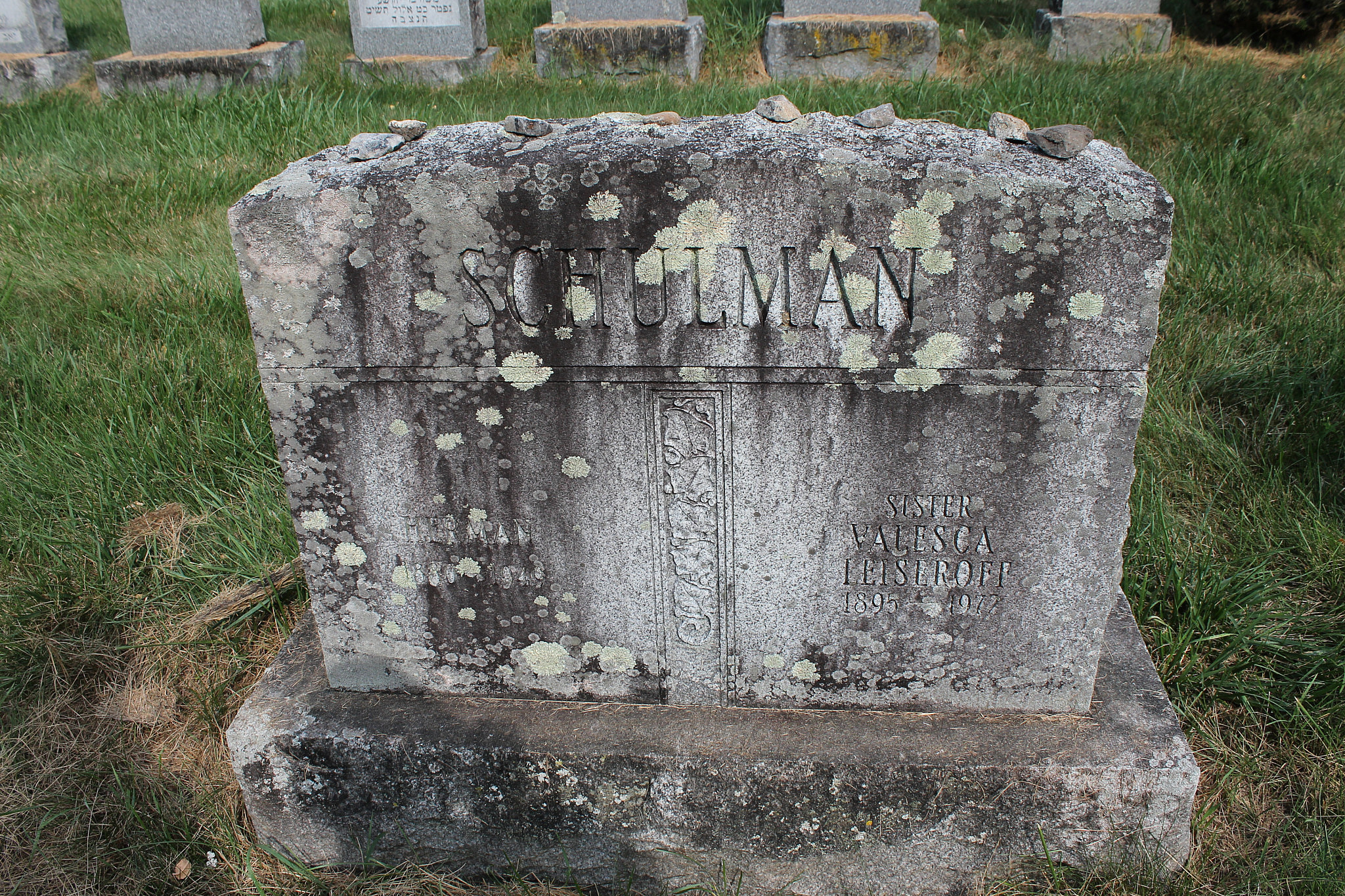
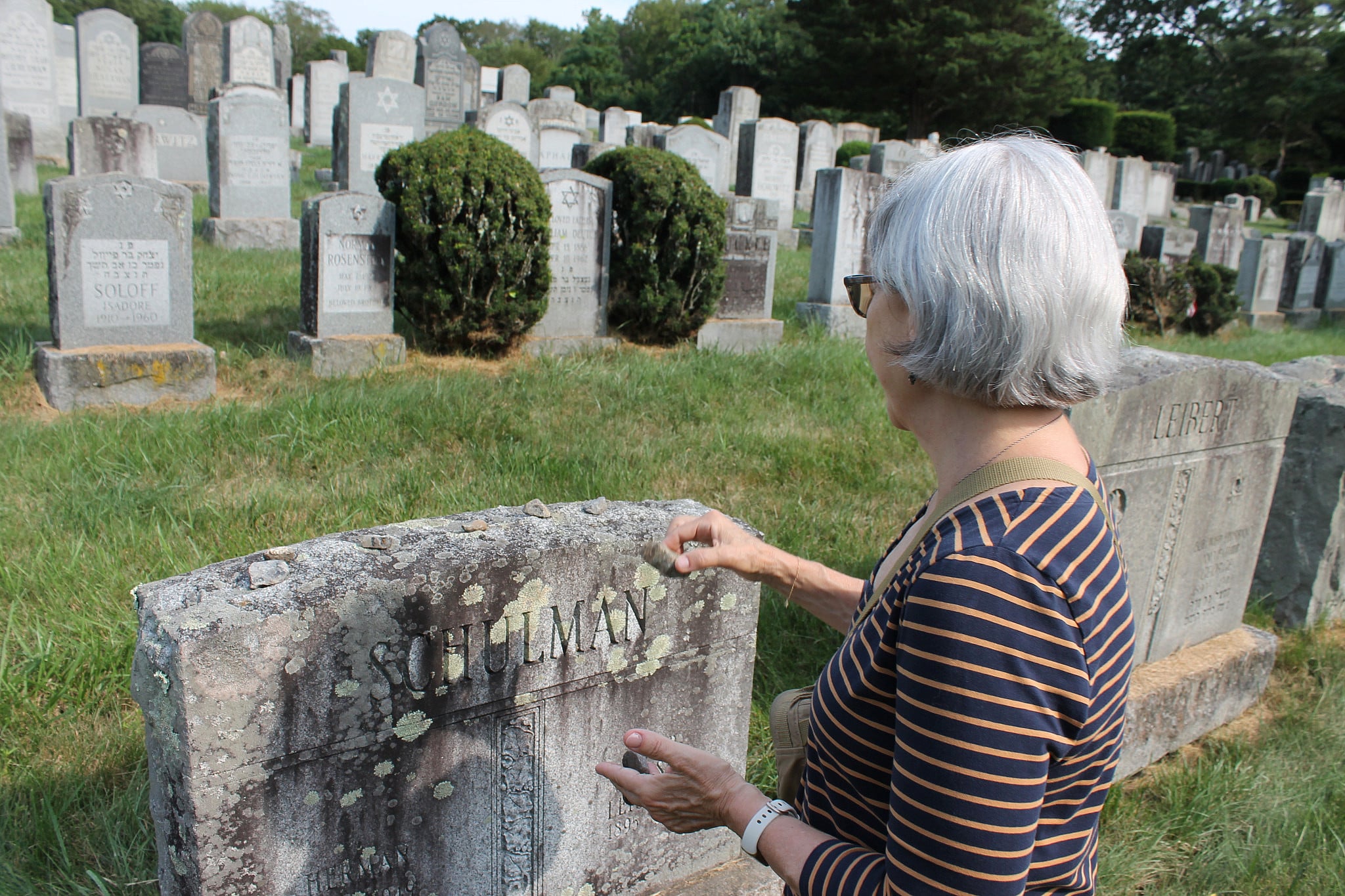
I hugged Naomi as we gazed on the monument. Nobody had put rocks on it—Naomi never knew of her father going there. I dusted it off while she fetched stones from the road. She placed them on the top of the memorial, stones representing both the living and the dead. We recited the Jewish mourning prayer, Kaddish, which opens with the lines:
Glorified and sanctified be God’s great name throughout the world which He has created according to His will.
May He establish His kingdom in your lifetime and during your days, and within the life of the entire House of Israel, speedily and soon; and say, Amen.
The improbable find, after so much frustration, gratifies us. It’s no longer that missing piece. It gives us a good feeling, knowing the final resting place of the resourceful woman who built a life in the United States, with a son who returned to Germany as GI in World War II. I’ve already read how to clean a gravestone, so we have a reason to return to Greenwich and the cemetery on Memory Lane, maybe for Thanksgiving.
Then, as now, we will remember Valesca.
Related Topics