
Leadership With Heart
Seeing Shavuot Through the Eyes of a Child
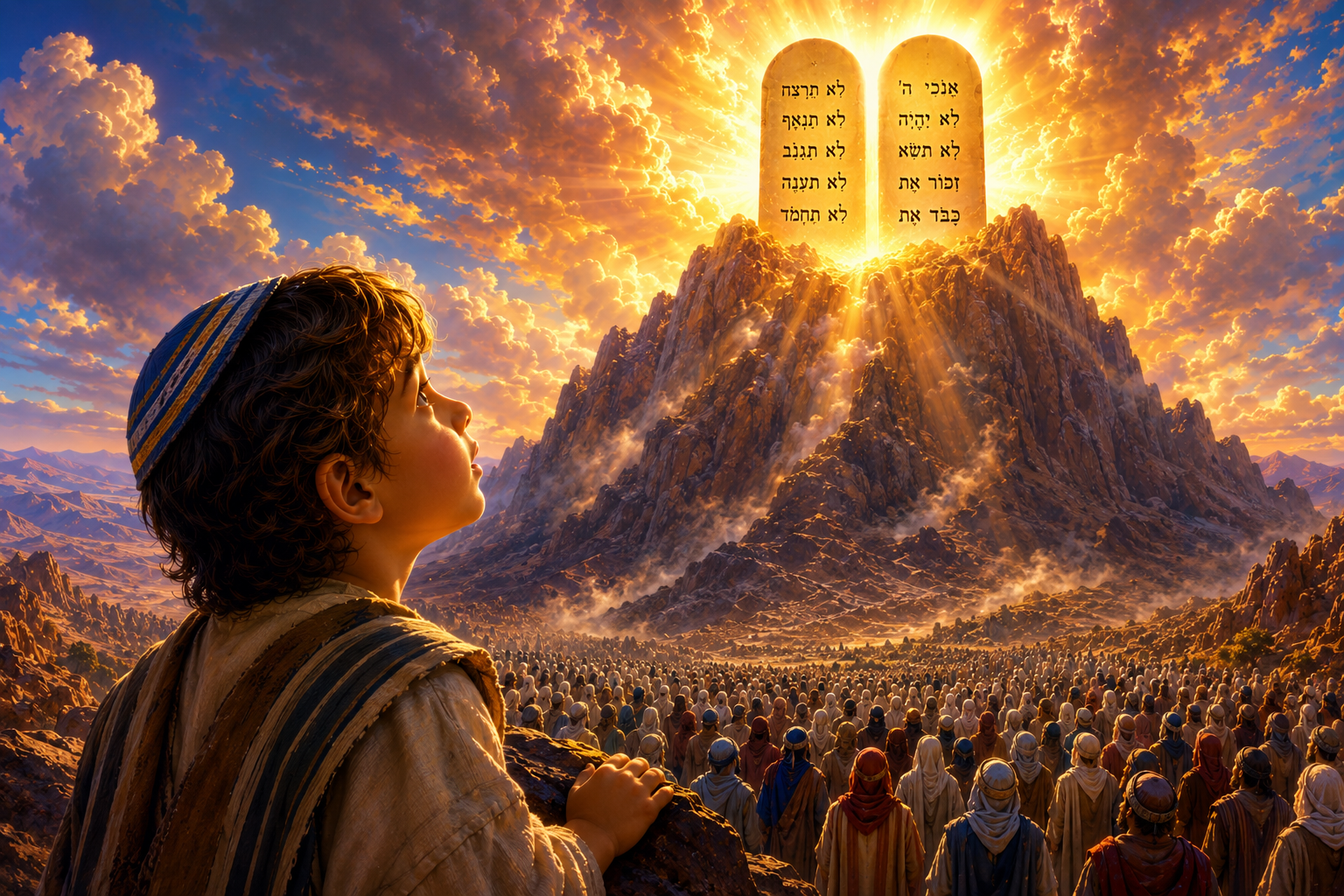
AI generated image
My five-year-old grandson came up to me this week with a very important Shavuot request: he wanted pictures of the Torah and the Ten Commandments.
So we sat down together at the computer, searched for a few beautiful images, and hit print. When I handed them to him, he looked up with complete sincerity and said, “Hashem is so happy that you made these for me.”
For a moment, time stood still.
There was something deeply moving about watching the Torah become so real and exciting to him. To a child, these were not relics from an ancient civilization or abstract religious symbols. They felt alive, immediate, and personal. His excitement carried a kind of innocence and clarity that adults sometimes lose.
And it struck me that this may be one of the central messages of Shavuot itself.
More than 3,000 years ago, the Jewish people stood at Mount Sinai and received the Torah. That moment shaped not only Jewish history, but also the moral and spiritual foundation of Jewish civilization. Yet Shavuot is not merely a commemoration of a distant historical event. In Jewish tradition, the giving of the Torah is understood as something spiritually renewed each year.
The Torah itself does not change—but we do.
Every year, we return to the same words as different people than we were before. We arrive carrying new experiences, new anxieties, new gratitude, new responsibilities, and new questions. The text remains eternal, but our relationship with it continues to evolve.
That is part of what has allowed Judaism to endure across centuries of exile, persecution, dispersion, and renewal. The Torah survives not simply because it was preserved, but because every generation chooses to rediscover it and recommit itself to its values in the context of their own lives.
In many ways, my grandson’s excitement captured that idea perfectly. To him, the Torah was entirely new. And in a deeper sense, it is new for all of us every year, because we ourselves are not the same people we were the year before.
Shavuot reminds us that Judaism is not sustained through nostalgia alone. It lives through active engagement—through learning, questioning, teaching, observing, struggling, and returning. The covenant at Sinai endures because Jews continue to bring it to life anew in every generation.
That renewal often happens not in dramatic moments, but in quiet everyday ones: a family conversation, a holiday meal, a child asking questions, or a grandfather printing out pictures of the Ten Commandments for a five-year-old boy who believes it makes Hashem smile.
And perhaps that is precisely how Jewish continuity has always worked.
Related Topics
Related Posts