
The Unravelling: How Netanyahu’s Brinkmanship Lost the American Heartland
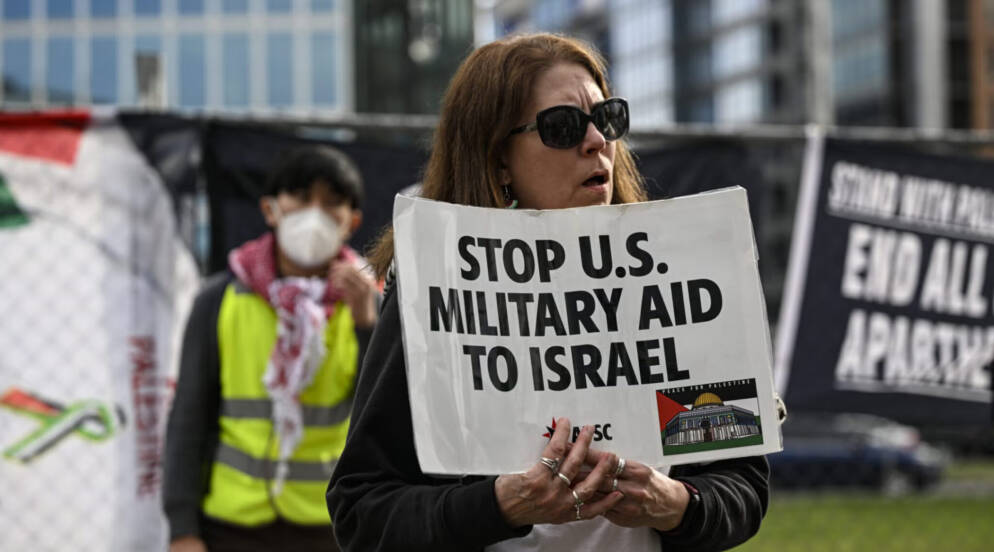
For decades, the U.S.-Israel relationship was framed as an “unshakable alliance”—a bipartisan cornerstone of American foreign policy that transcended the messy, often bitter domestic squabbles of either nation. It was a relationship built on shared democratic values, strategic interests, and, perhaps most importantly, a deep reservoir of public goodwill across the American heartland.
Today, that reservoir is not just drying up; it is being systematically drained by the reckless brinkmanship of Benjamin Netanyahu.
As we stand in June 2026, the data is as stark as it is sobering. Recent polling from the Pew Research Center reveals that a staggering 60% of U.S. adults hold an unfavorable view of Israel, a figure that has climbed steadily since 2022. Even more telling is the erosion of confidence in the Prime Minister himself: 59% of Americans now express little to no confidence in his handling of world affairs. While the “generational fracture” in support for Israel has been discussed for years, we are no longer just looking at a divide among young voters; we are witnessing a fundamental shift in the American psyche that threatens the very foundations of the U.S.-Israel partnership.
The Death of the Bipartisan Consensus
The historical brilliance of the U.S.-Israel relationship lay in its breadth. Whether through a Democratic or Republican administration, Israel enjoyed a level of legitimacy that made it a “safe” issue for American politicians. Netanyahu, however, has treated this alliance not as a strategic treasure to be protected, but as a political weapon to be wielded.
By consistently leaning into partisan fractures—most notably through his public antagonism toward Democratic leadership and his calculated, frequent addresses to Republican-dominated Congresses—Netanyahu has effectively turned support for Israel into a wedge issue. In doing so, he has invited a backlash that is now transcending political lines.
The decline is no longer confined to the fringes of the American Left. Even among those who have traditionally stood as bulwarks of support, there is a palpable sense of exhaustion. When Israeli policy is seen as a “drag” on American interests—whether by creating unwanted foreign policy entanglements or by appearing at odds with the evolving values of the American public—the traditional political cover for this alliance evaporates.
The Cost of Creeping Annexation
Beyond the optics of his diplomatic maneuvers, the substance of Netanyahu’s governance has been equally damaging. The shift in his cabinet’s policy toward the West Bank, characterized by the 2025 Knesset resolutions and ongoing legislative efforts toward annexation, has placed the U.S. in an impossible position.
In the heartland, where the average American views foreign policy through the lens of stability and shared morality, the image of “creeping annexation” is fatal to Israel’s standing. It projects a government that is not merely protecting its borders, but actively sabotaging the possibility of a sustainable peace. For the American public, which has historically oscillated between cautious optimism and weary pragmatism, the current trajectory feels like a betrayal of the democratic ideals that supposedly tethered our two nations together.
Brinkmanship as Strategy
Netanyahu has long operated under the belief that he possesses a master-level understanding of the American political system. He has gambled that by exploiting the U.S. political divide, he could bypass mainstream sentiment and secure long-term backing through personal relationships with specific leaders.
He has been proven wrong.
The strategy of “maximum pressure” and perpetual crisis management has not strengthened Israel’s security; it has isolated it. When a foreign leader is viewed as a divisive figure who actively interferes in his greatest ally’s domestic affairs, he loses the moral authority that made the alliance possible in the first place. By turning the U.S.-Israel relationship into a game of transactional politics, Netanyahu has stripped it of the emotional and ethical capital that once shielded Israel from the harsher critiques of the international community.
The Path Forward
The warning signs are unmistakable. As the Chicago Council on Global Affairs and Gallup have documented, the shift in American sympathies is no longer a temporary aberration following a specific conflict; it is a structural reversal. For the first time in decades, the percentage of Americans sympathizing more with the Palestinians has eclipsed those siding with the Israelis.
This is not a failure of American public relations; it is a failure of Israeli policy.
The tragedy of this moment is that it was entirely avoidable. The “unshakable” nature of our alliance was never an entitlement; it was a mandate that required responsible, forward-thinking leadership in both Jerusalem and Washington. By choosing the short-term gains of ideological purity and personal political survival over the long-term health of the U.S.-Israel bond, Benjamin Netanyahu has risked the most vital strategic asset the State of Israel ever possessed.
If we wish to preserve this alliance for the next generation, we must recognize that the problem is not a lack of American support—it is the erosion of Israel’s credibility under its current leadership. The unravelling of this bond is not just a policy failure; it is a profound failure of vision that, unless corrected, will leave Israel more isolated than it has been since its founding.
As a journalist and observer of these trends, how do you see the current political climate in Israel reflecting this disconnect, and what do you think is the most significant step the Israeli public could take to rebuild these bridges?