May You Live in Peace, שלום and سلام.
Seeking Peace in 2026
Penny S. Tee, at the Times of Israel Blogs
This year has been rough. As I look back on all we’ve discussed, I feel compelled both to honor the seriousness of 2025 and to offer a sincere wish for better days ahead. As we step into 2026, I wanted to provide something hopeful — a few insights from the teachers who helped me navigate a year that tested so many of us.
Noa & Mira Awad — “There Must Be Another Way”

In the video above, Israeli singer Achinoam Nini (Noa) and Palestinian Arab-Israeli artist Mira Awad did something rare in 2009: they chose to stand together on one stage, representing Israel at Eurovision with their trilingual plea for sanity, “There Must Be Another Way.” At a moment when fear and suspicion were running high, their partnership itself became the message — two women refusing to surrender to the narrative that coexistence is naïve or impossible. Kol Hakavod (Respect to you), ladies! Amen.
Their song, woven in Hebrew, Arabic, and English, didn’t pretend that pain is symmetrical or that politics can be solved by melody. Instead, it acknowledged the wounds on both sides and insisted that recognizing each other’s humanity is the only path worth taking. Their performance became a quiet act of courage, a reminder that even in the darkest seasons, there are still artists willing to model the world we claim to long for. To access the complete lyrics, click here.
On Spiritual Teachers & Oprah
For more than a decade, I’ve found comfort in the teachings of many spiritual guides — many of whom I first encountered through the Oprah Winfrey Show. And yes, fellas — no eye‑rolling. Oprah has been one of my most cherished teachers, and the educators she introduced were consistently enlightening.
You Are Not Your Thoughts
Some lessons took time to grasp — like the idea that we are not our thoughts, but the awareness behind them. At first, I was confused. But over time, I learned that the you who listens is the one who deserves protection from thoughts that are anything less than supportive — even when those thoughts come from within.
Living in the Present Moment
My teachers emphasized that life unfolds only in the present moment. The past is gone; the future hasn’t arrived. If most of our worry is spent on what was or what might be, imagine what could shift if we redirected that energy toward what is right NOW.
Eckhart Tolle’s Teachings
Eckhart Tolle offers two gems that continue to guide me:
- Life will give you exactly the experience you need.
- ‘All stress is wanting the moment you are in to be something else.’
These ideas open a new way of seeing the experiences we never would have chosen — and yet somehow had to walk through.
The First Israeli–Gaza War
I often marvel at how being caught in the early days of the first Israeli–Gaza War changed my life in ways I never expected. No one would willingly sign up for fear, bomb shelters, or the percussion of Iron Dome intercepting missiles overhead. Yet that experience awakened in me a commitment to work toward Peace.
Meeting Peacemakers
Along the way, I met extraordinary Israelis and Palestinians working for Peace through science, medicine, sports, music, conservation, transportation, economics, education, and more. Their stories rarely make headlines — which is precisely why I created PEACE with Penny.
Seeing the Humanity of the ‘Other’
Many Peacemakers had to unlearn lifelong propaganda about the ‘enemy.’ Some had never even met someone from the other side. Once they did, they were surprised by how much they shared. At the core, we are all human. We want our families safe and thriving. Both peoples carry deep collective trauma — inherited, lived, and reactivated. That trauma can be used for harm or for healing. Which would you choose?
Judaism’s Ancient Framework for Trauma
Long before Tolle spoke of ‘collective pain‑bodies,’ Judaism articulated its own framework:
- Zechor — remember trauma
- L’dor v’dor — pass experience through generations
- Tikkun — repair what is broken
Jewish Collective Trauma
The Jewish ‘pain‑body’ is centuries old — expulsions, the destruction of the Temples, exile, pogroms, blood libels, forced conversions, the Holocaust, post‑Holocaust antisemitism, and ongoing terrorism and wars. This isn’t abstract. It’s cellular, inherited, and constantly reactivated. The drive to annihilate Jews is ancient and bewildering. Being the Chosen People sometimes makes one wish God would choose someone else for a while.
Why Jewish Pain Today Is So Intense
For Jews worldwide, this moment is not merely geopolitical. It is:
- the shock of seeing Jewish civilians massacred
- the horror of global celebrations of that violence
- the fear of rising antisemitism everywhere
- the sense that the world is repeating its old role — watching Jewish suffering with indifference
This is why the emotional response is so intense. It is not only about today. It is about 3,000 years of persecution. The isolation felt by Jews as they cry out for help is deafening.
The Palestinian Collective Pain‑Body
The Palestinian collective pain‑body is shaped by displacement, occupation, repeated wars, and chronic instability. Watching families forced from their homes — with nowhere left to go — evokes a painful echo of Jewish history — a resonance that is hard to ignore. The devastation of Gaza, the rubble where homes once stood, and the staggering loss of life create a global wave of grief and revulsion.
A Hope for Peace
Someday, I hope both peoples will use their strength to rise above this suffering. If the killing stopped — even briefly — the relief would be profound. That pause could become the first step toward Peace. Understanding what prevents it must be studied and addressed, however difficult, however long it takes.
Jean Houston’s Mythic Lens
Jean Houston might describe this conflict as an ancient, mythic struggle. Her work centers on human transformation — the capacity to grow beyond what we believed possible. She urges us to expand our mental, psychological, spiritual, and ethical capacities to make resolution possible.
Moral Leadership & Empathy
To move toward resolution, we need expansive thinking supported by compassion. Actions must be rooted in morality and ethics — qualities too often missing in leadership. Empathy for the narrative of the ‘other’ is essential for any fair proposal of change — without it, no proposal for change can be truly fair.
Rabbi Jonathan Sacks: Courage & Hope
Rabbi Jonathan Sacks of blessed memory encourages us to have moral courage and hope in dark times. To have hope is an act of courage. To stand in the rubble — personal, communal, global — and still say:
- “I believe in the possibility of healing.”
- “I believe in the dignity of every life.”
- “I believe we can choose differently.”
- That takes a warrior’s heart — the kind forged in darkness, not comfort.
The Hard Work of Forgiveness
Working for Peace requires the bravery to look forgiveness in the eye. Even saying the word can create resistance. Sometimes we wear our pain like armor, convinced it protects us, believing forgiveness excuses the harm. It doesn’t. As Michael Singer teaches, trauma creates an inner contraction. Forgiveness names the wound, acknowledges the hurt, and begins to release it.
Forgiveness as Transformation
Michael Strahan writes that forgiveness is about releasing the burden of victimhood — transforming oneself from victim to survivor. It is a shift in identity, from wounded to empowered. Both peoples will need many chapters of reconciliation to move forward.
Richard Rohr & the Second Half of Life
Author, spiritual writer, and Franciscan friar Richard Rohr is widely regarded as one of the most popular authors and speakers on spirituality.
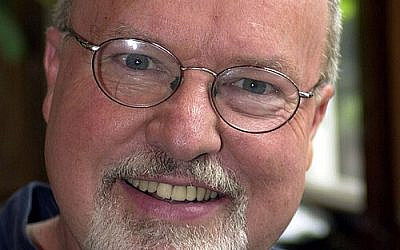
Richard Rohr speaks of ‘Second Half of Life’ consciousness — not defined by age but by a fall, a wound, a loss, or a crisis that cracks the ego’s shell. Although he speaks of it as unrelated to age, as I approach my 70th birthday (Holy Cow — how did that happen?), I find myself reflecting that it’s really not the second half left at all. I don’t know anyone who has lived to 140 : ) Within this realization lies the desire not to waste time. Often, when I’m discovering something new I’ve never tried before, the famous line from the Jewish sage Hillel comes to mind: “If not now, when?”
Rohr teaches that this stage of life is marked by surrender, compassion, wisdom, paradox, and humility — by seeing through the small self we cling to and defend, and by learning to live from the soul rather than the ego. It’s a shift toward embracing mystery instead of demanding certainty. And I’ll admit: uncertainty always seems to tug at my attention — perhaps because it asks more of us than certainty ever does. Does it pull at yours, too?
Depth Over Achievement
In this stage, life becomes less about achievement and more about depth. I feel that shift — even if the mirror humorously reminds me of gravity’s persistence. Rohr calls this ‘falling upward,’ where the wound becomes the doorway. If only : )
Rohr’s Core Teachings
Rohr’s core teachings include:
- Suffering strips away illusion.
- The ego must crack for the soul to emerge.
- Paradox replaces dualism.
- The true self is revealed through loss.
- Compassion grows with spiritual maturity.
- We become more universal, less tribal.
- Wisdom becomes spacious, not defensive.
Clarissa Pinkola Estés & the Wounded Healer
Clarissa Pinkola Estés’ writings on the wounded healer also resonate with me — especially the ‘wild woman’ who rises from the ashes. She reminds us that wounds can become medicine. Her line, ‘We were made for these times,’ feels especially relevant now.
Closing Blessing
“Ready or not, these are the times we’ve been given — and they call on us to meet them with courage and compassion. We will need all the strength, wisdom, and compassion we can gather in 2026. Stay strong. May you feel surrounded by love, encouragement, and ready for whatever life brings.
May You Live in Peace, שלום and سلام. Amen.
Related Topics
Related Posts