

Serial Thinker Interview | Alexandre Gilbert #292.3
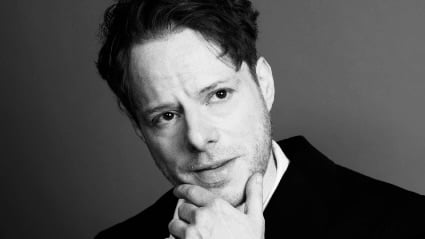
Lev Fraenckel aka Serial Thinker is a French philosopher. He published La philo en mode Serial Thinker, in 2023 and Ma vie a -t-elle un sens ?, in 2025. He counts 55k followers on Youtube and 322k on Tik Tok.
Part II here
Lévinas refused to be called a Jewish philosopher. You can wield, on oyu side, concepts and speak to a nun, a rabbi, or a Muslim.
Serial Thinker: Yeah, I think in Strasbourg, there’s something pretty powerful. There are strong personalities who’ve passed through there. Even in religious Jewish circles, Strasbourg has a reputation as a city of philosophers, not just in academic circles. I grew up in that environment, and it definitely shaped my approach. I studied with Rabbi Eliahou Abitbol, (Editor’s note: from the Yeshiva of the Students of Paris, founded by Rav Gérard Zyzek in 1987) who had a pretty revolutionary way of seeing religion—not as dogma but as an existential questioning.
I moved away from his teachings, but I also inherited something from them—this way of staging existential questions. I think there was something really powerful in that, and it’s what makes a good philosophy teacher. A good philosophy teacher stages an existential crisis. That’s not all it takes, of course—if you stop there, it’s a bit limited—but if you can do that, you’ve already done a lot.
If you manage to disrupt the smooth running of the world, to derail someone, to pull them out of the tracks they were stuck in, you’ve already done something huge. Socrates, in some dialogues, doesn’t always have an answer, but he manages to derail his interlocutor—or at least hopes to. Those are the aporetic dialogues, where there’s no clear answer, but derailing someone is already a big deal. If you’ve done that, you’ve created something in them, a form of freedom, liberated them from something, and that’s massive.
That’s what philosophers are about—they love that derailing, that freedom. A lot of people are scared of it. Many prefer to stick to well-worn paths, to norms or rituals passed down for millennia without questioning them. But those with the philosophy bug are more excited by freedom than by the comforting happiness of norms, whether practical or theoretical.
Two Nazi philosophers who can derail a conversation, Martin Heidegger and Carl Schmitt are cited by left—thinkers such as Giorgio Agamben or Chantal Mouffe.
Serial Thinker: I think, paradoxically, I’ve distanced myself from them. I studied Heidegger a lot when I was younger, but today I’m less drawn to that kind of philosophy. What derails me now is philosophy of mind, which is less lyrical, less literary. That’s what shakes me up today. Take someone like Daniel Dennett—I talked about him in Philo Magazine when he passed away. He derails me more than Heidegger, who now leaves me a bit cold.
The questions that preoccupy me now are things like: Will artificial intelligence ever become conscious? For that, I’d rather read authors like Searle, Chalmers, or Dennett—thinkers from the Anglo-Saxon tradition. They’re the ones derailing me today. Dennett, for example, suggests that what we call consciousness might not be what we think it is, that maybe we’re driven by algorithms just like the AI emerging today. When I say that in circles of philosophers or psychoanalysts steeped in Heidegger, Sartre, or Freud—Freud’s different because he saw himself as a scientist, even if his scientific status is questioned today—it causes a stir.
I was at a psychoanalysis conference, talking about Dennett, and someone said, “Oh, you’ve gone over to the enemy.” When they say that, I think, “Well, that’s interesting.”
It’s the second time you’ve “gone over to the enemy.” First, the step away—from Jewish thought to philosophy, and now from continental to analytic philosophy.
Serial Thinker: I’m in perpetual deconstruction. That’s my symptom. Every time I discover a new continent, a new field of knowledge, I want to dive in fully. Then, after chewing on it for years, I see its limits. I become wary of the religious, sanctifying side of things. Having grown up in religion, I can spot what’s religious even when it doesn’t claim to be. There are dogmas in psychoanalysis, in phenomenology. There’s a religious spirit where authors are treated like saints, their texts studied like sacred scriptures.
In science, it’s not like that. No biologist today reads Darwin, except maybe out of historical curiosity. Today, they read Dawkins’ The Selfish Gene, and even Dawkins might be outdated by newer authors. Mendel came in between, and so on. I’m not saying philosophy should work like that, but I find it a shame there’s this sanctifying relationship to texts, a religious attitude.
These people don’t even realize they’re in a religion. They can’t entertain the idea that consciousness might be analogous to AI. That means something sacred is at play, which is incoherent, especially since none of them are religious believers. It’s astonishing that they’ve managed to recreate religion where it shouldn’t be.
It’s like a secularized theology. Heidegger says science is still metaphysical, still speculative, still belief-driven. You have to tread carefully here, because there’s a difference between the scientistic ideology that says scientific progress will save humanity—that’s a metaphysics, an ideology, as Jacques Ellul pointed out—and science itself, which confronts us with reality.
I’m totally Freudian on this: the three narcissistic wounds—Copernicus, Darwin, Freud. Science inflicts a narcissistic wound by hitting us with a piece of reality. Take Darwin’s theory of evolution—it’s a monumental shock in history. No philosopher can ignore it. Bergson wrestles with it in Creative Evolution, arguing with and against Darwin, but he can’t just dismiss it. No philosopher can say, “I’ll set Darwin aside.”
But you can say, “I’ll set Heidegger or Sartre aside; they don’t interest me.” For analytic philosophers, Heidegger’s philosophy is meaningless. But Darwin? Whether you agree with him or wrestle with him, even if you’re a vitalist like Bergson, you have to engage with him. That’s the difference. Science isn’t an ideology—it imposes itself. Thinking about life without considering Darwin is null and void. Thinking about consciousness as a phenomenologist while ignoring neurology or neurobiology is nonsense.
You mentioned Philosophy of mind, we could extent to Andy Clark or Carl Friston —those philosopher-scientists in cognitive philosophy, predictive mind. Yet, paradoxically, they draw directly from phenomenology.
Serial Thinker: Dennett doesn’t, though. He calls it heterophenomenology—the opposite. Some phenomenologists have taken neurobiology into account, thankfully. I still read phenomenology, but I can’t read it as if nothing’s happened since. I can’t read it ignoring scientific discoveries. It’d be like doing philosophy of life without considering Darwin.
Even someone as out-there as Bergson, a spiritualist in his time, is still a spiritualist. Freud, for example, is far less spiritualist, even though they were contemporaries or close to it. There are contradictions here. Some philosophers claim to be materialists but say AI will never be conscious. If you’re a materialist, why say that?
Take Raphaël Enthoven, for example. We did a test with AI to grade an AI’s philosophy paper. I was the one grading. We did that experiment, and he concluded AI could never do it. M. Phi, Thibault Giraud, analyzed it in a dialogue, showing AI can produce better philosophical problems than some teachers or students.
Enthoven is rooted in the spiritualist tradition, while you lean toward a more cognitivist perspective.
Serial Thinker: Exactly. I think it’s a mistake to have this spiritualist bias that doesn’t make sense. Many philosophers, even philosophy teachers won’t say it outright, but if you say the brain has a representation, they’ll tell you: “No, the subject has representations.” You can be a spiritualist, you can be a dualist, a Cartesian, believing in the soul and body—but you have to own it.
Part IV here