Serial Thinker Interview | Alexandre Gilbert #292.4
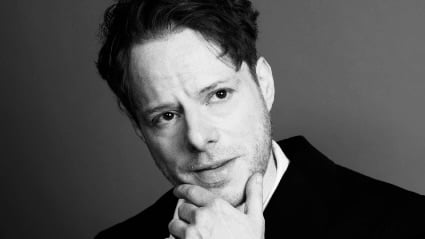
Lev Fraenckel aka Serial Thinker is a french philosopher. He published La philo en mode Serial Thinker, in 2023 and Ma vie a -t-elle un sens ?, in 2025. He counts 55k followers on Youtube and 322k on Tik Tok.
Part III here
The problem is, no one wants to admit that today because people aren’t religious—they’re atheists. So they want to stay atheists while holding onto this duality of body and mind because living in a materialist world disgusts them. The idea that everything is just matter grosses them out.
I saw this at the conference I spoke at. When I suggested the materialist idea that consciousness might just be the result of Darwinian evolution, I saw a reaction of disgust—a religious kind of disgust, the same kind you’d see from religious people who put Spinoza under herem. Then, when I gave my talk on Lévinas, everyone was happy. Lévinas fit their framework, so it was all good. It’s funny to see that there’s a kind of clergy in philosophy. The same nausea a priest might feel. I know it because I’ve felt it myself.
When I got to university and heard some professors doing analytic philosophy in a materialist way, I had the same nausea. I know exactly what I’m provoking when I defend that view now. But since I’m in perpetual deconstruction, I’ve deconstructed that in myself and moved past it. If you don’t go through that deconstruction, you just react with immediate disgust.
But philosophizing, as Nathan [Devers] would say, is thinking against yourself. Thinking against yourself means thinking against your disgusts. Bourdieu talked about tastes and disgusts revealing a lot. The moment you deconstruct deconstruction, things go very, very wrong. You see it in academic wokism—when you deconstruct the deconstruction, it hurts. It’s still this postmodern ideology of post-truth, where everything’s a cultural construct. That’s not true—everything isn’t a cultural construct. There’s chemistry, there’s biology.
That’s the crazy paradox of our time. On one hand, people say humans are just animals, sometimes to a ridiculous extent, like in anti-speciesism, where all distinctions between humans and animals are erased. Yet, at the same time, they refuse to admit we’re also chemistry. That’s the biggest contradiction of our era.
They’ll say humans are just like other animals, but when you point out that testosterone might play a role in male identity, they’re like, “No way, it’s all cultural!” That’s not true—hormones do play a role in gender identity. If they didn’t, trans people wouldn’t take hormones.
We’re not only chemistry—we’re also cultural beings. There’s a YouTuber, a doctor of animal ethology—Homo Fabulus, I can’t recall his name—who wrote a great book asking a scandalous question. He said he’s almost not allowed to ask it in scientific circles, even though he’s very left-wing. He wonders, in evolutionary psychology, if there aren’t differences in how men’s and women’s minds evolved because they don’t always have the same interests to defend.
For example, for survival, we’re disgusted by certain things. A pregnant woman has to be even more disgusted by some things because it could endanger her child. From an evolutionary psychology perspective, that makes sense. We’re disgusted by feces, for instance, for a reason—it helped us survive. Prehistoric humans didn’t know about microbes in feces, but evolution shaped our organs, including our brains, to maximize species survival. Our psychology is shaped by our brain, by hormones, by chemistry.
Unless you’re a total spiritualist believing in a soul, if you’re a bit of a consistent materialist, our psychology is determined by the nela, by hormones, by chemistry. Prehistoric humans were disgusted by feces or dead animals because it helped them survive. Why are we afraid of snakes? Because it helped survival—they’re venomous. Why are we repulsed by other people’s bodily fluids? Because it helped us survive. If I started swallowing everyone’s saliva, semen, or blood, I wouldn’t live long.
But, curiously, when sexual attraction kicks in, those phobias disappear. Why? Because it enables reproduction. Schopenhauer got this even before Darwin. You can read Schopenhauer materialistically—he understood that human psychology is shaped by the survival of the species, what he called the “will to live.” When you’re sexually attracted to someone, their saliva or bodily fluids stop being a barrier—they might not become attractive, but they’re no longer off-putting.
Why? Because our brains are wired that way. If nature had made us permanently disgusted by bodily fluids, we wouldn’t reproduce. You can see what our psychology is aiming for—it’s not random. If a giraffe has a long neck to eat leaves high up, it’s not random. If a rhino has a horn or a snake has venom, it’s not random—it’s for selection and reproduction.
So, to circle back, yes, we are chemistry. If men have testosterone, it’s because it serves a function. The mistake would be saying, “Men are violent by nature because of testosterone, so they shouldn’t fight it.” That’s wrong—it’s the error of thinking we should just let nature take its course.
Humans are the beings who don’t let nature take its course. Humans are anti-nature. Even Dawkins says this in The Selfish Gene. He ends the book saying humans are the only beings capable of rebelling against their selfish genes. Of course, a gene isn’t selfish—it’s just selected to maximize species survival.
Schopenhauer says this too. Humans, through art, religion, philosophy, science, and culture, can rebel against nature. Nature gives us pleasure for reproduction, but we can short-circuit it with a condom, taking the pleasure without the reproduction. It’s like taking the bait without biting the hook. Sexual pleasure is nature’s bait to get us to reproduce, but humans can outsmart it. That’s what sets us apart from other animals—we’re the only ones who can rebel against our selfish genes.
For Spinoza, desire is about persevering in being, something all animals share. But in humans, it takes a unique form. Human perseverance in being is singular—it’s much stronger than in other animals. Other animals don’t have much individuality. Take ten lions—sure, one might be a bit more aggressive, another a bit different, but the differences are minimal. A lion is a lion; it eats meat, it hunts antelopes. There’s no herbivore lion. A bison is a bison, an antelope is an antelope.
A shepherd might recognize each sheep in their flock, sure, but the differences are tiny. With humans, though, are Hitler and Mother Teresa even the same species? Or Einstein and, say, Cyril Hanouna? The differences are radical, fundamental. Some are vegetarian, some carnivorous, some violent, some gentle as lambs. Some want to explore the moon, others spend their lives carving wood in a workshop. What do these people have in common? There’s an infinite range of behaviors, attitudes, and morals. That’s why I think anti-speciesists who flatten these differences are wrong.