
A Jew from Texas, who knew?
Setting Up Mezuzot as Our Spiritual Iron Dome
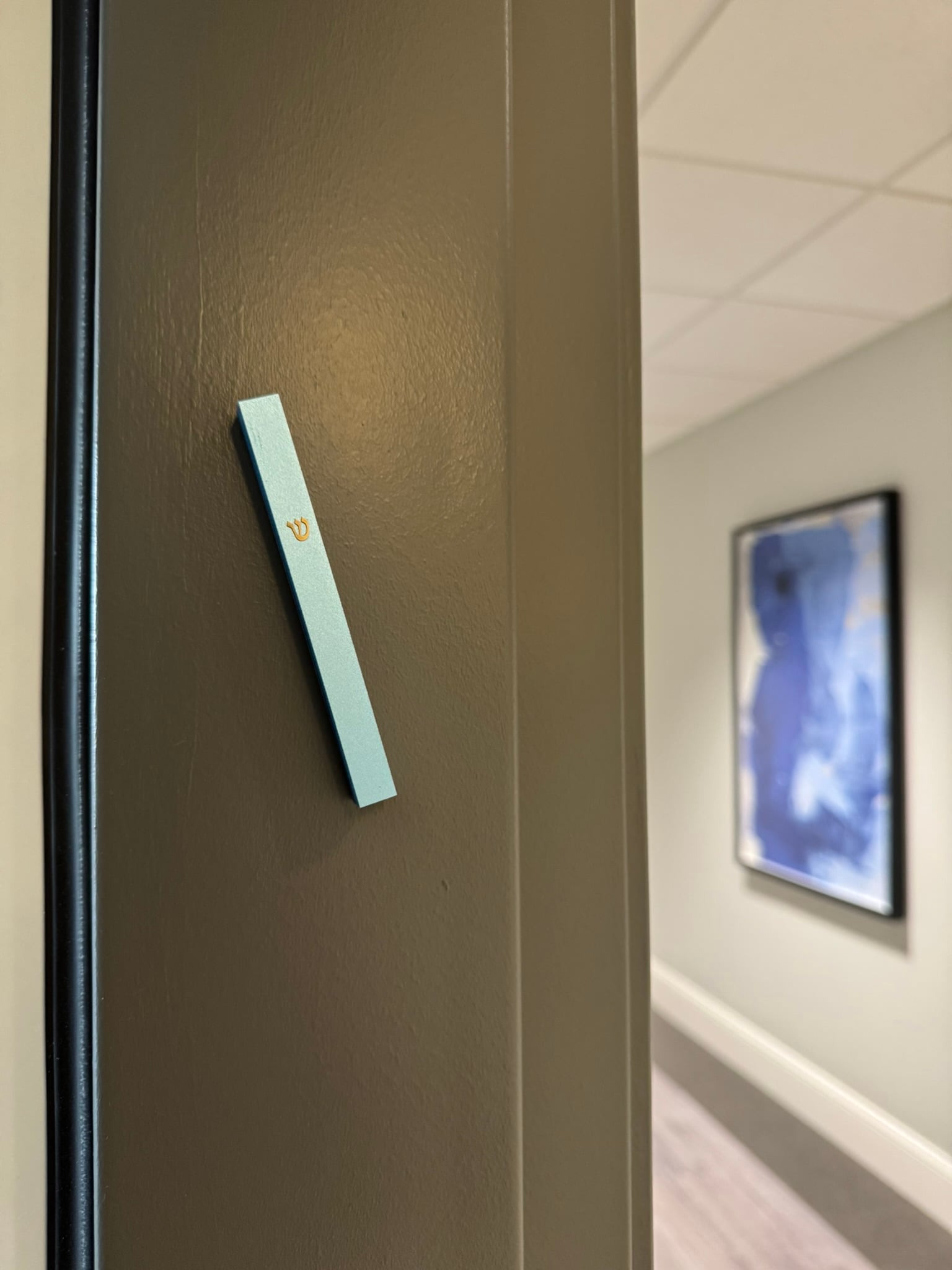
Welcome to the spiritual Iron Dome.
My partner Naomi and I finally completed the mitzvah of attaching mezuzot at our new condo. When I enter it, I envision our three mezuzot forming a spiritual Iron Dome that protects us and the entire space.
Like every other aspect of Judaism, we needed determination and patience to perform this mitzvah correctly.
I’ve had mezuzot for decades, starting with one painted with a teddy bear for my son’s bedroom after he was born. As I moved from house to apartment to house over the years, I kept that teddy bear mezuzah and others, appreciating them in the folkloric and aesthetic senses but overlooking the actual content—the scrolls meticulously written by scribes to exacting specifications. The content can be found in Deuteronomy 6:4-9 and 11:13-21.
My perspective evolved once I began wrapping tefillin regularly at home, reading regular reminders of what mezuzot are all about. They are right there in Deuteronomy 6:
Bind them as a sign on your hand, and they shall be an emblem between your eyes. Write them on the doorposts of your house and gates.
Earlier this year Naomi and I moved into a condo north of Boston from Westchester County, NY. Friends gave her two mezuzot as gifts before we relocated. I also brought the ones I had collected over the years; some had never been used. After the relocation, however, the time came to get serious about the mitzvah and not just the House Beautiful decorative aspect.
I connected with Rabbi Sruly Brook of Chabad of Wakefield, Massachusetts, for guidance on how to properly affix the mezuzot. He came by and looked at them, then had a rabbi-scribe, Eli Olidort, examine the scrolls. The astounding result: None of the scrolls were kosher, per halakhic standards, due to insect damage, missing letters or, most disheartening, being just photocopies of other scrolls.
Rabbi Brook told me, “It’s a misconception that the mezuzah is the box. The essence of the mitzvah is the written parchment scroll inside the box. Another misconception, according to the Rebbe, is that a mezuzah is a one-time thing. You get it, you mount it, you’re done. In fact, getting the scrolls professionally checked twice every seven years is also critical to ensure they are in accordance with halakha.” Which, we discovered, ours were not.
As a result, we were left with attractive, even elegant, cases with no kosher scrolls for them. I could have stayed with the nonkosher ones, but, well, in for a dime, in for a dollar. Do it right or don’t bother. I carefully measured the cases to determine the size of the scrolls we needed (Rabbi Brook indicated they come in standard sizes). After measuring, I ordered three kosher-certified scrolls from Judaica Webstore in Israel.
Once they arrived, we thought they would just snap into place in the cases like Jewish Lego blocks.
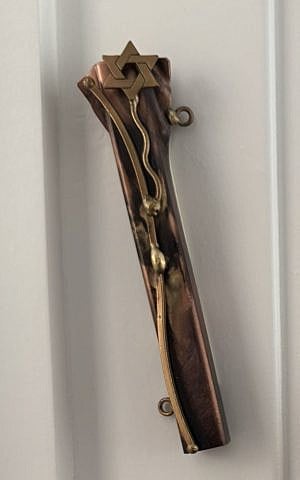
But, no: First, they all seemed too big for the narrow space in the cases. Second, the cases themselves didn’t quite work for our condo’s structure. We couldn’t drill into the metal frame of our front door and we didn’t want to nail the others into the interior wooden door frames. Naomi and I felt stymied.
Clearly, we needed informed, hands-on ideas for this last phase of our mezuzot journey. That took us to the Kolbo Fine Judaica Gallery in Brookline, Mass. The sales representative looked at our cases and scrolls. With confidence born of experience, she showed how we could work the scrolls into the cases with some focused nudging. Then we talked about techniques to attach them with magnets and two-sided tape. Grateful for the instruction, we bought a blue metal case for the front door and left with more confidence that we could pull the mezuzot project together.
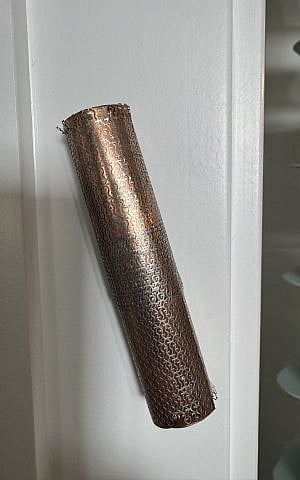
Back home, we got to work fitting scrolls into cases with some judicious squeezing and squashing. With that done, we measured the doorposts to find the appropriate height and inward-facing angle. Magnets and two-sided tape got them firmly attached to door frames. I donned a favorite yarmulke, we said the prayers and we were done. The artisan and Tabernacle general contractor Bezalel himself would be pleased with our home handiwork.
Since then, I’ve felt the presence of the mezuzot daily. Our Iron Dome is always there, asserting and protecting our Jewish identity in a time when that is a dangerous act—and making Jewish homes a target. These mezuzot forge the link connecting our apartment with thousands of years of other defiant Jewish homes.
Related Topics
Related Posts