
Clear analysis of Israel's politics, security and history
Settler Violence: Perception vs Reality
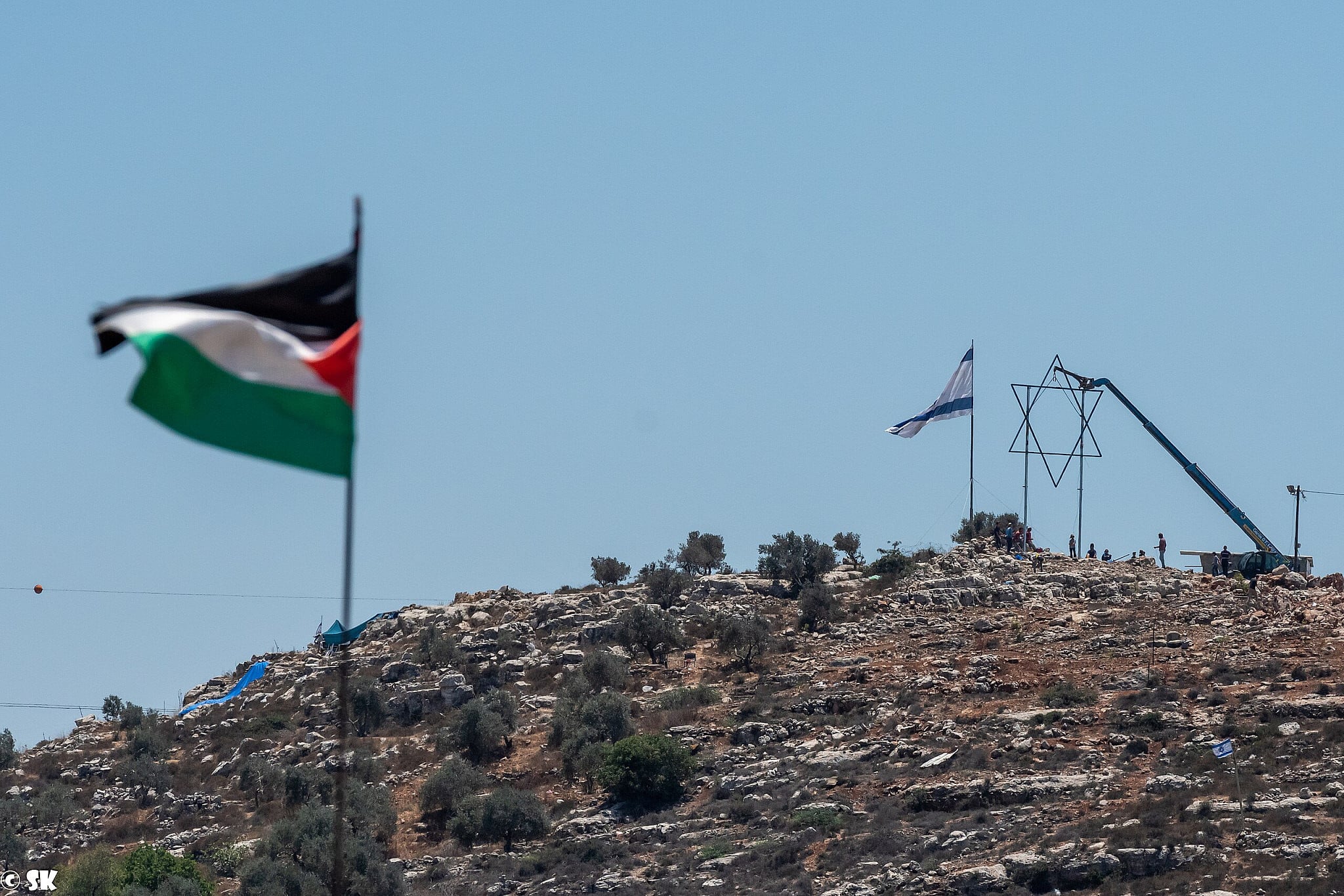
Evyatar oupost, Judea and Samaria. (Photo: Shai Kandlar, Wikimedia Commons CC BY-SA 4.0)
Over the past year, debates between pro-Israel and pro-Palestinian activists have become increasingly common across social media, podcasts, and YouTube. When arguments about Hamas violence or Palestinian terror gain momentum, the conversation is often deflected to a single accusation: “What about settler violence in the West Bank?”
This has become the familiar “gotcha” moment. Pro-Israel participants stumble or fall silent, while self-described neutral observers automatically side with the accusation. The reason is straightforward – there is very little media coverage on where “settler violence” claims come from, how they are measured, or how they compare with realities on the ground. In terms of Israeli public diplomacy, this has become one of the country’s clearest weaknesses, both at home and abroad.
Where The Numbers Come From
Almost every international claim about “settler violence” relies on the same narrow chain of reporting. Initial reports of alleged incidents usually come from Palestinian authorities, such as local municipal bodies and Palestinian District Coordination Offices, as well as from human rights organisations, including far-left Israeli NGOs. These NGOs collect testimonies and complaints from the field, but their role is to document allegations, not to investigate crimes or determine responsibility.
Reports from these sources are then passed on to the UN Office for the Coordination of Humanitarian Affairs (UN OCHA), which records them in a central database. Once entered there, the incidents are presented internationally as UN data and are widely cited by media outlets, foreign ministries, and international organisations.
At that point, a key question is rarely asked: how was the “settler violence” claim defined, and what kind of incident was actually included under that label?
What Is Actually Counted As “Settler Violence”
In June 2025, Regavim examined UN OCHA’s incident database in detail, reviewing what is actually recorded under the heading of “settler-related violence.”
One of its central findings was that the vast majority of cases attributed to settlers were not caused by settlers at all. In more than 98% of cases where Palestinians were recorded as harmed under the label “settler violence,” the harm resulted from clashes with Israeli security forces, not attacks by civilian settlers.
Remarkably, the review found that Palestinians injured or killed while carrying out terror attacks were included in the “settler violence” figures.
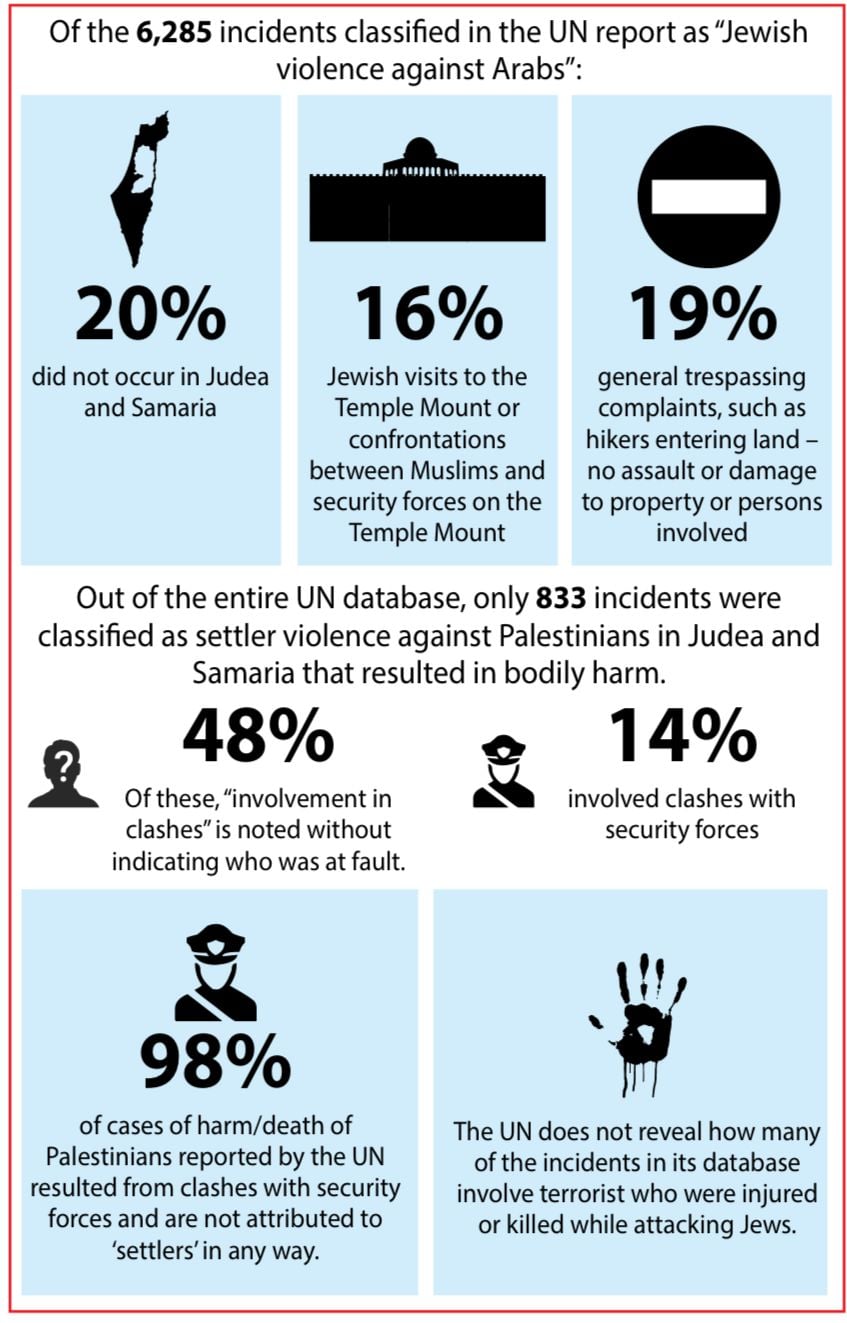
Beyond security-related incidents, the database captures a wide range of events that involve no violence whatsoever. Logged entries include routine civilian activity such as visits to the Temple Mount by Israeli civilians, legal construction work, and other non-confrontational presence in contested areas.
It further records traffic accidents involving Israeli and Palestinian vehicles, and school trips that passed through disputed areas in Judea and Samaria. In these cases, no attack or violence was involved whatsoever, yet the incidents were still logged and later cited within overall “settler violence” statistics.
Much of what is presented as “settler violence” is therefore not a record of violence at all, but an inflated dataset constructed to support a predetermined narrative.
Media Framing
How “settler violence” is understood internationally is shaped as much by media framing as by facts on the ground.
In May 2025, Tzeela Gez, a pregnant Israeli woman from the community of Bruchin, was shot dead while on her way to the hospital to give birth. Her baby boy was delivered by emergency C-section and fought for his life for two weeks before dying from his injuries. The attack was carried out by Palestinian terrorists operating in Judea and Samaria.
A few months earlier, international media devoted extensive coverage to the killing of Sondos Shalabi, a pregnant Palestinian woman shot during an IDF operation in the West Bank.
The circumstances were fundamentally different: Tzeela Gez was deliberately targeted at point-blank range by terrorists, while Sondos Shalabi was killed during an IDF operation aimed at apprehending a militant, not civilians. Regardless of how it happened, both cases were tragic. Both women were innocent. Both were pregnant. Both lost their children. Yet only one kind of case consistently receives sustained international attention, shaping how the West Bank is understood.
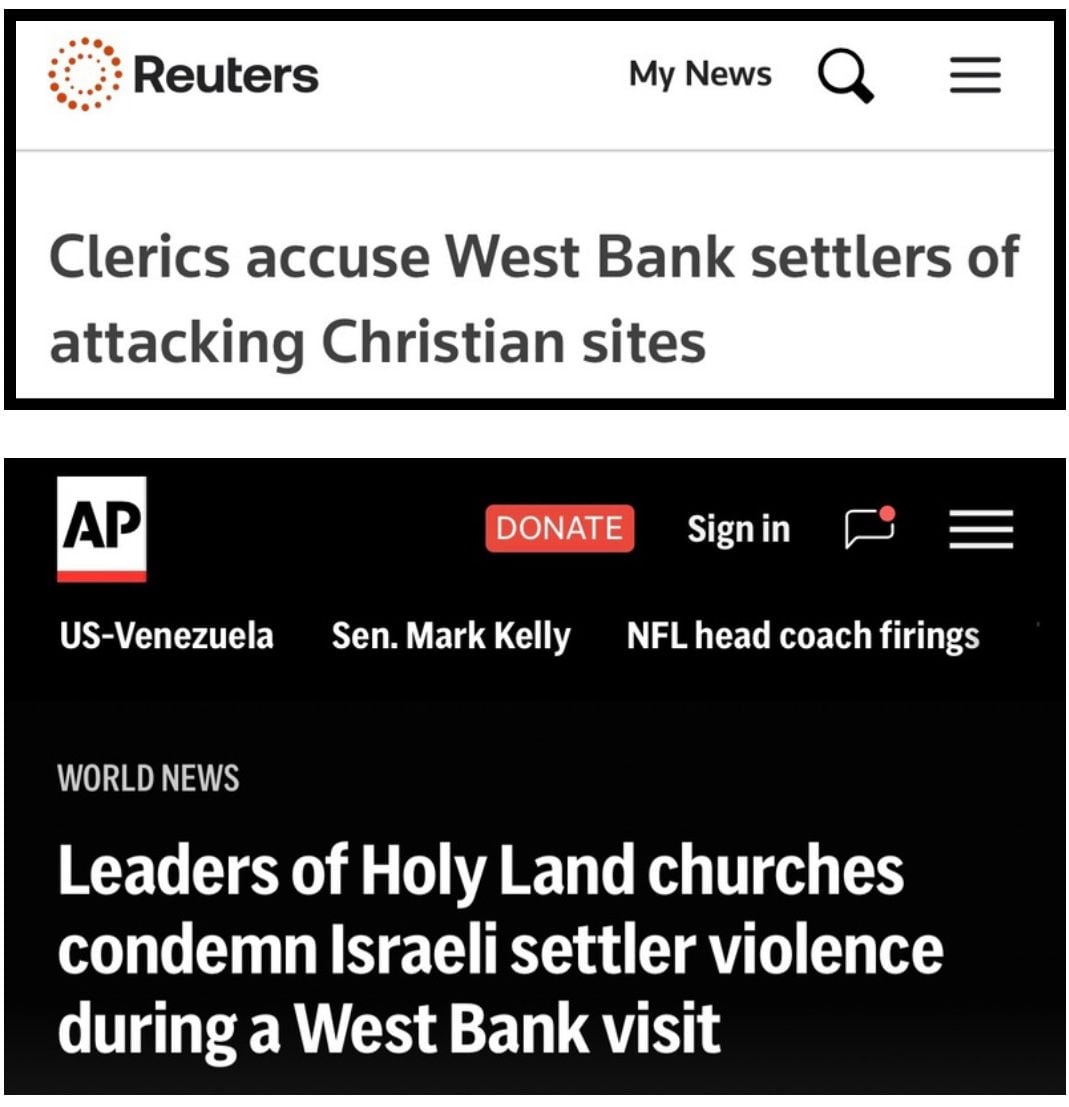
Source: Screenshots from international media reports
The same imbalance appears when allegations emerge that fit the existing “settler violence” narrative.
In July 2025, international reports claimed that Jewish settlers had set fire to a historic church in the West Bank village of Taybeh. After investigating the incident, Israeli police said there was no evidence of arson and clarified that the fire had not been set on the church itself, but nearby. Video footage later reviewed by police showed a young Jewish settler from the area helping to put it out. The allegation spread globally; the correction did not.
This pattern helps explain why perceptions diverge so sharply from reality on the ground. According to Regavim’s analysis, even after stripping out non-violent entries and security-related incidents wrongly classified as “settler violence,” the remaining figures amount to a small number of cases spread over several years. By contrast, official Israeli security data shows thousands of Palestinian terror attacks originating from Judea and Samaria in the same period. In some years, the ratio between Palestinian terror incidents and cases plausibly described as settler violence exceeds 30 to 1.
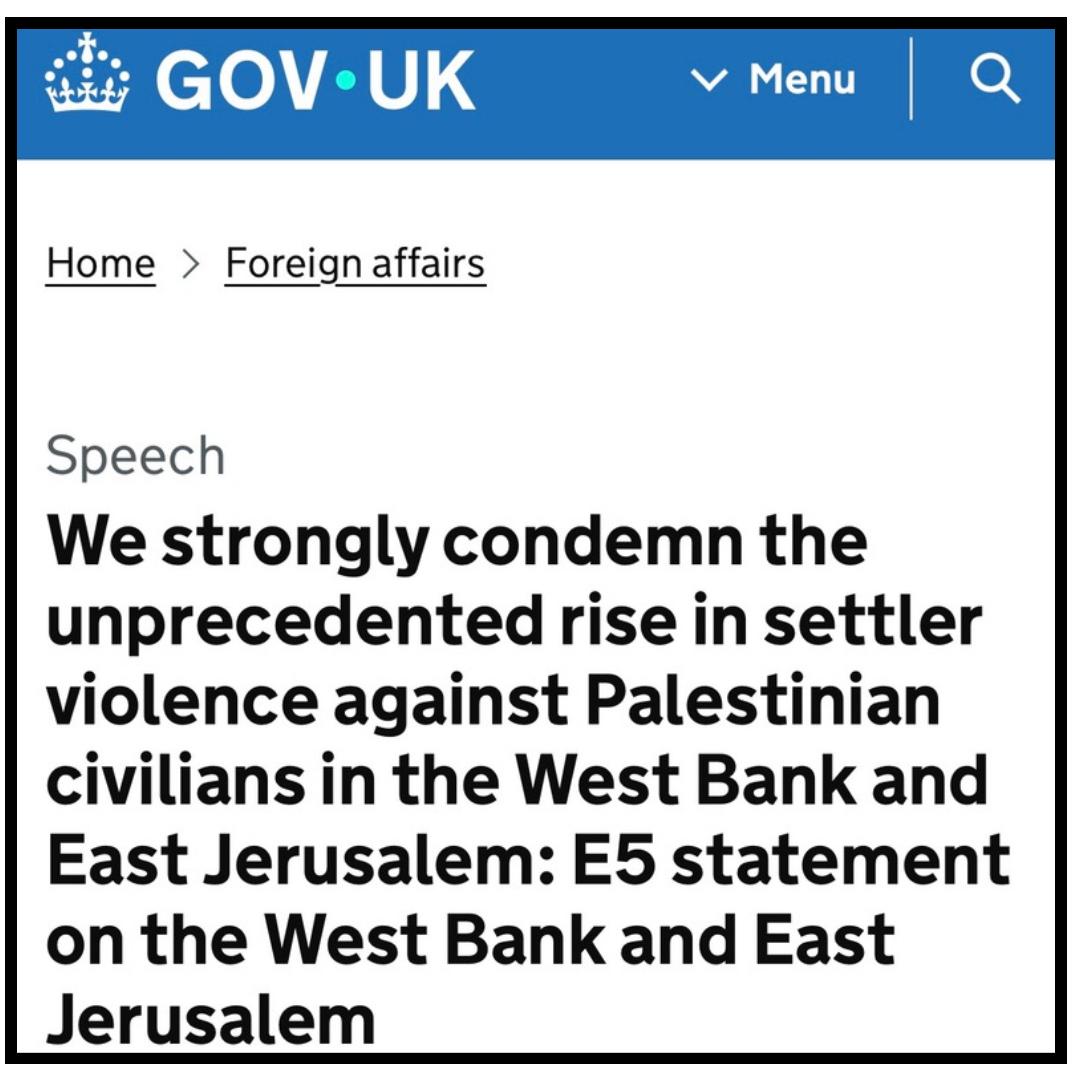
That scale difference is not reflected in international coverage. Palestinian terrorism is often folded into vague references to a “cycle of violence,” reported briefly, or ignored entirely. Allegations involving Jewish residents, even when later disproven or legally dismissed, are far more likely to be framed as evidence of a systemic moral failure.
The result is not simply imbalance, but distortion. Media framing, not facts, ends up defining the story of the West Bank.
Internal Israeli Dynamics
The international narrative around “settler violence” has also been reinforced by parts of the Israeli media and developments within Israel’s internal security service, the Shin Bet.
Alongside its core mission of countering Palestinian terrorism, the Shin Bet operates a unit known as the Jewish Division, tasked with monitoring Jewish extremism. Its existence was not widely known to the Israeli public until early 2025, when leaked audio recordings attracted major attention and raised questions about how the unit was operating in practice.
The recordings, made during Ronen Bar’s tenure as Shin Bet chief, captured the head of the Jewish Division speaking with Avishai Mualem, then the police commander for Judea and Samaria. In the exchange, the Shin Bet official pressed for arrests even when no incriminating material existed, stating that even if nothing could be found, arrests should still be carried out. In the same conversation, Jewish settlers were referred to as “schmucks,” with instructions to “throw them into cells with rats.”
Arrests were being discussed as a tool to “send a message,” rather than as a response to specific criminal evidence. Within parts of the security establishment, Jewish extremism has been treated not merely as a criminal issue, but as a strategic obstacle to a political vision centred on territorial withdrawal. The deeper significance beyond legalities and internal politics is that even when cases went nowhere, they were added to the already-inflated dataset of “incidents” cited as settler violence.
This mindset was expressed in previous years by Avi Arieli, a former head of the Shin Bet’s Jewish Division. After his retirement, Arieli argued in a 2018 interview that Arab terrorism, while dangerous, was a secondary threat compared to what he described as the existential danger posed by ‘Jewish terrorism’. In the same discussion, he stated that the number of Jewish extremists amounted to only around 100 individuals. Under Ronen Bar’s tenure, the ideology was the same. The Shin Bet displayed a disproportionate focus on a very small fringe, which reinforced claims of widespread “settler violence.” When reported in parts of the Israeli media, this framing acquired added weight abroad.
The Reality In Proportion
Any serious discussion of Judea and Samaria has to begin with the reality on the ground, not with slogans. There are violent Jewish extremists in Judea and Samaria. Most serious estimates place their number at between 100 and 200 individuals, drawn largely from a loose fringe commonly referred to as the Hilltop Youth. That is out of a population of roughly 540,000 Jewish residents living in Judea and Samaria. Some have committed real crimes, including arson, vandalism, intimidation, and assaults. They should be arrested, prosecuted, and punished like any other criminal – and when the evidence exists, they are.
But proportion matters. Regavim’s analysis shows that Jewish nationalist crime in Judea and Samaria is lower than the national average for nationalist crime inside Israel proper.
Meanwhile, Palestinian violence routinely involves stone-throwing at vehicles, Molotov cocktails, shootings, stabbings, roadside bombs, and ambushes on civilian roads. These are not rare events, but a regular part of the security environment and the backdrop to nearly every IDF operation in the area.
At the same time, rather than the Palestinian Authority seeking to make arrests, it pays salaries to convicted terrorists and to the families of those killed while carrying out attacks. This policy of encouraging violence by rewarding it is widely documented and openly defended by Palestinian officials. As Palestinian Authority President Mahmoud Abbas stated in 2018 and repeated in 2025, “Even if we have only a penny left, we will give it to the martyrs, the prisoners and their families.”
Conclusion: Reclaiming Reality
“Settler violence” has become a loaded term, used as a moral verdict rather than a description. When the sources and numbers behind the claim are actually scrutinised, the gap between perception and reality becomes clear. What is presented as a widespread phenomenon is built from a narrow and distorted set of incidents, grouped together in ways that exaggerate scale and blur responsibility. The result is a powerful narrative that feels persuasive, but does not reflect what is actually happening on the ground.
That distortion has consequences. It shifts attention away from the far more significant drivers of violence in Judea and Samaria: Palestinian terrorism, which is openly encouraged through incitement and financial reward. This is violence with clear intent, continuous, and responsible for far more deaths than the phenomenon it is so often used to deflect from.
Recognising this does not deny Palestinian suffering or excuse criminal behaviour by Jewish extremists. It restores proportion. As things stand, the “settler violence” narrative functions as a heavily distorted political instrument, while Palestinian terror remains the enduring, incentivised reality on the ground.
Related Topics
Related Posts