Author & speaker, son of a Holocaust survivor
She Saved My Father’s Life. Yad Vashem Doesn’t Know Her Name
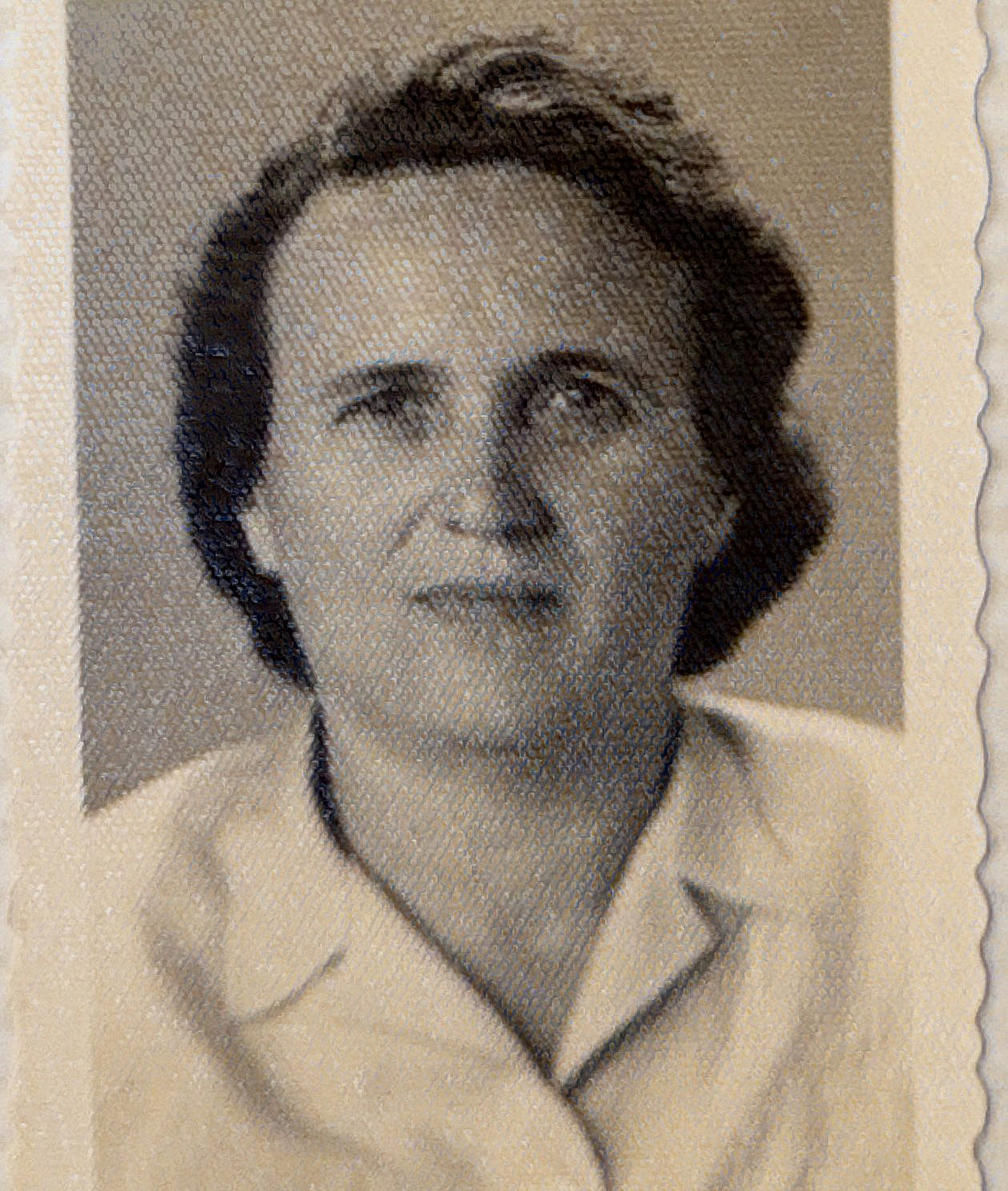
Władysława Jaeger
Władysława Kazimiera Jaeger hid two Jewish children for five years under penalty of death. She has never been formally recognized. I am going to change that.
My father Edward Singer was five years old when the Nazis marched into Kraków.
He and his younger sister Giza were handed to a Catholic woman named Władysława Kazimiera Jaeger, who was not their mother, not their relative, not under any legal or moral obligation to do anything for them. She was a family friend. She was Polish. She was Catholic. She was thirty-two years old.
She took them anyway.
The penalty for hiding Jews in occupied Poland was death. Not arrest. Not imprisonment. Death for the rescuer. Death for their family. Death for anyone in the house. Władysława knew this before she said yes. She said yes anyway.
For five years, she raised my father and his sister as her own children. She forged birth certificates listing herself as their biological mother. She drilled them in Catholic prayers until the words came without hesitation, until crossing themselves looked natural, until their Polish names were the only names they answered to. She rehearsed the hiding routine: strangers at the door, children disappear, no sound, no movement, no matter what.
Her brothers, Mieczysław and Stanisław, ran the Polish Underground in the region. They provided the outer ring of protection. Anyone asking questions was made to understand the consequences.
My father spent five years not existing as himself.
He came out at eleven years old. He never fully explained what those years had done to him. He learned that silence meant safety and spent the rest of his life practicing it. He died on February 10, 1997, at sixty-two, carrying most of it still.
Władysława came to Israel after the war.
She lived there until her death. She is buried in Jaffa, in a quiet Christian cemetery. I know because I was there once, as a teenager, standing next to my father while he placed flowers on her grave. I didn’t know whose grave it was. I didn’t ask. I was young and it didn’t register.
I think about that afternoon a lot now.
I was standing at the grave of the woman who saved my father’s life, and I treated it like an ordinary afternoon. I had no idea what I was looking at.
That is the first thing that needs to change.
Yad Vashem maintains the world’s most comprehensive record of the Holocaust. Its Central Database of Shoah Victims’ Names contains more than 7.5 million personal records. Its archive holds testimonies, transport lists, photographs, and documentation from every country the Nazi machinery touched.
It also maintains a separate, formal recognition: Righteous Among the Nations. The title, established by the 1953 Martyrs’ and Heroes’ Remembrance Law passed by the Knesset, is awarded to non-Jewish individuals who risked their lives to rescue Jews during the Holocaust, without expectation of reward. It is not a database entry. It is a state honor. A commission, chaired by a retired justice of the Israeli Supreme Court, reviews every case and votes.
As of January 2024, 28,707 people from 51 countries have been recognized.
Władysława Kazimiera Jaeger is not among them.
She is in the Yad Vashem database. Her designation is survivor, the classification for Jews who lived under Nazi persecution and remained alive. That designation makes no sense for her. She was not Jewish. She did not survive persecution. She was the one doing the protecting.
She deserves the other title.
The process for applying for Righteous Among the Nations recognition requires testimony from the Jewish side, documentation of the rescue and the risk, and sufficient evidence for the Commission to verify the account. Yad Vashem will consider cases regardless of how much time has passed. There is no deadline.
I am a one-person team. I am a writer, not a historian. I have no institutional backing, no legal team, no archive access beyond what is publicly available.
What I have is the story.
And I have my father’s silence, which is its own kind of testimony. A man who survived those five years and never spoke about them, who placed flowers on a grave in Jaffa in front of his teenage son without explanation, who carried the weight of what Władysława gave him without ever finding words for it. His silence tells me how much it cost. His silence tells me what she meant.
Next year I am going to Poland. I will walk the ground she walked. I will look for records, for witnesses, for anyone who knew her or knew of her, for documentation that places her story precisely within the historical record Yad Vashem requires. I will visit Głuchów, where she was born. I will go to Łańcut, where she hid my father and his sister in the shadow of a Wehrmacht headquarters building.
I will build the file.
I lock my doors every night.
Every door, every window, the garage, the gate. A specific sequence. No exceptions. My children have started noticing. My eight-year-old son joined me recently and checked each lock carefully with the look of a child who loves you and isn’t sure you’re okay.
I grew up in Tel Aviv during the Second Intifada. I know what it looks like when the world decides Jewish lives are negotiable. I moved to America in 2003. I built a life here. I have three children who attend a Jewish day school in North Carolina and who will grow up knowing that they are safe, that they are wanted, that nobody is coming for them.
I check the locks anyway.
Because somewhere between Kraków in 1942 and North Carolina in 2026, a woman named Władysława taught my family what it costs when nobody is standing at the door. She stood there herself for five years. She paid the price every morning when she woke up and decided to keep paying it.
Her name should be on the Wall of Honor in Jerusalem.
Not as a database entry. Not as a footnote in someone else’s record.
Her own name. Her own medal. Her own line on the wall.
I am going to see to it.
This is my first piece for The Times of Israel.
My name is Ido Singer. I am an Israeli-born writer based in North Carolina. I write about inherited trauma, Jewish identity, and the pattern that started in Kraków in 1939 and is still running in my house today.
The memoir is called When I Should Have Died. It launches in January 2028.
The Władysława campaign starts now.
If you have information, documentation, or family connections to Władysława Kazimiera Jaeger, her brothers Mieczysław and Stanisław, or the Jewish families she protected in Łańcut during the war, I want to hear from you.
whenishouldhavedied.substack.com
Related Topics
Related Posts