
Shemot and the Universal Art of Leadership
If the book of Bershit marks the beginning of the world and the Jewish people, then the book of Shemot signifies the beginning of the Jewish story, community, and its leadership. Of the five books of the Torah, Shemot is arguably the most central to Jewish identity, both past and present. This significance is reflected in its two most common English names: Names and Exodus. Names lie at the core of Jewish identity, and the Exodus is perhaps the most foundational and widely known story in Jewish history.
As significant as the Jewish people’s journey from slavery to freedom is the timeless leadership motifs and lessons that repeatedly emerge throughout the story.
Leadership is one of those concepts often invoked as aspirational, yet rarely defined. In many ways, it resembles an elephant in the room, clearly important, but difficult to quantify or grasp in practical terms. The challenge before us is twofold: to recognize and appreciate genuine leadership when it appears, and to understand that each of us possesses the capacity to step forward in meaningful ways for our people and our communities.
As we reflect and learn from the leadership exemplified in the book of Shemot, which we begin reading this week, it feels appropriate for me to also reflect on the closing of a chapter of my own leadership. I recently concluded my two semesters as the co-president of the Binghamton University JLIC(Modern-Orthodox) community, a leadership opportunity that was very meaningful for me.
I will share some insights and reflections on leadership from Shemot, my Binghamton communal leadership, which are valuable for the Jewish community and world at large today.
- The Individual Names and People Matter
The literal meaning of Shemot is “names,” and it begins with a list of the names of Yaakov’s sons who accompanied him on his journey to Egypt, noting that a total of seventy people descended with him. This is an especially fitting opening for a book so deeply connected to community and leadership.
Leadership is often understood as focusing primarily on the bigger picture, vision, direction, and collective goals. While this perspective is essential, it carries the risk of overlooking the individuals who make up that collective. A community does not exist in the abstract; it exists through the people who comprise it.
I have always tried to view each person as possessing inherent value and deserving of attention to their individual needs. Yes, a community has broad and significant priorities, but those priorities cannot be met without care for the individuals within it. Leaders occupy a unique vantage point, both literally and metaphorically, that allows them to see, know, and engage with every member of a community.
While it may be natural to overlook individuals in the midst of larger responsibilities, leadership presents a powerful opportunity to connect personally, uplift others, and make people feel seen. These moments of individual attention can go a long way in fostering a stronger, more resilient community.
- Every Person Can Lead
Coupled with the recognition that a community is made up of individuals of inherent value is the understanding that anyone can step forward and contribute.
This idea emerges from a seemingly unusual passage in this week’s parashah: the birth of Moshe. The Torah relates:
“A certain man of the house of Levi went and took a Levite woman. The woman conceived and bore a son; and when she saw how beautiful he was, she hid him for three months.” (Shemot 2:1–2)
At first glance, this passage is striking. One of the most significant births in the Torah is recorded without mentioning the names of Moshe’s parents. The individuals responsible for raising the greatest leader in Jewish history remain anonymous.
Rabbi Ephraim Mirvis, Chief Rabbi of the United Kingdom, explains that this omission is intentional. The Torah seeks to emphasize that greatness is not dependent on lineage or background. Moshe’s leadership does not stem from who his parents were, but from the choices he would later make.
Rav Yaakov Kamenetsky offers a complementary insight. By describing Moshe’s parents simply as a man and woman from the tribe of Levi, the Torah underscores that Moshe Rabbeinu was not a miraculous or supernatural being. He was born through ordinary means, to ordinary people, and yet he became the redeemer of Israel.
Leadership is something that can be unlocked by anyone. Too many people are of the belief that they are not leaders and cannot become one. This reductive view shoulders the responsibility among a select few and inhibits real growth.
Being able to look around a room and recognize that every individual has the capacity to lead, contribute, and shape a community is itself a crucial act of leadership and something I have grown to appreciate. Yes, people may have inherent skills or strengths, but that can be said for everyone, and encouraging people to realize their leadership ability is of great importance.
- Humility and Transcending Doubt
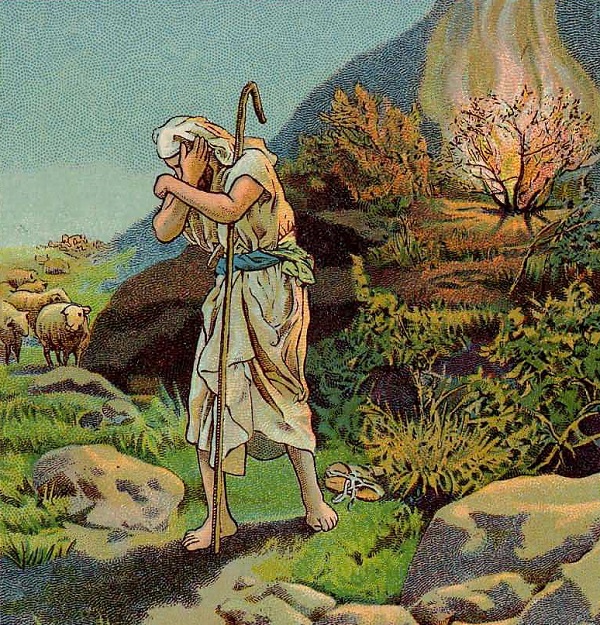
Our introduction to Moshe hardly presents him as a confident leader. When God calls upon him at the burning bush, Moshe responds, “Who am I that I should go to Pharaoh and free the Israelites from Egypt?” (3:11). He later adds, “I have never been a man of words… I am slow of speech and slow of tongue” (4:10), and ultimately pleads, “Please, O my lord, make someone else your agent” (4:13).
These moments reveal Moshe’s deep humility and his self-doubt. His hesitation resonates strongly with me. There have been moments in my own leadership where uncertainty, fear of failure, or concern over perception loomed large.
The test of leadership, however, is not whether doubt exists, but what one does despite it. Moshe teaches us that responsibility often comes before confidence. It is easy to wish, as Moshe did, that someone else would step forward. Yet Rabbi Tarfon’s challenge remains: “You are not obligated to finish the task, but neither are you free to neglect it.”
Looking back, my greatest regrets are less about mistakes I made, but about opportunities and ideas I hesitated to pursue. Learning to balance humility with responsibility has been one of the most important aspects of my leadership journey.
4) The Importance of Gratitude and Recognizing the Contribution of Others
In the hectic nature of our everyday lives and the constant demands of leadership, it is easy to retreat into a self-centered silo and overlook the valuable contributions of others. Too often, gratitude is not sufficiently expressed to those who are vital to the functioning of a community or shared endeavor. Leaders can also fall into the trap of trying to go it alone, forgetting the importance of collaboration, consultation, and the recognition that no one holds a monopoly on good ideas or effective solutions.
The relationship of Moshe and Aaron, evident in parshiyot of this week and next, is powerfully emblematic of this balance. Aaron serves as Moshe’s spokesperson and accompanies him before both the elders and Pharaoh. Without Aaron, Moshe would have struggled to lead effectively.
When it comes time for the plagues in next week’s parsha, an interesting phenomenon arises in the story. Aaron, not Moshe, commences the initial three plagues: striking the water to turn it into blood, stretching his hand over the water to bring forth frogs, and striking the earth to produce lice. Rashi explains that Moshe’s absence is no coincidence, but rather a profound expression of gratitude. Citing a midrash, he notes that Moshe refrains from performing these acts because the water once saved his life when he was hidden in the Nile, and the earth had sheltered him when he buried the Egyptian taskmaster.
This episode highlights two layers of gratitude. The first is the simple act of saying thank you. The second, deeper layer is cultivating a mindset of appreciation. While verbal gratitude requires little effort, developing an ongoing sense of appreciation, especially toward those who cannot acknowledge it in return, shapes how we relate to the world as a whole. Moshe teaches us that gratitude is not merely a reaction, but a posture: an awareness of and respect for everything that has contributed to who we are and what we can do.
Gratitude also has a powerful communal effect. When people feel appreciated, they feel valued, and when people feel valued, they are far more likely to contribute positively and remain engaged. Communities thrive when gratitude is present and wither when it is absent. I saw this firsthand and always strived to recognize the consequential ideas, efforts, and support of students and staff of the community.
Being involved in campus community leadership is a unique and invaluable experience, and these reflections only begin to capture what I have learned about leadership, both during my time at Binghamton and beyond, and about the broader importance of thoughtful leadership itself. Leadership is about giving, but it is also crucially about growth and learning. Challenges can be intimidating, but they cannot deter us from stepping forward or accepting responsibility. Shemot sets a gold standard for meaningful leadership, one that I strive to embody and believe could benefit our broader community and society if embraced more widely.