The perpetual cyberabbi!
Should We Blow the Shofar on Shabbat?
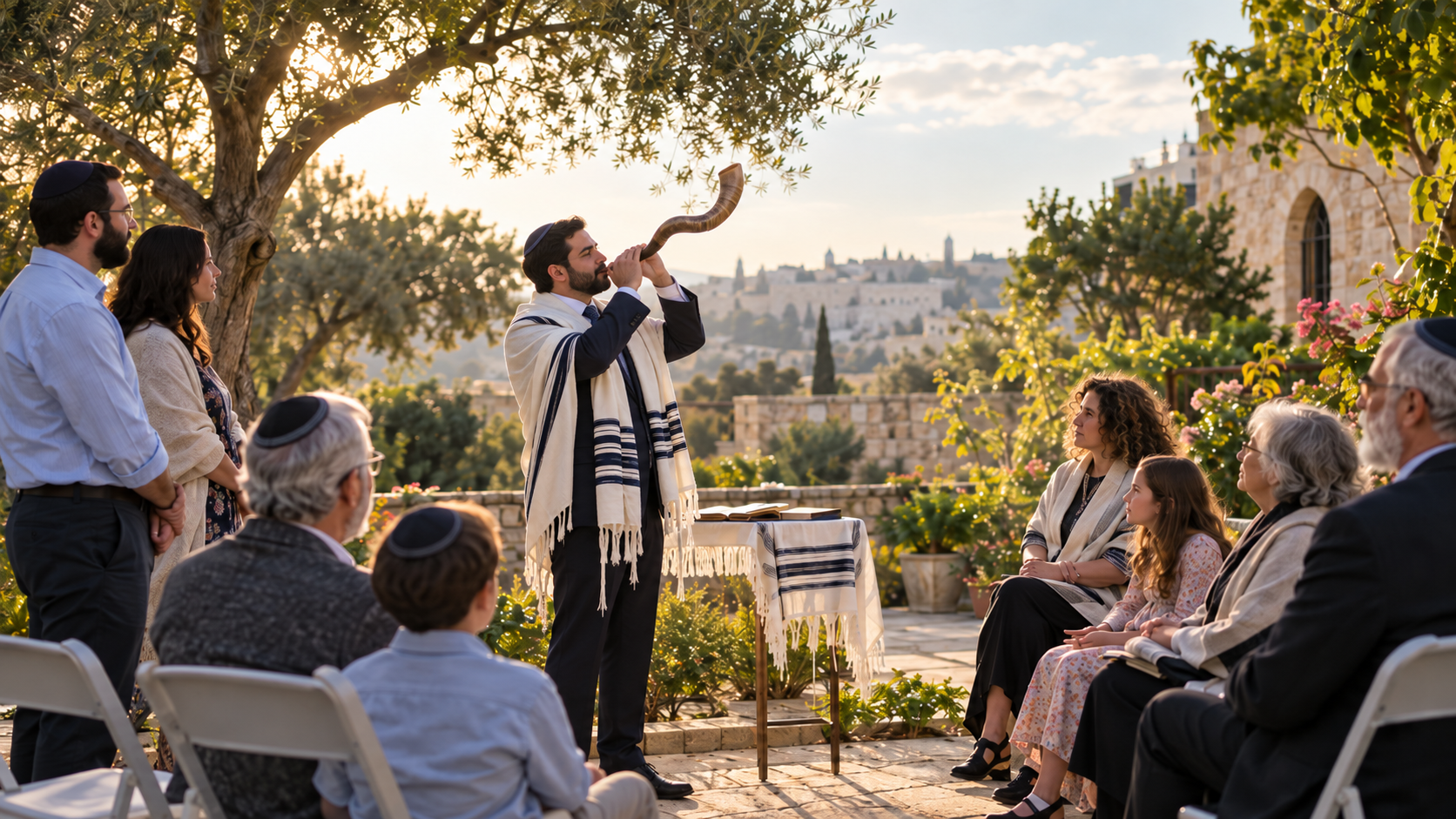
When the shofar is silent on Shabbat, the mitzvah need not become inaccessible. A brief outdoor gathering can create another faithful way for the community to hear its call.
When changing patterns of Jewish participation collide with an ancient rabbinic prohibition
A lively discussion recently broke out among some of my rabbinic colleagues. This year, the first day of Rosh Hashanah falls on Shabbat, Saturday, September 12. According to longstanding Jewish practice, the shofar will not be sounded that day, but on Sunday, the second day of the festival.
For many Conservative congregations, that creates a genuine pastoral problem. The first day draws the largest attendance, and many worshippers will not return on Sunday. For them, observing the prohibition may mean not hearing the shofar at all. Some colleagues have therefore asked: Should we reconsider the prohibition?
The mitzvah of hearing the shofar is central to Rosh Hashanah. The Torah calls the festival Yom Teruah, a day of sounding. And the prohibition against blowing on Shabbat is itself rabbinic. Sounding a shofar is not a prohibited labor. The Mishnah records that when Rosh Hashanah fell on Shabbat, the shofar was sounded in the Temple but not throughout the country. After the Temple’s destruction, Rabban Yohanan ben Zakkai permitted it in places possessing an appropriate rabbinic court. The Babylonian Talmud later explains the broader prohibition with a practical concern. Since everyone is obligated to hear the shofar but not everyone knows how to sound it, someone might carry a shofar through the public domain to an expert, thereby violating Shabbat. That ruling was eventually codified by Maimonides and the Shulhan Arukh.
But here is where the modern question becomes interesting. Most Jews attending Conservative synagogues today do not inhabit the social world imagined by that decree. Many drive to synagogue on Shabbat. They carry keys, reading glasses, medications and prayer books. The possibility that someone might inadvertently carry a shofar four cubits through a classical reshut harabim (public domain) hardly seems to describe the practical religious life of most of our communities. At the same time, another social reality has changed: second-day attendance has diminished dramatically in many congregations. Should those facts matter?
Conservative Judaism has never understood halakhah as deaf to changing circumstances. Our movement arose precisely from the conviction that history matters, that Jewish law has developed over time, and that new realities can require fresh legal thinking. At the same time, Conservative Judaism has generally resisted the opposite proposition: that whatever Jews happen to be doing now automatically becomes what Judaism ought to require. That distinction is crucial. Changed social reality can change the halakhic question. It does not automatically supply the halakhic answer.
The Rabbinical Assembly’s Committee on Jewish Law and Standards reflects that tension. Approved responsa constitute official halakhic positions of the Conservative movement, while individual rabbis, as marei d’atra, the local rabbinic authorities, retain responsibility for determining practice in their own communities. The system explicitly allows disagreement while insisting that change take place through halakhic argument rather than sociology alone.
There is an instructive precedent outside our movement. In 1913, Reform responsa explicitly supported blowing the shofar on Shabbat. Among the realities behind that approach was the fact that Reform congregations generally did not observe a second day of Rosh Hashanah. Without shofar on the first day, their congregants would lose the mitzvah entirely. The Reform response therefore reached a different conclusion from traditional practice. The Conservative movement has generally not followed that path.
Even more revealing was 2020. During the pandemic, many Jews could not safely attend synagogue at all. If ever there were circumstances in which access to the mitzvah posed an extraordinary problem, that was the year. The Rabbinical Assembly’s guidance retained the traditional practice: because the first day was Shabbat, the shofar was not sounded. Instead, it encouraged creative second-day solutions: outdoor gatherings, neighborhood shofar blowing and abbreviated opportunities in which the required thirty blasts could be heard independently of a complete service. That precedent speaks to me.
If our problem is that people will not return for a four-hour second-day service, perhaps the first question should not be, “How can we eliminate the prohibition?” Rather, it should be, “How can we make the mitzvah genuinely reachable?”
Related Topics