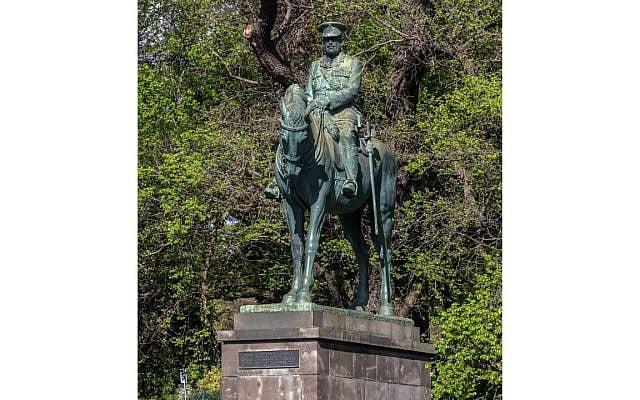
Sir John Monash: The Jewish Australian Who Became Australia’s Greatest General
The Australian Everyone Knows — But Few Really Know
As an Australian, I wanted to write something about Sir John Monash – arguably the greatest general of the First World War, and certainly one of the greatest Australians.
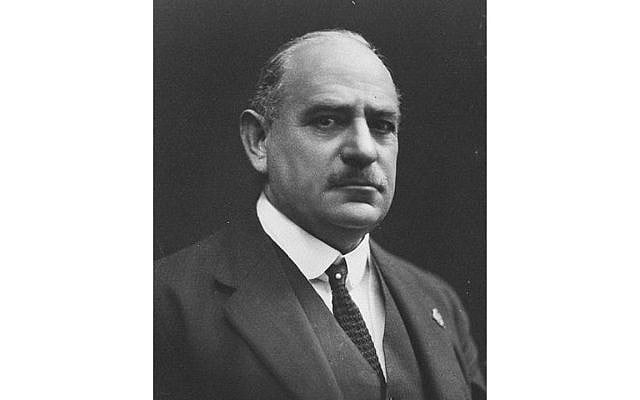
A lot of Australians know the name Monash. They know Monash University. They drive on the Monash Freeway, there is even a Monash golf course near where I live. Many carry him around in their wallets without even thinking about it — Sir John Monash appears on Australia’s $100 note. But I think that today most Australians don’t know who he is.
The Son of Jewish Immigrants
Monash was born in Melbourne in 1865. Before the war he was an engineer, lawyer and intellectual — not the stereotypical military man at all. During the First World War there were people in the establishment who distrusted him because he was Jewish, because his family background was German, and because he was seen as too academic and unconventional.
But in the end, his excellence just could not be ignored.
The Battle of Hamel
The battle most associated with Monash is the Battle of Hamel in July 1918.
By that stage the First World War had become almost unimaginable in its destruction. Huge offensives often achieved very little except massive casualties. What made Monash different was the extraordinary care and precision with which he planned battles. At Hamel, infantry, artillery, tanks and aircraft were all coordinated together in a way that was far ahead of its time.
The attack was planned down to the minute and achieved its objectives in just 93 minutes.
The battle is still studied today because many historians see it as a turning point, not just of the First World War, but in modern warfare and a model for the successful Allied offensives that followed.
Field Marshal Bernard Montgomery later wrote:
I would name Sir John Monash as the best general on the western front in Europe.
That is an extraordinary thing to say about an Australian commander from a country that had only federated less than two decades earlier.
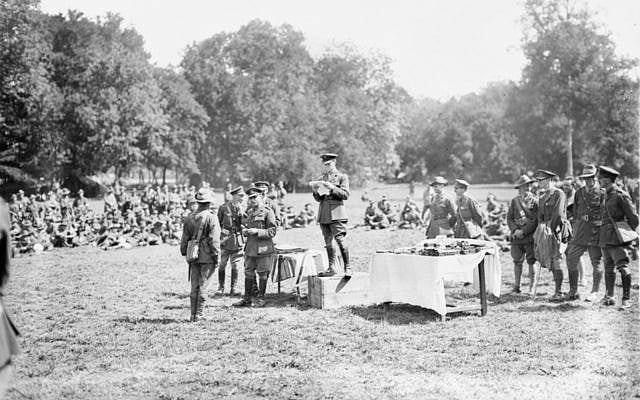
What Monash Says About Australia
Australia in Monash’s time was not free of antisemitism or prejudice. Far from it. Yet somehow this young country on the other side of the world produced a society open enough that the son of Jewish immigrants could rise to become one of its greatest military leaders and one of the central figures in its national story.
According to author Colin MacInnes, as recounted by Monash’s biographer Geoffrey Serle, Monash’s “presence and prestige … made anti-Semitism … impossible in Australia”.
Monash became so admired, so respected, and so associated with competence, decency and national service that he helped shape the way Australians saw Jewish Australians more broadly.
Australians Should Remember Him
Australians need to be reminded of who John Monash was and what he did for this country.
Not simply because he was Jewish. Not simply because he was a brilliant general. But because he represented a kind of serious, capable and unifying national figure that feels increasingly rare.
More than a century later, Australians still put his name on roads, universities and memorials.
And in my view, rightly so.