So, Who Did You Vote for? A Naive Thought on Achdut
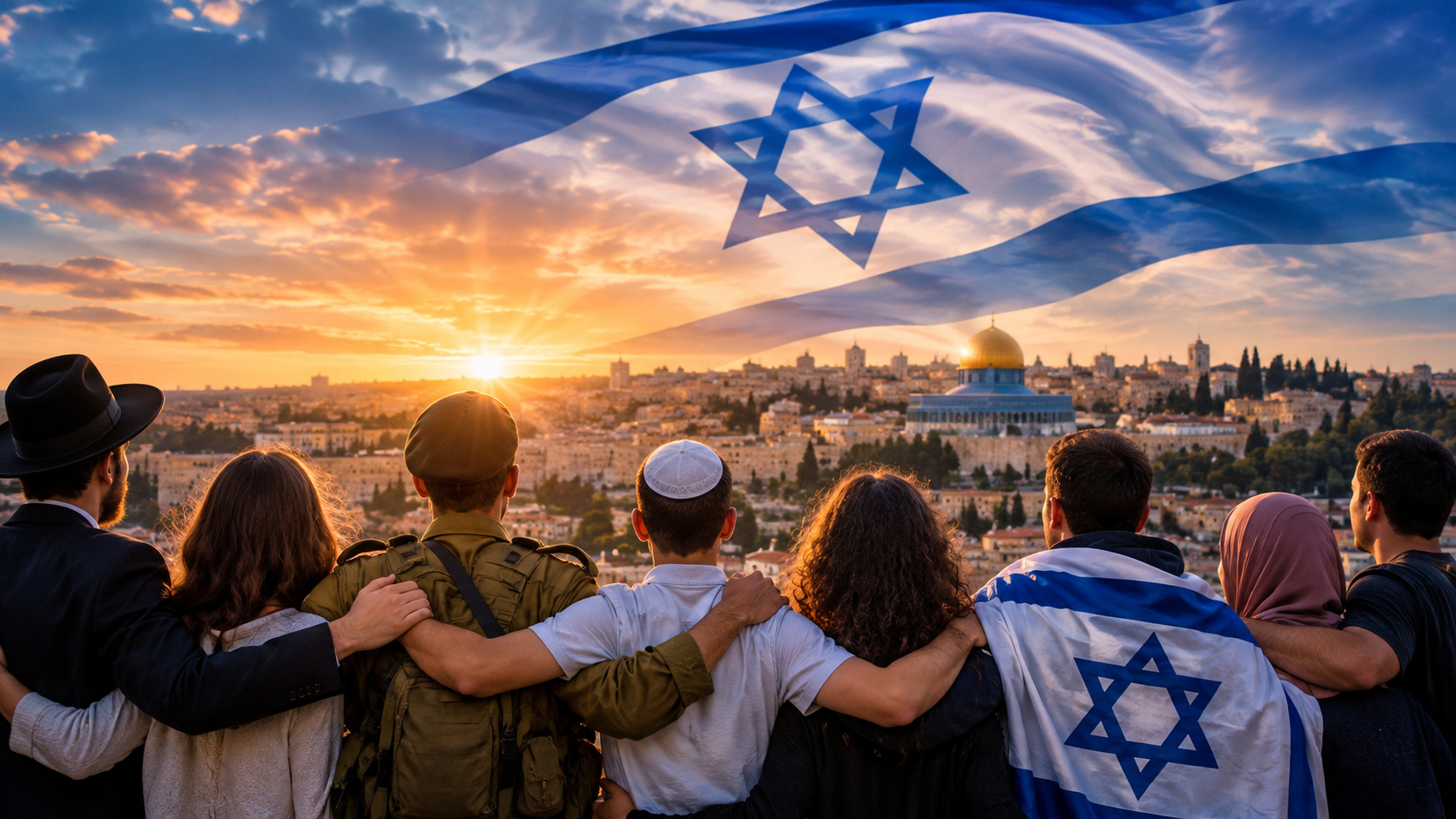
Many factors differentiate the experience of voting in the U.S. versus in Israeli elections. The proximity of course – the Israeli experience is inherently physical; to the nearest school, waiting in a (very long) line, showing your ID, etc. Voting absentee in the U.S., by contrast, feels isolated, a quiet transaction completed via envelope and mailbox across thousands of miles.
But the most jarring difference is the openness around who we voted for. On countless occasions, everyone from my army buddies to the guy wheeling my injured parent to an x-ray has asked who I support(ed). Some of that is the Israeli dougri mentality and its taste for brutal honesty. But I wonder if the ease with which we ask a question that is often considered intimate across the pond also stems from something deeper: a shared stake in this place, and a sense that even the person who voted the opposite of me is tied to the same fate.
In the United States, the choice feels more binary, especially now. Many define themselves as MAGA or never-Trump. One can often guess the other person’s opinion, but many dare not ask. In rhetoric and in action, those on the “other side” are described as the enemy, and especially with the midterms, loyalty to the party has been placed above all else while differing viewpoints are shunted.
Contrast this to the weeks following October 7th, sitting in one of the kibbutzim in the Gaza envelope, over coffee, intense back and forth debates over what else but the judicial reform. The great contest of wills that preceded the massacre had not disappeared. We argued, yelled, and pointed fingers, then put on the same green olive uniforms and heavy bulletproof vests, to fight the evil that did not care how we voted, and would kill us all the same. In those times we all sweated, we bled, we cursed the heat, we grieved. Our differences dissolved into a simple, shared sense of tragedy, mission and purpose.
Unity Does Not Mean Consensus
I want to be precise here, because “unity” is a slippery word. Achdut does not mean agreement. It does not mean forgiving everything or abandoning principles. It means holding onto a sense of mutual belonging and responsibility despite profound disagreement.
Think of the neighbor you fight with over parking or noise. The argument is real. So is the fact that you share a stairwell, and that if the building catches fire, it catches fire for both of you. That is not warmth, and it is not agreement. It is a recognition of shared fate.
The Reality Checks
My sample is small and biased, drawn largely from people I know. It is harder to extend the same generosity to those whose world is so far from mine that we would rarely speak on an ordinary day. Still, I’ll try.
Arab citizens, who voted in “droves,” are telling us that they want physical safety and to be treated as stakeholders in the country where they live. The Haredim who refuse to share the burden with me and my fellow soldiers, or to integrate into a modern society and economy, are in their own minds preserving a way of life. I find their methods misguided, alien, and often abhorrent. Understanding motivation is not endorsing the choice. But I believe each group is acting out of a deep instinct to secure a future for itself, and I would rather start there than with contempt, as difficult as that may be (and it is).
A lot has happened in three years. 251 people were taken hostage, all have returned, not all alive. Israel has fought a brutal, grueling, multi-front war. Israelis have raced to shelters under missiles, rockets, and drones from Lebanon, Yemen, Iran, and Gaza, and have faced terror in the West Bank. Meanwhile, Israel’s standing in the world has imploded, global antisemitism has surged, and we found ourselves feeling more isolated, and more caricatured, than at any point in memory. It is no wonder the spirit of unity that defined that terrible day has waned. Israelis are simply exhausted. Americans know how this goes: the unity after 9/11 felt unbreakable for a time, and then it frayed anyway, battered down by a cruel reality, lacking leadership, societal divisons.
And when these differences meet policy, the heat rises considerably, for understandable reasons. We each want a better future, but we have very very different visions of how to achieve it. One side views Palestinian statehood as the only way to stave off a demographic, moral, and security catastrophe; the other views it as a religious abomination or a death sentence. One views judicial reform as preserving the voice democracy; the other as a grave threat to civil liberties. One views the Jewish and religious character of the state as the goal, the other as the obstacle. These gaps are unlikely to close any time soon, if at all. This is not to suggest that all positions are equally defensible. They are, in my opinion, most certainly not. However, that does not erase the common ground beneath the argument: a shared desire to secure a better future here, in this country.
Still, there are red lines, at least for me: support for terror or its financing; deliberate violence against innocents; persistent lawlessness, including the blocking of highways; moral hypocrisy; and a refusal to accept accountability. Such conduct, and the way would-be leaders excuse or ignore it, is disqualifying in my book and plainly not in the country’s interest.
Most worryingly, and depressingly, are the examples of real extreme incitement, utterly abhorrent behavior by protestors and counter-protestors on the streets, whose actions are fuelled by the flames of irresponsible, even morally repugnant leadership that plays off emotions for political and personal gain.
Over the past three years, I’ve heard a great deal of talk about unity. Too often, these calls felt hollow, essentially meaning, “Let’s unite around my positions on everything.” Yet when it mattered most, true achdut broke through the chaos. My platoon comrades raced to war on October 7 regardless of whether they supported Itamar Ben-Gvir or Yair Golan (both views exist on my team). Public figures as different as Almog Cohen, Roman Gofman, Noam Tibon, and Yair Golan displayed extraordinary heroism that day, placing themselves in mortal danger to save people they barely knew. Saving others was their north star; nothing else mattered.
The enemies who seek Israel’s destruction are thankfully farther from its borders and far less capable than they once were. But it should not take an existential crisis to remind us of our common fate. Unity is not just a reflexive reaction when disaster strikes. It is what allows a society to make hard decisions, absorb disagreement, and build forward with common purpose.
Israel is at an international, regional, societal, religious, and political crossroads. The people have spoken, and their representatives must now build a functioning government capable of addressing the tremendous challenges ahead. A daunting, hopefully not impossible task.
If I knew how to reconcile all of this, I’d probably run for office instead of writing a blog. For now, I’ll settle for the barest silver lining: beneath the layers, most of us want to leave our children a better home. Yes, that is naive. It is also true. Our divisions are real and will not disappear soon, but they need not crowd out everything else. Recognizing that we all care about this place, even when we disagree about how to protect it, is a necessary start. My platoon went to war with kippa-wearing religious Zionists shoulder to shoulder with atheist kibbutzniks. On paper, we had little in common. In reality, we lived by the most important principle: putting our country and one another first. It is time our leaders followed that example.