
Solidarity with Israel’s Film Industry
While you enjoyed your favorite movies during the holiday season (and perhaps also nervously awaited a renewed war with Iran), Israel’s own film industry has been in a tailspin. The noise locally, in Hebrew, is deafening; outside the country, it’s the silence that is deafening.
That quiet isn’t the only reason I decided to write about this now. The further I move away from almost 40 years as a civil servant and into the early retirement I decided on, the more my gaze settles on freedom of expression issues.
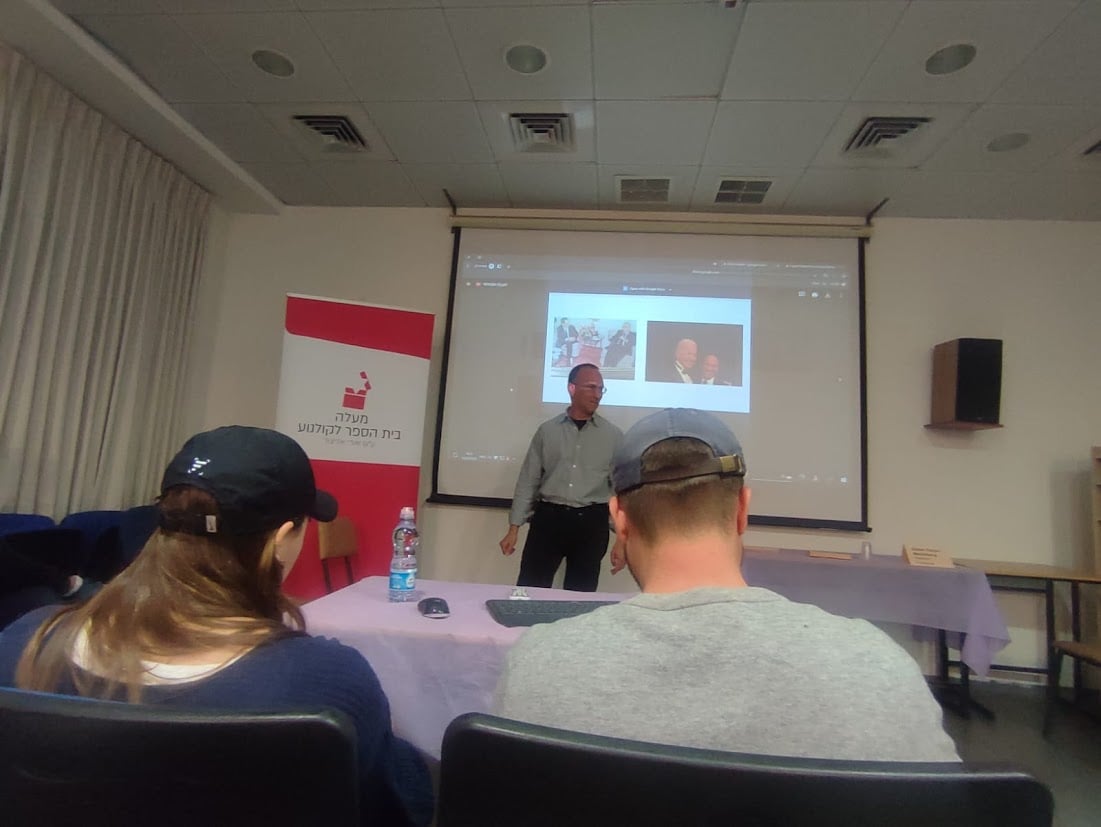
And yes, I’ll admit it: having completed a two-year scriptwriting program at the Jerusalem-based Maaleh Film School at the height of the COVID pandemic, I am desperate to interest producers in some ideas I have. While retirement offers much more free time, I’m not getting any younger.
Another problem: by the time success smiles upon me, there may not be any money available. This became readily apparent during the Hamas-instigated war, as the previously behind-the-scenes boycott of Israeli artists became blatantly overt.
One of the earliest signs of this trend was the postponement – which became a full-blown two-year delay – of the global debut of Season 3 of the Israeli TV series “Tehran.” Keeping us at arm’s length was apparent in other ways as well, such as in the dearth of international creators attending the annual Docaviv documentary film festival in Tel Aviv this past May.
The mask came off soon afterward.
First, the Toronto International Film Festival’s August announced (and then overturned) a ban on the Israeli film “The Road Between Us: The Ultimate Rescue” dealing with the events of October 7, 2023. In September, an open letter calling for a boycott of our film industry began circulating – more than 4,000 foreign film industry figures have since signed it. A month after that letter was initiated, the International Documentary Film Festival Amsterdam decided to bar the participation of relevant Israeli bodies.
With all this external hostility, it is only natural for our artists to seek solace at home. Unfortunately, nothing is simple here.
As reported by The Times of Israel – with its deep-dive reporting of cultural world develoments here, as illustrated by Amy Spiro’s coverage of important side events at July’s Jerusalem Film Festival – Israel’s Culture Minister and our film industry started battling at the worst of times.
The latest round of jousting dates back to September 2024, when the 900-member strong Israeli Academy of Film chose “The Sea” as our feature entry to the Oscars. Perhaps the movie was the artistically best we had to offer, but the story of a 12-year-old Palestinian boy trying to reach the beach for the first time in his life doesn’t do much to represent the unique Israeli experience to the world at large.
I’ll spare readers the minutiae since then and get to the point: the Minister eventually threatened to cease state funding and cancel the 1999 Film Law, which guarantees freedom of expression and reflection of Israel’s cultural diversity. With a global boycott hovering above, the last thing we needed is this internal crisis.
To summarize the rhetoric: the Minister focused on political leaning, the professionals on diverse creative freedom. That aside, I do think it’s worth pondering a talking point of the Israeli Screenwriters’ Guild: budget cuts are liable to harm – first and foremost – new filmmakers (they say “young,” at which I take offense as a pensioner), students, the socio-economic periphery and “transparent” production staff.
In this context, I’d like to make special mention of minorities – from creators to actors – and productions that reflect their realities. The two most recent Israeli TV series, “Nutuk” and “Yaffa” (about 85 percent of each is in Arabic), are great examples of this primetime exposure of the viewing audience – overwhelmingly Israeli-Jewish – to the country’s minority community, some 21 percent of the overall population.
Luckily, it appears that the budget-cut threat has moved to the back burner. But while a cease fire on this particular issue is in place – at least for the time being – other matters of controversy have since erupted between the Minister and Israel’s artistic community.
I’ve (so far) not made it past the film-school graduate stage. I know all too well, however, from Israelis in the local film industry I’ve gotten to know that making a living in their world is challenging to say the least. The current in-fighting harms the entire spectrum of Israeli artists – the last thing we need in the face of an unfriendly world.
This clash isn’t taking place in a vacuum, of course; perhaps I’ll reflect on that broader theme in a future post. For now, I’d just like to call for an internal closing of the ranks – and a show of solidarity from film industries beyond our shores.