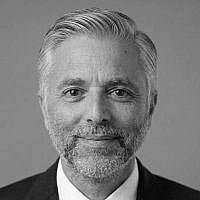
This week, as Jews around the world read Parashat Korach, I found myself thinking about the difference between arguing and building.
Korach’s story is remembered as a story of conflict. Yet what often remains after every dispute is a simple question: What will we leave behind?
This week, I dedicated a fruit tree in Israel in honor of the preservation and renewal of the rare Kanaani cat breed.
For me, the gesture carried a meaning far beyond the tree itself. A tree is planted not for today, but for tomorrow. It is an act of faith in the future. The person who plants it may never enjoy all of its fruits, yet plants it anyway for those who come after.
The Kanaani cat is one of Israel’s rarest living treasures. Developed by Doris Pollatschek, a Holocaust survivor who devoted herself to preserving a unique part of Israel’s natural heritage, the breed today stands on the edge of disappearing. Its future depends on people who believe that some things are worth protecting simply because they are rare, beautiful, and part of our shared story.
The name Kanaani was not chosen by me. I inherited it together with the breed itself. In the world of cat breeds, names often reflect geography and history: Persian, Abyssinian, Siamese. Israel’s native breed became known as the Kanaani.
Today, when I hear that name, I think not of ancient conflicts, but of responsibility. I think of the Land of Israel. I think of stewardship. I think of the privilege of caring for something fragile and irreplaceable.
As I reflected on the tree that will one day bear fruit in Israel, I found myself working on another project inspired by the same values. The green color of a new design I have been developing reminds me of growth, renewal, and the landscapes of Israel itself. Green is the color of life. It is the color of things that continue.
Perhaps that is one of the deeper lessons hidden within the story of Korach.
Some people leave behind arguments.
Others plant green trees.
Some leave behind division.
Others leave behind life.
Long after the arguments are forgotten, the tree continues to grow.
Its roots deepen.
Its branches spread.
Its fruit nourishes others.
The same is true of every act of preservation, every effort to protect a living creature, every attempt to build something that may outlast us.
The tree will grow, God willing.
The Kanaani breed will endure, God willing.
And the seeds we plant today—whether in the soil, in our communities, or in the causes we choose to serve—may continue to bear fruit long after we are gone.
That is a legacy worth building.
Rabbi Moshe (Mikhail) Salita is a Brooklyn-based rabbi, legal scholar, and emerging animal chaplain whose work unites Jewish spirituality, international law, and compassion for all living beings.
He holds a Master’s in International Law (with honors) from the National University “Odesa Law Academy,” where he is currently a PhD student researching the restitution of unlawfully confiscated Jewish communal property in Soviet Ukraine. He also earned a Master’s in Library and Information Science from Pratt Institute (New York) and a Master’s in Education and Special Education from Touro University, with graduate certificates in Applied Behavior Analysis (ABA) and Bilingual Education.
Rabbi Salita is an ordained rabbi of the Jewish Spiritual Leaders Institute (JSLI), a Doctor of Ministry student in Jewish Spirituality at the Graduate Theological Foundation, and an Animal Chaplain-in-Training with the Compassion Consortium in New York. His mission is to weave together justice, mercy, and creation care into one sacred path of Tikkun Olam — healing the moral and spiritual wounds of the world.
He serves as Executive Director of the Salita Foundation, originally founded by his brother, Dmitriy Salita — former WBF World Champion boxer, and inductee of both the New York Boxing Hall of Fame and the Jewish Sports Hall of Fame. Today, Rabbi Salita leads the Foundation toward a broader vision — uniting humanitarian ethics, environmental awareness, and cultural restitution.
Through the Foundation, he has launched the “Eco-Kosher Initiative,” a global program encouraging support for businesses and individuals who respect the environment, animals, and their communities. For him, “eco-kosher” is not limited to food — it is a moral philosophy of living in balance with creation, where sustainability and holiness walk hand in hand.
He is also devoted to preserving and gaining international recognition for the rare Israeli cat breed Kanaani — a living symbol of harmony between Jewish heritage and the natural world.
A descendant of Sruel ben Aharon Lekhtman, a Ruzhiner Hasid and brick-factory owner in Kitai-Gorod, Kamianets-Podilskyi — once a spiritual heart of the Ruzhin Hasidic movement in Tsarist-era Ukraine — Rabbi Salita continues his ancestor’s legacy of faith, integrity, and bridge-building. Sruel Lekhtman served as a close friend and estate manager for Pan Dembitsky, a Polish landowner remembered with respect in both Jewish and Ukrainian memory. Their friendship, crossing lines of faith and culture, remains a profound symbol of coexistence — especially meaningful for Ukraine today.
Although Rabbi Salita received Reform rabbinic education in the spirit of Jewish Universalism, he maintains a deep spiritual connection with Chabad, whose living Hasidic tradition unites intellect, compassion, and joy.
Following the example of the prophets — from Adam, the first caretaker of creation, to King Solomon, who understood the language of animals, and to Rav Papa, the sage who spoke kindly of cats — Rabbi Salita teaches that true holiness is revealed through compassion for all living beings. His life’s work is to show that caring for animals and serving God are one and the same sacred breath.